Archaeologists Uncover One of Britain’s Largest Celtic-Era Treasure Troves in North Yorkshire

More than 800 Iron Age artifacts—including chariots, ceremonial spears, and tools—have been unearthed at a vast Celtic-era site in North Yorkshire.

©Image license via Chat GPT

Archaeologists in North Yorkshire have uncovered one of Britain’s largest collections of Iron Age artifacts, revealing extraordinary details about life and ritual during the Celtic era. The excavation yielded over 800 items, including chariot fittings, weapons, and intricate metalwork believed to date back more than 2,000 years. Researchers say the discovery offers rare insight into the customs and craftsmanship of Iron Age communities, suggesting the area was a thriving ceremonial center long before the Romans reached Britain.

Read more

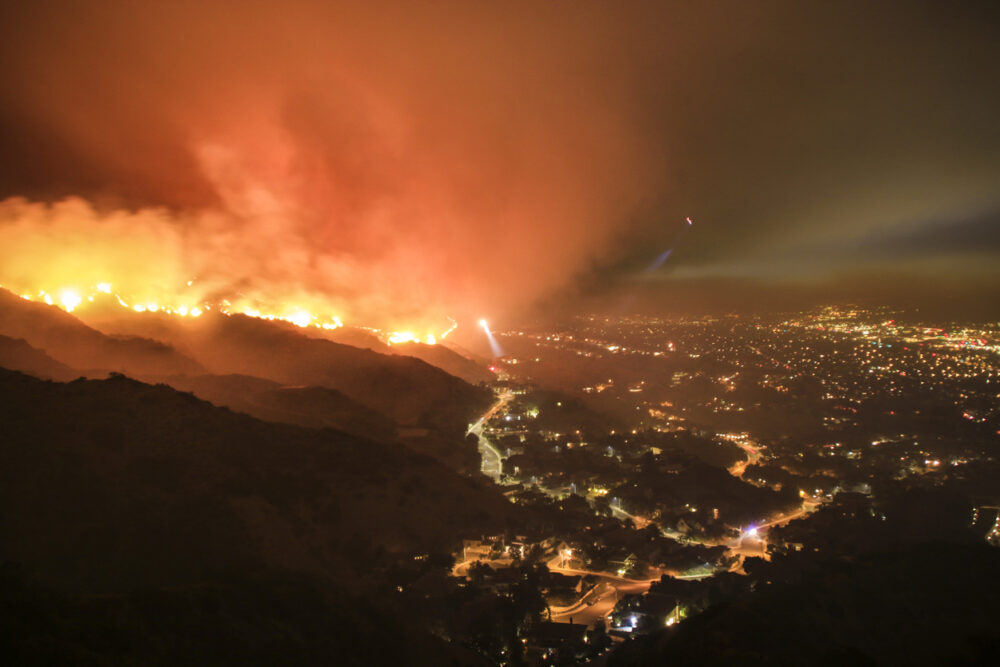
Climate-Driven Disaster Costs in First Half of 2025 Outpace All Previous Records

Extreme weather events have already caused $101 billion across the U.S., scientists confirm.

Hillside wildfire, glowing flames, thick smoke rising above city lights, night scene, documentary style, no people.
©Image license via iStock

The first half of 2025 has set a grim new record for climate-related destruction. According to recent analyses by NOAA and insurance researchers, more than $100 billion in damage has already been recorded from wildfires, severe storms, and flooding across the United States. Experts say the pace and scale of these disasters mark the costliest start to any year on record, highlighting how a warming climate is intensifying weather extremes and straining disaster-response systems nationwide.

Read more

The Hidden Ways Climate Change Is Making Us More Susceptible to Illness

Scientists say rising heat, pollution, and stress on the planet may weaken immune responses, increasing disease risk.

©Image license via Canva

Climate change isn’t just reshaping the planet—it’s affecting our bodies in ways scientists are only beginning to understand. New research shows that rising global temperatures, worsening air pollution, and changes in ecosystems are weakening the human immune system. Heat stress, nutrient loss in crops, and exposure to new pathogens all play a role. Experts warn this could make populations more vulnerable to infections, allergies, and chronic illness as the planet continues to warm.

Read more

Discovery of Ancient Stone Megastructures Reveal Europe’s Earliest Organized Hunting System

New LiDAR scans reveal vast stone funnels once used by prehistoric Europeans to trap wild herds.

©Image license via Chat GPT

Archaeologists have uncovered massive stone megastructures hidden beneath the forests of the Karst Plateau along the Slovenia–Italy border, revealing Europe’s earliest large-scale hunting system. The funnel-shaped walls, stretching up to 3.5 kilometers, were designed to channel herds of red deer into pits or enclosures. Built before the Late Bronze Age, these structures show that prehistoric Europeans hunted cooperatively on an organized, landscape-wide scale—comparable to systems once thought unique to ancient communities in the Middle East and North Africa.

Read more

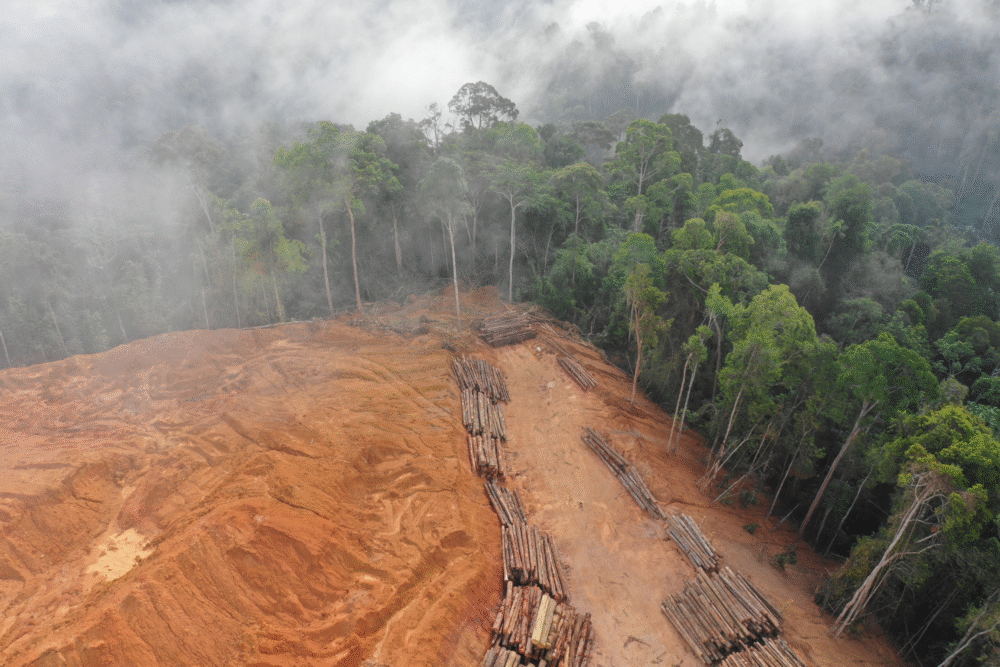
Deforestation Isn’t Just Killing Trees—It’s Fueling a Global Health Crisis

Scientists warn that deforestation is increasing disease outbreaks by disrupting ecosystems and driving wildlife closer to humans.

©Image license via Canva

As forests disappear, scientists say the risks to global health are growing. Deforestation doesn’t just destroy habitats—it alters the balance between humans, animals, and pathogens. Studies show that clearing forests for agriculture and development exposes people to new diseases carried by displaced wildlife, including viruses linked to Ebola, malaria, and COVID-like outbreaks. Combined with loss of biodiversity and rising temperatures, these changes are creating the perfect conditions for future pandemics and worsening public health crises worldwide.

Read more

Scientists Say Brain Stimulation Could Unlock Expanded States of Consciousness

Scientists are exploring whether linking the human brain to quantum computers could temporarily expand conscious awareness.

©Image license via Canva

A new study published in the journal Entropy proposes a bold experiment: entangle a human brain with a quantum computer to test whether consciousness is rooted in quantum processes. Lead author Hartmut Neven of Google Quantum AI Lab and co-author Christof Koch suggest that if successful, the experiment could produce an “expanded quantum superposition,” resulting in heightened awareness or creative cognition. While the theory remains far from practical, it marks a provocative step in the quest to understand and potentially alter human consciousness.

Read more

Why Humans Still Can’t Reach Mars—And What’s Holding Us Back

Decades of research and billions in funding haven’t solved the deadly challenges of sending humans to Mars.

©Image license via Canva

For decades, Mars has been humanity’s ultimate destination—a world within reach but just beyond our grasp. Despite huge advances in rocket design and life-support systems, the Red Planet remains off-limits to people. NASA, SpaceX, and international space agencies agree that the obstacles are immense: radiation exposure, long-duration isolation, and the sheer distance from Earth. Scientists say reaching Mars isn’t science fiction—it’s science limitation—and overcoming those barriers will define the next century of exploration.

Read more

‘Mirror Life’ Could Be the Next Biotech Threat—Here’s What It Means

Synthetic “mirror life” organisms defy natural biology—and could rewrite the rules of evolution.

©Image license via Canva

Researchers are experimenting with a strange new kind of biology called “mirror life,” built from molecules that are reversed versions of those in all known organisms. These synthetic life forms might resist viruses and open doors to new medicines—but they also pose risks no one fully understands. Because they can’t interact with normal DNA, they could behave in unpredictable ways, raising tough questions about containment, safety, and the limits of scientific control.

Read more

If Civil Unrest Erupts, These American Cities Could Become Unrecognizable Overnight

Analysts say some U.S. cities could face rapid collapse if widespread unrest overwhelms vital systems.

©Image license via Wikimedia Commons

A new analysis of urban infrastructure, population density, and social vulnerability suggests that some American cities could change dramatically within hours if widespread civil unrest were to erupt. Experts point to factors like aging power grids, limited evacuation routes, and deep political divisions that could turn demonstrations into cascading crises. While researchers stress that such scenarios are unlikely, they warn that recent years have revealed just how fragile modern cities can become under extreme social pressure.

Read more

The Oceans Are Rising at a Speed Not Seen in 4,000 Years, Scientists Say

New data reveal modern sea levels are climbing faster than at any point in the past four millennia—driven largely by human-caused warming.

©Image license via Canva

A landmark study published in Nature by a team of researchers from Rutgers University has found that global sea levels are rising faster today than at any time in the past 4,000 years. By examining ancient coral reefs, mangrove deposits, and sediment cores, scientists reconstructed sea-level patterns and discovered a sharp acceleration beginning with the industrial era. The study concludes that human-driven warming and melting polar ice are propelling modern oceans into conditions unseen in recorded history.

Read more