
Evolution may favor complex minds more often than we once believed.

Neuroscientist Nikolay Kukushkin, author of One Hand Clapping, argues that human intelligence may not be a cosmic accident after all. Instead of being a once-in-a-universe fluke, our thinking abilities may be the result of how life naturally became more complex over billions of years.
Kukushkin suggests that once life crossed certain biological milestones, advanced cognition became increasingly likely. His idea builds on a familiar pattern in evolution. When very different organisms face similar problems, they often arrive at similar solutions. From this perspective, intelligence isn’t just lucky—it’s useful, and usefulness tends to get repeated by evolution.
That doesn’t mean humans were guaranteed. But it does challenge the long-standing assumption that our mental abilities were purely random good fortune.
1. What makes human intelligence “special”
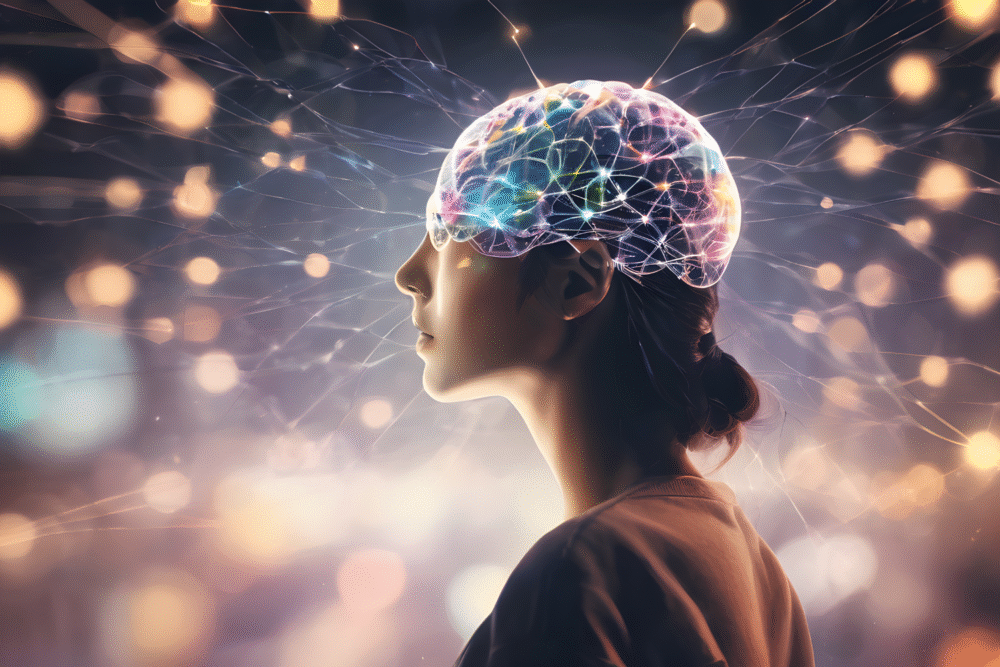
Human intelligence stands out because of what it allows us to do. We can think abstractly, use complex language, plan far ahead, and reflect on our own thoughts. These abilities rely on a large, highly interconnected brain with regions devoted to memory, decision-making, and social understanding.
Other animals are clearly intelligent too, but humans combine many cognitive skills at once. Neuroscientists increasingly see this as the result of long evolutionary fine-tuning rather than a sudden or mysterious leap.
2. The traditional view: chance and contingency
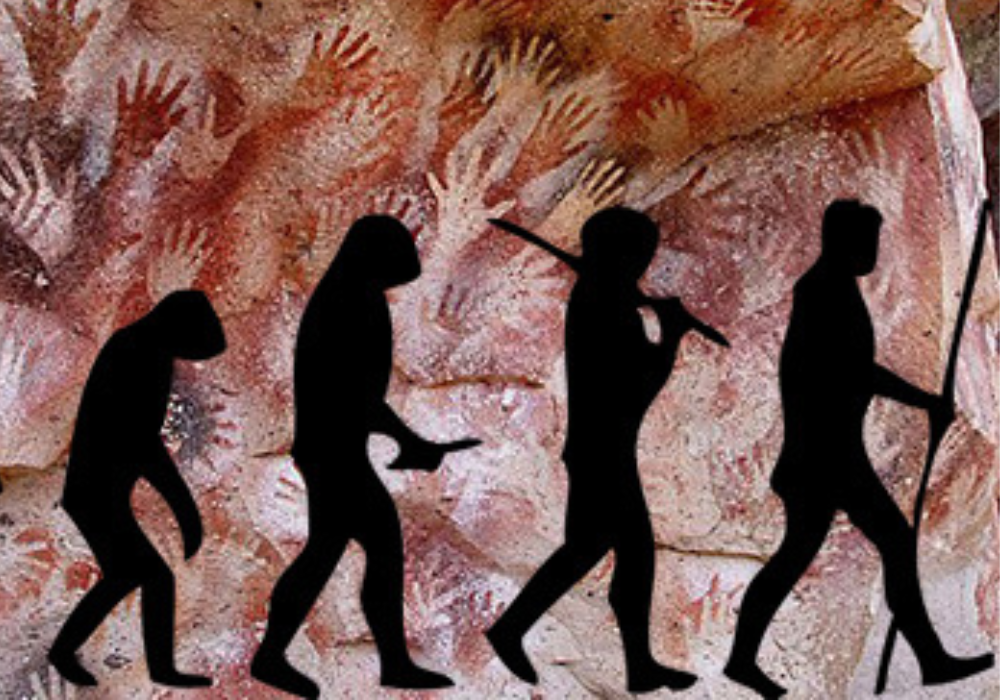
For decades, many scientists viewed human intelligence as extremely unlikely. Evolution depends on random mutations, shifting environments, and unpredictable events like mass extinctions. From that viewpoint, replaying Earth’s history would almost certainly produce a different outcome.
This way of thinking emphasizes “contingency,” the idea that chance events play an outsized role in shaping life. Humans, under this model, are just one improbable outcome among countless possibilities.
3. Why some traits keep reappearing in evolution

One thing evolution shows again and again is convergence. Unrelated species often evolve similar traits when they face similar challenges. Eyes evolved independently in multiple lineages. Wings did too.
Supporters of Kukushkin’s view argue that intelligence may follow the same pattern. When environments reward learning, prediction, and flexible behavior, nervous systems tend to become more complex over time.
4. How early nervous systems set the stage

The first nervous systems were simple networks that helped organisms sense and respond to their surroundings. Once those systems existed, evolution didn’t have to start over—it could build on them.
Over hundreds of millions of years, connections became denser and more specialized. Memory improved, coordination increased, and organisms became better at responding to changing conditions. Those changes laid the groundwork for more advanced thinking.
5. Why social life pushed brains even further

Living in groups places heavy demands on cognition. Animals that cooperate, compete, or communicate benefit from understanding others’ behavior and intentions.
This “social brain” effect appears across many intelligent species. It suggests that intelligence doesn’t come just from having a big brain, but from needing to navigate complex social worlds where flexibility and prediction offer real survival advantages.
6. What Kukushkin’s perspective adds to the debate

Kukushkin argues that once life crosses certain thresholds, like multicellularity, nervous systems, and complex sensory processing, the path toward flexible intelligence becomes easier to follow. In One Hand Clapping and related discussions, he describes cognition as something evolution keeps building on rather than inventing from scratch.
This doesn’t mean humans were inevitable. But it suggests that evolution’s basic machinery makes intelligence more accessible once key steps are in place. Instead of a single lucky break, human-level cognition may be one outcome of evolution exploring increasingly adaptive strategies.
Seen this way, intelligence looks less like winning a lottery and more like walking a path shaped by pressures to adapt in unpredictable environments.
7. Signs of advanced cognition in other animals

Humans aren’t alone in showing complex thinking. Dolphins use sophisticated vocal communication. Certain birds can solve multi-step puzzles. Elephants display long-term memory and emotional awareness.
These examples suggest that intelligence can emerge through different evolutionary routes. You don’t need a human-style brain for sophisticated cognition to appear.
8. What this means for the search for alien life

If intelligence tends to emerge once evolution reaches certain levels of complexity, it could change how scientists think about life elsewhere in the universe. The question becomes less about luck and more about conditions.
Planets with long-term stability, rich ecosystems, and enough time may be more likely to produce intelligent life. That intelligence wouldn’t necessarily look human, but it might still involve learning, prediction, and flexible behavior.
9. Why some scientists remain skeptical

Not everyone is convinced. Critics point out that Earth’s history includes many near-misses, mass extinctions, and environmental upheavals that could have easily derailed complex evolution.
They argue that while traits like eyes or wings may reappear easily, intelligence requires many fragile systems working together. Without very specific circumstances, evolution might stall at simpler forms indefinitely.
10. How this view reshapes humanity’s story
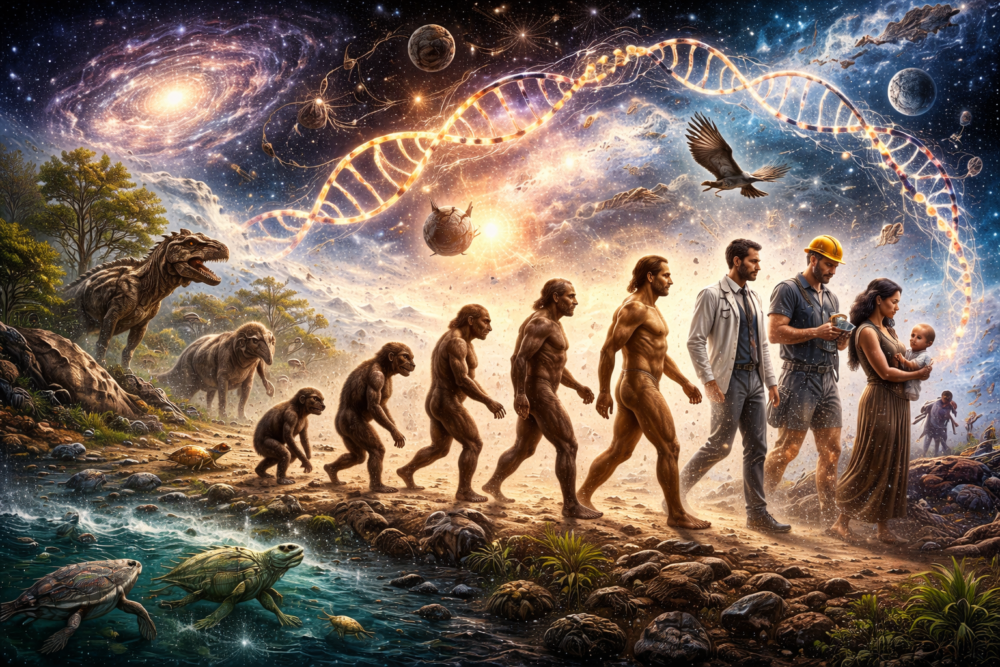
If intelligence was likely rather than miraculous, it changes how we see ourselves. Humans become part of a broader evolutionary pattern instead of a singular cosmic exception.
That idea can feel humbling, but it doesn’t diminish human achievement. It suggests that complex minds arise because life repeatedly tests strategies that help organisms survive uncertainty.
11. The bigger question scientists are now asking

The debate is shifting away from whether intelligence was pure chance and toward how often it might arise under similar conditions. Researchers are now asking which evolutionary pressures matter most and whether there are predictable routes from simple life to complex minds.
Answering that question brings together neuroscience, evolutionary biology, and planetary science. Whether intelligence is rare or common remains open, but focusing on patterns rather than accidents is reshaping how scientists approach one of life’s biggest mysteries.