Why Entire Civilizations Vanished and What They Left Behind

Ancient societies didn’t vanish overnight. They unraveled slowly, leaving lasting marks on the world.

©Image license via Canva

When civilizations disappear, it’s often framed as a sudden mystery or dramatic collapse. In reality, most declines unfolded over generations, shaped by environmental stress, social strain, and decisions that slowly narrowed a society’s options. Collapse was rarely caused by a single event.

Archaeologists now know these cultures left behind detailed clues in landscapes, ruins, and everyday objects. Those remnants reveal not just how people lived, but how pressure built over time.

Taken together, these stories show why civilizations failed—and what they unintentionally left behind for the world that followed.


Read more

Scientists Say the Universe May End Much Sooner Than We Thought

New calculations suggest the universe’s “end date” may be far sooner than scientists once estimated.

©Image license via Canva

The universe isn’t ending tomorrow, but scientists are still arguing about its ultimate expiration date. For decades, the far-future story focused on black holes slowly evaporating over an almost unimaginable timescale.

Now a new line of research suggests the countdown might be shorter—not because the universe is in danger, but because more things may “evaporate” over time than we realized.

It’s still a number with dozens of zeros. But the shift changes how we picture the very last chapter of everything.

Read more

A Massive Shark That Swam 300 Million Years Ago Was Just Found in Arkansas

A giant fossil shark in Arkansas is rewriting what we know about ancient oceans and life before dinosaurs.

©Image license via Planet Sage/Chat GPT

When most people picture prehistoric seas, images of dinosaurs don’t immediately come to mind. But long before the age of dinosaurs, Earth’s oceans were ruled by other massive predators.

Recently, paleontologists uncovered fossil remains of an enormous ancient shark in what is now Arkansas. It lived around 300 million years ago, and its size and features are revealing new details about the ecosystems of deep time.

This wasn’t just a big fish; it was part of a world where sea levels, climates, and animal communities were very different from today’s oceans. The discovery gives scientists a rare snapshot of how life adapted in ancient waters long before familiar creatures emerged.

Read more

This 4,000-Year-Old Tablet Once Warned That “A King Will Die”—Archaeologists Finally Read It

Decoded tablets reveal how Babylonians read lunar eclipses as warnings of doom for kings and kingdoms.

©Image license via Planet Sage/Chat GPT

A clay tablet can’t shout, but this one comes close: it warns that under certain skies, “a king will die.”

Researchers have now fully translated four 4,000-year-old Babylonian cuneiform tablets that link lunar eclipses to specific omens: war, famine, plague, and political collapse. The tablets sat in a museum collection for decades, mostly unread.

The texts don’t predict the future in a modern sense. They show how trained advisors watched the moon, matched eclipse details to an omen list, and then tried to protect the ruler with tests and rituals. It’s a window into a world where the night sky felt like a coded message.

Read more

Inside the Room of the Last Supper: Hidden Messages That Shed New Light

Hidden medieval graffiti in Jerusalem’s Cenacle reveals who traveled far to reach a revered holy site.

©Image license via Canva

For centuries, pilgrims have visited a stone hall on Mount Zion in Jerusalem long believed by many to be the place of Jesus’ Last Supper. The room appears quiet today, but its walls have been quietly recording human presence for generations.

Using advanced imaging techniques, researchers recently uncovered dozens of hidden inscriptions, symbols, and drawings etched into the stone. Left by medieval visitors, these marks transform the room into a rare record of pilgrimage, devotion, and movement across the ancient world.

While the discoveries don’t prove this was the actual Upper Room, they reveal who believed it mattered, and how far people traveled to be there.

Read more

12 Signs You’re Experiencing a Spiritual Awakening—Not a Breakdown

When emotions, perceptions, and priorities start shifting, it may signal growth rather than something going wrong.

©Image license via Canva

Everyone talks about spiritual awakenings like they arrive with trumpets and lightning bolts, but the reality is often much quieter and confusingly similar to what some might call a crisis. You might be experiencing profound spiritual growth without realizing it, mistaking the discomfort of expansion for something going wrong.

Think of it like a hermit crab outgrowing its shell – there’s a necessary period of vulnerability and discomfort before finding a new home. The symptoms of spiritual evolution can masquerade as ordinary life problems or even mental health concerns. But there are subtle distinctions that separate genuine awakening from garden-variety existential dread. Here are twelve signs you might be experiencing spiritual growth rather than just having a really weird month.

Read more

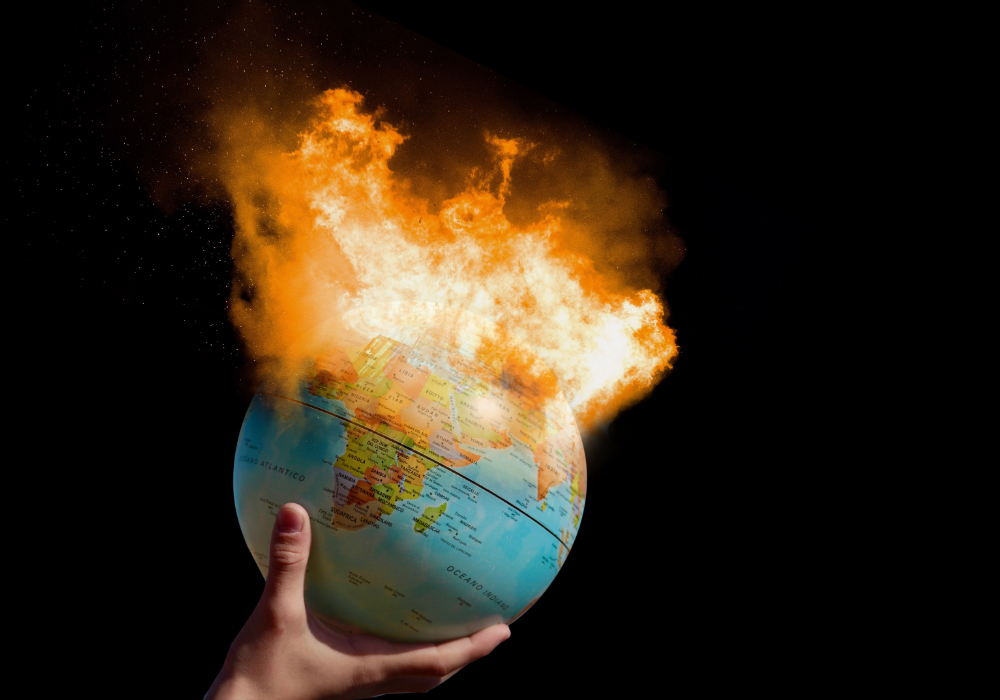
10 Everyday Items That Harm the Planet More Than Most People Realize

Small daily choices can quietly add up, creating far more environmental damage than most people ever suspect.

©Image license via Canva

Most people don’t set out to harm the planet, but everyday choices have a bigger impact than they realize. Convenience often wins over sustainability, and many household staples contribute to pollution, resource depletion, and long-term damage. Items that seem harmless—like plastic utensils, disposable razors, or single-use coffee cups—are often some of the biggest environmental offenders.

Even when companies claim their products are recyclable, many still end up in landfills or oceans, where they take centuries to break down.

These common items may seem like small conveniences, but their effects are more severe than expected. If they’re still part of your routine, it’s time to rethink your choices and opt for more planet-friendly alternatives. Every small change adds up to a more sustainable future.

Read more

If You Feel Short of Breath but Your Lungs Are Fine, Your Nervous System May Be Involved

Breathing issues aren’t always caused by the lungs—and the reason can be surprisingly subtle.

Living room, woman clutching chest, frontal medium shot, daylight, documentary style, one person.
©Image license via iStock

Feeling short of breath can be frightening, especially when tests come back normal. Many people are told their lungs and heart are fine, yet the sensation of not getting enough air keeps returning. That disconnect often leads to frustration and anxiety.

What’s less commonly explained is how closely breathing is tied to the nervous system. Stress responses, muscle tension, and sensory signaling can all change how breathing feels, even when oxygen levels are normal.

Understanding the nervous system’s role can help explain symptoms that feel very real, even without a clear medical cause.

Read more

Technology Is Changing Daily Life Faster Than Laws Can Respond

As everyday tools get smarter, the rules meant to protect people are struggling to keep pace.

©Image license via Canva

Not long ago, new technology arrived slowly enough that people could get used to it. You bought a device, learned how it worked, and only later did society start debating its downsides. That rhythm gave everyone time to catch their breath.

Today, technology slips into daily life almost overnight. Updates appear automatically. Features turn on by default. Tools become essential before most people realize they’ve adopted them.

The problem isn’t innovation itself. It’s the growing gap between how fast technology moves and how slowly the rules meant to protect people are able to respond.

Read more

These Everyday Products Are Being Quietly Recalled — and Many People Miss the Warnings

Safety notices are increasing for common items, often without the headlines most shoppers expect.

©Image license via Pix4free

Many product recalls don’t arrive with breaking-news banners or urgent phone alerts. Instead, they’re quietly posted on government websites or buried in retailer notices that most shoppers never see. That means people often keep using recalled items long after problems are identified.

What’s striking is how ordinary many of these recalled products are. Recent cases show that snacks, supplements, appliances, and children’s items can all be affected — often without widespread public attention.

Read more