
A harmless-looking reef creature is feared by divers for reasons you might not expect.

Few ocean creatures are as misunderstood—or as feared—as the stonefish. At first glance, it looks like nothing more than a lumpy rock resting on the seafloor. But this strange, perfectly camouflaged fish has earned a reputation as one of the world’s deadliest marine animals. Divers, swimmers, and scientists all treat it with serious respect, not because of how it looks, but because of what it hides. Learning how it survives, hunts, and defends itself reveals why this creature has become one of the ocean’s most notorious predators.
1. It’s Nearly Impossible to See Until You’re Right on Top of It
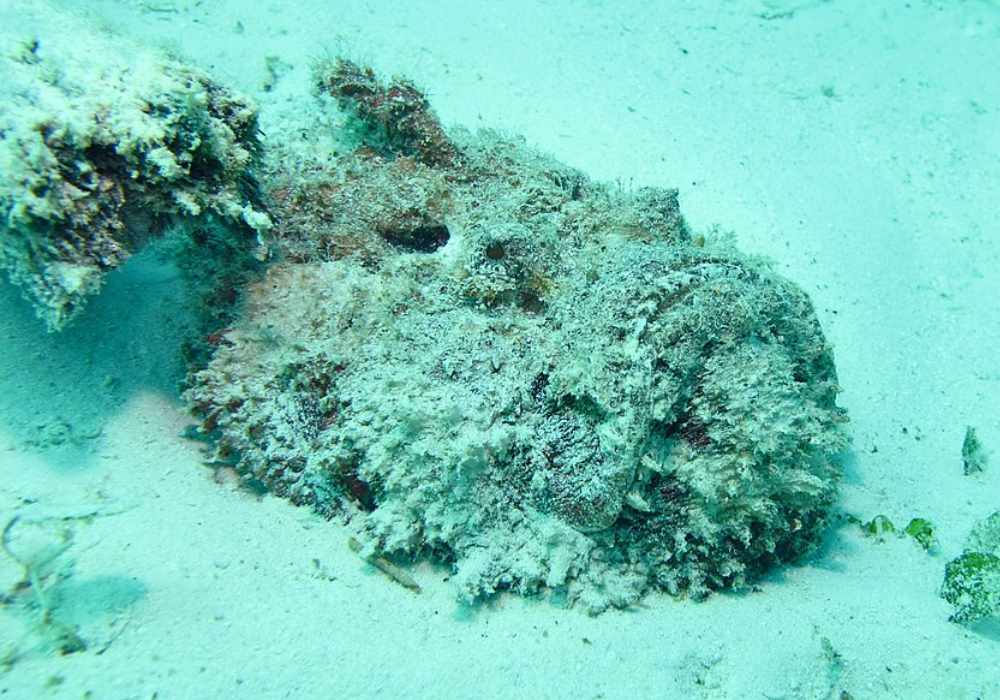
The stonefish’s camouflage is its greatest superpower. Covered in algae-like bumps and mottled colors, it blends seamlessly into coral reefs, rocky areas, and sandy bottoms. Most people swim right past one without ever realizing it’s there.
This incredible disguise helps it avoid predators and ambush prey, but it also poses a major risk to humans. Because people often mistake it for a harmless rock, accidental encounters happen far more often than anyone expects.
2. It’s a Master Ambush Predator
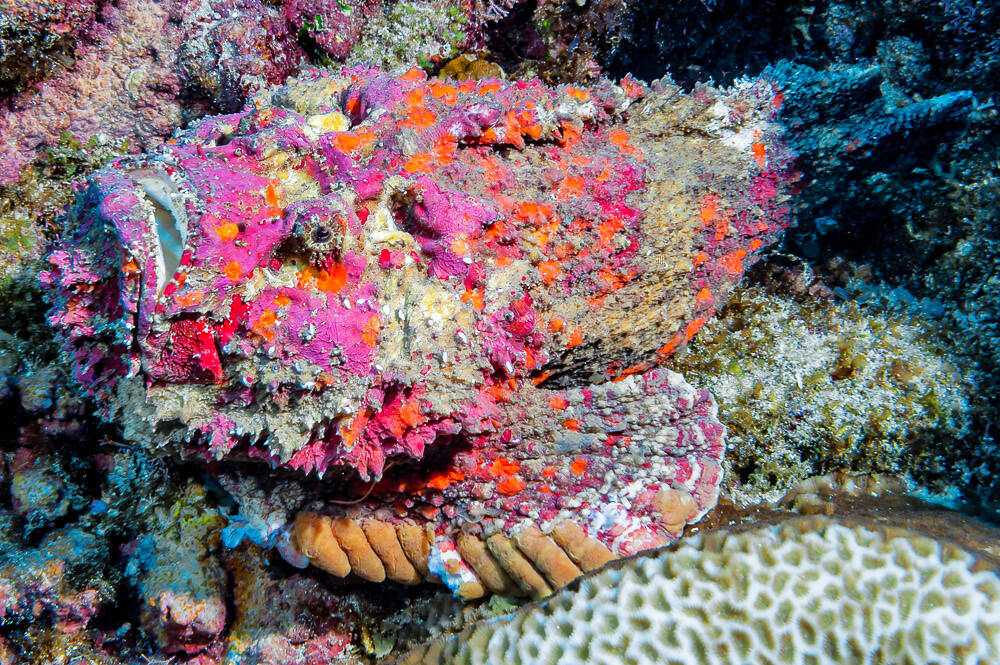
Stonefish don’t chase their prey—they wait. Perfectly still, they lie on the seafloor until an unsuspecting fish or shrimp swims too close. Then, in a flash faster than a blink, they strike.
Their lightning-fast bite happens in milliseconds, making them one of the quickest predators in the ocean. This feeding strategy is part of what makes them so dangerous: their stillness, combined with camouflage, makes them almost invisible until it’s too late.
3. The Danger Comes From Stepping on One
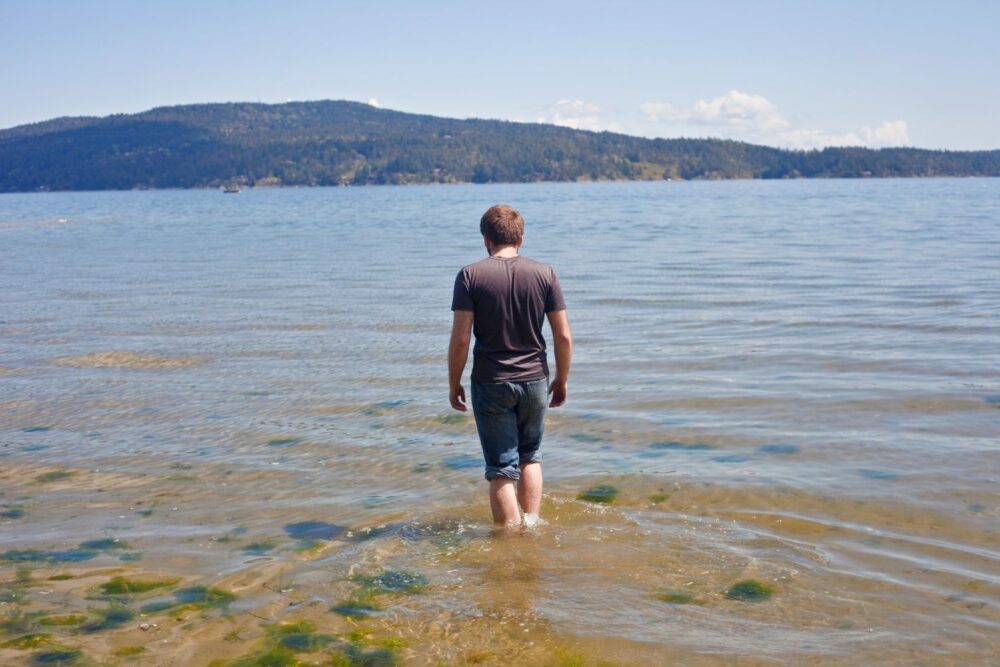
The stonefish doesn’t seek out conflict with humans. Most injuries happen accidentally when someone steps on one hidden in shallow water. When pressed, its sharp dorsal spines automatically rise, delivering its defensive weapon.
Because stonefish often rest near beaches, tide pools, and shallow reefs, these encounters are more common in popular swimming and snorkeling areas across the Indo-Pacific region.
4. Its Spines Function Like Natural Hypodermic Needles
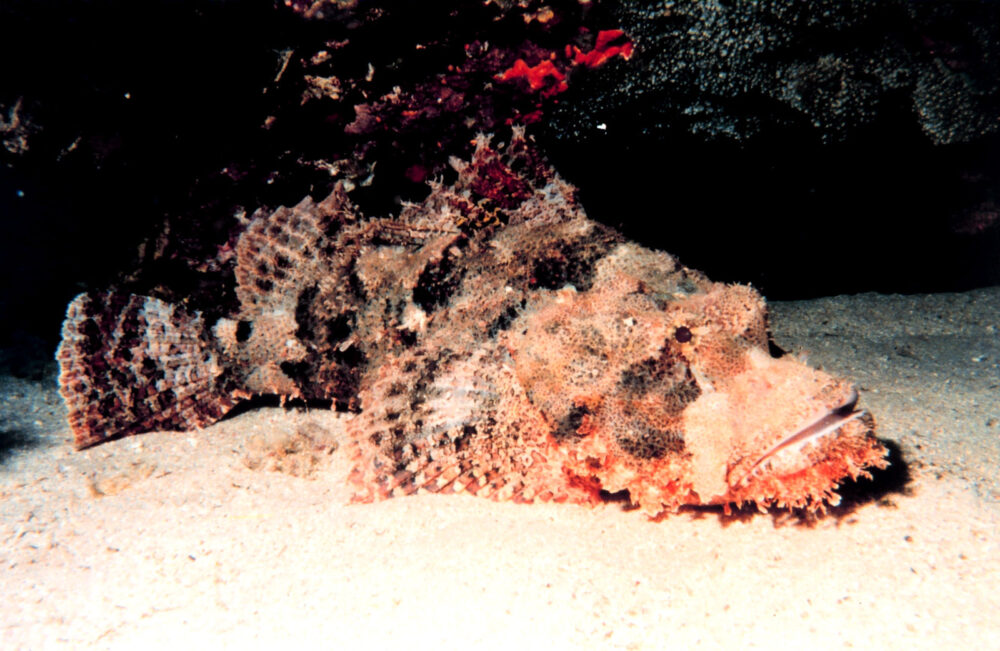
Along its back are thirteen hard, hollow spines connected to venom glands. When pressure is applied, these spines inject venom deep into tissue, much like a needle.
This system evolved entirely for self-defense, not aggression. The venom is designed to discourage predators such as sharks or large fish, but humans who accidentally apply pressure get the full effect of this biological defense.
5. The Pain Is Infamously Intense

People who’ve experienced a stonefish sting often describe the pain as immediate, overwhelming, and unlike anything else. Many compare it to a crushing or burning sensation that spreads quickly through the limb.
The reaction is so strong that victims sometimes go into shock. Lifeguards in high-risk areas are trained to respond quickly because the physical effects can escalate fast if untreated.
6. Faster Treatment Makes a Huge Difference

While a stonefish sting can be extremely serious, prompt medical care saves lives. Hot water immersion is often used as first aid because heat helps break down venom proteins and reduce symptoms.
Hospitals in regions where stonefish live typically carry antivenom. Getting proper treatment quickly can significantly improve recovery time and reduce complications.
7. It Lives in Beautiful, Popular Destinations

The stonefish is found throughout the Indo-Pacific, including Australia, Southeast Asia, Fiji, Hawaii, and parts of the Indian Ocean. Many of these areas attract millions of swimmers, snorkelers, and divers every year.
Because people explore shallow reefs barefoot or with thin footwear, encounters can happen without warning. Local guides and dive operators often warn visitors to shuffle their feet or watch where they step.
8. Despite Its Reputation, It Rarely Attacks

Stonefish aren’t aggressive creatures. They don’t hunt humans, chase swimmers, or pursue interaction. Most of the risks come from their stillness and camouflage, not their behavior.
In fact, the stonefish would prefer to be left alone. It only uses its spines reactively when stepped on or disturbed, making awareness the best form of prevention.
9. It Can Survive Out of Water for Hours

One surprising trait is the stonefish’s ability to endure long periods out of water. During low tide, they can remain motionless on rocks or in tide pools while still fully alive.
This ability increases the chance of accidental contact from beachgoers who may not realize a living fish is underfoot. It’s one more reason why local residents remain cautious around rocky shorelines.
10. Its Venom Evolved to Stop Large Predators

The stonefish’s venom isn’t just for small threats—it’s powerful enough to deter big predators like sharks or large groupers. Its defensive strategy ensures it has a fighting chance even against much larger animals.
Humans are not its intended target, but because of our size and weight, stepping on one triggers a large dose. This evolutionary mismatch explains why the effects on people can be so severe.
11. Knowing How to Avoid Them Is the Best Protection

Beach safety experts recommend simple precautions: wearing thick-soled water shoes, shuffling feet in sandy areas, and being cautious around rocky or coral-rich shorelines.
Education is key. The more people understand about stonefish behavior and habitat, the safer popular coastal destinations become. Respecting their space—and learning to spot their hiding places—turns a potentially dangerous encounter into a safe and informed adventure.