
Footprints frozen in time reveal where dinosaurs once moved across ancient landscapes.

These fossilized footprints aren’t bones locked behind museum glass. They are frozen moments from the Age of Dinosaurs that you can still see in the open world today. Preserved in stone, these tracks record where dinosaurs walked, paused, and sometimes moved together across soft ground millions of years ago.
From riverbeds in the United States to cliffs, beaches, and mountain walls across Europe and South America, each site captures a different prehistoric scene. Some tracks are enormous and unmistakable, while others reveal subtle details like toe marks or shifting weight.
Together, these places offer one of the most direct connections we have to dinosaur behavior, showing not just what dinosaurs were, but how they moved through their ancient landscapes.
1. In Glen Rose, Texas, dinosaur footprints still line the Paluxy River
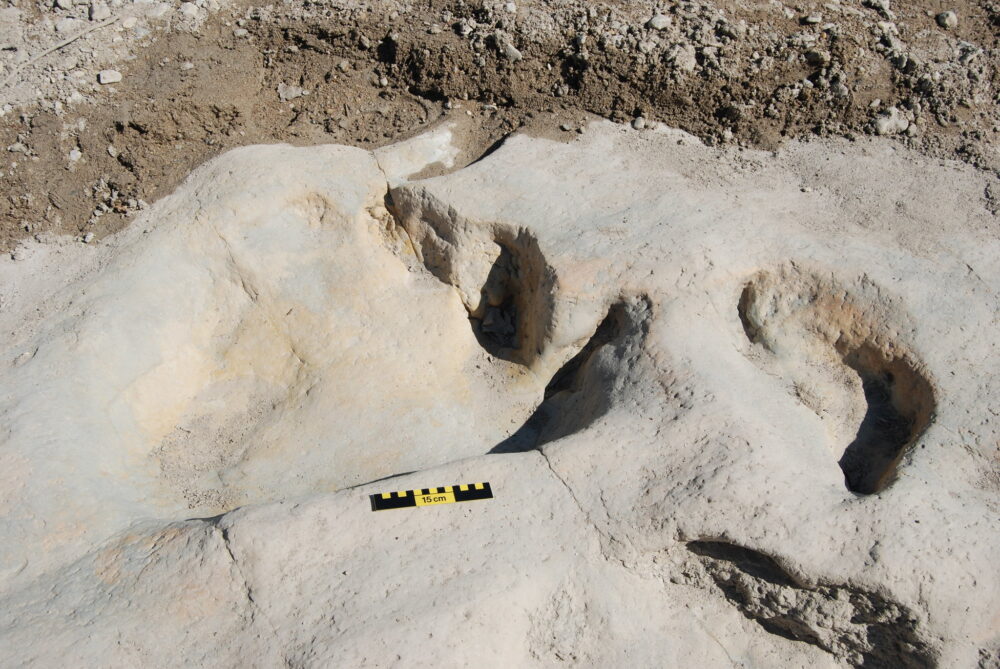
At Dinosaur Valley State Park near Glen Rose, massive sauropod and theropod tracks are preserved directly in the bed of the Paluxy River. During dry seasons, dozens of footprints emerge, some measuring nearly three feet across.
These impressions formed about 113 million years ago when dinosaurs crossed muddy riverbanks. Today, visitors can walk beside the tracks, following paths once taken by giant animals in the Early Cretaceous.
2. Near Denver, Colorado, Dinosaur Ridge traces ancient paths through stone
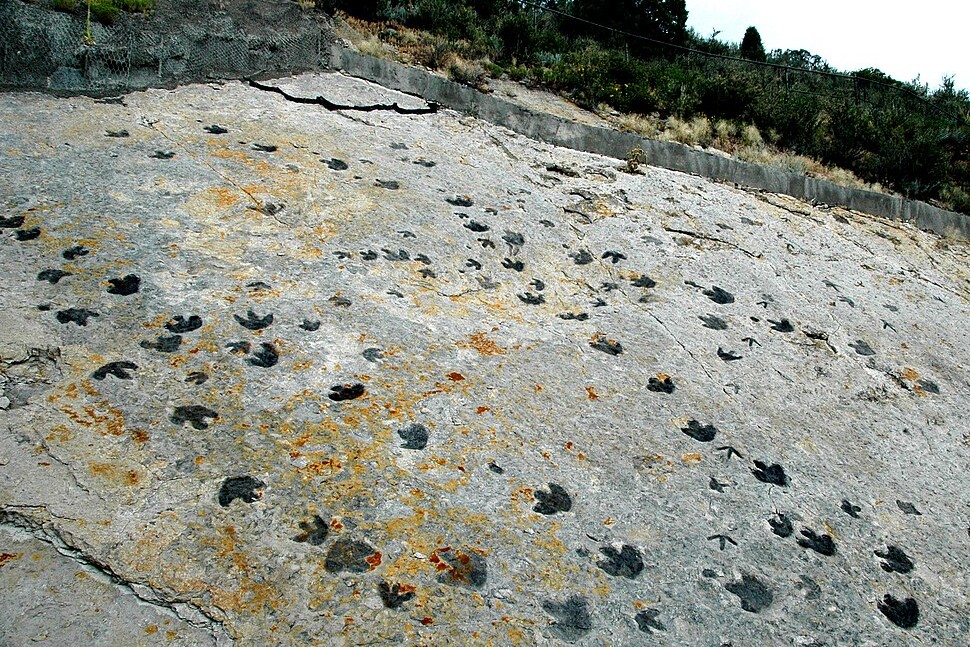
Just west of Denver, Dinosaur Ridge preserves more than 300 dinosaur footprints along a tilted sandstone ridge. The tracks date to both the Jurassic and Cretaceous periods.
Marked trails allow visitors to follow trackways that once crossed shallow floodplains. The site clearly shows stride length, direction, and movement patterns that scientists still study today.
3. On Scotland’s Isle of Skye, dinosaur tracks appear along the shoreline
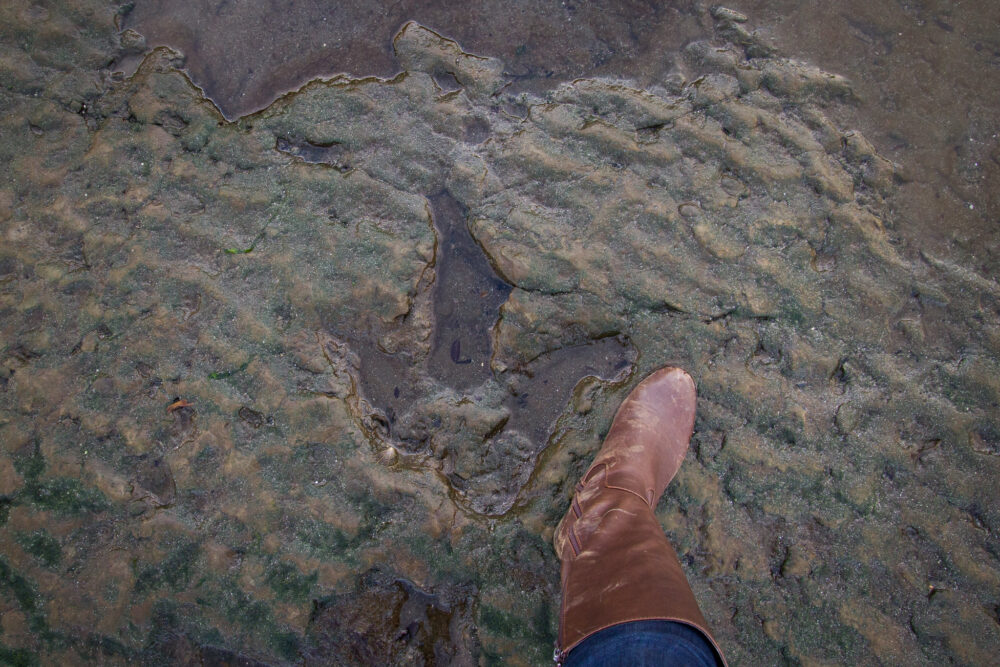
Along the Isle of Skye’s rocky coast, three-toed dinosaur footprints emerge on tidal platforms, especially near places like An Corran beach. These tracks date back to the Middle Jurassic.
Seeing dinosaur footprints beside crashing waves creates a striking contrast. The coastal setting also shows how changing sea levels exposed and preserved these rare impressions.
4. In Torotoro, Bolivia, thousands of tracks blanket ancient lakebeds
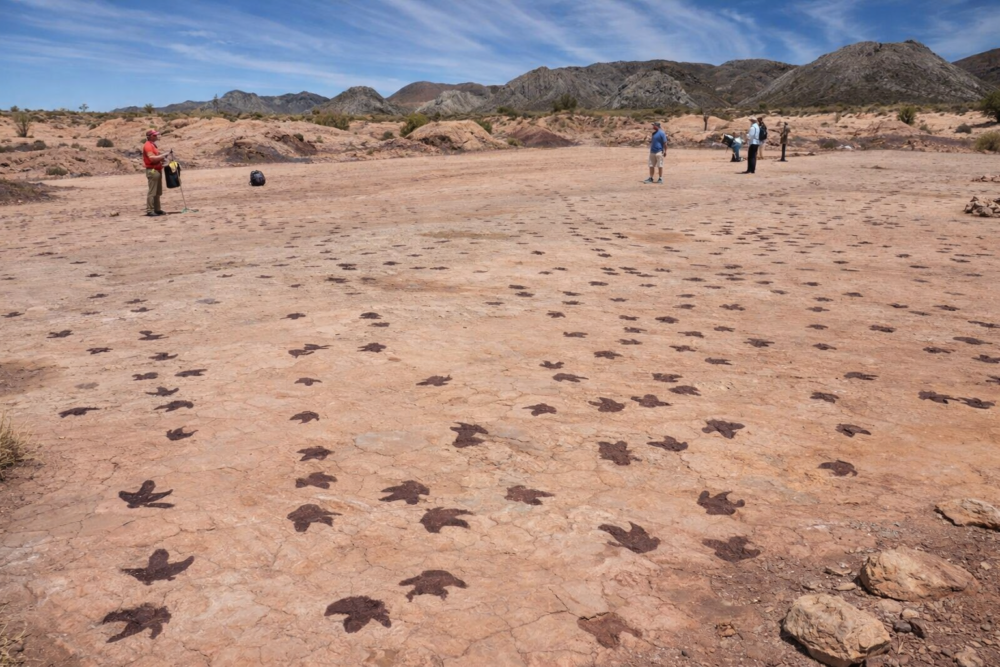
Torotoro National Park contains one of the densest collections of dinosaur footprints on Earth. Thousands of tracks from multiple species cover exposed rock surfaces formed from ancient lake sediments.
Some trackways suggest group movement, while others show dinosaurs walking through shallow water. The sheer volume of footprints makes Torotoro a key site for understanding dinosaur behavior.
5. High above Switzerland, Lommiswil preserves giant sauropod steps
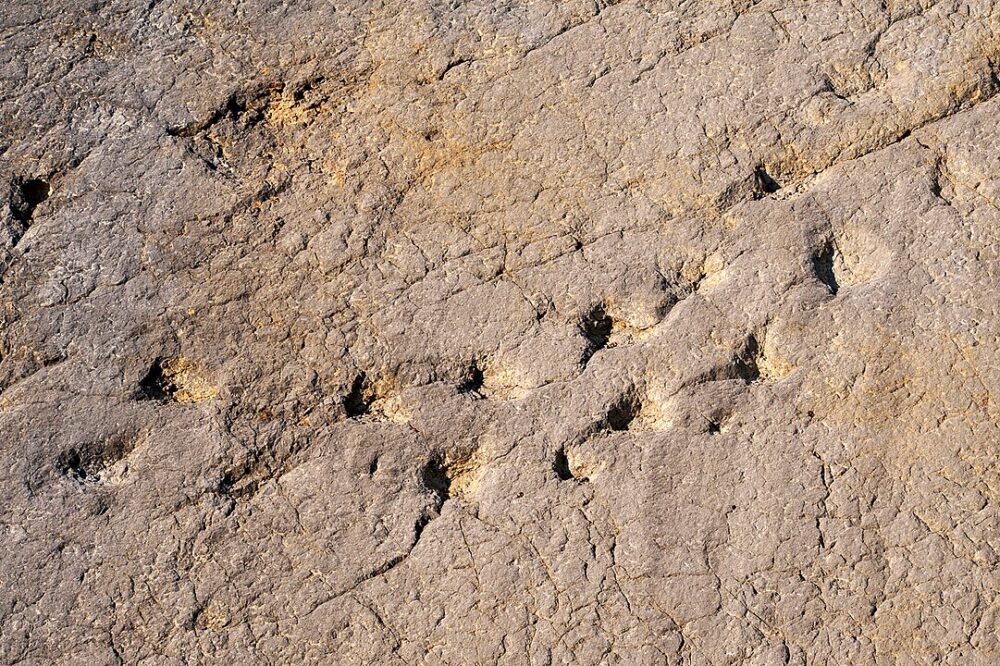
Near the village of Lommiswil in the Swiss Jura Mountains, nearly 500 sauropod footprints are preserved on a steep rock surface. These tracks date back about 150 million years to the Late Jurassic.
The footprints were exposed by quarrying and later protected. Their size and spacing help scientists estimate dinosaur weight, speed, and gait.
6. In Italy’s Stelvio National Park, dinosaur tracks now climb Alpine walls
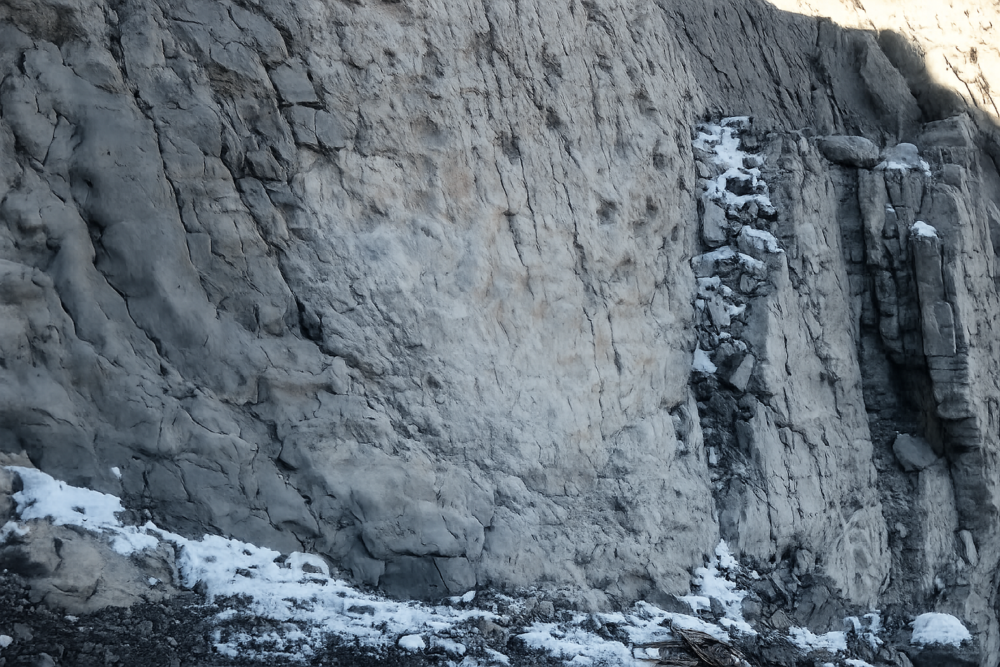
High in northern Italy’s Stelvio National Park, tens of thousands of dinosaur footprints are preserved on steep rock faces in the Fraele Valley near Livigno and Bormio. These tracks date back roughly 210 million years to the Triassic period, when the region was a low-lying floodplain.
Over millions of years, tectonic forces pushed these once-horizontal mudflats upward, leaving the tracks suspended high above today’s valleys. Some prints show clear toes and claw marks, while others form long, parallel trackways.
Scientists believe many of these tracks were made by long-necked herbivores moving together. Because of the terrain, researchers often rely on drones and remote mapping to study what may be one of Europe’s most extensive dinosaur track systems.
7. In southeastern Colorado, Picketwire Canyon hides a massive trackway
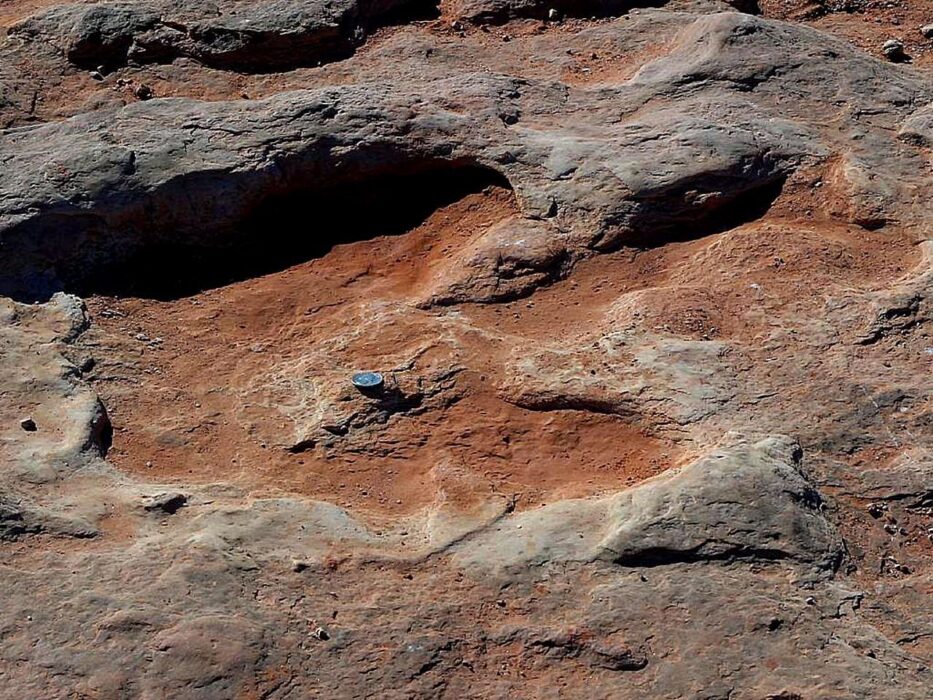
Picketwire Canyon contains one of the longest continuous dinosaur trackways in North America. Dozens of footprints stretch across sandstone layers in a remote, rugged landscape.
Most tracks belong to large, three-toed theropods from the Jurassic period. The canyon’s isolation adds to the sense of discovery for visitors who reach the site.
8. Along Spain’s Asturias coast, dinosaurs once walked beside the sea
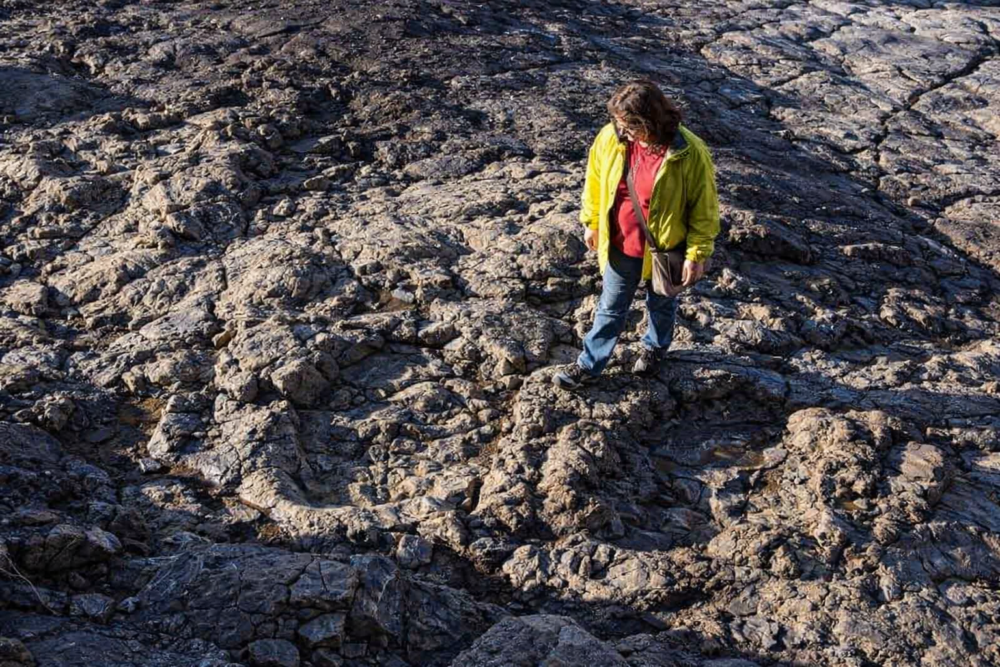
The Costa de los Dinosaurios in Asturias features numerous Jurassic-age footprints exposed on rocky beaches and cliffs. Many are visible only at low tide.
These tracks represent a wide range of dinosaur species and show how prehistoric animals moved along coastal environments that no longer exist.
9. In southern Utah, Red Cliffs preserves tracks in red sandstone
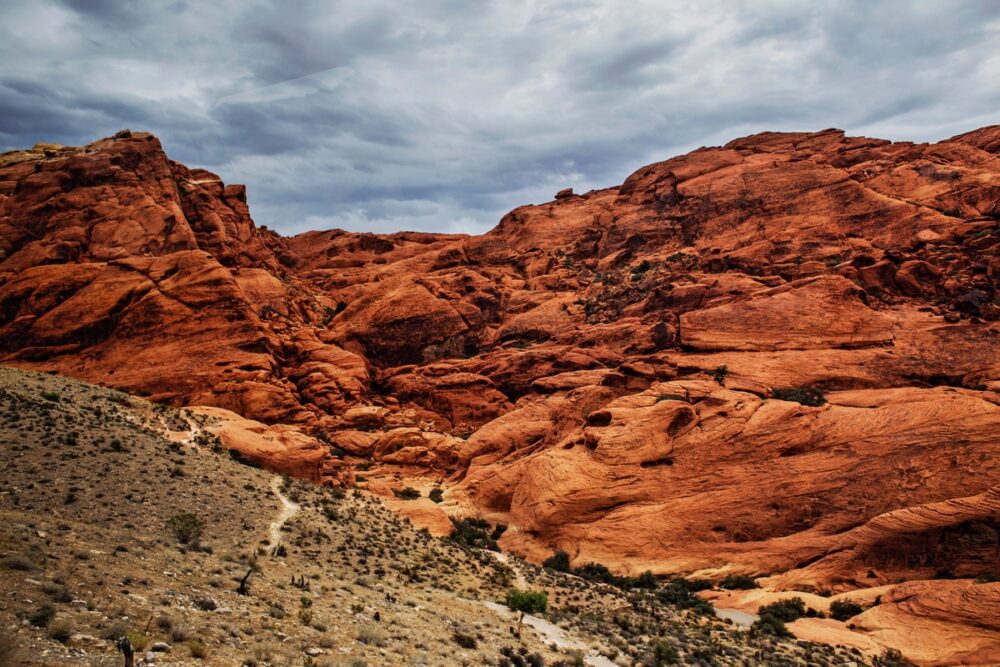
Within Utah’s Red Cliffs National Conservation Area, dinosaur footprints are embedded in red sandstone formed from ancient river systems. These tracks date back nearly 190 million years.
The site reveals how dinosaurs traveled along waterways in the early Jurassic, leaving impressions that hardened as sediments turned to stone.
10. Near Sucre, Bolivia, Cal Orcko displays tracks on a towering wall
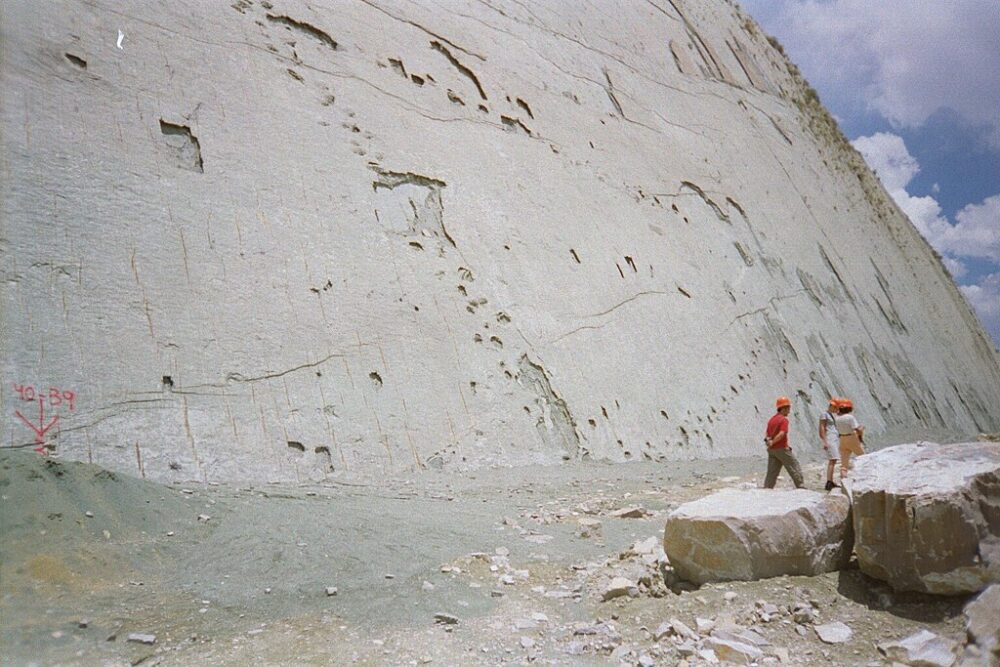
Cal Orcko is a near-vertical limestone wall covered with thousands of dinosaur footprints. Tectonic uplift turned what was once flat ground into a towering natural display.
Visitors can see multiple track layers stacked together, representing repeated dinosaur activity over time and making it one of the most visually dramatic sites in the world.
11. In Connecticut, Dinosaur State Park protects tracks under a dome
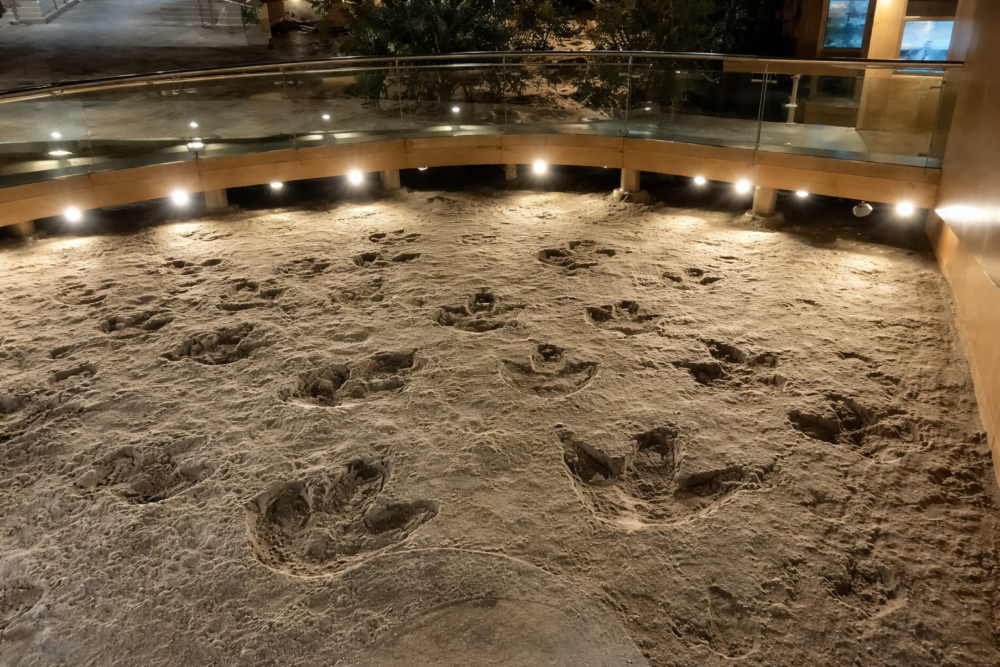
At Dinosaur State Park near Rocky Hill, hundreds of Early Jurassic footprints are preserved beneath a protective dome. The tracks were discovered during construction and later conserved.
These three-toed impressions offer a rare look at dinosaur activity in what was once a subtropical region of North America, long before humans appeared.
Each of these locations preserves a direct imprint of prehistoric life. Standing beside dinosaur tracks is one of the few ways people today can literally walk in the footsteps of creatures that ruled the Earth millions of years ago.