
A new “early warning” signal suggests the Atlantic’s heat conveyor may be less stable than we assumed.

The Gulf Stream is part of a bigger Atlantic conveyor belt that moves heat north and helps shape storms, sea level, and winter temperatures on both sides of the ocean.
Scientists call the larger system the Atlantic Meridional Overturning Circulation, or AMOC. Observations and models suggest it is likely weakening as the North Atlantic becomes warmer and fresher.
New studies are hunting for early warning signals that a tipping point could exist. Researchers also stress timing is uncertain: a slowdown is expected this century, but an abrupt collapse before 2100 is considered very unlikely, not impossible.
1. “Gulf Stream” isn’t the whole story

Most people say “Gulf Stream,” but scientists usually mean a whole circulation system. The Gulf Stream is the fast surface current along the U.S. East Coast, driven mostly by winds. The bigger engine is the AMOC, which includes warm surface flow north and cold deep water sinking and returning south.
When headlines say “collapse,” they’re usually talking about that overturning engine slowing sharply, not the surface current vanishing overnight. The risks are about heat transport and climate patterns, not a literal ocean highway shutting off.
2. The AMOC runs on salty, sinking water

The AMOC is powered by density. In the far North Atlantic, salty water cools, gets heavy, and sinks. That sinking helps pull more warm water north, like a pump that keeps cycling.
Add extra freshwater from rain, rivers, and melting ice, and the surface becomes less salty and less dense. If it can’t sink as easily, the pump weakens. Warming also changes density and layering, making it harder for deep water to form in the first place over time.
3. The “new signal” is about freshwater, not speed

So what is the “new signal”? Recent research focuses on measurable indicators that change as the AMOC approaches a tipping point, not just the current’s speed on a given day.
One physics-based idea tracks how much freshwater the AMOC transports at the South Atlantic boundary. In models, a specific shift in that freshwater transport shows up before an abrupt transition, making it a potential early warning sign scientists can watch for in real-world observations over the coming decades, too.
4. Another warning method looks for wobbling behavior

Other work looks for “early warning” patterns in ocean data, like rising variance and slower recovery after disturbances. If a system is losing stability, it can start wobbling more and snapping back more slowly.
A 2023 study used statistical methods on sea-surface temperature patterns to estimate a possible AMOC tipping window later this century, even suggesting mid-century as a plausible range. Many experts say the approach is intriguing but uncertain, because short records, natural cycles, and measurement gaps can fool the math.
5. Big assessments expect weakening, not a guaranteed collapse

Here’s the important reality check: major assessments expect the AMOC to weaken over the 21st century, but they don’t agree on the pace or exact consequences.
The IPCC’s assessment says an AMOC decline this century is very likely, while an abrupt collapse before 2100 is considered very unlikely. That doesn’t mean “never.” It means the best available evidence sees a big slowdown as the clearer near-term risk, with collapse a lower-probability tail that still worries researchers.
6. A weaker AMOC would reshape weather in uneven ways
If the AMOC weakens a lot, the impacts wouldn’t hit everywhere the same way. Northern and western Europe could see cooler winters compared with a world where the AMOC stayed strong, even while the planet overall keeps warming.
Along parts of the U.S. East Coast, a weaker AMOC can contribute to higher regional sea level, because ocean circulation affects how water “piles up.” Rain belts and storm tracks can also shift, changing drought and flood risks in some regions.
7. Scientists track clues like the “cold blob” and direct sensors

Scientists watch a famous patch of unusually cool water south of Greenland, sometimes called the North Atlantic “cold blob.” It can appear when less heat is carried north, so it shows up in many AMOC discussions.
This pattern is not a perfect AMOC meter, but it’s one clue. Researchers also use direct measurements from the RAPID array at 26.5°N, plus satellites and drifting floats. The hard part is separating natural ups and downs from a long-term trend in a very noisy ocean.
8. Is collapse “close”? The honest answer is uncertainty

So is collapse “close”? The honest answer is: we don’t know. Some studies argue the system may be nearer a threshold than older models suggested, especially under continued warming. Others find stabilizing processes that keep it from tipping quickly in most simulations.
What most experts agree on is this: the risk rises as warming and freshwater input rise. That’s why the phrase “early warning” matters. It’s a push to watch the right signals, improve monitoring in key regions, and reduce the chance of being blindsided.
9. “The Gulf Stream will stop” is the wrong mental image

You’ll also hear people say “the Gulf Stream will stop,” which oversimplifies things. Even if the AMOC slowed sharply, winds would still drive a Gulf Stream–like current along the coast. The big change would be how much warm water and salt get moved into the North Atlantic.
That difference matters for climate, ecosystems, and fisheries. It’s less like flipping a switch and more like changing the ocean’s heat delivery system over years to decades. Communities could feel it through weather shifts, rising seas, and marine impacts.
10. The practical takeaway is smarter monitoring, not panic
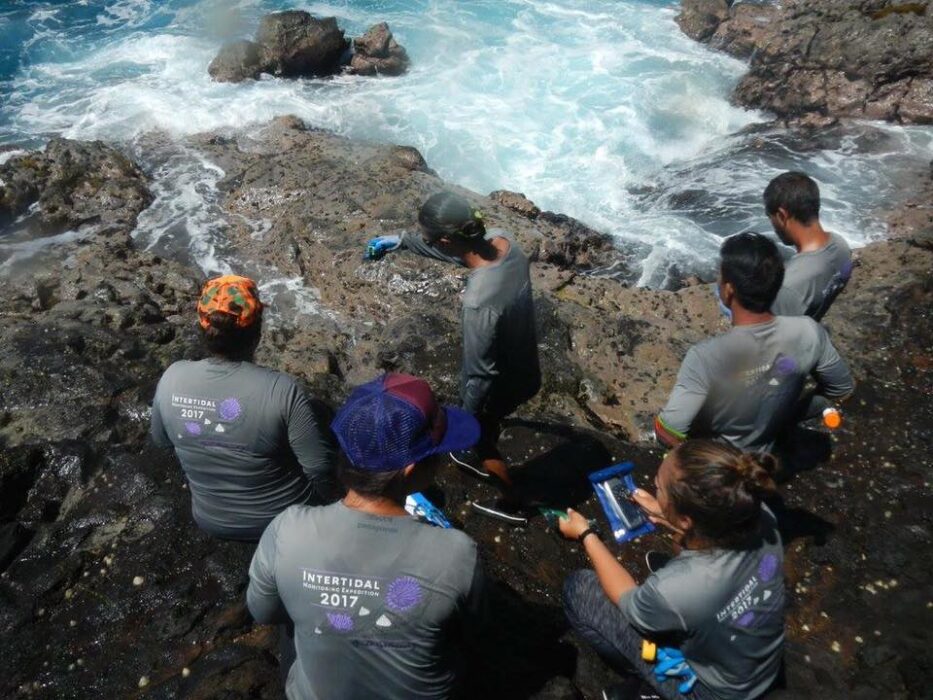
The takeaway isn’t to panic. It’s to pay attention to what scientists are actually measuring and how confident they are. Better ocean monitoring, longer records, and clearer indicators can turn scary headlines into real risk tracking.
If you see new studies, look for careful wording: “weakening,” “tipping risk,” and “uncertainty ranges.” The AMOC story is still being written, but the direction is clear enough to treat it as a serious climate stress test, not just a theoretical debate. That’s why the research community keeps updating the tools.