Robotic explorers revealed an unexpected seafloor ecosystem hidden beneath Antarctic ice for centuries.
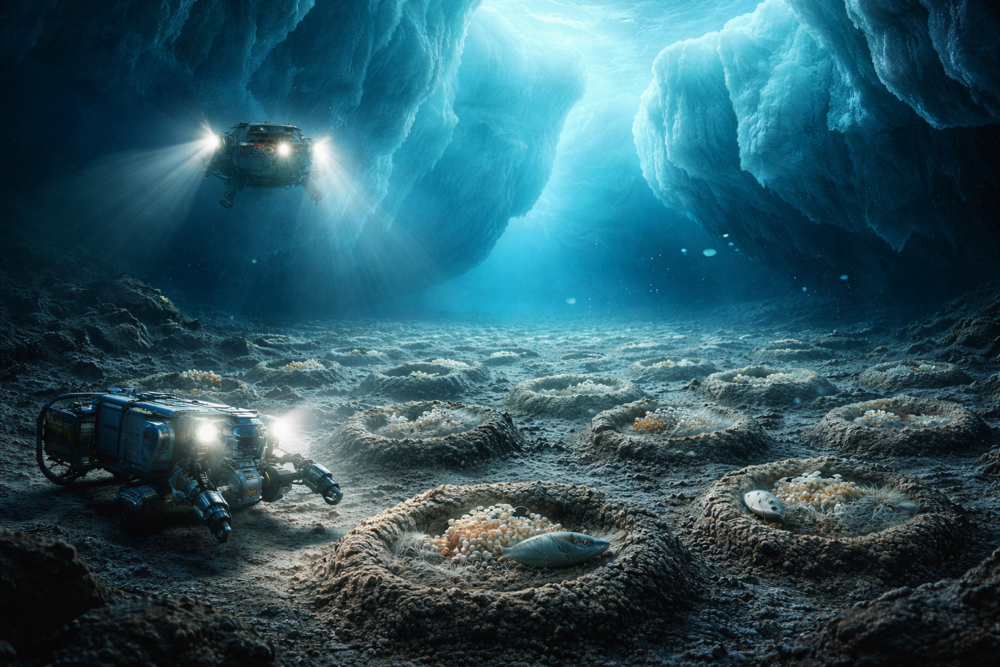
The frozen expanses of Antarctica are among Earth’s least explored environments, and even small changes in its massive ice sheets can expose areas never before visited by humans or machines. That happened when a rare break from the A-68 iceberg calved away from the Larsen C Ice Shelf, opening a broad swath of ocean to direct observation for the first time in thousands of years.
Using remotely operated vehicles (ROVs), researchers peered beneath the formerly ice-covered water and discovered something remarkable: thousands of tightly packed circular formations on the seafloor, each one the handiwork of marine life.
What appeared to be simple impressions at first turned out to be a vast nesting ground for icefish, an ecosystem hidden in plain sight beneath the Antarctic ice. The find is reshaping scientists’ understanding of how life persists in one of the harshest parts of the planet.