
Amid the dazzling lights of Chicago’s 1893 World’s Fair, a man named H. H. Holmes lured victims into what became America’s first “murder castle.”

The 1893 World’s Columbian Exposition transformed Chicago into a shining symbol of innovation and modernity. But just beyond the fairgrounds, a chilling story was unfolding. A charming young doctor named H. H. Holmes built a three-story hotel designed not for comfort, but for killing—complete with soundproof rooms, trapdoors, and secret chutes to a basement crematorium. While millions celebrated America’s progress, Holmes used the chaos of the fair to conceal his crimes, becoming one of history’s most notorious serial killers.
1. The Fair That Defined a New Century
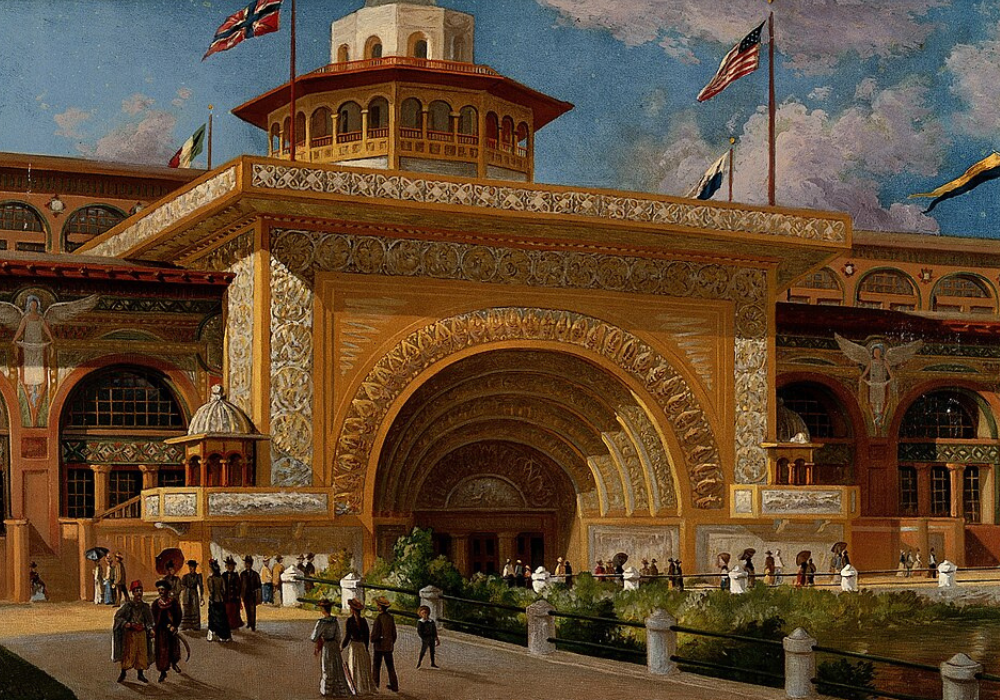
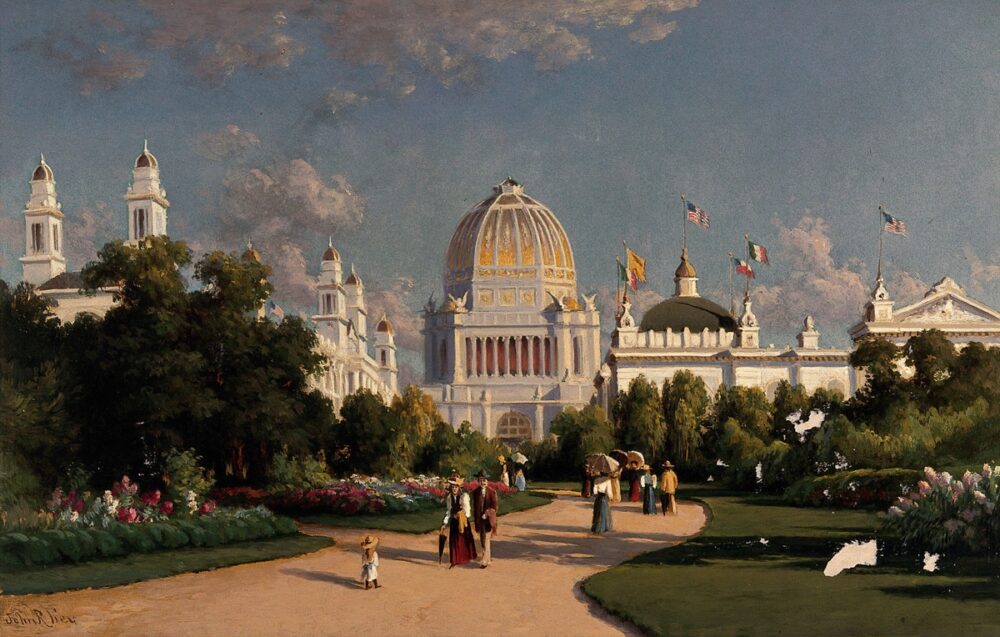
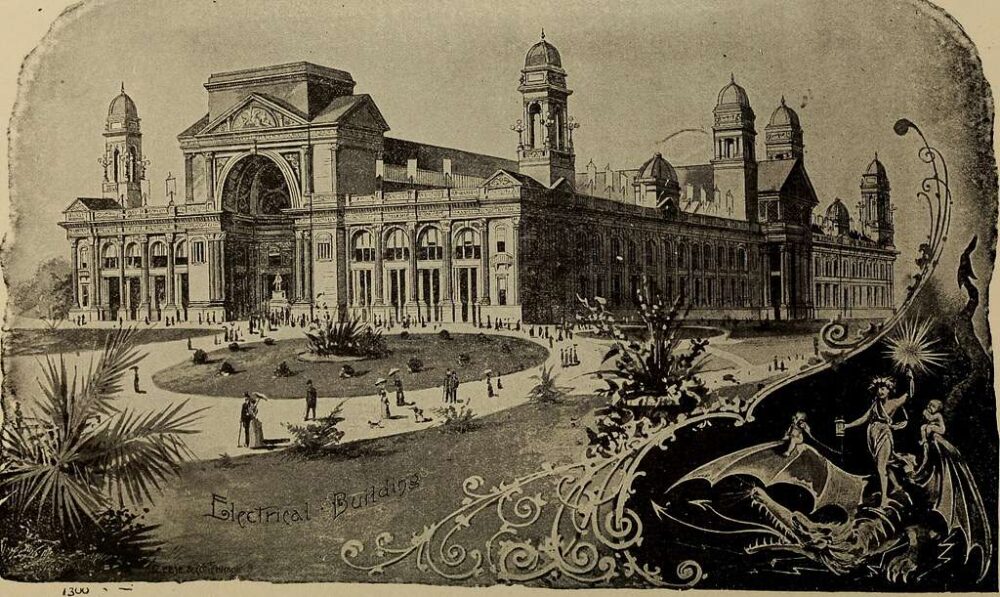
In 1893, Chicago hosted the World’s Columbian Exposition to celebrate the 400th anniversary of Columbus’s voyage. The fair spanned more than 600 acres along Lake Michigan and showcased electricity, architecture, and culture from around the world.
It was a symbol of America’s progress—home to the first Ferris wheel, electric streetlights, and massive “White City” buildings that glowed at night. But beneath the wonder and optimism of the age, a far darker story was unfolding just a few miles away.
2. A City Reborn From Fire and Ambition

Chicago had rebuilt itself after the devastating Great Fire of 1871, and the World’s Fair became its declaration of triumph. More than 27 million people attended, drawn by inventions, art, and the promise of modern life.
The fair represented the height of the Gilded Age—an era of industrial expansion and growing cities. Yet that same environment of opportunity, anonymity, and chaos provided the perfect setting for someone with deadly intentions to hide in plain sight.
3. The Arrival of a Charming Young Doctor
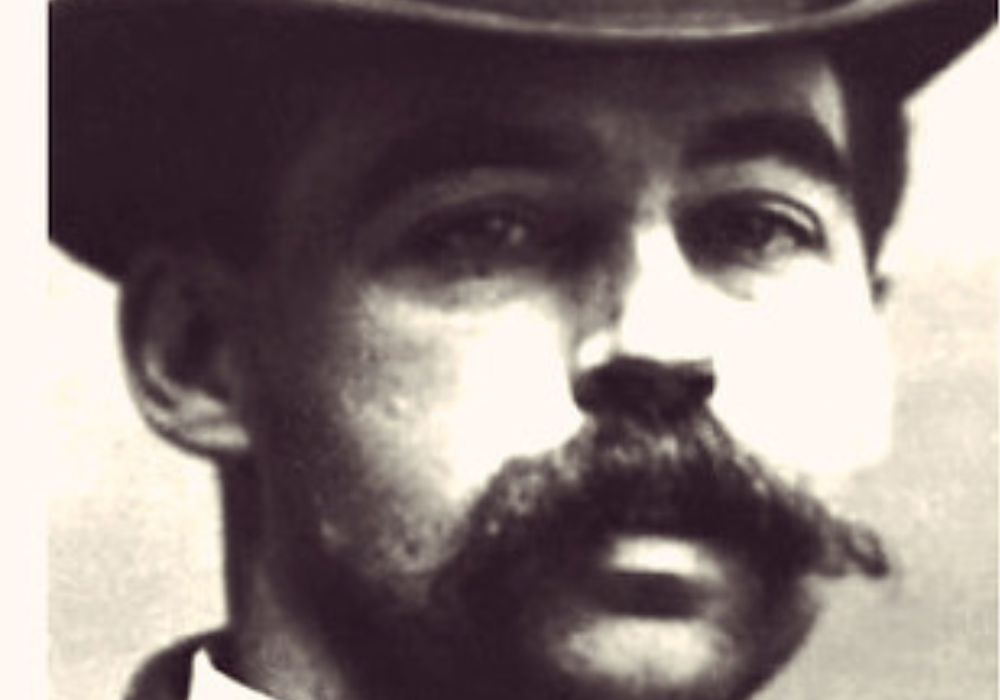
Herman Webster Mudgett, who called himself Dr. H. H. Holmes, arrived in Chicago in the late 1880s. Educated and articulate, he quickly gained the trust of locals by posing as a successful pharmacist and entrepreneur.
Holmes was more than a con artist—he was a master manipulator. Behind his polite demeanor, he defrauded suppliers, seduced women, and planned an elaborate scheme that would allow him to prey on visitors coming to the city for the fair.
4. The “Murder Castle” Begins to Take Shape

Holmes purchased a lot in the Englewood neighborhood and began constructing a three-story building he called a hotel. The structure included shops on the ground floor and rooms above—perfectly ordinary at first glance.
But hidden behind the walls were secret passages, windowless rooms, false doors, and a maze-like layout designed for concealment. Some rooms were soundproofed; others contained gas lines. The basement held acid vats, dissection tables, and a furnace. Holmes had built a killing machine disguised as a place of business.
5. The Fair Brings Millions—and Victims—to Chicago
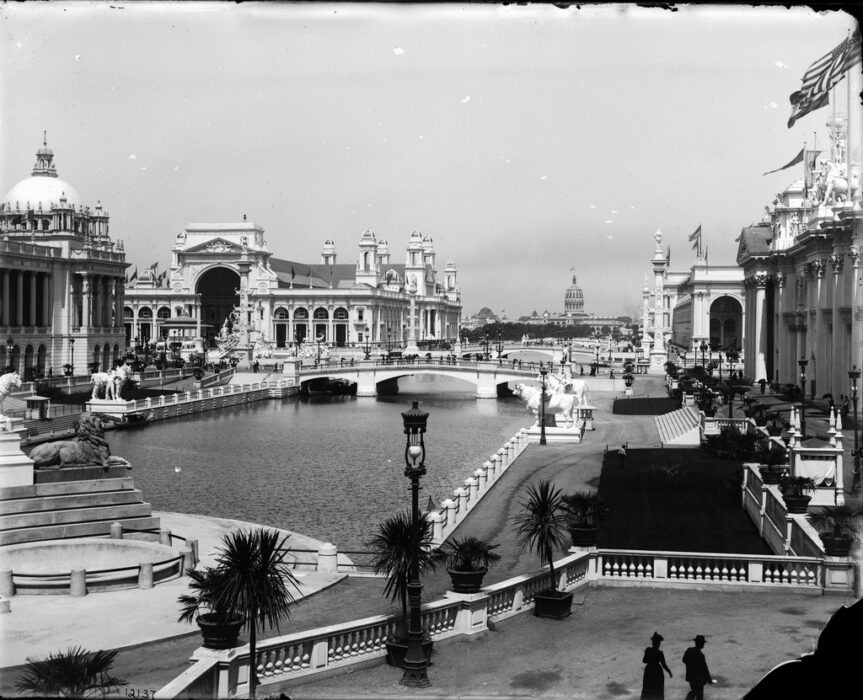
When the World’s Fair opened in 1893, millions of visitors flooded the city. Many were young women traveling alone for work or adventure, drawn by new opportunities in a growing metropolis.
Holmes targeted these newcomers, offering jobs or lodging at his “World’s Fair Hotel.” Few who entered ever left. The bustle of the fair—and the constant movement of visitors—made disappearances easy to overlook. In the shadow of America’s greatest celebration, Holmes quietly fed his monstrous impulses.
6. Holmes’s Web of Lies and Deception
Holmes didn’t rely only on violence; he was also a skilled con artist. He took out life insurance policies on supposed employees, collected money from creditors, and sold fake pharmacy goods.
He frequently changed stories, identities, and even business partners, always staying one step ahead of suspicion. To those around him, he appeared eccentric but harmless—a testament to how easily charm and intelligence can mask danger. His crimes blended psychological manipulation with cold precision.
7. A Trail of Disappearances Raises Alarm

As months passed, friends and family of Holmes’s victims began asking questions. Women who had written letters home suddenly stopped responding. Associates who trusted Holmes with money vanished without a trace.
Rumors spread through Chicago, but police lacked evidence and resources to investigate properly amid the fair’s chaos. It wasn’t until after the exposition closed that suspicions grew into a full-fledged pursuit—one that would expose horrors beyond imagination.
8. The Investigation That Exposed a Monster

Holmes’s downfall began not with murder charges, but with fraud. In 1894, he was arrested in Boston for insurance scams. Detectives following his trail uncovered disturbing evidence linked to his Chicago property.
When investigators entered the “castle,” they found hidden rooms, human bones, bloodstains, and personal belongings from multiple missing women. The building’s design revealed meticulous planning for murder—a chilling labyrinth of cruelty concealed behind respectable walls.
9. Confessions, Lies, and a Trial That Shocked the Nation

Holmes eventually confessed to more than two dozen murders, though the true number remains unknown. Many of his statements were contradictory, blending fact with self-serving fiction.
At his 1895 trial in Philadelphia, where he was convicted of killing an associate named Benjamin Pitezel, Holmes’s calm demeanor fascinated and horrified the public. Newspapers dubbed him “The Beast of Chicago.” He was executed by hanging in 1896, unrepentant to the end.
10. The “Murder Castle” Meets Its Own Fate
After Holmes’s crimes were exposed, the Englewood building became a macabre attraction before being gutted by a mysterious fire in 1895. Later accounts suggest the blaze may have been intentional, possibly set to destroy lingering evidence.
Nothing of the original “castle” remains today; a post office now stands on the site. Yet the legend of the structure—and the evil it contained—has endured as one of America’s most disturbing chapters in true crime history.
11. The Legacy of the White City’s Dark Secret
The story of the 1893 World’s Fair and H. H. Holmes captures the contradictions of the era: innovation and horror, progress and deceit. While the fair represented human achievement, Holmes embodied its shadow—an opportunist exploiting the anonymity of modern life.
His crimes continue to fascinate historians, inspiring countless books, documentaries, and films. More than a century later, the “Devil in the White City” remains a haunting reminder that even in humanity’s brightest moments, darkness can hide just beyond the light.