Scientists Revisit a Disturbing Theory: Did Toxic Lead Contribute to the Serial Killer Era?

New research revisits how toxic lead exposure may have been a hidden factor in America’s serial-killer era.

©Image license via Wikimedia Commons / State Archives of Florida, Florida Memory, Public Domain

In her new book Murderland: Crime and Bloodlust in the Time of Serial Killers, author Caroline Fraser examines how exposure to the neurotoxin lead might have played a role in the rise of American serial killers in the 1970s. She links high levels of lead from smelters, petrol, and other industrial sources in places like the Pacific Northwest to later waves of violence and murder. While the connection remains theoretical, Fraser argues that the environmental history of lead offers a compelling framework for understanding the peak of violent crime.

Read more

A Single Tooth and a Few Bones Are Challenging What We Thought We Knew About Christianity

Archaeologists uncovered a chain-bound skeleton near Jerusalem that may rewrite what we know about early Christian devotion.

©Image license via Chat GPT

Archaeologists excavating a Byzantine-era monastery near Jerusalem have uncovered a skeleton wrapped in chains, believed to belong to an early Christian ascetic. A single tooth provided the breakthrough: protein analysis showed the remains likely belonged to a woman. The discovery challenges the long-held assumption that extreme ascetic practices—like self-restraint and self-mortification—were exclusive to men. Dating to roughly 350–650 A.D., the find offers the first physical evidence that women may have taken part in these rigorous spiritual traditions.

Read more

The Hidden Genetic Rift That May Explain Why Neanderthals Vanished

New research suggests DNA incompatibility between humans and Neanderthals may have hastened their demise.

©Image license via Flickr

A new genetic study offers fresh insight into why Neanderthals disappeared after interbreeding with early modern humans. Researchers found that DNA incompatibilities between the two species may have made hybrid offspring less fertile or healthy, weakening Neanderthal populations over time. The findings add a new twist to the long-debated question of why Neanderthals vanished about 40,000 years ago. Scientists say this subtle genetic divide could have tilted the evolutionary balance in favor of Homo sapiens.

Read more

Ancient Footprints Could Upend What We Know About the First Americans

Fossilized human tracks in New Mexico suggest people arrived in North America far earlier than once believed.

©Image license via Wikimedia Commons

In the white sands of southern New Mexico, scientists have uncovered fossilized human footprints that could transform our understanding of early American history. Dating analysis shows the prints are around 23,000 years old—thousands of years earlier than the migration timeline long accepted by archaeologists. The discovery challenges the idea that humans first crossed into the Americas after the last Ice Age. Researchers say these tracks offer direct, physical evidence of people living here much sooner than anyone thought possible.

Read more

New 3D Mapping Could Rewrite What We Know About the Titanic’s Final Moments

A full-scale digital scan of the Titanic wreck reveals stunning new details about how the ship broke apart.

©Image license via Easy-Peasy.AI

More than 110 years after the Titanic sank, new technology is offering the clearest view yet of the disaster. Using deep-sea submersibles and advanced 3D mapping, researchers created a complete digital model of the wreck on the Atlantic seafloor. The scan reveals structural damage and collapse patterns never before seen, challenging long-held theories about how the ship broke in two. Experts say the discovery marks a major leap in understanding one of history’s most studied tragedies.

Read more

New Research Shows the Maya Predicted Solar Eclipses With Astonishing Accuracy

Decades of study reveal ancient Maya astronomers forecast solar eclipses centuries before modern tools existed.

©Image license via Canva

Long before telescopes or modern astronomy, the ancient Maya were tracking the skies with remarkable precision. Recent research into centuries-old Maya codices reveals that their astronomers could accurately predict solar eclipses hundreds of years in advance. Using careful observations of the Sun, Moon, and Venus, they created complex mathematical calendars that rivaled modern scientific models. The findings shed new light on the sophistication of Maya science and their deep understanding of cosmic cycles that shaped both ritual and daily life.

Read more

Scientists May Have Finally Solved the Mystery of Wales’ Legendary Dragons

New research traces the origins of Wales’ iconic red dragon symbol to ancient battles and buried history.

©Image license via Canva

For centuries, the red dragon of Wales has been shrouded in legend—said to have fought a white dragon in an epic battle beneath the hills. Now, scientists and historians believe they’ve uncovered the true story behind the myth. New archaeological and linguistic evidence suggests the dragon emblem may have evolved from early Roman and Celtic symbols of power and conflict. The findings connect one of Britain’s most enduring legends to real events from more than 1,500 years ago.

Read more

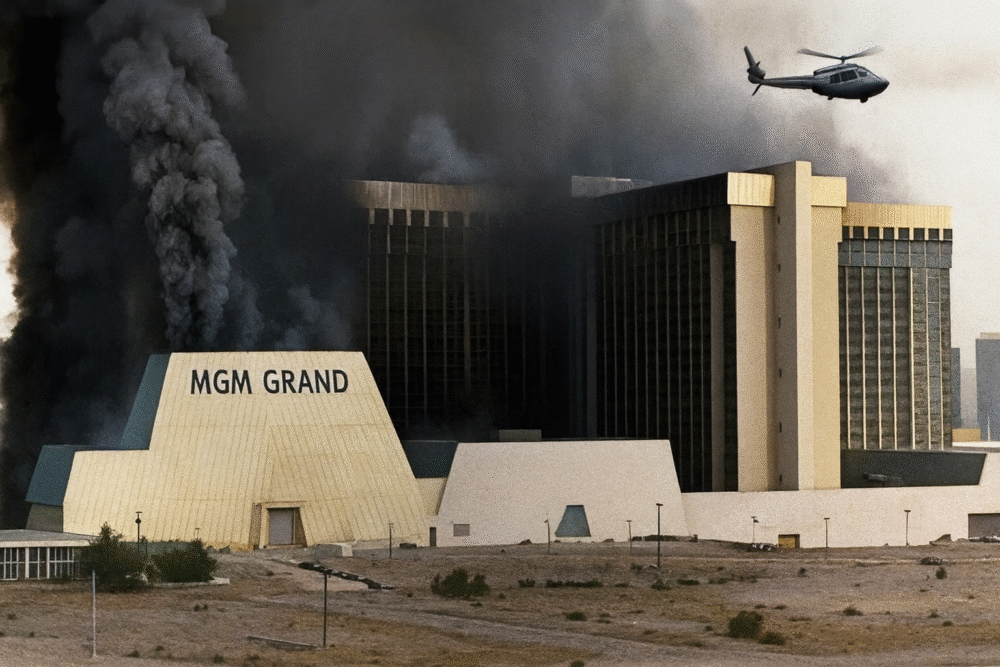
Inside the MGM Grand Fire That Killed 87 People in Just Minutes

A Las Vegas luxury hotel turned into a deadly inferno, exposing fatal safety flaws that changed U.S. law.

©Image license via Chat GPT

On the morning of November 21, 1980, smoke began pouring through the MGM Grand Hotel in Las Vegas—and within minutes, chaos erupted. Guests awoke to blaring alarms, trapped in hallways filled with toxic fumes as flames raced through the casino level. In less than 20 minutes, 87 people were dead and hundreds more injured. The tragedy exposed alarming lapses in fire safety that led to sweeping changes in building codes across the United States.

Read more

How a Serial Killer Hunted Guests at the 1893 Chicago World’s Fair

Amid the dazzling lights of Chicago’s 1893 World’s Fair, a man named H. H. Holmes lured victims into what became America’s first “murder castle.”

©Image license via Wikimedia Commons

The 1893 World’s Columbian Exposition transformed Chicago into a shining symbol of innovation and modernity. But just beyond the fairgrounds, a chilling story was unfolding. A charming young doctor named H. H. Holmes built a three-story hotel designed not for comfort, but for killing—complete with soundproof rooms, trapdoors, and secret chutes to a basement crematorium. While millions celebrated America’s progress, Holmes used the chaos of the fair to conceal his crimes, becoming one of history’s most notorious serial killers.

Read more

The Night the Sea Took Galveston: America’s Deadliest Hurricane

In 1900, a Category 4 hurricane struck Galveston, Texas, killing more than 8,000 people and wiping the city off the map.

©Image license via Canva

On September 8, 1900, a monstrous hurricane slammed into Galveston, Texas, with winds exceeding 140 miles per hour and a storm surge that swallowed the island city whole. Within hours, entire neighborhoods were flattened, and thousands of lives were lost—making it the deadliest natural disaster in U.S. history. The storm struck without modern forecasting or warning systems, leaving survivors to rebuild from unimaginable ruin and forever changing how America prepared for the forces of nature.

Read more