These Are the World’s Most Dangerous Cities, and Many Are in the U.S.

Crime data tells one story, but how these cities end up on global lists is far more complicated.

©Image license via Wikimedia Commons

Some global crime rankings paint a troubling picture of urban safety, but the reality is more layered than a single list suggests. These rankings usually focus on violent crime rates, especially homicide, rather than everyday quality of life or where crime is concentrated within a city.

What often surprises people is how frequently U.S. cities appear alongside places long associated with instability or cartel violence. That pattern reflects not only real problems, but also how crime is measured, reported, and compared across countries.

Looking at specific cities helps clarify what these rankings actually show, why so many American cities appear, and what context is often missing when places are labeled “dangerous.”

Read more

The Hidden Flaw That’s Been Shortening EV Battery Life

The problem wasn’t charging speed or chemistry; it was stress building deep inside the material.

©Image license via Planet Sage/Chat GPT

Electric vehicle batteries are improving rapidly, but some of the most promising materials have been failing sooner than engineers expected.

Single-crystal battery cathodes were designed to last longer because they eliminate grain boundaries, a common source of cracking in traditional materials. Yet real-world testing kept revealing damage anyway. A new study explains why.

Researchers discovered that hidden internal stresses can build up inside these materials during repeated charging and discharging, eventually causing cracks from within.

Click through to see how this issue affects battery durability, cost, safety, and charging confidence.

Read more

The 10 Science Breakthroughs That Defined The Year

From medical firsts to cosmic surprises, these discoveries reshaped how we understand life, health, and the universe.

©Image license via Canva

Every December, the science editors at Smithsonian Magazine review hundreds of discoveries and breakthroughs to identify the ones that mattered most over the past year.

Their list spans medicine, space, genetics, paleontology, public health, evolution, and technology. These stories captivated the public, influenced scientific directions, and could shape the future.

Together, they reflect a year when humanity pushed the boundaries of what we know about life, the universe, and ourselves.

Click through to discover the ten science stories Smithsonian’s team judged most significant for the year.

Read more

Scientists Found a New State of Matter Between Liquid and Solid That Defies Classic Physics

Researchers observed metal atoms flowing like a liquid while staying locked in a solid structure.

©Image license via Planet Sage/Chat GPT

For centuries, science classes have taught that matter comes in a few familiar forms: solid, liquid, gas, and plasma. Each behaves in predictable ways, with atoms either locked in place or free to flow. But recent laboratory work has complicated that tidy picture.

Researchers studying metals at the atomic level observed something that doesn’t fit cleanly into those categories. Under highly controlled conditions, atoms behaved like a liquid while remaining arranged like a solid.

This matters now because it pushes back on one of the most basic frameworks used to understand the physical world. States of matter aren’t just textbook concepts. They underpin how materials are designed, how electronics work, and how energy moves through systems.

Click through to discover how matter doesn’t always behave the way we assume.

Read more

Could Gravity Be Evidence That the Universe Is a Simulation?

A new physics theory links gravity to information flow, raising questions about how real the universe truly is.

©Image license via Planet Sage/Chat GPT

What if gravity is more than just a force that pulls objects together? What if it’s actually a clue about how reality itself is structured? That’s the question raised by a recent theoretical study by physicist Melvin Vopson, who argues that gravity may emerge from how the universe organizes information rather than from mass alone.

His work builds on ideas from information theory and thermodynamics, proposing that the universe may behave less like a smooth physical stage and more like a system that processes and optimizes data. This idea matters because it challenges one of the most basic assumptions about how the universe works.

Gravity is usually treated as a fundamental force, something that simply exists. But if gravity instead arises from deeper informational rules, it could reshape how scientists think about space, time, and reality itself.

Click through to learn what Vopson’s theory claims.

Read more

Scientists Are Investigating an Unusual Pattern in Trees Near Cell Towers

Researchers are finding unusual patterns of damage in trees near cell towers, and it’s not from pollution or drought.

©Image license via Wikimedia Commons

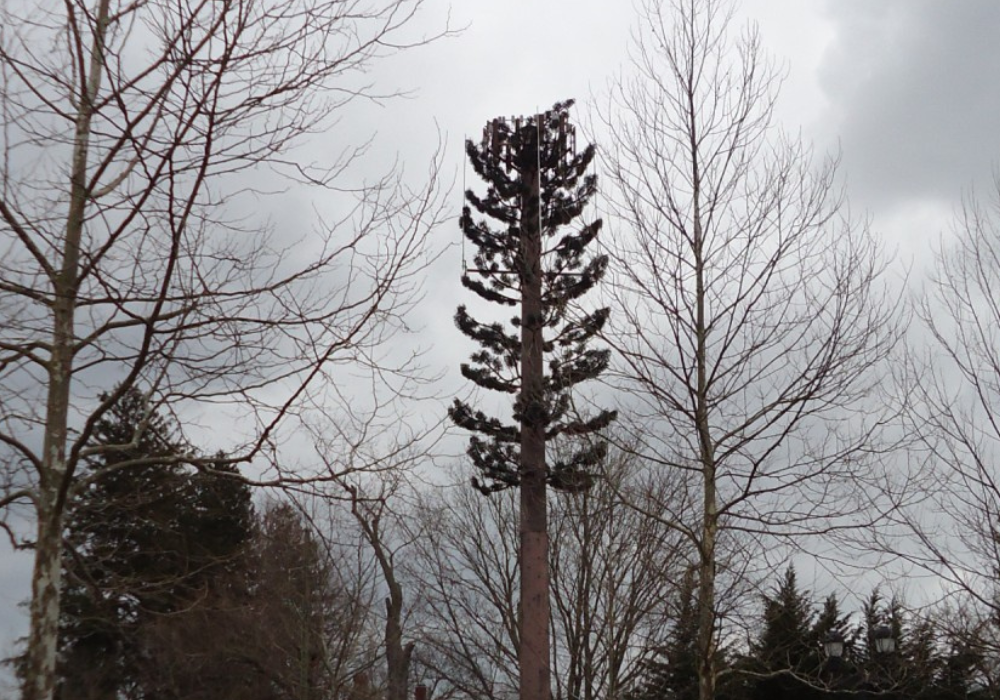
Researchers in Germany have documented unusual damage to trees growing near cell phone base stations, noting patterns that defy typical explanations like drought, pollution, or disease.

The most affected trees show damage primarily on the side facing the antennas, suggesting a possible link to electromagnetic radiation exposure. Over nine years, scientists recorded and measured field strengths around dozens of trees in urban and suburban areas.

While their findings remain correlational, not proof of cause, the research has sparked international interest and calls for further studies into how modern communication networks might subtly influence plant health.

Click through and discover why this asymmetrical tree damage is occurring.

Read more

How the Artemis 2 Crew Is Preparing to Become the First Humans Near the Moon Since 1972

Inside the full launch countdown rehearsal preparing astronauts for NASA’s first crewed lunar mission in decades.

©Image license via NASA/Kim Shiflett/Flickr

For the first time in more than five decades, a crew of astronauts is preparing to travel back toward the Moon. NASA’s Artemis 2 mission will not land on the lunar surface, but it represents a crucial step in returning humans to deep space and proving that the systems needed for longer missions are ready.

In recent weeks, the astronauts completed a full launch countdown rehearsal, practicing every moment they will experience on launch day, from suiting up to sitting atop the rocket. These rehearsals may look routine from the outside, but they are where small problems surface, pressure is tested, and confidence is built.

What happens during these quiet practice runs can determine whether a mission proceeds safely or stops before it ever leaves the ground. Long before launch day arrives, these rehearsals shape how prepared both people and technology truly are.

Click through to discover more about this historic mission.

Read more

What Physics Actually Says About the Possibility of Time Travel

What modern physics allows, forbids, and still can’t fully rule out.

©Image license via Canva

Time travel is usually treated as fantasy, but in physics it’s a serious subject that has been studied for decades. When physicists talk about time travel, they aren’t picturing machines jumping between centuries.

They are asking how time behaves under the laws of nature, and whether those laws allow time to pass differently for different observers.This question matters because modern physics has already shown that time is not universal. Experiments confirm that time can slow down depending on speed and gravity, meaning our everyday experience of time is only an approximation.

While traveling backward in time remains deeply controversial, traveling forward in time is already supported by tested physics. Understanding what physics actually allows helps separate real science from science fiction.

Click through to see if it’s possible to travel through time.

Read more

When Could Artificial General Intelligence Actually Arrive?

Researchers disagree widely on the timeline, but patterns are starting to emerge.

©Image license via Canva

Artificial General Intelligence, often called AGI, refers to a form of AI that can learn, reason, and adapt across many tasks the way humans can. Unlike today’s AI systems, which excel at specific jobs like writing text or recognizing images, AGI would be flexible and broadly capable.

The idea has been discussed for decades, but recent advances in AI have made the question feel more urgent. Some experts believe AGI could arrive sooner than expected, while others argue we are still many decades away.

What makes the debate tricky is that intelligence is hard to define, progress is uneven, and breakthroughs are difficult to predict. Still, by looking at how researchers measure progress today and why their estimates differ so much, we can better understand what timelines might actually be realistic.

Click through to see how AGI is so much different than AI systems today.

Read more

How Electric Vehicles Are Quietly Redesigning City Streets

How charging stations, curb space, and parking rules are reshaping everyday urban travel.

©Image license via Downlight Electrical

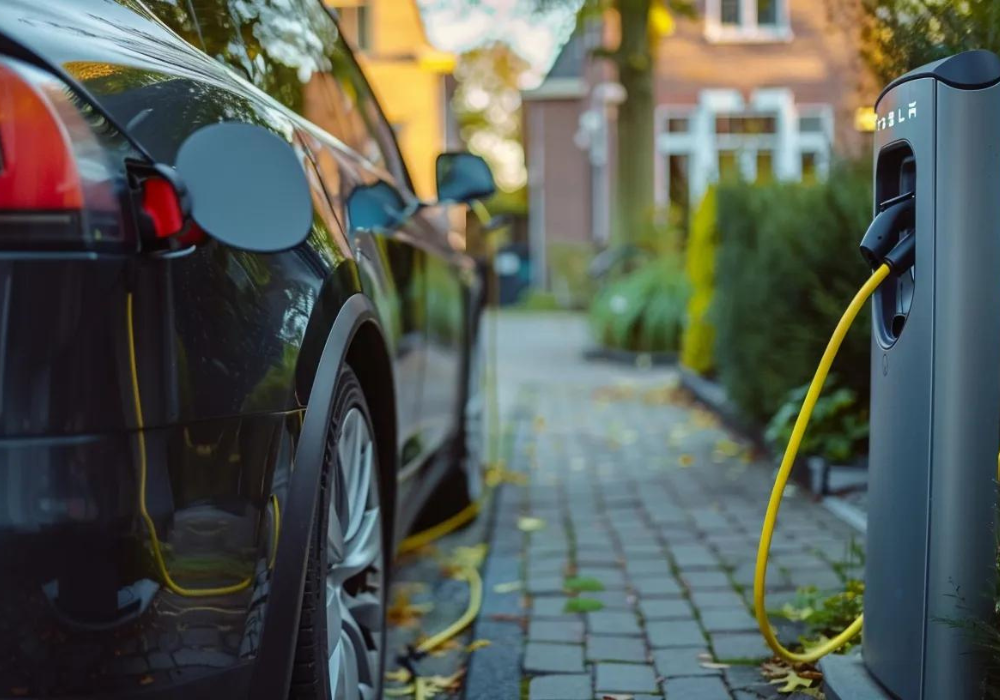
If you drive, walk, bike, or take transit in a city, electric vehicles are already changing how your streets work, even if you have not noticed it yet.

The shift is not happening all at once, and it is rarely announced with fanfare. Instead, small adjustments slowly add up: a new charging pole near your apartment, a parking sign that suddenly includes EV-only rules, a curb space that no longer works the way it used to.

These changes are not abstract climate goals; they shape where you park, how long you stay, and how easily you move through your neighborhood. This gallery traces those changes step by step and shows what the rise of electric vehicles really means for your daily routine.

Click through to see how EV’s will impact your local streets and neighborhoods.

Read more