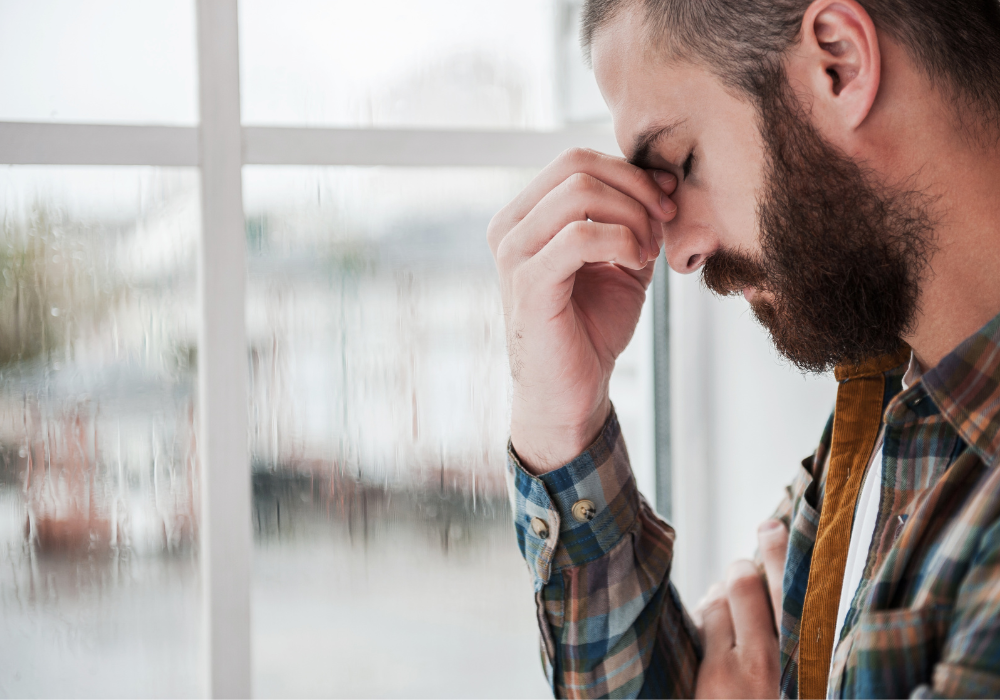
Feeling Off Lately? The Weather Might Be to Blame

Scientists reveal how changing weather patterns can influence mood, energy, and mental health more than you might expect.

©Image license via Canva

Some days you wake up ready to take on the world, and other days it feels like you’re dragging through fog—mentally and physically. While it’s easy to blame stress, sleep, or diet, the weather outside your window could be quietly pulling strings on how you feel.

From shifts in sunlight to swings in temperature, changes in the atmosphere can ripple through your brain chemistry in ways you might not expect. Understanding this connection won’t make you immune to bad moods, but it can help you work with the forecast instead of feeling blindsided by it.

Read more

12 Daily Habits That Build Discipline and Consistency in an Uncertain World

Simple, proven habits to sharpen focus, strengthen self-control, and stay consistent no matter what life throws your way.

©Image license via Canva

Some days, showing up for yourself feels effortless. Other days, it’s a battle just to start. Discipline and consistency aren’t about superhuman willpower—they’re about shaping small, repeatable actions into part of who you are. In a world that can change overnight, relying on motivation alone is a gamble. Habits, on the other hand, give you something steady to hold on to.

They’re what keep you moving when your mood, energy, or circumstances want to pull you off course. Build them with intention, and you’ll be able to navigate uncertainty without losing your direction or your momentum.

Read more

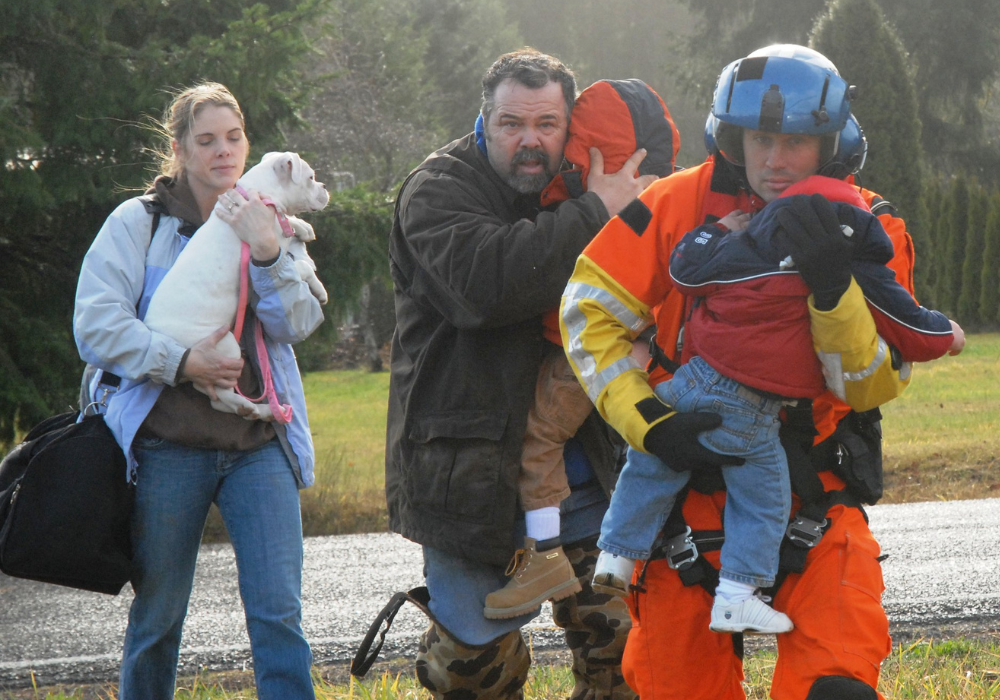
The Hidden Mental Health Crisis Flood Survivors Don’t Talk About

Natural disasters leave lasting psychological wounds that can persist for years, but mental health support often disappears quickly.

©Image license via Flickr

When the floodwaters recede and the cameras leave, flood survivors face an invisible battle that can last for years. While communities focus on rebuilding homes and businesses, many people struggle with anxiety, depression, and post-traumatic stress that develops long after the initial disaster.

Studies show that up to 40% of flood survivors develop serious mental health problems, but these psychological wounds often go untreated because the focus shifts to physical recovery. The trauma isn’t just about losing possessions—it’s about feeling helpless, unsafe, and fundamentally changed by an experience that turned life upside down in a matter of hours.

Read more

The Ancient ‘Memory Palace’ Technique That Reverses Anxiety in 20 Minutes

Neuroscientists reveal how ancient memory visualization method rewires anxious brain pathways and provides instant relief from racing thoughts and worry.

©Image license via Canva

What if ancient Greek orators had the key to conquering modern anxiety all along? Dr. Isabella Wagner from Radboud University Medical Center recently proved that the “memory palace” technique—used by Roman rhetoricians 2,000 years ago—can literally rewire anxious brain pathways in just 20 minutes. Brain imaging studies show that people using this method create more robust neural networks linking the prefrontal cortex, hippocampus, and visual cortex.

But here’s the breakthrough: mental health experts are now discovering that the same spatial memory system that helps “memory athletes” recall thousands of facts can be used to instantly access calm, positive mental states when anxiety strikes. The technique works by transforming your familiar spaces into mental refuges filled with soothing memories and coping resources.

Read more

10 Calming Phrases to Say to Someone Who Just Had a Panic Attack

Mental health experts reveal the phrases that reduce panic symptoms and help loved ones feel safe and supported during anxiety attacks.

©Image license via Canva

When someone you care about is having a panic attack, your words can either provide comfort or accidentally make things worse. Dr. Ken Duckworth, medical director of the National Alliance on Mental Illness, explains that panic attacks aren’t just “being dramatic”—they’re intense fear responses where the body’s survival instincts activate without real danger. The person experiencing it feels genuine terror, often thinking they’re having a heart attack or dying.

Mental health experts emphasize that what you say in those critical moments can help ground them back to reality and reduce the severity of symptoms. Here are ten expert-backed phrases that mental health professionals recommend using to support someone through this frightening experience.

Read more

Brain Scans Reveal Why Hoarders Feel Physical Pain When Throwing Things Away

Brain scans show hoarding disorder triggers physical pain pathways, explaining why decluttering hurts and how new therapies help.

©Image license via Flickr

When researchers put people with hoarding disorder into brain scanners, they discovered something shocking: throwing away possessions literally activates the same neural pathways as physical injury. Dr. David Tolin from Yale University found that the anterior cingulate cortex and insula—brain regions that process emotional pain—go into overdrive when hoarders decide whether to keep or discard their own items.

This isn’t just attachment or sentimentality; it’s actual neurological distress equivalent to being hurt. The brain scans reveal that for someone with hoarding disorder, tossing a piece of junk mail triggers the same alarm systems as touching a hot stove. Understanding this biological reality is revolutionizing how therapists approach treatment, shifting from “just throw it away” to addressing the genuine physical pain that decluttering causes.

Read more

13 Surprising Ways Your Brain Is Making You More Afraid Than You Need to Be

Psychologists explain how your brain’s ancient fear system still influences modern decision-making.

©Image license via Canva

Ever find yourself panicking over something that never happens? Or lying awake at night, playing out every worst-case scenario? You’re not broken—your brain is doing exactly what it evolved to do: keep you safe. The problem? It’s working overtime in a world that’s very different from the one it was designed for.

Psychologists call this the negativity bias, and it means we’re naturally wired to notice threats, remember bad news, and fixate on what could go wrong. That bias might’ve kept our ancestors alive, but today, it’s making many of us more anxious than necessary—and often without us even realizing it.

Read more

Therapy Is Booming, So Why Are Young People Still Falling Apart?

Despite widespread access to therapy, mental health outcomes among young adults are growing worse.

©Image license via Canva

Therapy apps are booming, mental health awareness is trending, and Gen Z is more open than any previous generation about getting help. So why does it still feel like so many young people are emotionally unraveling?

Despite all the tools, resources, and encouragement to seek support, youth anxiety, depression, and burnout are at record highs. In a time when mental health is a major talking point, something clearly isn’t working the way we hoped. Is the therapy itself failing? Or is the problem much bigger than what a once-a-week session can fix?

From systemic issues to cultural shifts, there’s a growing disconnect between emotional support and actual healing. The question isn’t whether young people are getting help—it’s whether the help is enough in a world that feels increasingly unmanageable.

Read more

11 Small Shifts That Can Pull You Out of Hopelessness—Even on Your Worst Days

When it feels like the world’s falling apart, these tiny changes can make all the difference.

©Image license via Canva

Hopelessness has become an all-too-common undercurrent in modern life. Between worsening climate change, political division, the relentless rise in housing costs, and global instability, it’s no wonder so many people feel like they’re drowning in despair.

The problems seem too big, too out of our control, and too deeply embedded in the systems we rely on. But even in the darkest moments, small shifts in mindset, behavior, or environment can create surprising openings for relief.

These aren’t magic fixes—but they’re powerful reminders that change starts close to home, sometimes just one decision or one hour at a time. If you’re feeling stuck, numb, or like nothing you do matters, it might be time to try one of these simple but transformative practices.

Read more

America Is Numb—11 Ways Constant Crises Are Killing Our Capacity to Care

From mass shootings to climate disasters, our compassion has an expiration date—and it’s getting shorter.

©Image license via Canva

We’ve barely recovered from one crisis before the next one hits. Wildfires choke the skies, mass shootings flash across the news, economic fears rattle our nerves—and it just doesn’t stop. Somewhere along the way, feeling overwhelmed became our default.

And now, something darker is happening: people are starting to shut down emotionally. It’s not that we don’t care—it’s that we’ve hit our limit. When every headline screams disaster, our brains protect us by tuning it all out. Compassion fatigue, desensitization, burnout—whatever you call it, it’s spreading fast. We scroll past tragedy with barely a blink. We feel powerless, detached, even cynical.

But this emotional numbing isn’t just about stress—it’s rewiring how we connect with others and respond to injustice. Here’s how constant crisis mode is quietly eroding America’s emotional core.

Read more