America’s Center Is Cracking—10 Ways Drought and Firestorms Are Tearing It Apart

What used to be America’s backbone is now the bullseye of disaster.
©Image license via iStock

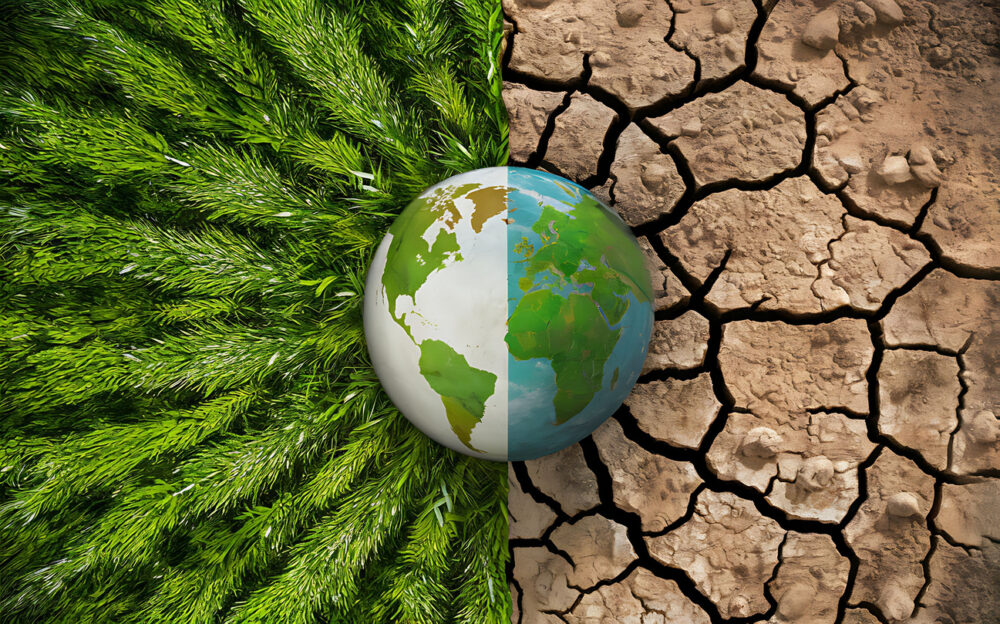
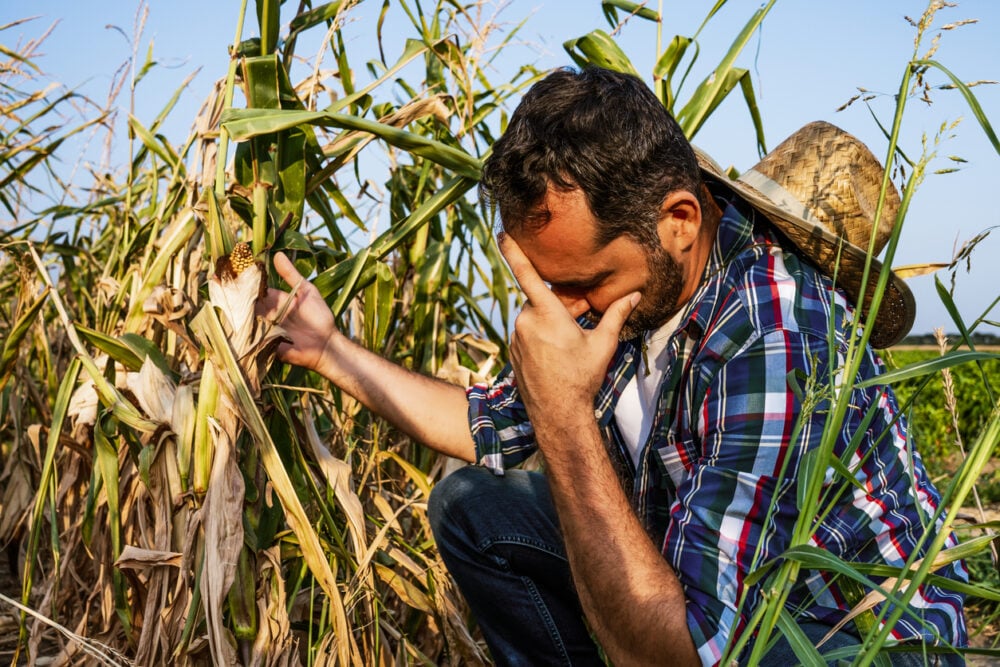
The Heartland was once seen as the country’s most dependable region—rich soil, stable weather, and a vast middle ground that fed the nation and buffered its coasts. But that image no longer holds. As the climate heats up, America’s interior is becoming less a sanctuary and more a flashpoint. Droughts drag on for months. Fire seasons don’t end. Crops wither. Communities burn. And still, the systems built around this land pretend it’s business as usual.

What’s unfolding isn’t a series of isolated weather events—it’s a transformation. Water tables are falling. Heat is rewriting planting calendars. The once-predictable rhythm of life in the Midwest and Great Plains is being replaced by volatility, scarcity, and fear. These aren’t distant threats. They’re already carving into the land that feeds and fuels the rest of the country. And the longer we ignore the warning signs, the deeper the damage gets.


Read more

These 11 Snacks Feel Like Junk—But They’re Surprisingly Good for the Planet

Your favorite gas station snacks might be greener than your grocery haul.

©Image license via iStock

We tend to assume that sustainable eating has to look a certain way—farmers’ market veggies, unpackaged grains, maybe some homemade oat milk in a reused jar. But sometimes, the foods we write off as “junk” are actually pulling their environmental weight. Packaged snacks might not scream eco-conscious, but some are lower-impact than their healthy-looking counterparts. Especially when you factor in things like water use, emissions, and food waste.

Sustainability isn’t just about how something looks on a label. It’s about how it was grown, processed, and shipped. And surprisingly, some of the most accessible, affordable snack foods can come with a much smaller footprint than the kale chips and coconut yogurts crowding the wellness aisle. If you’ve ever felt guilty about reaching for a bag of pretzels instead of a raw vegan bar, it might be time to rethink the rules. These snack staples prove that sustainability can be found in unexpected places.

Read more

Waiting for Tech to Save the Planet? 10 Reasons That’s a Risky Bet

The longer we wait on breakthroughs, the more damage we lock in.

©Image license via iStock

It’s tempting to believe that the right invention will turn everything around. A miracle battery, a carbon-sucking machine, an algae-based fuel that powers the world without emissions. The promise of innovation is powerful—and in many ways, justified. But banking on tech alone to solve the climate crisis is like expecting an airbag to save you while flooring the gas. By the time it kicks in, the damage might already be done.

Real progress doesn’t come from invention alone. It comes from implementation, regulation, behavior change, and political will. And every year we wait for something “better” instead of doing what works now, we’re locking in more warming, more destruction, and more inequity. Tech can support the transition—but it’s no substitute for the action we’re avoiding.

Read more

Beauty Culture Rebranded—But These 11 Trends Still Push the Same Shame

The labels changed, but the message stayed the same: you’re not enough.

©Image license via iStock

Beauty culture didn’t disappear. It just got better at marketing. Words like “natural,” “minimal,” “clean,” and “effortless” replaced “perfect,” “flawless,” and “anti-aging.” The filters got softer. The lighting got warmer. And the pressure? It got sneakier. Now it’s not about looking like someone else—it’s about looking like the best version of yourself. Which still somehow means buying more, doing more, fixing more.

We’re told it’s self-care. That it’s empowering. That it’s all about confidence. But if that confidence only comes after the serum, the sculpting, the editing—then how much has really changed? Beauty standards didn’t vanish. They just got rebranded with a wellness spin. And the result is often the same: shame, comparison, and a quiet sense that who you are naturally just isn’t quite good enough. These trends prove that even the “empowering” version of beauty still comes with strings attached.

Read more

You’re Not Lazy—These 10 Choices Are Actually Strategic Energy Conservation

What looks like procrastination is often wisdom in disguise.

©Image license via iStock

It’s easy to call yourself lazy when you don’t feel like doing something. When the inbox piles up, the dishes wait, or your to-do list grows dust, that inner voice can get cruel. But here’s the thing: what we often label as laziness is actually your body doing its best to protect you. In a world that runs on burnout, refusing to push yourself past the brink isn’t weakness—it’s intelligence.

You’ve likely been told that discipline looks like movement, productivity, progress. But sometimes, discipline looks like stillness. Like saying no. Like choosing rest because your nervous system is fried and your brain is maxed out. What you think of as avoidance might actually be survival. These ten behaviors aren’t signs of failure—they’re signs that you’re conserving what matters most: your energy, your peace, your sanity.

Read more

Leaving Isn’t Always a Choice—These 12 Realities Are Forcing People to Start Over

You don’t always get to choose when it’s time to begin again.

©Image license via iStock

People love to romanticize starting over—new cities, fresh starts, blank slates. But for millions, leaving isn’t about chasing opportunity. It’s about surviving loss. Climate disasters, eviction notices, rising rents, broken healthcare systems, fractured communities—these aren’t plot twists in someone’s personal growth story. They’re pushes out the door. Quiet ones. Ruthless ones. And often, they come without warning.

Most people don’t uproot their lives just because. They leave because they’re forced to—by policy, by poverty, by circumstance. And when they do, they don’t always land on their feet. “Fresh start” makes it sound easy. But displacement, even when it looks tidy, comes with grief. These 12 realities show how people are being pushed to the edge—not for adventure, but because staying simply stopped being an option.

Read more

The Internet Was Supposed to Connect Us—These 11 Trends Show It’s Just Making Us Lonely

We talk more than ever, but it rarely feels like anyone’s listening.

©Image license via iStock

It all started with good intentions. Message boards, friend requests, status updates—we were told the internet would bring us closer. And for a while, it did. Long-lost relatives found each other. Strangers became friends across oceans. But somewhere along the way, connection turned into content. Likes replaced intimacy. Replies turned into algorithms. And now, we’re more connected than ever—while feeling more alone than we’ve ever admitted.

We scroll past milestones without stopping. We vent into the void and call it vulnerability. We mistake attention for care. The internet gave us infinite access to each other’s lives, but very few tools to actually feel close. Loneliness didn’t vanish when the web showed up—it just changed shape. These 11 trends reveal how the digital age didn’t kill isolation. It just gave it better Wi-Fi.

Read more

Climate Change Is Creating Strange New Ecosystems—Here Are 10 You’ll Start Seeing Soon

As old habitats disappear, new ones are forming in all the wrong places.

©Image license via iStock

Nature doesn’t pause for us to catch up. As the planet heats up, ecosystems aren’t just collapsing—they’re transforming. Species that never used to mix are suddenly sharing space. Tropical insects are moving into temperate zones. Forests are creeping into tundras. Coral reefs are turning ghostly white, while jellyfish swarm in places they never used to thrive. These shifts aren’t part of some orderly evolution—they’re the messy, unpredictable fallout of a warming world.

And we’re not just talking about far-off rainforests or Arctic ice shelves. These new ecosystems are forming right outside city limits, along roadsides, in abandoned lots, even in your backyard. They’re strange, fast-moving, and deeply unstable. What we used to call “invasive” is now just part of the mix. As familiar landscapes unravel, new ones are taking their place—many of them driven more by chaos than balance. Here are 10 of the most bizarre and fast-emerging ecosystems you’ll start seeing sooner than you think.

Read more

These 10 Skincare Steps Look Luxurious—But They’re Wrecking Your Barrier

Your skin’s screaming for help under all that serum.

©Image license via iStock

You followed all the “rules.” You double cleansed, exfoliated, layered your actives, misted between steps, and sealed it in with a glossy finish. On paper, your routine looks flawless—like something straight out of a 10-step K-beauty tutorial. But if your skin’s stinging, flaking, or constantly breaking out? That’s not glow. That’s a barrier begging for mercy.

Your skin barrier is what keeps moisture in and irritants out. It’s your first line of defense—and it’s surprisingly easy to destroy in the name of beauty. Harsh acids, over-cleansing, too many actives layered on top of each other… all of it adds up, even if the packaging screams “gentle.” These routines might look luxurious, but if your skin’s dry, tight, or perpetually red, something’s not working. Here are ten skincare steps that seem indulgent—but might actually be doing more harm than good.

Read more

The Neighborhood Changed, But Not for You—These 12 Signs Gentrification Won

They built it up, priced you out, and called it progress.

©Image license via iStock

You stayed. Through the empty lots, the noise, the slow rise of rent. You watched the corner store become a juice bar, the church turn into a coworking space, and the neighbors you grew up with slowly disappear. And now, even if you’re still here, it doesn’t feel like your neighborhood anymore. That’s the quiet part of gentrification no one talks about. It doesn’t always push you out immediately—it just reshapes everything around you until you no longer fit.

They call it revitalization. They call it investment. But what it really means is that the culture gets erased while the rent gets higher. Suddenly, everything you loved is gone—but the city insists this is an upgrade. Gentrification doesn’t always knock loudly. Sometimes it slips in slowly, dressed in bike lanes and boutique hotels. These 12 signs show how it takes over—not just physically, but emotionally, until the place you knew becomes something else entirely.

Read more