Why Approaching Wild Animals in National Parks Is More Dangerous Than It Looks

Even animals that seem calm can react unpredictably when humans get too close.
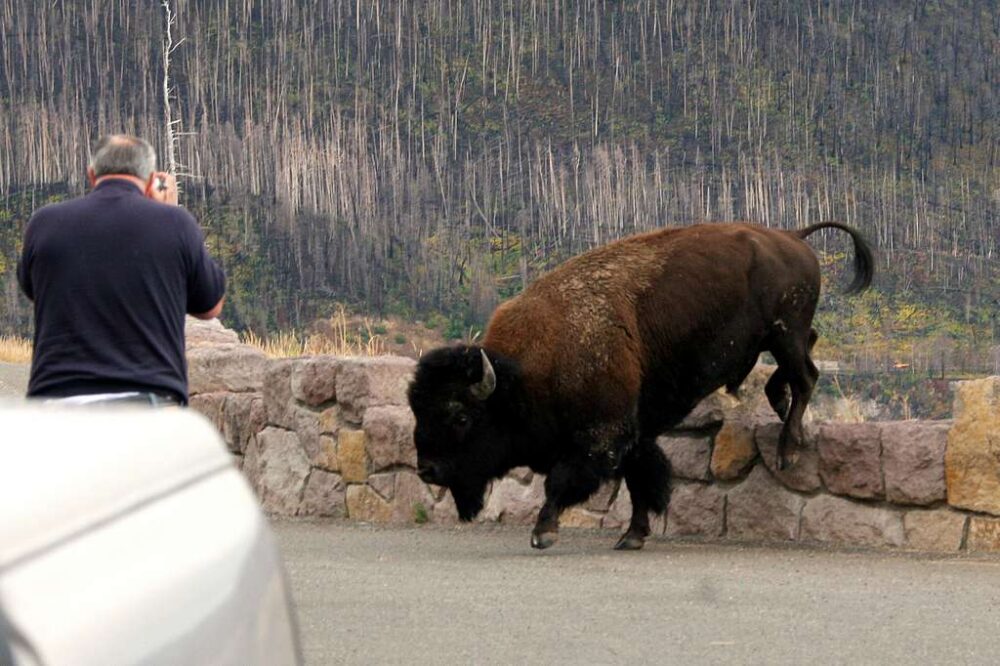
©Image license via Picryl

National parks offer rare chances to see wild animals in their natural habitats, but those encounters can create a dangerous illusion of safety.

Animals grazing near roads, resting in open fields, or moving slowly through popular areas can appear calm and approachable, especially to visitors who have never seen them up close before.

Social media and roadside pullouts often reinforce the idea that getting closer is harmless. In reality, wildlife encounters are one of the most common causes of injuries in national parks, and most of them begin the same way: a person crosses a distance boundary without realizing it.

Click through to see why approaching wild animals is risky, how these encounters typically unfold, and what real incidents reveal about how quickly things can go wrong.

Read more

This Gut Pain Pathway Helps Explain Why IBS Is More Common in Women

The study points to a biological explanation for long-standing IBS disparities.

©Image license via Canva

Irritable bowel syndrome affects millions of people worldwide, yet one pattern has puzzled doctors for decades: women are diagnosed far more often than men. For years, that difference was often attributed to stress, lifestyle, or reporting habits, without a clear biological explanation.

Many patients were left feeling dismissed, especially when tests showed no visible damage in the gut. New research is beginning to change that picture. In a study published in Nature, scientists identified a previously unknown gut pain pathway that appears to be more active in females and influenced by estrogen.

The findings suggest that biological differences in how pain signals travel through the digestive system may help explain why IBS is more common and often more severe in women.

Click through to learn why it matters, and what it could mean for future treatment.

Read more

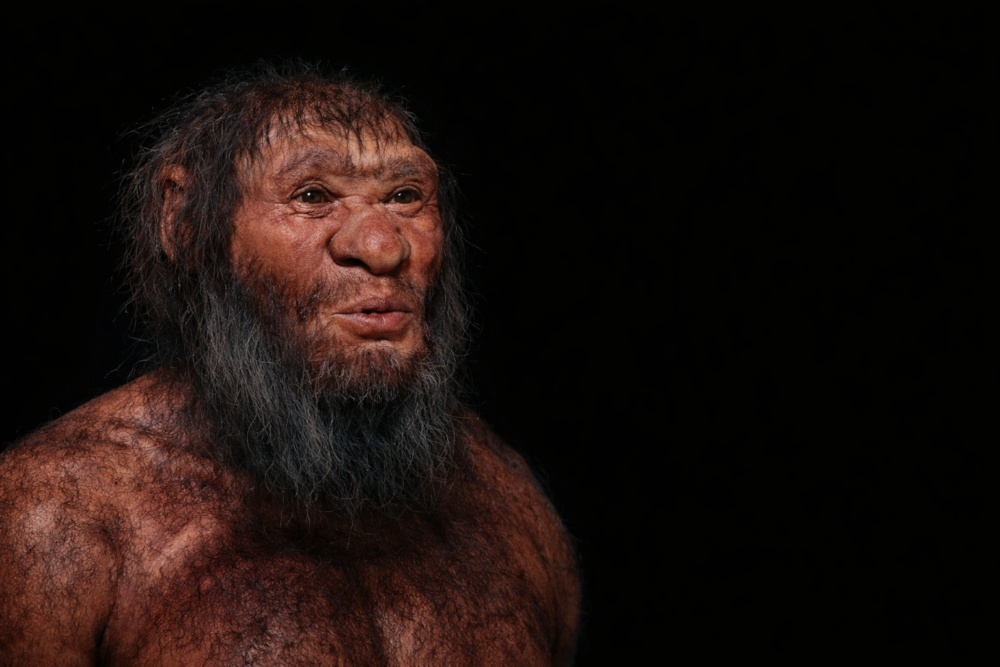
Why the ‘Dragon Man’ Discovery Is Reshaping the Human Family Tree

New evidence suggests the skull belongs to a previously mysterious branch of ancient humans.

©Image license via Planet Sage/Chat GPT

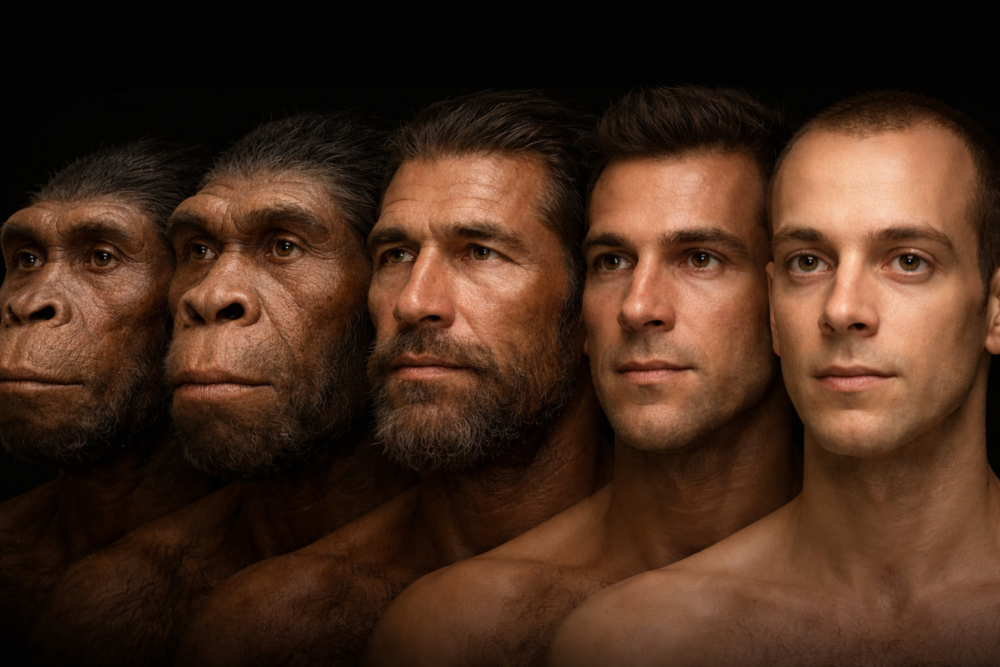
For decades, a nearly complete ancient human skull nicknamed “Dragon Man” sat at the center of a scientific mystery. Discovered in China and kept hidden for years, the fossil didn’t fit neatly into any known category of ancient humans.

Its size, facial structure, and heavy brow ridges set it apart, leading some researchers to suggest it represented an entirely new species. New evidence has now brought clarity. By analyzing ancient genetic material and preserved proteins extracted directly from the skull, scientists were able to compare it with known ancient human lineages.

The results show that Dragon Man belongs to the Denisovans, a shadowy group of ancient humans previously known mostly through DNA. This finding helps reshape the human family tree and fills in one of the biggest gaps in our understanding of human evolution in Asia.

Click through to learn how Dragon Man closes a gap in human evolution.

Read more

Scientists Found a New State of Matter Between Liquid and Solid That Defies Classic Physics

Researchers observed metal atoms flowing like a liquid while staying locked in a solid structure.

©Image license via Planet Sage/Chat GPT

For centuries, science classes have taught that matter comes in a few familiar forms: solid, liquid, gas, and plasma. Each behaves in predictable ways, with atoms either locked in place or free to flow. But recent laboratory work has complicated that tidy picture.

Researchers studying metals at the atomic level observed something that doesn’t fit cleanly into those categories. Under highly controlled conditions, atoms behaved like a liquid while remaining arranged like a solid.

This matters now because it pushes back on one of the most basic frameworks used to understand the physical world. States of matter aren’t just textbook concepts. They underpin how materials are designed, how electronics work, and how energy moves through systems.

Click through to discover how matter doesn’t always behave the way we assume.

Read more

A Simple Nighttime Habit Improved Memory by Over 200 Percent in a New Study

Researchers observed dramatic gains in memory after participants followed a simple routine for several months.

©Image license via Canva

Memory loss is often treated as an unavoidable part of aging, something people expect to manage rather than meaningfully improve. But a recent study conducted by neuroscientists at the University of California, Irvine, is challenging that assumption.

In the research, healthy older adults experienced dramatic improvements in memory after following a simple, repeatable habit carried out nightly over several months. What makes this study especially notable is that the habit didn’t involve mental exercises, medication, or lifestyle overhauls.

Instead, it worked quietly in the background while participants slept. The findings suggest that memory may be more adaptable than previously believed, especially when the brain is supported during its natural overnight processes.

Click through to learn more about this simple habit.

Read more

The Wild Animal Most Likely to Injure Humans Lives Right Outside

Emergency room data and wildlife studies show most human injuries from close contact with a familiar animal.

©Image license via Wikipedia Commons

When people think about dangerous wildlife, their minds usually jump to large predators or rare, dramatic encounters in remote places. But the data behind human injuries tells a very different story. Most wildlife-related injuries don’t happen in national parks or deep wilderness. They happen close to home, often during routine moments when people aren’t expecting any danger at all.

This matters right now because human development continues to push deeper into natural habitats, increasing everyday contact with wildlife that has learned to adapt alongside us. As cities and suburbs expand, some animals are thriving in these shared spaces.

Click through to discover which animal is most often involved in human injuries, and why proximity matters more than aggression.

Read more

Humans Have a Unique Body Feature No Other Animal Has and Its Purpose Is Still a Mystery

It’s a defining human trait with no clear survival advantage and no agreed-upon explanation.

©Image license via Planet Sage/Chat GPT

Take a close look at the human body and it feels familiar, even predictable. Two eyes, a nose, a mouth, limbs built for walking and grasping. At first glance, there’s nothing that seems radically different from what we see in other mammals. Yet hidden in plain sight is a feature so distinctive that it appears in no other living species.

Fossils show it arrived relatively late in our evolutionary story, and modern science still can’t agree on why it exists at all. This mystery matters because it quietly challenges how we think evolution works. We often assume every trait must serve a clear purpose, shaped by survival and reproduction. But this feature doesn’t fit neatly into that idea.

As researchers revisit old assumptions using better fossil evidence and modern imaging tools, it has become a reminder that evolution doesn’t always follow a clean or logical script.

Click through to learn the body part that sets humans apart.

Read more

Could Gravity Be Evidence That the Universe Is a Simulation?

A new physics theory links gravity to information flow, raising questions about how real the universe truly is.

©Image license via Planet Sage/Chat GPT

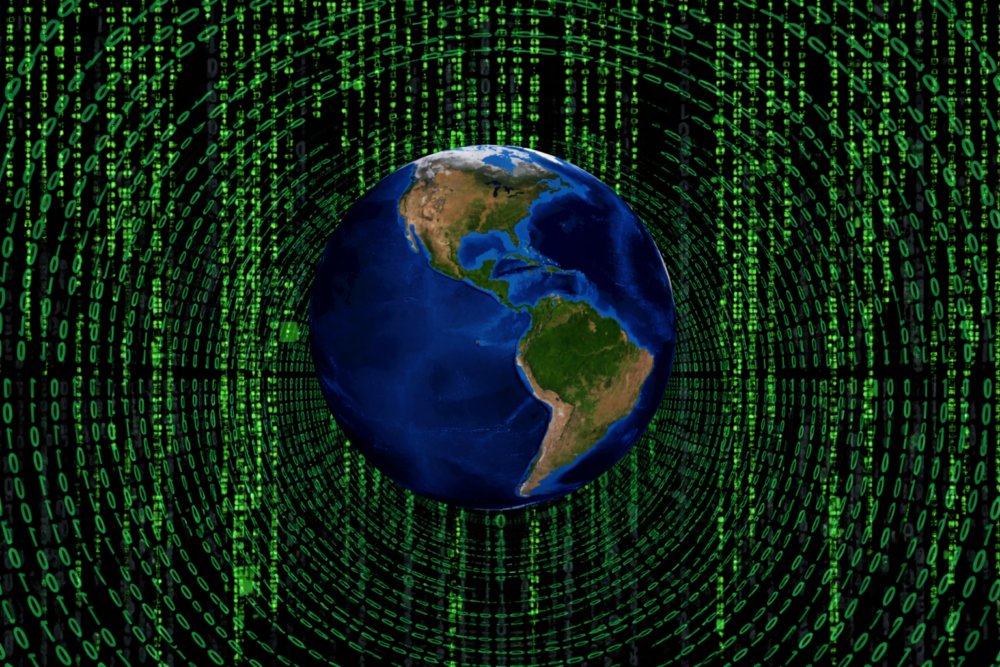
What if gravity is more than just a force that pulls objects together? What if it’s actually a clue about how reality itself is structured? That’s the question raised by a recent theoretical study by physicist Melvin Vopson, who argues that gravity may emerge from how the universe organizes information rather than from mass alone.

His work builds on ideas from information theory and thermodynamics, proposing that the universe may behave less like a smooth physical stage and more like a system that processes and optimizes data. This idea matters because it challenges one of the most basic assumptions about how the universe works.

Gravity is usually treated as a fundamental force, something that simply exists. But if gravity instead arises from deeper informational rules, it could reshape how scientists think about space, time, and reality itself.

Click through to learn what Vopson’s theory claims.

Read more

Why Saying You’re Sustainable Doesn’t Always Mean Living Sustainably

Sustainability isn’t just about good intentions—it’s about real actions that make a difference.

©Image license via Canva

Too many people claim to be eco-conscious but still engage in habits that contradict their supposed values. It’s easy to assume that carrying a reusable tote or buying organic automatically makes someone sustainable, but the reality is more complex.

Small changes help, but true sustainability requires deeper shifts in how we consume, travel, and dispose of waste. Without addressing the bigger picture, even the most well-meaning choices can still contribute to environmental harm.

If you’re serious about reducing your impact, it’s time to look beyond the surface. Some of the biggest sustainability offenders aren’t the people ignoring climate change but the ones who think they’re already doing enough.

Click through for the common behaviors that keep people stuck in eco-friendly illusions.

Read more

Scientists Are Investigating an Unusual Pattern in Trees Near Cell Towers

Researchers are finding unusual patterns of damage in trees near cell towers, and it’s not from pollution or drought.

©Image license via Wikimedia Commons

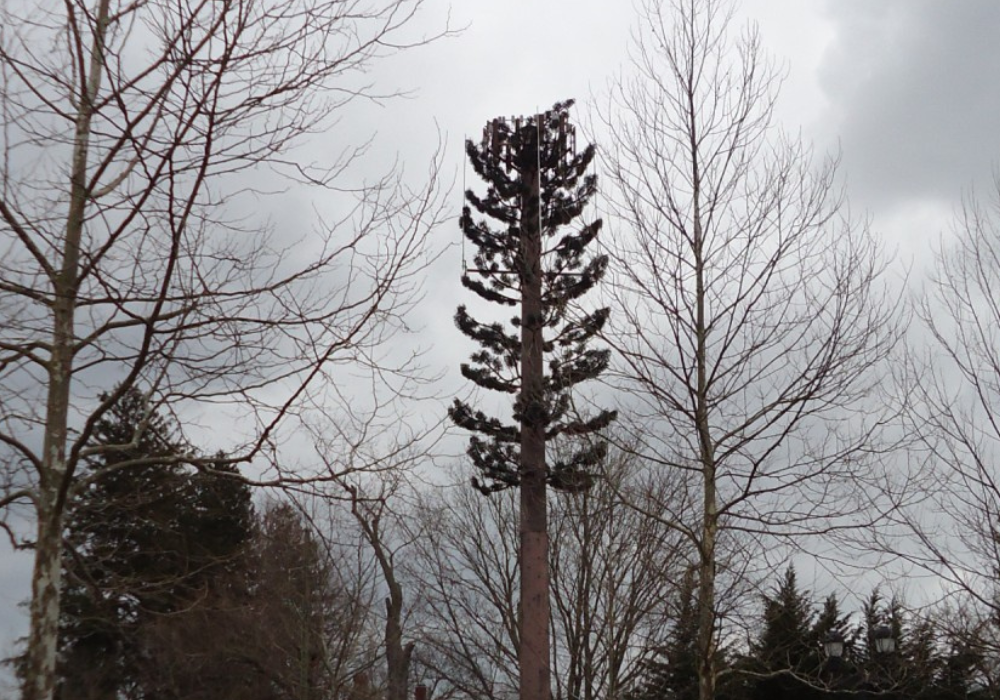
Researchers in Germany have documented unusual damage to trees growing near cell phone base stations, noting patterns that defy typical explanations like drought, pollution, or disease.

The most affected trees show damage primarily on the side facing the antennas, suggesting a possible link to electromagnetic radiation exposure. Over nine years, scientists recorded and measured field strengths around dozens of trees in urban and suburban areas.

While their findings remain correlational, not proof of cause, the research has sparked international interest and calls for further studies into how modern communication networks might subtly influence plant health.

Click through and discover why this asymmetrical tree damage is occurring.

Read more