Fossils from one African site suggest early human evolution was crowded, complex, and far less orderly than once believed.
For decades, human evolution was often explained as a simple progression. One species appeared, adapted, and replaced the one before it, forming a straight line that eventually led to us
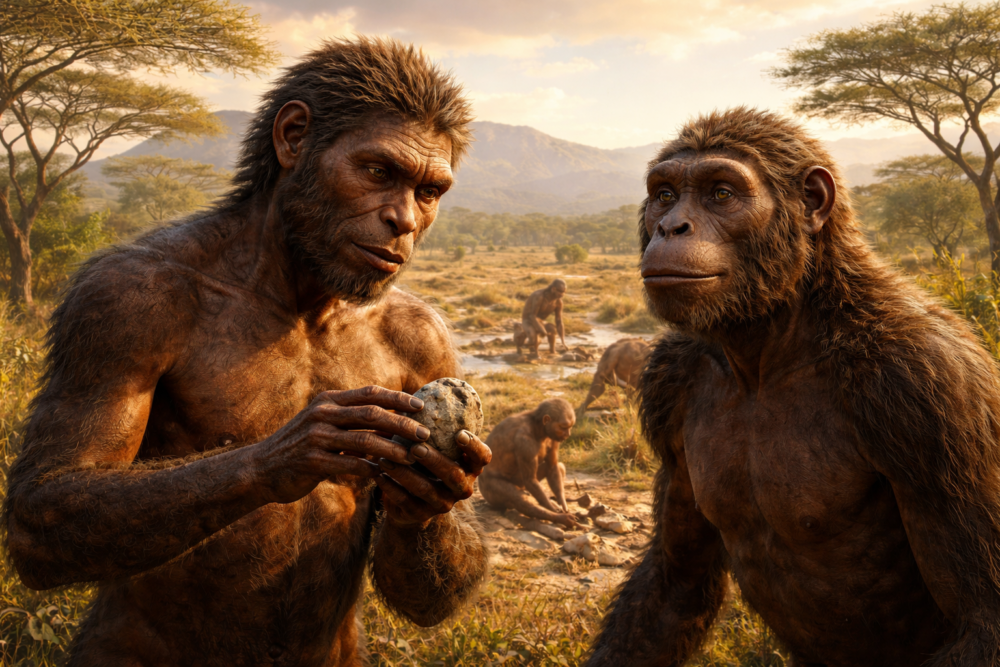
New fossil discoveries from eastern Africa are forcing scientists to rethink that story. At a single site, researchers have identified remains from at least two different ancient human ancestors living at the same time and place.
The finding suggests early human history was not a tidy sequence, but a shared landscape where multiple relatives evolved side by side, possibly competing, adapting, and surviving in different ways.