
Astronomers say the unexplained feature doesn’t match anything seen before and challenges current models of the cosmos.

Astronomers from the Dark Energy Survey (DES) and collaborators recently announced the detection of an enigmatic linear streak in the cosmos—an immense cosmic “streak” that spans millions of light-years and defies conventional explanation.
Published in Astrophysical Journal Letters, the study led by Dr. Elena Wang et al. combines radio and optical sky surveys to map its coherent, high-contrast emission. The phenomenon challenges current models of large-scale structure, offering a possible clue to unknown cosmic forces or relics from the early universe.
1. The Streak Was First Spotted in Deep Sky Surveys

Astronomers first noticed the anomaly while analyzing radio maps and deep optical images across wide sky areas. They flagged a narrow, elongated emission that’s nearly straight running through otherwise unremarkable regions.
It isn’t linked to a single galaxy or cluster, which makes it especially odd. Given its uniform brightness and length spanning millions of light-years, it stands out as a new kind of cosmic phenomenon demanding explanation.
2. It Defies Known Cosmic Structures

Galaxies, filaments, and sheets in the cosmic web tend to curve, branch, or cluster. But the newly observed streak is unusually linear and isolated, with little branching or dispersion.
Its straightness and continuity challenge models of gravitational collapse. Some scientists propose it may represent a relic magnetic structure, a shockwave remnant, or an unknown kind of filament, but no model yet fits all its properties.
3. Radio Emission Suggests Nonthermal Processes
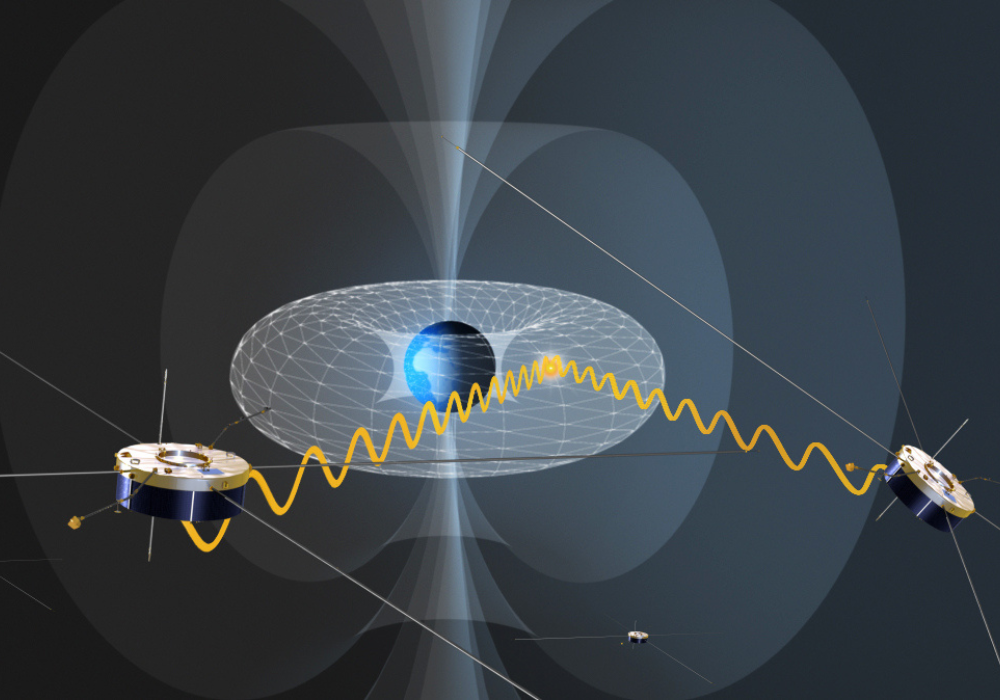
The streak is particularly bright in radio frequencies compared to visible light. That hints at synchrotron radiation, charged particles spiraling in magnetic fields, as a possible emission mechanism.
If that’s true, it suggests this streak isn’t passive structure but an energetic cosmic phenomenon. Its nonthermal signature implies something powerful may have energized it in the past—or could still be doing so.
4. Its Uniform Brightness Is Hard to Explain
Along its length, the emission remains remarkably consistent. Most cosmic structures show variation in brightness or density, but this streak’s signature is unusually even.
That uniformity rules out many simple formation scenarios, like a tail from a merging galaxy. Some theorists suggest the streak might trace an earlier phase of cosmic magnetism or an enormous shock front from a past event.
5. It Cuts Across Galaxy Clusters and Voids
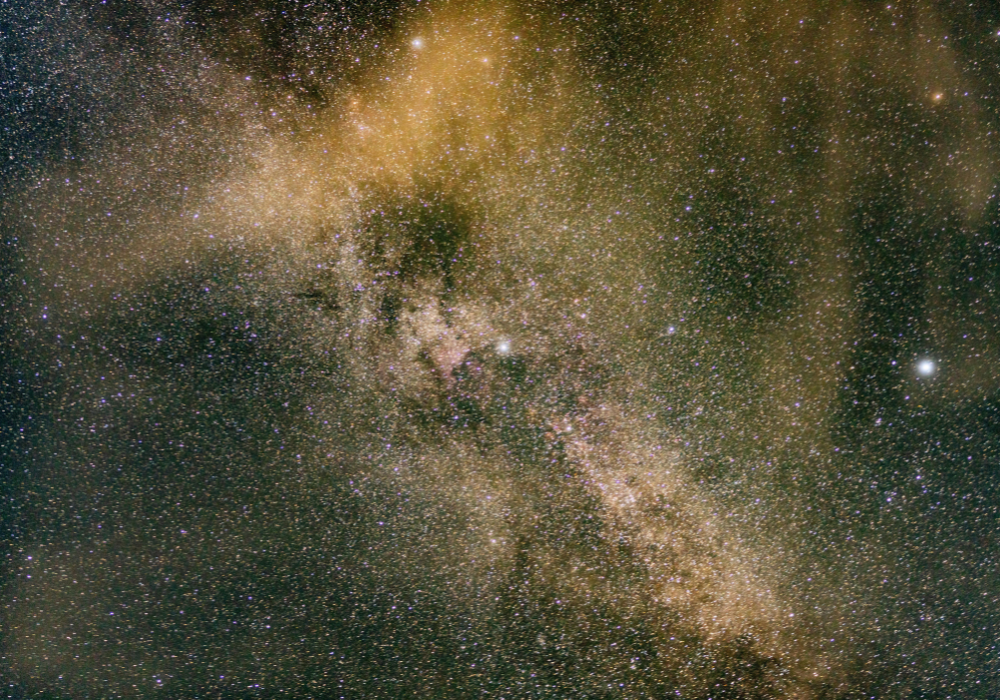
The streak traverses regions of both dense and sparse matter, clusters, voids, and everything in between. It doesn’t follow the paths one would expect from gravity-driven structure formation.
This “cutting across” behavior makes it harder to tie the streak to standard cosmic web processes. Its traversal of voids suggests it may be more fundamental or ancient than typical structures.
6. Its Scale Is Astoundingly Large
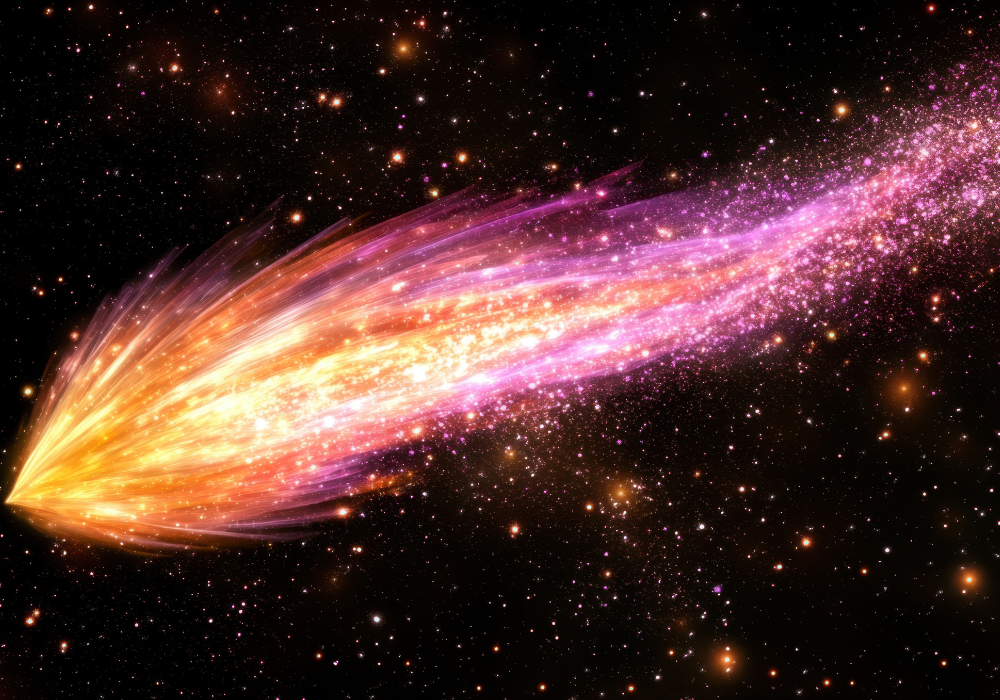
Preliminary estimates place its length at tens of millions of light-years, possibly hundreds. That scale is comparable to some of the largest known cosmic filaments, but its morphology is quite different.
At such sizes, light-travel time and cosmic expansion become relevant. The streak may reflect ancient conditions or processes from epochs when the universe looked very different—a fossil from cosmic history.
7. It’s Not Aligned with Known Magnetic or Gravitational Fields

Attempts to match its orientation with nearby galaxy filaments, dark matter maps, or magnetic field lines have come up empty. The streak’s direction often seems uncorrelated.
If its orientation is random relative to known structures, it might indicate an independent origin mechanism. Some researchers propose that we’re seeing a signal of large-scale primordial magnetism or unusual large-scale plasma behavior.
8. Similar Structures Have Never Been Confirmed
Astronomers have occasionally noted odd linear features before, but none with the coherence, scale, and properties of this new streak. It stands out even among “cosmic oddities.”
That singularity is both exciting and frustrating. Without precedent, it’s difficult to validate or simulate. It is a reminder that the universe may still hold new classes of structures we haven’t imagined.
9. Some Theories Invoke Ancient Shockwaves
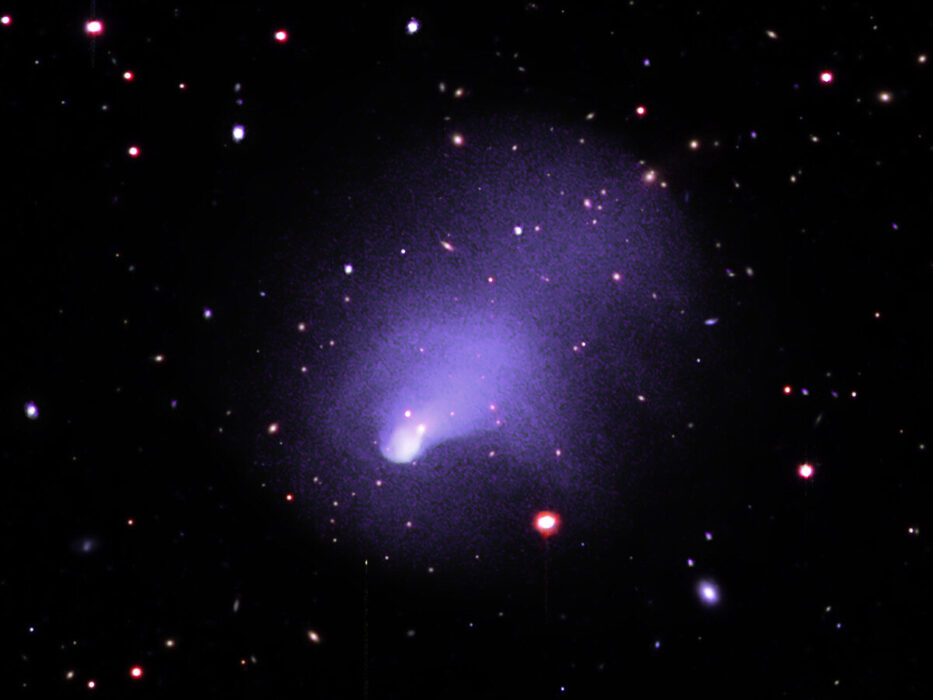
One hypothesis suggests the streak could be the remnant of a colossal shockwave, perhaps from a primordial collision, reionization front, or massive black hole event.
If true, this line could be a relic of violent cosmic history. Yet no evidence currently ties it to any known epoch or event. Proving such a theory would require detecting complementary signatures like temperature gradients or particle acceleration.
10. Follow-Up Observations Are Already Planned
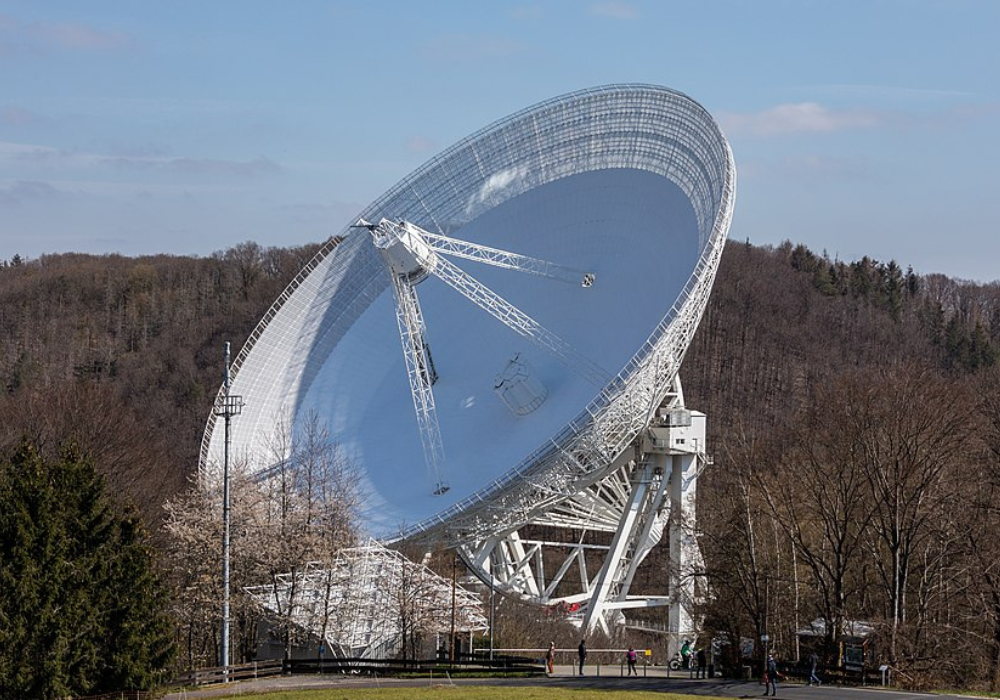
To solve the puzzle, astronomers are targeting the region with next-generation radio telescopes, X-ray observatories, and polarization studies. They’ll look for spectral variations, polarization signatures, and counterpart emissions.
Multifrequency data could reveal its composition, origin, and evolution. If we find correlation with magnetic fields or particle motion, the streak could become a new tool to probe cosmic structure and history.