
Digital detoxing delivers rewards your notification-numbed mind craves desperately.

Our phones have morphed into needy companions – constantly vying for attention and sulking when ignored. Americans now gaze at glowing rectangles more hours than they sleep, checking devices nearly 100 times daily – roughly every 10 waking minutes. Our thumbs have essentially evolved into entertainment-seeking tentacles with agendas of their own.
Meanwhile, our inner selves quietly hunger for experiences no pixel can provide. Authentic human connections, natural environments, and full-sensory engagement have been swapped for technological empty calories – momentarily satisfying but ultimately hollow. The remedy requires no expensive retreats or trendy wellness subscriptions. Everyday unplugged activities offer paths back to feeling completely human again. Your neglected inner self is frantically signaling for attention – perhaps it’s worth glancing up from your device to notice.
1. Books transport you to worlds no screen can touch—no charging required.

Paper books deliver a magic that screens simply can’t match. Physical books engage all your senses – that unique paper smell, the feeling of turning pages, the satisfying weight in your hands. A study by M. Julee Tanner, published in the School of Information Student Research Journal, found that readers comprehend and retain slightly less information when reading on digital screens compared to printed materials. Your brain actually processes information from printed pages differently, creating stronger memories than digital reading.
A physical book turns your mind into a personal movie studio that outperforms Hollywood. Characters appear exactly as you imagine them, not limited by actors. Bonus: books track nothing, sell nothing, and never ping you with notifications. They’re perfectly portable escapes – no charging or subscription needed. That well-loved paperback gives your brain a vacation from tech overload that streaming services can’t compete with.
2. Handwritten notes prove you care more than autocorrect ever could.

In our era of thumb-typed messages and disappearing digital chats, putting pen to paper is practically an act of rebellion. A study led by Professor Audrey van der Meer at the Norwegian University of Science and Technology found that handwriting engages more brain regions than typing, enhancing learning and memory.
Handwriting forces thoughtfulness that rapid-fire texting actively discourages. Your distinctive handwriting, with all its quirks and character, reveals parts of yourself that boring standard fonts completely mask.
When someone receives your handwritten note, they’re holding something your hands actually created, forming physical connections impossible through pixels and screens. While text threads eventually sink beneath the endless digital flood, handwritten notes become treasured keepsakes kept for years or decades. The time you invest speaks volumes beyond your words: this relationship deserves irreplaceable minutes from my limited time on Earth. One thoughtful, handcrafted letter outlasts hundreds of quickly forgotten digital exchanges.
3. Phone-free gatherings reveal what humans did before becoming screen zombies.

Modern get-togethers increasingly resemble bizarre tech rituals – meals arranged for Instagram perfection, conversations paused for posting, real connections sacrificed at the altar of documentation. Remove phones from your next dinner party and watch the magic happen: people become fully present, practicing that endangered social skill called undivided attention. As highlighted by Martha Gill in The Guardian, excessive phone use can lead to social isolation and deteriorating mental health, suggesting that society should begin treating excessive phone use as an addiction.
The atmosphere transforms instantly when screens vanish. Conversations flow naturally without Google-interruptions or notification pings. Actual listening replaces that zombie-like state of mentally crafting responses while pretending to hear. Food tastes better when experienced directly rather than through the appetizer paparazzi treatment. The evening becomes a lived experience rather than a social media performance – delivering exactly what your phone-weary soul has been secretly craving all along.
4. Forest bathing upgrades your mental hardware using trees instead of tech.

The Japanese practice of “forest bathing” involves zero bubbles or scrubbing – just intentional tree time that science confirms boosts wellbeing. Forests emit natural compounds that supercharge your immunity and slash stress hormones when you breathe them in. Nature’s organic patterns activate neural pathways that refresh your mind – essentially the opposite of what your doomscrolling habit does to your brain chemistry.
Just two hours weekly surrounded by greenery measurably improves your health stats like a personal trainer you never have to tip. The sensory buffet – chirping birds, dappled sunlight, varied textures, earthy smells – delivers exactly what our technology-numbed senses are starving for. No pristine wilderness needed – even that scruffy city park offers substantial benefits. Your brain architecture, designed through millennia for natural settings, experiences a major reboot when freed from the digital carnival of notifications. Trees dispense medicine that pharmaceutical companies would patent in a heartbeat if they could figure out the formula.
5. Deep conversation delivers what your soul craves after endless digital snacking.

Despite having infinite knowledge at our fingertips, we mostly use this miracle tech to watch cats falling off shelves and argue with strangers. Meanwhile, life’s big questions get ghosted faster than your last dating app match. Screen-free conversations create space for the vulnerability these topics need. Without glowing rectangles present, people open up like WiFi-allergic flowers.
These exchanges unfold at nature’s pace – impossible in message threads where “typing…” creates more anxiety than horror movies. Facial expressions deliver subtleties no emoji army could capture. The unpredictable conversational journey builds bonds through mutual discovery rather than filtered self-marketing. One focused, tech-free conversation packs more authentic connection than months of digital interaction. The wisdom you seek isn’t in search results – it’s sitting across from you, waiting for you to actually listen.
6. Making music activates mental regions our scrolling habit neglects.

Learning an instrument is like CrossFit for your neurons, simultaneously engaging finger gymnastics, sound processing, math thinking, memory circuits, and emotional centers. This full-brain workout counterbalances the narrow stimulation of touchscreens, which primarily activate visual processing while other cognitive systems sit on the mental couch, atrophying. Unlike passively consuming content (the brain equivalent of fast food), creating music demands complete presence, making distracted multitasking impossible – a refreshingly focused state for our notification-addicted minds.
Progress comes through deliberate practice rather than instant gratification – cultivating patience increasingly extinct in our tap-and-swipe world. Even beginner-friendly instruments like ukuleles provide accessible entry points. Creating simple melodies delivers genuine accomplishment that your carefully curated social feeds can only pretend to provide. The immediate feedback between action and sound generates flow states that neurochemically resemble meditation, minus the uncomfortable sitting positions.
7. Stargazing shrinks your problems faster than any mindfulness app.
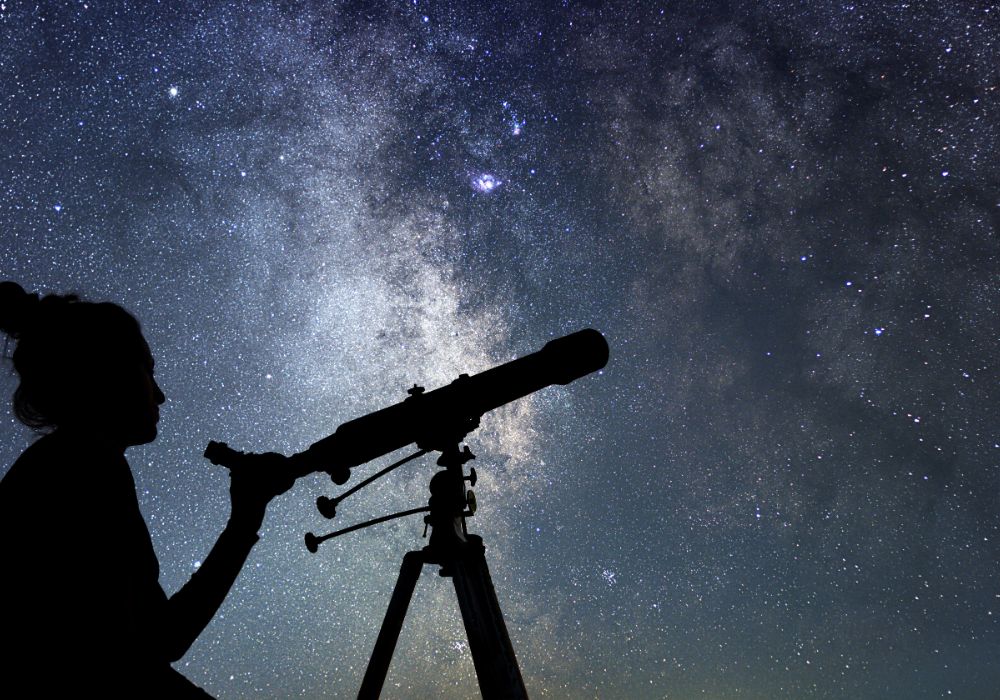
Nothing deflates your ego quite like staring into the cosmic abyss. Contemplating stars whose light began its journey while woolly mammoths still roamed Earth offers perspective no inspirational quote-over-sunset-photo could ever deliver. The universe’s mind-bending vastness creates what scientists call the “overview effect” – a brain reset that mutes your personal drama against the cosmic main stage.
Unlike the manufactured urgency of your phone’s desperate “notice me!” pings, stargazing triggers genuine awe – an emotional state that science links to increased generosity and wellbeing. The darkness necessary for good viewing naturally reboots your circadian rhythms, frazzled by screens that trick your brain into thinking it’s perpetually noon. Even spotting basic constellations connects you to something vastly greater than your social media feed’s latest mini-crisis. After hanging out with galaxy neighbors a billion light-years away, yesterday’s parking ticket suddenly feels remarkably insignificant.
8. Handmade projects prove you’re human in a world of algorithmic approval.

Creating something with your hands proves you’re human in a world where “work” means endless clicking and typing. Whether you’re shaping clay, building furniture, or cooking dinner, seeing your actual effort turn into something real brings satisfaction that no finished email thread ever will. When you’re completely absorbed in crafting something, you enter what experts call “flow” – basically the purest form of happiness your brain can cook up.
Unlike digital experiences engineered to keep you doom-scrolling through strangers’ vacation photos, hands-on projects follow the honest rhythms of materials and physics (remember those?). Making something imperfect but real feels refreshingly different from the digital world’s fake perfection – like biting into a homegrown tomato after years of those red plastic imposters from the supermarket. Your hands hold ancient knowledge; they’re just waiting for you to put down your phone long enough to rediscover it.
9. Solo nature time reboots your brain when too many tabs are open.

Escaping into nature alone creates mental states impossible to achieve while glued to your devices. Without an audience for your adventures, you face what truly matters beyond likes and comments. Without the constant ping of notifications, your inner compass resets like a smartphone finally finding signal after being trapped in an elevator. Quiet time creates space for thoughts that can’t break through when your mind is constantly distracted.
Real-world challenges – sudden rain, steep hills, finding the right trail – build actual skills instead of the fake mastery your apps provide. You solve problems with what’s at hand, not Google, while real consequences teach lessons no tutorial can. Even short solo nature trips give your brain benefits like a mini mental spa day. Your nervous system, built for real adventures, not watching other people’s, resets when freed from technological middlemen. Sometimes finding yourself means temporarily misplacing your phone.
10. Human touch satisfies a primal need no emoji will ever replace.

Nothing shows tech’s limits like our need for touch – that basic human hunger no fancy gadget can feed. Real touch releases oxytocin (your body’s natural feel-good chemical), cuts stress, lowers blood pressure, and wakes up brain areas needed for empathy. These body responses developed over millions of years and remain completely out of reach through even the most expensive digital devices.
Activities with actual physical contact – dancing with partners, getting massages, or simple handshakes – meet human needs that no virtual option can replace. Physical activities engage multiple senses at once in ways screens simply cannot match. Your brain fundamentally needs real human closeness – it’s the original connection that doesn’t need charging or updating. While technology helps us connect across distances, it can’t replace the basic human necessity of being physically present with others.