
You stopped checking under the bed, but the anxiety just moved to your inbox.
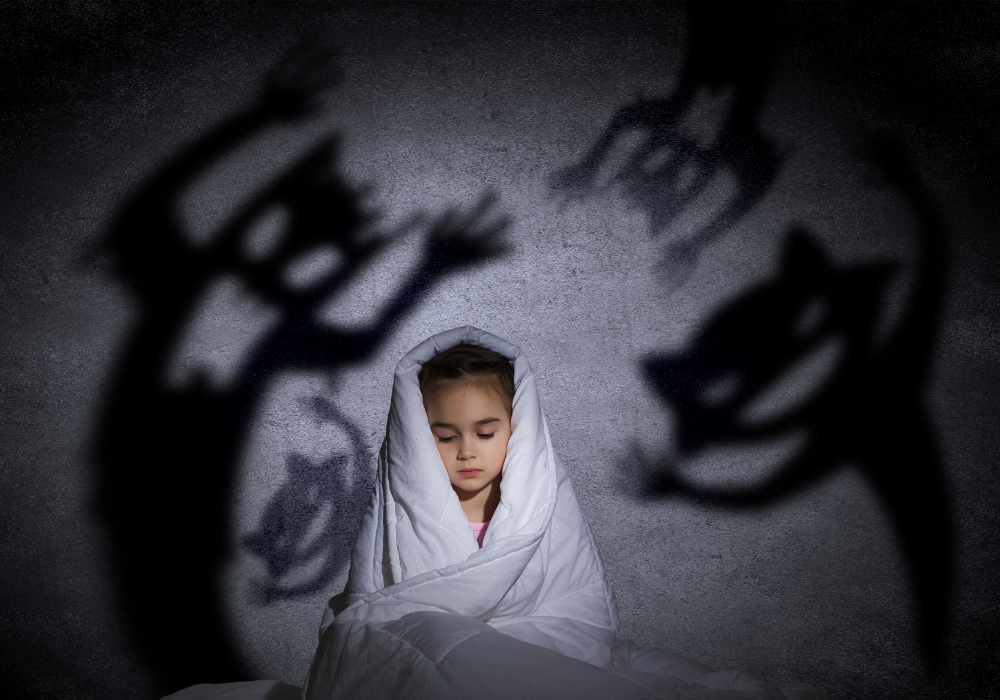
Some fears you outgrow, sure. You learn shadows don’t bite and clowns are just people in bad makeup. But others? They don’t go away. They just shapeshift. The fear of being left out becomes social anxiety. The fear of getting in trouble turns into obsessive inbox-checking or panic when your boss uses a period. We call it stress now, or burnout, or imposter syndrome—but if you trace it back, the roots are familiar.
It’s easy to laugh off childhood fears as irrational. But a lot of them were actually pretty intuitive. You were scared of being abandoned, judged, unloved, unsafe—and now, as an adult, those fears just wear different clothes. They show up at work. In relationships. In how you treat yourself when no one’s watching. You’re not dramatic. You’re human. And naming those grown-up versions doesn’t make you weak—it makes you a little less haunted.
1. The fear of being alone turned into a constant need for connection.

As a kid, being left alone felt like the world had forgotten you. Now, it’s the creeping sense that your group chat moved on without you or that everyone else somehow “has their people” while you’re still floating. It’s not about needing constant company—it’s about craving connection that actually sticks. That old fear didn’t vanish. It just got filtered through adult experiences. A canceled plan can send you spiraling, not because you’re clingy, but because something in you still remembers what it felt like to be left behind.
Steven Stosny draws a line in Psychology Today between modern digital habits—like compulsively checking social media—and deeper fears of abandonment that linger beneath the surface. You’re not needy. You’re wired for belonging—and your fear knows what it feels like to go without it.
2. The monster under the bed became a vague, constant sense of doom.
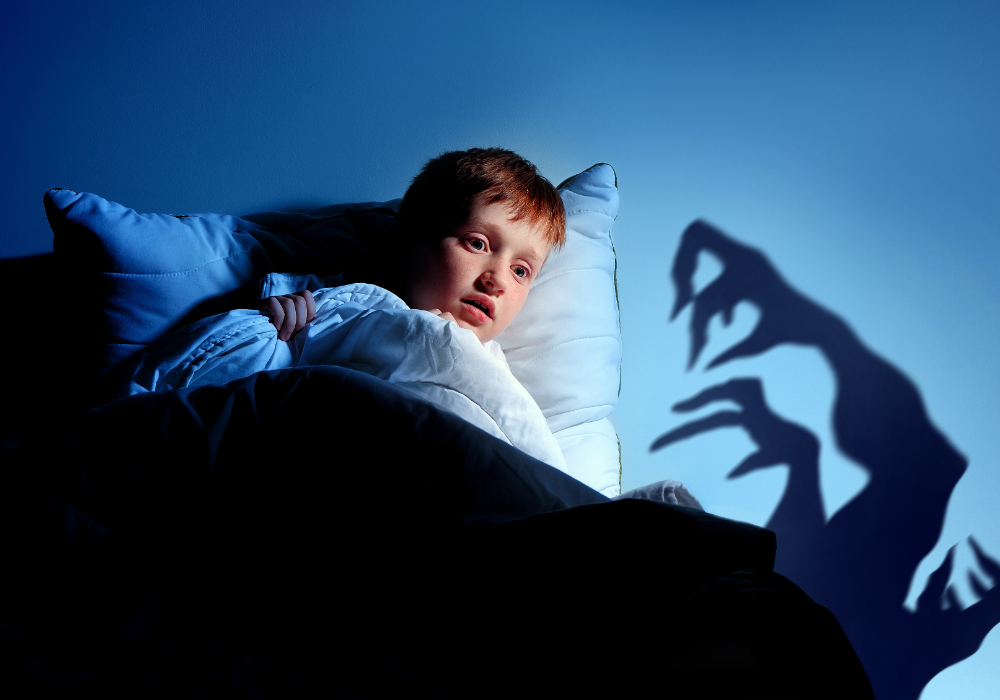
Back then, monsters had names. You could picture them under the bed or in the closet. Now? The fear feels more abstract. It’s a weird sense of doom when your phone rings, or a stomach drop over nothing you can quite explain. It’s not imaginary. It’s just less cartoonish now.
That fear of lurking danger didn’t leave—it just got more internal. You learned not to flinch at shadows, but you never stopped bracing for impact. Tom Beckers and his co-authors describe this shift in PubMed Central, noting that anxiety in adulthood often shows up as hypervigilance and persistent mental rehearsal of threats—even without a clear danger present. Grown-up monsters don’t growl. They disguise themselves as silence, uncertainty, or the feeling that something’s just… off.
3. The fear of the dark morphed into anxiety about the unknown.

The light switch used to be the fix. Now the things you can’t see are bills, medical test results, job applications, or whether someone still wants to be in your life. It’s still about what you don’t know—just with bigger stakes and fewer night lights.
Vanessa M. Brown and her co-authors explain in Frontiers in Psychology that uncertainty in adulthood functions as a chronic psychological stressor, rooted in the brain’s difficulty tolerating unpredictability. It’s harder to fight because there’s no clear villain, no quick reassurance.
You’ve learned how to function in ambiguity, but that doesn’t mean it stopped freaking you out. Every unread email or delayed response can feel like a cliffhanger, not because you’re fragile—but because you still crave safety where there’s only fog.
4. The fear of getting in trouble became fear of doing things wrong.

Remember the panic when a teacher said, “Can I see you for a second?” That fear didn’t disappear. It just mutated into dread over feedback, shame when you miss a deadline, or anxiety about how you “come off.” You’re not afraid of detention—you’re afraid of being wrong, flawed, or not enough.
Adult life is full of moments that echo that childhood fear. Every mistake feels like a moral failure, even if no one’s mad. You apologize too much. You double-check your tone. You overthink casual comments. It’s not that you messed up—it’s that part of you still fears what messing up means about you.
5. The fear of starting school evolved into fear of starting anything new.

That tight-chest feeling before walking into a room of strangers? Still here. It just happens before job interviews, dates, or trying something you’ve never done before. You don’t miss recess, but you miss the part where someone told you where to sit and what to expect.
Starting new things as an adult often comes with the same flood of fear you felt on the playground. Will they like me? What if I fail? Who do I sit with?
Now the stakes feel higher, and no one hands you a name tag. That fear of not fitting in didn’t disappear. It just got better at hiding in ambition, procrastination, or that voice saying, “Maybe now’s not the right time.”
6. The fear of being picked last turned into fear of not being chosen at all.

You remember that sting—standing in a lineup, waiting for someone to call your name. Now it shows up as radio silence after an application, unread messages, or feeling invisible in a room full of people. Rejection isn’t new. It just hurts in a grown-up costume. That childhood fear of not being wanted didn’t go away—it just got quieter and more complicated.
You tell yourself it’s fine, that you’re independent, that you don’t need validation. But somewhere inside, that kid is still watching the game start without them. That ache doesn’t mean you’re weak. It means you’re human—and still hoping to be seen.
7. The fear of letting people down turned into chronic over-functioning.

Back then, disappointing someone felt like the end of the world. Now, you bend over backwards to avoid it. You say yes when you’re exhausted, over-deliver on every project, and panic if you miss a deadline by an hour. You call it being responsible. Your body calls it burnout.
This fear trains you to anticipate everyone’s needs before your own. You become the dependable one, the fixer, the person who always pulls through—even if it wrecks you. But deep down, it’s not about competence. It’s about safety. If you never mess up, no one can be mad. And if no one’s mad, maybe they’ll stay.
8. The fear of being left out turned into constant social comparison.

Missing one birthday party used to feel like the end of the world. Now it’s watching everyone else’s vacations, promotions, weddings, and friendships unfold online—while you sit there wondering if you’re somehow behind. You don’t want to compete. But part of you still wants to be chosen.
That fear of exclusion is sneakier now. It hides behind scrolling, behind FOMO, behind the quiet question: Am I doing life wrong? You know social media isn’t real—but that doesn’t stop your brain from keeping score. The feeling’s the same as it was at recess. You just swapped the playground for a timeline.
9. The fear of being misunderstood turned into fear of being truly seen.

As a kid, being misunderstood felt frustrating—like no one got what you meant. Now, the scarier part might be being fully understood. What if they do see you clearly? What if they don’t like what they find? So you stay polished, agreeable, a little guarded. Safer that way. This fear works in reverse. You long for intimacy but flinch when it gets too close. Vulnerability used to mean risking a teacher misreading your tears or a friend mocking your secret.
Now it’s about whether your mess is lovable, your silence forgivable, your truth tolerable. You’re not afraid of being seen. You’re afraid of being rejected after being seen.
10. The fear of something bad happening turned into hypervigilance.

You used to double-check the closet. Now you double-check the locks, the calendar, your partner’s tone, your doctor’s phrasing. It’s not paranoia—it’s pattern recognition from a nervous system that never quite learned to exhale.
You don’t panic for fun. You panic because your brain still thinks it’s protecting you. Hypervigilance is exhausting, but it feels productive. Like if you just catch everything early enough, nothing can go wrong. But you’re not a threat detector. You’re a person who deserves to rest. That fear from childhood didn’t vanish. It just learned to speak in alarms—and it’s been waiting for someone to finally say, “You’re safe now.”