
A lone fisherman’s routine catch in 1938 revealed a creature scientists believed vanished with the dinosaurs.
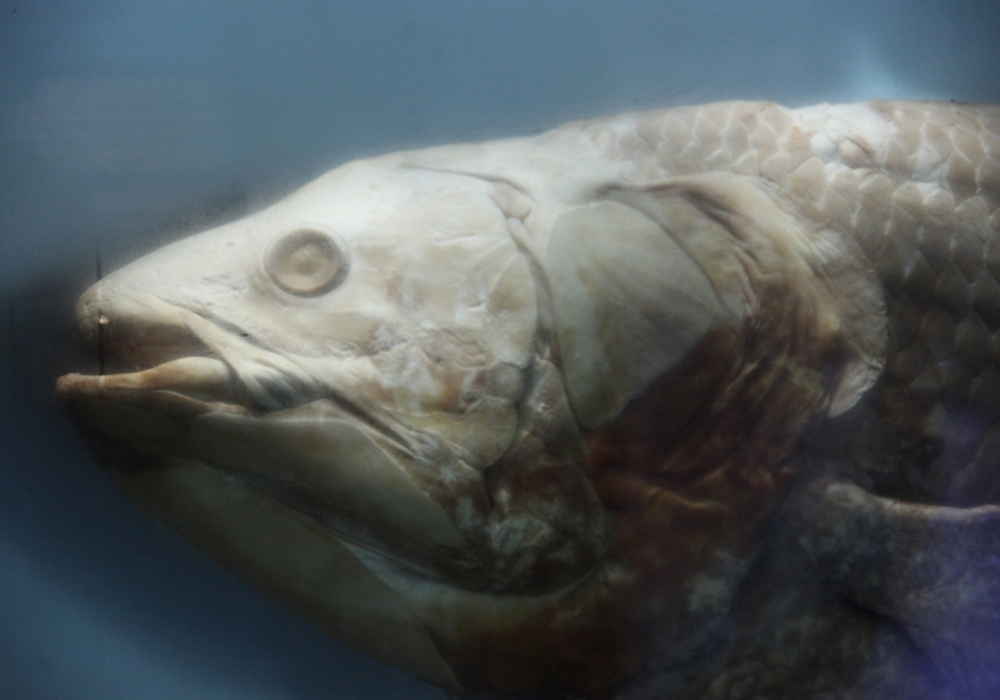
A routine catch off the coast of South Africa in 1938 led to one of the most astonishing scientific discoveries of the century. When a small-town museum curator examined a strange blue fish brought in by a local fisherman, she realized it resembled a species believed to have vanished 66 million years ago. Her persistence set off an international scramble to confirm the find, ultimately revealing that a creature thought lost since the age of dinosaurs had somehow survived in the deep.
1. A Curious Catch Arrives at a Small Coastal Museum
Marjorie Courtenay-Latimer, curator of the East London Museum, regularly inspected local fishermen’s hauls for interesting specimens. On December 22, 1938, she noticed a large, unusual fish with thick scales, limb-like fins, and an ancient appearance unlike anything she had seen before. Its strange shape and armored body immediately caught her attention.
Despite the fish’s deteriorating condition, Courtenay-Latimer recognized it could be significant. She saved the specimen, had it preserved, and began contacting scientists who might help identify it. Her decision to preserve the fish would prove crucial in unlocking one of the greatest zoological surprises of the 20th century.
2. The Creature Scientists Believed Had Vanished With the Dinosaurs
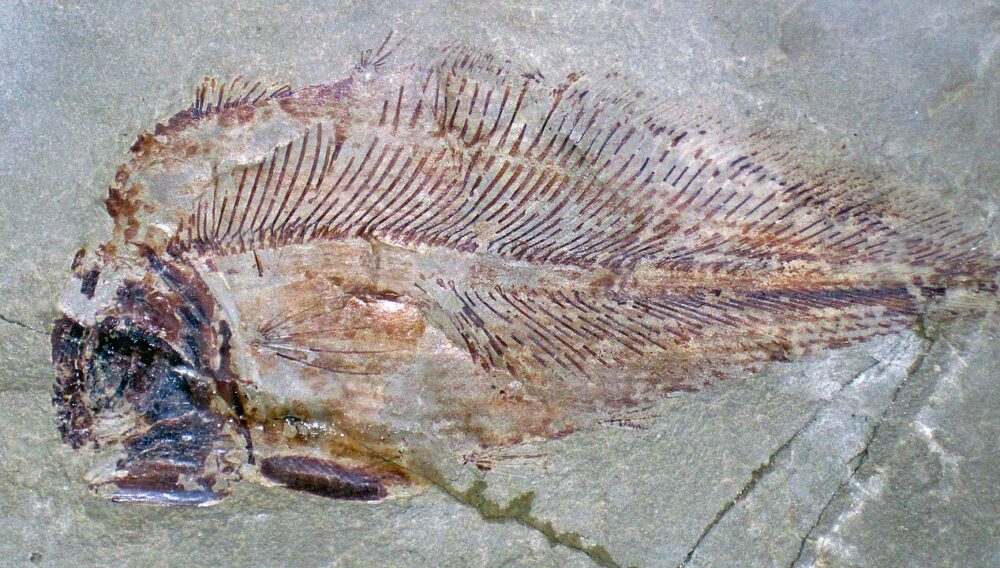
For decades, the coelacanth was known only from fossils dating back more than 300 million years. Paleontologists believed it went extinct at the end of the Cretaceous period, the same time dinosaurs disappeared. Its fossil record suggested no survival into modern times.
The fish found in 1938 possessed many classic coelacanth features: lobed fins, thick scales, and a unique tail shape. When scientists reviewed sketches of the specimen, they were stunned. The idea that a creature unchanged for millions of years could survive unnoticed challenged long-held assumptions about extinction and evolution.
3. The Race to Confirm the Identity of the Strange Fish
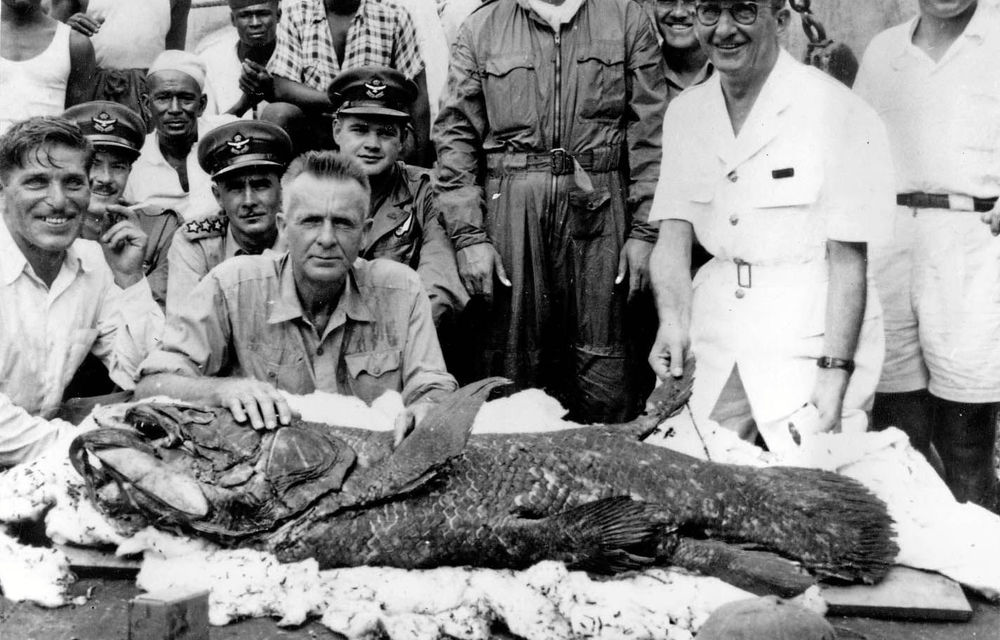
Courtenay-Latimer contacted ichthyologist J.L.B. Smith, who recognized the fish from her drawings almost immediately. Although he could not see the specimen right away, he believed it matched the description of a coelacanth. His excitement grew as he studied each detail.
When Smith finally examined the preserved specimen weeks later, he confirmed the impossible: this was indeed a living coelacanth. His verification electrified the scientific community. The confirmation turned a small-town museum discovery into a global scientific event that made headlines around the world.
4. Why the Coelacanth Was Considered a “Living Fossil”
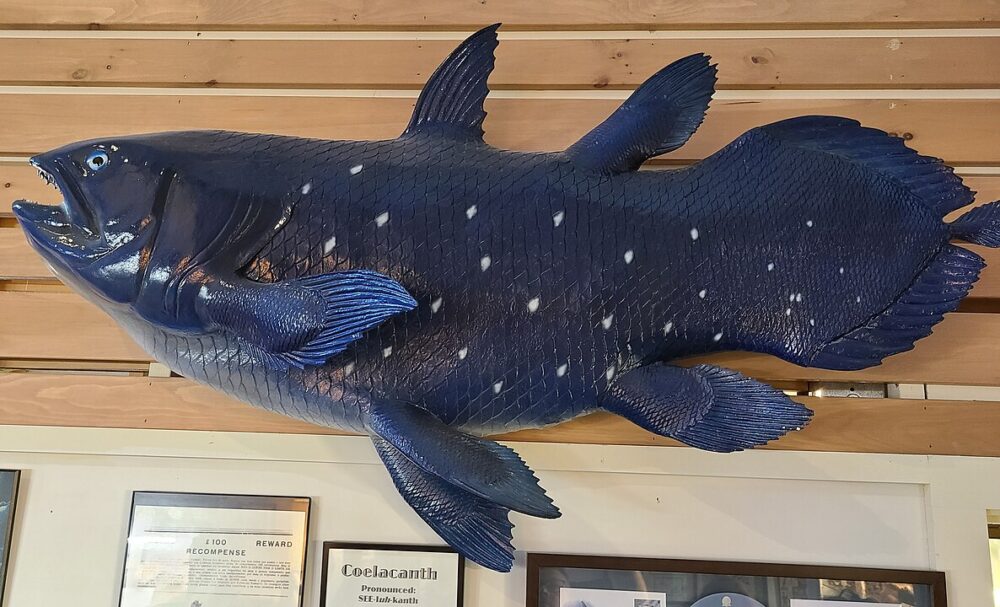
Coelacanths possess many ancient traits found only in early vertebrates, including lobed fins that resemble the beginnings of limb structures. Their anatomy provides clues about the evolutionary path from sea creatures to land animals. Because they were believed extinct for millions of years, their survival stunned researchers.
The rediscovery suggested that deep-sea habitats could hide species long thought vanished. Scientists began to reconsider how extinction is understood, especially for creatures living in remote, inaccessible environments where human observation is limited.
5. How a Single Fisherman Became Part of Scientific History

The fish that changed scientific history was caught by Captain Hendrik Goosen during a routine trawl near the Chalumna River. He noticed nothing unusual about the catch and sent it, along with others, to the local market.
His decision to notify the museum, something he often did with odd specimens, unknowingly altered scientific understanding. Goosen’s catch revealed that significant discoveries can arise from everyday activities, especially when paired with curiosity and scientific awareness from people like Courtenay-Latimer.
6. The Specimen’s Preservation Nearly Failed

When Courtenay-Latimer acquired the fish, local taxidermists lacked experience preserving such unusual marine species. The fish began to deteriorate quickly, putting its scientific value at risk. She worked urgently to have it mounted, saving as much detail as possible.
Although the internal organs could not be preserved, enough anatomical features remained to allow scientists to make a definitive identification. The partial preservation proved essential—without it, the world might never have recognized the coelacanth’s survival.
7. The Global Sensation That Followed the Discovery
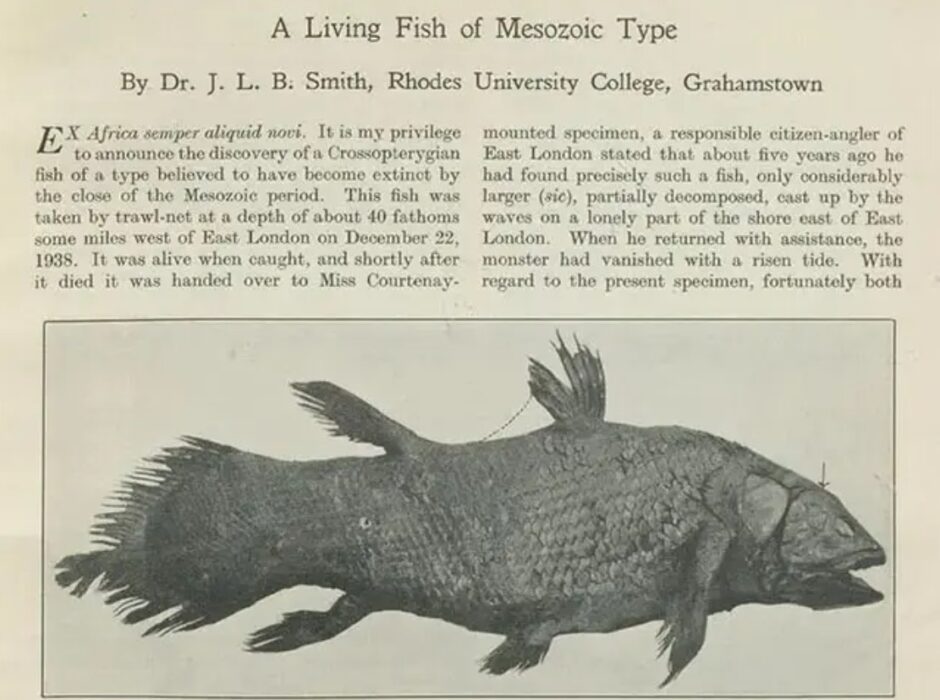
News of the coelacanth’s rediscovery spread rapidly, capturing attention across continents. Newspapers described it as a “prehistoric monster” and “the greatest zoological find of our time.” Scientists from multiple countries expressed disbelief and fascination.
The fish became a symbol of scientific mystery and survival. Its reappearance sparked debates about how many ancient species might still exist in unexplored ocean depths and inspired renewed interest in deep-sea research.
8. Scientists Launched Expeditions to Find Another One
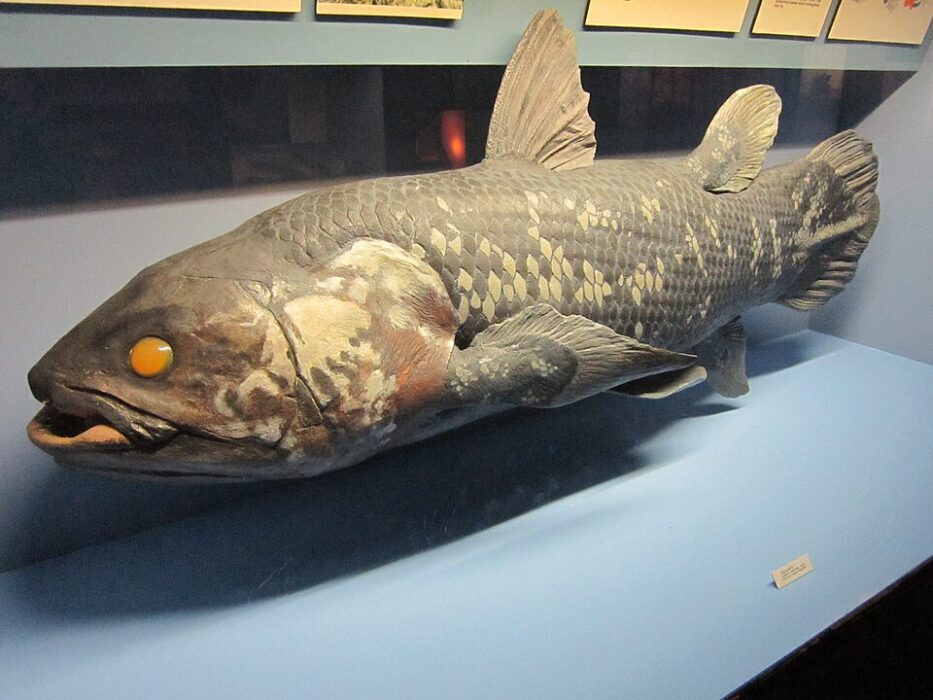
After confirming the first specimen, researchers launched determined expeditions to locate more coelacanths. Years passed before another living specimen was found. The search took scientists along remote coastlines, where fishermen recalled seeing similar fish.
The next coelacanth was discovered in 1952 near the Comoros Islands, confirming that a small population had survived in deep underwater caves. This second find proved the species was not a one-off relic but part of a hidden ecosystem.
9. Why the Coelacanth Survived Undetected for Millions of Years
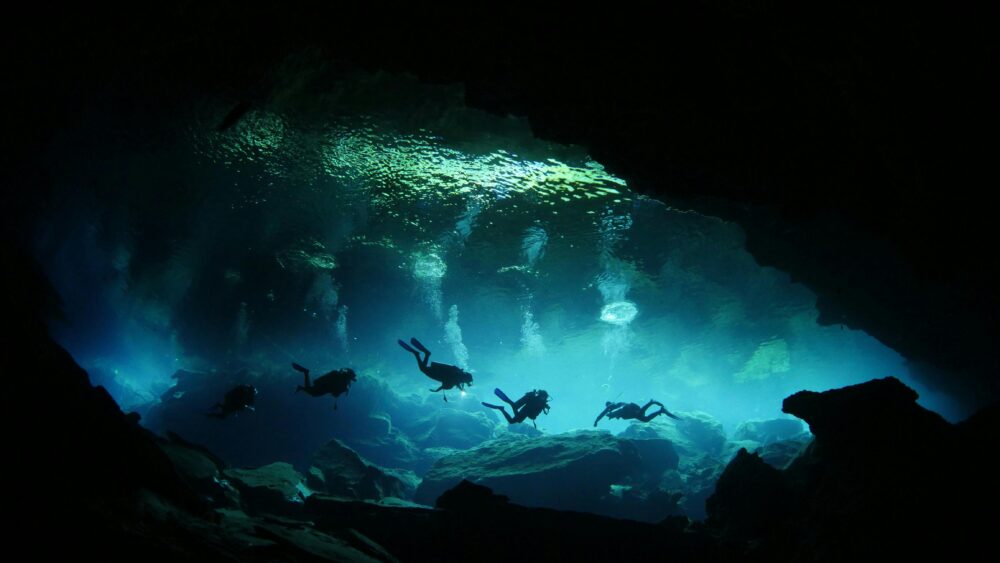
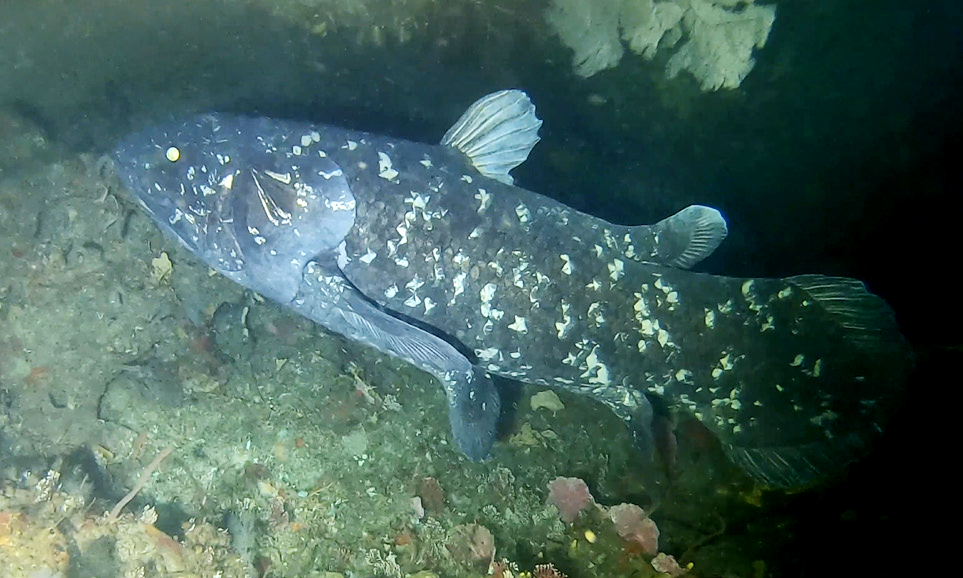
Coelacanths live in deep submarine caves between 300 and 700 feet below the surface, far beyond the reach of traditional fishing methods. Their remote habitats shielded them from human observation for centuries.
Additionally, they are slow-moving, nocturnal, and reclusive, spending their days in dark underwater recesses. These behaviors made them nearly invisible to coastal communities, contributing to their long concealment from scientific knowledge.
10. A Creature With One of the Longest Gestation Periods
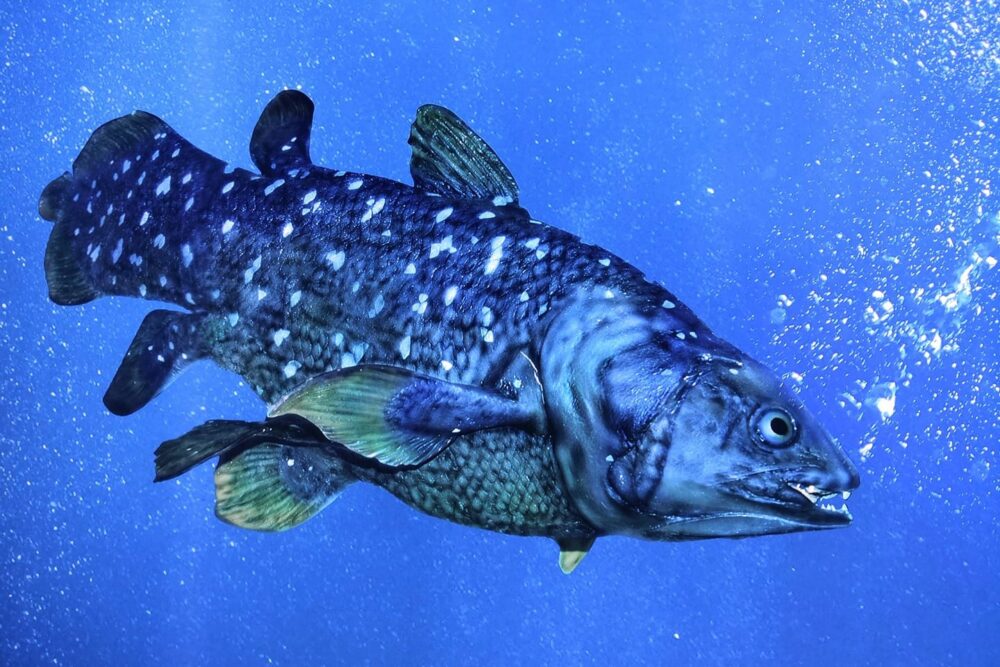
Researchers later learned that coelacanths have exceptionally slow reproductive cycles, with gestation lasting around 13 months or longer. They produce few offspring at a time and mature slowly.
This reproductive strategy suggests a species highly adapted to stable, deep-sea environments. It also explains why coelacanth populations remain small and why they are vulnerable to overfishing and habitat disturbance.
11. What the Discovery Means for Evolutionary Science
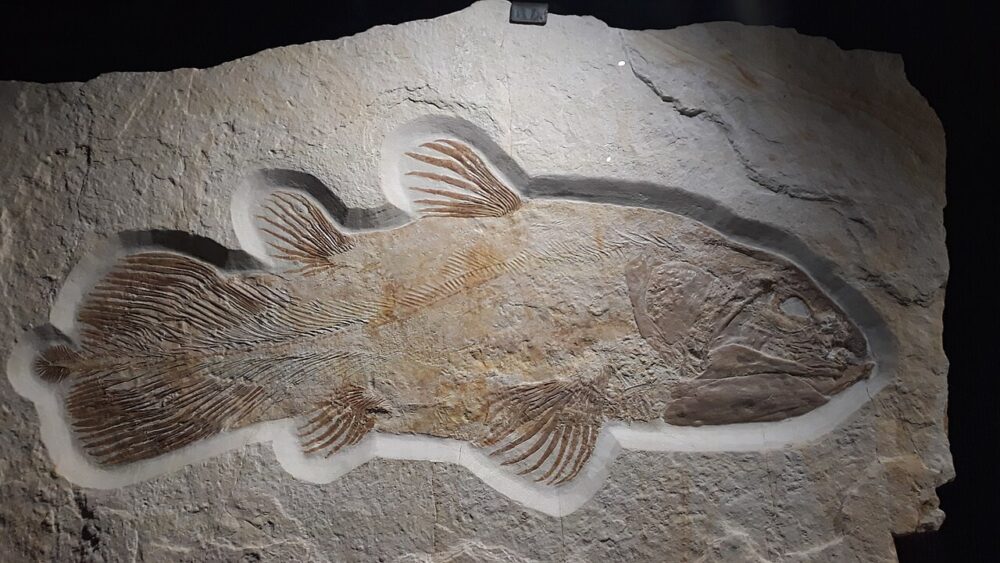
The coelacanth offers rare insight into early vertebrate development because it retains many ancestral physical traits. Its fin structures provide clues about how early animals began adapting to life on land.
Studying the species helps scientists trace evolutionary pathways and understand how anatomical transitions occurred. The discovery strengthened the idea that deep-sea ecosystems can preserve ancient lineages far longer than expected.
12. The Coelacanth’s Legacy and Ongoing Protection Efforts

Today, coelacanths are protected by international conservation laws. Their populations remain small, and sightings are rare, but they continue to fascinate scientists and the public. Researchers monitor them using submersibles and remote cameras.
The fish’s rediscovery remains one of the most extraordinary examples of a “living fossil” returning from presumed extinction. It serves as a reminder of how much remains hidden in Earth’s oceans—and how a single moment of attention can reshape scientific understanding.