
Scientists say your great-great-great-grandkids might not even recognize your face.

You might want to take a good, long look in the mirror—because your descendants probably won’t look anything like you. The way we’re living now, with our tech habits, diets, climate, and even the way we socialize, is slowly sculpting the human body into something… different. And it’s not just a little wrinkle here or a new trend in height. We’re talking real, jaw-dropping changes to how we might see, move, think, and function in the next 500 years.
It’s kind of wild to think about, right? That everything from your daily screen time to what you snack on could ripple into the distant future and shape what humanity becomes. Of course, none of us will be around to confirm it, but science, history, and evolution all point to some pretty fascinating outcomes. Some are exciting. Others? A little creepy. Either way, imagining the human of the future isn’t just a thought experiment—it’s a peek into where we might be headed if we don’t hit the brakes or change direction.
1. Humans could evolve bigger eyes to adapt to life indoors and in low light.

Imagine your great-great-great-grandkids with eyes that look more like an anime character than your average person today. As we spend more time indoors and under artificial light, some researchers believe our eyes may gradually grow larger to help absorb more available light—just like animals that live in caves or the deep sea, according to the people at New Scientist. And with the rise of virtual reality and screen time, our vision needs may evolve right along with our habits. Some even suggest a secondary eyelid could develop to help block out excess blue light. Sounds far-fetched? Maybe.
But evolution always follows use. If our lives continue trending indoors, our peepers may be the first feature to respond. Bonus: Bigger eyes could also help us spot microexpressions better, enhancing emotional intelligence—or just making us really great at people-watching.
2. Spines might curve forward as we become more hunched from technology use.

Scroll through your phone long enough and you might already feel this one setting in. As our reliance on devices increases, the human spine is facing new pressures—literally. Experts say posture is shaping evolution, and a more hunched or curved-forward spine could become the norm over centuries, as reported by the authors at Mayo Clinic Health System. It’s called “tech neck,” but future generations might just call it… posture. Combined with possible shifts in the center of gravity and skeletal structure, you could be looking at an entirely different silhouette.
This isn’t just about appearances—postural changes could also affect breathing, mobility, and muscular development. If our tech habits don’t change, we might evolve into a society of “C-shaped” humans who need fewer muscles to stand tall. Kinda dystopian, but also a powerful reminder that your daily routine shapes more than just your mood—it might shape the future of humanity’s entire frame.
3. Skin tones could become more diverse to adapt to changing climates and UV exposure.

As people move more freely across the planet—and as climate change shifts UV radiation patterns—our skin may adapt in fascinating ways. With hotter regions expanding and sun intensity fluctuating, human skin may evolve to better handle increased radiation or sudden extremes, as stated by Saioa López at SRUK. It’s possible that future generations will develop skin tones that don’t resemble anything on today’s spectrum—either through evolutionary adaptation or even genetic modifications. Imagine copper-gold hues that absorb just the right amount of sun, or skin that naturally regulates vitamin D more efficiently. Some theorists even propose built-in SPF through melanin enhancements.
And with climate migration on the rise, mixing between previously isolated populations will only accelerate these changes. Bottom line? The palette of human skin might get more complex, diverse, and specialized than ever before—not just for beauty, but for survival.
4. Hands might shrink while fingers lengthen to better navigate digital tech.

Hold your phone. Now imagine doing it with long, slender fingers designed like precision tools. If current tech trends continue, our hands could actually morph to be better at tapping, swiping, and typing. Fewer hard labor tasks and more screen-based interaction might reduce the need for broad palms or heavy musculature. Instead, future hands could be all about flexibility, dexterity, and subtle movements. It’s evolution following function—just like how the opposable thumb gave us tools, the “tech pinky” might be next.
Some futurists have even sketched out hand shapes with new joint angles to reduce digital strain. Creepy? A little. But pretty efficient if everything you do involves interfacing with machines. As our daily lives evolve into button-pushing and gesture-based controls, evolution might just upgrade us to be the ultimate touchscreen species.
5. Respiratory systems may adapt to handle poor air quality and pollutants.

Think of it like built-in air purifiers in your lungs. With worsening air quality in many parts of the world and more exposure to urban pollutants, our bodies might eventually develop enhanced filtration systems. Some speculate that nasal passages could lengthen to better screen out fine particles or that new cell structures in the lungs might evolve to tolerate low-oxygen environments. In extreme predictions, we might even develop internal bacteria that help neutralize toxins.
But animals have evolved all kinds of respiratory tricks in response to tough environments—and humans are no exception. If the smog doesn’t clear, we may need biological hacks to keep breathing easy. On the bright side, this adaptation could make future humans more resilient in disaster zones or polluted urban centers.
6. Humans could develop thicker eyelids or a third eyelid to combat screen strain.

If you’ve ever finished a long day staring at screens with dry, tired eyes, you might be experiencing a very modern problem. One that evolution may eventually solve. Some biologists theorize that future humans could develop a semi-transparent third eyelid (like some birds and reptiles have) to help filter blue light and keep the eyes moist during constant digital use. Another theory? Thicker eyelids that reduce glare or blink more frequently to lubricate the cornea.
We already see tiny evolutionary shifts in eye health and structure from modern habits—so this isn’t as far-fetched as it sounds. It’s like your body saying, “Fine, if you’re going to look at a glowing rectangle all day, I guess I’ll build better gear for it.” The future may look weird, but it just might be easier on your vision.
7. People may grow larger heads to house more developed brains and tech integration.

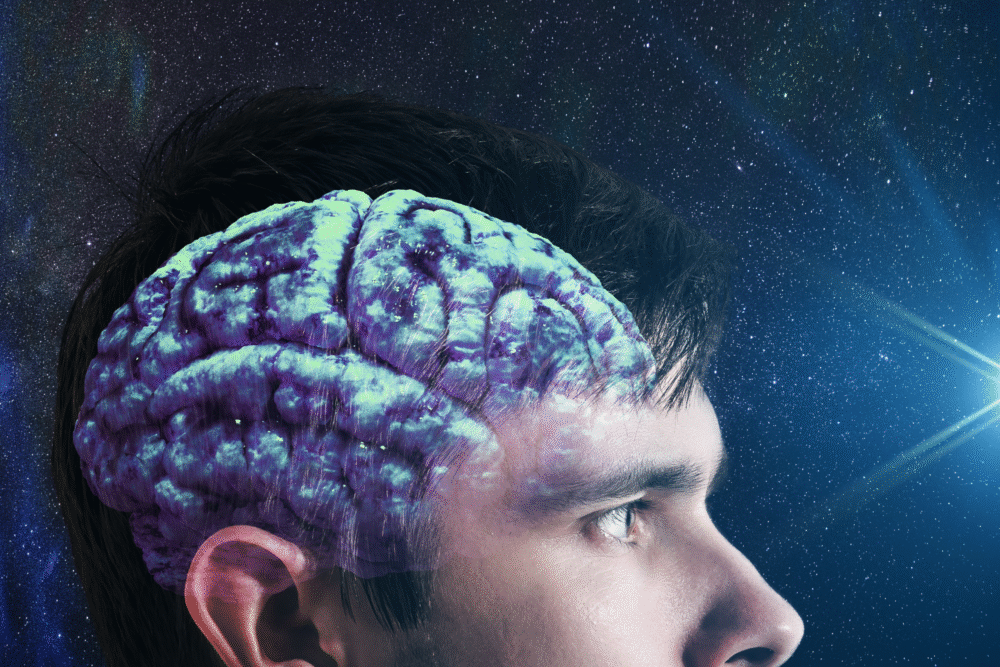
As our dependency on technology deepens and brainpower becomes even more central to survival, evolution might give us roomier skulls. Some scientists suggest the human cranium could expand to accommodate either more neural processing or direct tech integration—think implants, neural links, or bio-enhanced cognition. Bigger brains mean heavier heads, so necks might adapt too, growing stronger or shifting forward to better balance the weight.
Of course, it’s not just about smarts—it’s about synergy. If we start interfacing directly with AI, we might need structural upgrades to house the gear. It’s not hard to imagine future humans with subtly larger domes and sleeker jawlines to streamline breathing and communication. It might sound like science fiction, but so did smartphones once. When the brain becomes our most essential survival tool, the body may follow suit.
8. Legs could become shorter if we stop walking as much and rely on transportation.

Between rideshares, autonomous vehicles, and a world that’s increasingly built around sitting, you’ve probably already felt the effects of movement decline. Now stretch that over centuries. If we continue walking less and designing cities for machines, not feet, our legs may shrink as they become less critical for everyday function. Some evolutionary models predict more compact lower limbs, narrower feet, and even subtle changes in gait.
The upside is energy conservation. The downside? A future where running a mile sounds downright prehistoric. As technology continues to remove the need for physical travel, evolution may quietly trim our legs to reflect the shift. It’s not about aesthetics—it’s about efficiency. In a hyperconnected world, shorter legs might actually signal a more advanced, mobility-optional lifestyle.
9. Future humans might develop enhanced emotional sensitivity for social survival.
We often think evolution is all about muscles or reflexes, but social skills have always been a major survival tool. As our world grows more interconnected—and more mentally complex—future humans may evolve heightened emotional intelligence. That could mean faster empathy recognition, stronger intuition, or even new micro-expressions we don’t use today. In a society flooded with information, being able to read others instantly and navigate relationships with precision could become vital.
Some researchers suggest we could even evolve a richer range of facial muscles or more reactive skin to better signal emotion. Imagine a future where your body is more expressive by design—because connection matters as much as logic. In an age of isolation and digital misunderstanding, emotional clarity might be the next great leap forward.
10. Teeth could become smaller and fewer due to changes in modern diets.

You probably don’t need molars of steel to eat mashed potatoes, right? As processed foods become the norm and chewing-intensive diets fade, evolution may gradually phase out some of our teeth. In fact, some people today are already born without certain molars. Over hundreds of years, jaws could narrow, and tooth size could shrink since we’re no longer tearing into raw roots or uncooked meat.
Plus, with better dental care and fewer bite-related survival needs, fewer teeth might mean fewer problems. That said, a future with smaller jaws might also affect speech, facial structure, and even social cues like smiling. It’s a reminder that what we eat—and how we eat—shapes our biology in ways we rarely notice until we zoom out a few generations. So that next smoothie? It might be changing someone’s DNA, one slurp at a time.
11. Hair might become thinner or disappear altogether due to climate control and less UV exposure.

If you live with AC blasting all summer and central heating all winter, your body’s natural insulation system is basically on vacation. Over time, that could lead to thinner hair or even baldness becoming more common—not from age, but from evolution. We no longer need thick body hair to survive harsh climates or warn off predators, and some scientists think humans might eventually shed most of it altogether. Add to that the widespread use of hats, sunscreen, and indoor living, and you’ve got a recipe for follicle phase-out. We’re already seeing fewer body hairs compared to our early ancestors.
So, in a few hundred years, humans might sport barely-there fuzz or evolve a smooth, UV-resistant scalp. It may look futuristic, but it’s really just adaptation doing its thing. But hey, less money spent on shampoo.
12. Human skin might become tougher or more synthetic to handle environmental extremes.

As climate chaos ramps up—hotter sun, toxic pollutants, rapid temperature swings—our skin might step up its game. Scientists have floated the idea that human skin could become thicker, more elastic, or even semi-synthetic (via biotech) to withstand environmental challenges. That could mean self-healing tissue, improved UV resistance, or skin that helps regulate hydration. If cities become more polluted, we might need epidermises that function more like armor than canvas. Some biotech enthusiasts even suggest engineered skin could be programmed to adapt in real-time, changing color, texture, or function depending on conditions.
It’s not just about survival—it’s about thriving in unpredictable surroundings. And honestly, if our planet keeps throwing curveballs, future humans may come equipped with the biological equivalent of a survival suit, built right into their DNA.