
What modern physics allows, forbids, and still can’t fully rule out.

Time travel is usually treated as fantasy, but in physics it’s a serious subject that has been studied for decades. When physicists talk about time travel, they aren’t picturing machines jumping between centuries.
They are asking how time behaves under the laws of nature, and whether those laws allow time to pass differently for different observers.This question matters because modern physics has already shown that time is not universal. Experiments confirm that time can slow down depending on speed and gravity, meaning our everyday experience of time is only an approximation.
While traveling backward in time remains deeply controversial, traveling forward in time is already supported by tested physics. Understanding what physics actually allows helps separate real science from science fiction.
Click through to see if it’s possible to travel through time.
1. Why physics no longer treats time as absolute

For most of human history, time was assumed to move at the same rate for everyone, everywhere. Physics overturned that idea by showing that time is woven together with space into a single structure called spacetime.
Once time is understood as flexible rather than fixed, it becomes something that can stretch, slow, or differ between observers. This shift is what makes time travel a legitimate scientific question rather than a purely imaginative one.
Follow us and access great exclusive content every day
2. How Einstein changed our understanding of time forever
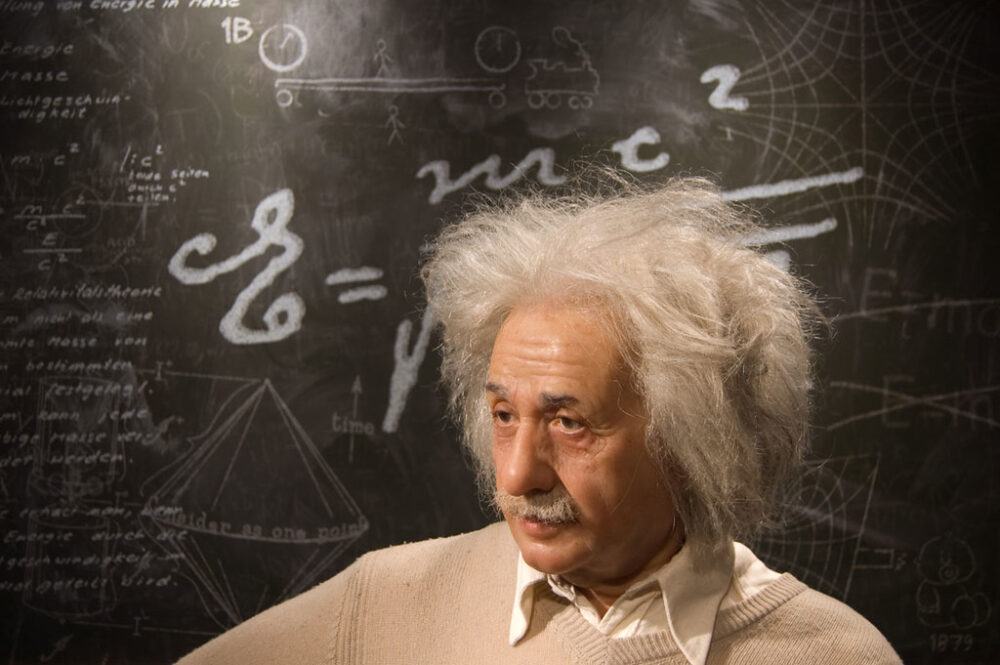
Albert Einstein’s theory of relativity demonstrated that time is affected by motion and gravity. The faster something moves, the more slowly time passes for it compared to something at rest.
This idea isn’t theoretical speculation. Time dilation has been measured repeatedly using precise clocks, confirming that time itself responds to physical conditions.
3. Why traveling forward in time is already possible

From a physics standpoint, traveling forward in time doesn’t violate any known laws. An object moving close to the speed of light experiences time more slowly than objects moving at ordinary speeds.
If that object returns to Earth, more time will have passed for everyone else. In that sense, the traveler has moved into the future relative to others, a real effect predicted and confirmed by physics.
Follow us and access great exclusive content every day
4. How everyday technology already accounts for time travel effects

Time dilation isn’t just a laboratory curiosity. It must be accounted for in systems that rely on precise timing, such as satellite-based navigation.
Clocks on satellites tick at different rates than clocks on Earth due to their speed and weaker gravity. Without correcting for these effects, modern navigation systems would quickly become inaccurate.
5. What extreme gravity reveals about the nature of time

Strong gravitational fields slow time dramatically. Near extremely dense objects, such as neutron stars or black holes, time passes much more slowly compared to regions farther away.
While no one could survive close to a black hole, these predictions are supported by observations of how light and matter behave near massive objects. They reinforce the idea that time is not uniform across the universe.
6. Why wormholes are discussed seriously but remain unproven
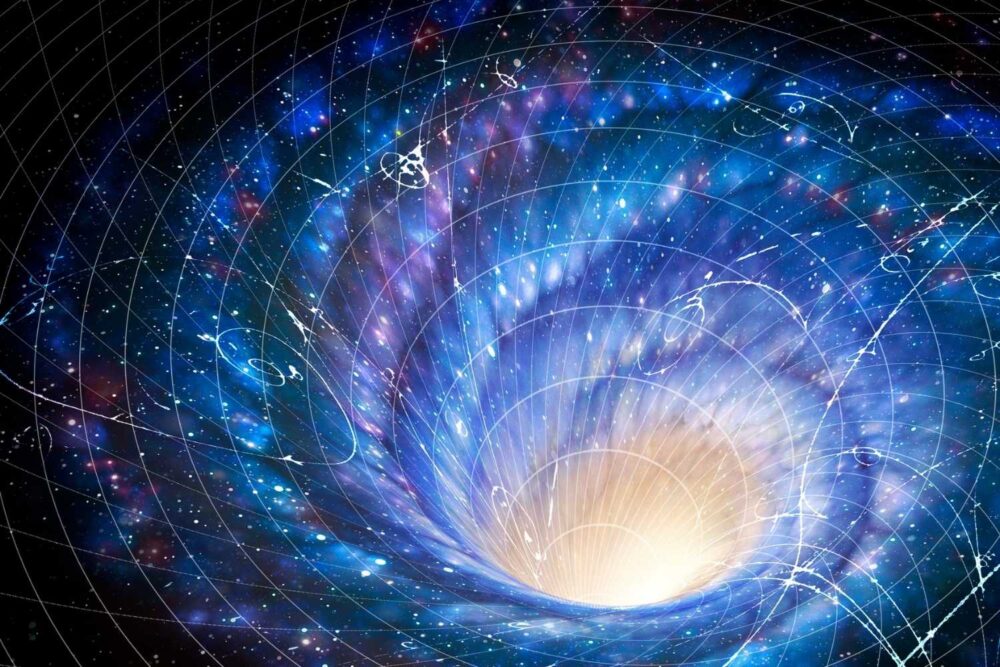
Wormholes are hypothetical structures that could connect distant regions of spacetime. In certain mathematical solutions to Einstein’s equations, wormholes appear as shortcuts that might allow travel across vast distances.
Some versions of wormholes could, in theory, create paths that resemble time travel. However, they would require exotic forms of energy that have never been observed in nature. Even if wormholes exist, keeping them stable and usable presents enormous challenges.
Because there is no experimental evidence for wormholes, they remain a theoretical concept. Physicists study them not because they promise time machines, but because they help explore the limits of known physical laws.
Follow us and access great exclusive content every day
7. Why traveling backward in time creates serious problems

Traveling backward in time introduces paradoxes that physics struggles to resolve. Situations where an event causes itself or changes its own cause conflict with basic principles of logic and causality.
So far, no tested theory allows backward time travel without breaking fundamental rules. This makes backward travel far more problematic than forward time effects.
8. How causality constrains what time travel could allow
Causality is the principle that causes come before effects. It underpins everything from physics experiments to everyday reasoning.
Many physicists suspect that even if unusual time effects exist, the universe would prevent paradoxes from occurring. This idea suggests that nature enforces consistency, even in extreme scenarios.
9. Why quantum physics doesn’t offer an escape hatch
Quantum physics often gets associated with time travel because of its strange behaviors. However, quantum theories still respect causality at observable scales.
While time plays a complex role in quantum mechanics, there is currently no evidence that quantum effects allow backward time travel in the real world.
Follow us and access great exclusive content every day
10. What experiments can actually test about time travel

Physics advances through experiments, and forward time effects like time dilation are routinely measured. Backward time travel, by contrast, has no experimental support.
Until a theory makes testable predictions that can be observed, backward time travel remains speculative rather than scientific.
11. What physics ultimately says about time travel
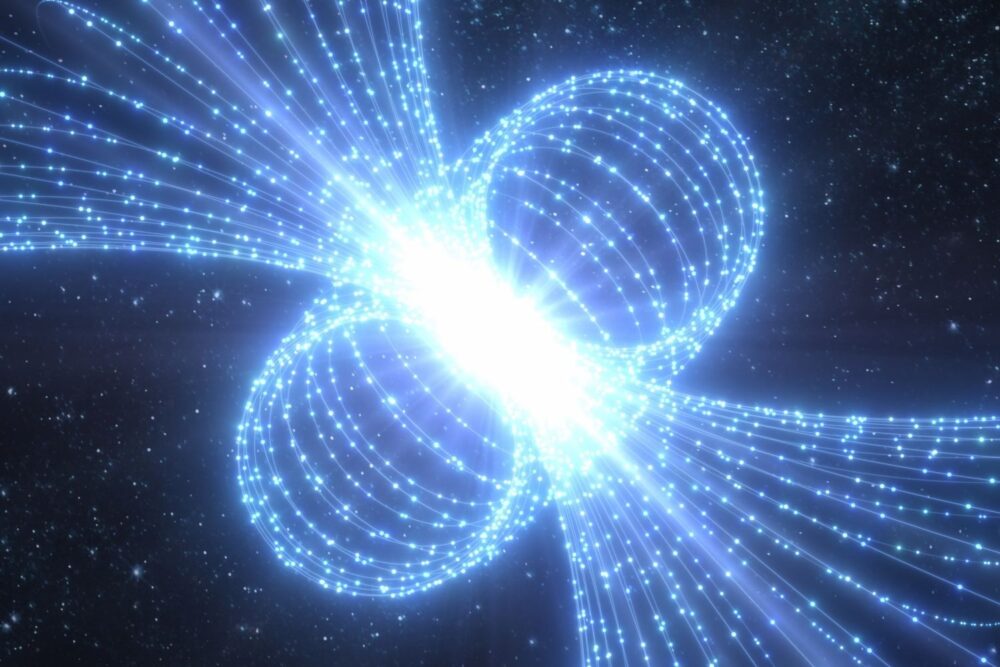
Physics shows that time is more flexible than it feels, but it also sets strict boundaries. Traveling forward in time is real and measurable, while traveling backward remains unsupported and deeply constrained.
Rather than promising time machines, physics offers a clearer picture of how time truly works. That understanding continues to evolve as scientists explore the universe’s most extreme conditions.