
Officials say long-sealed government records on unexplained aerial encounters may soon be released to the public.

For decades, government UFO files have existed at the crossroads of secrecy, speculation, and pop culture fascination. Renewed efforts to declassify additional records have once again raised public curiosity about what these documents actually reveal. Many people hope the files will finally clarify decades of unexplained sightings reported by pilots, radar operators, and military personnel.
History suggests expectations should remain grounded. Past disclosures show that most files focus less on extraordinary answers and more on uncertainty, incomplete data, and the difficulty of identifying unusual objects. Even so, the records offer a rare window into how governments document and manage phenomena they cannot immediately explain.
1. Most UFO files are collections of reports, not answers
Government UFO files largely consist of firsthand reports rather than final conclusions. These records include written statements from pilots, radar operators, air traffic controllers, and civilians describing objects they could not identify at the time of observation.
In many cases, investigations ended without resolution because data was incomplete, contradictory, or too limited for follow-up. The documents capture confusion, gaps in information, and unanswered questions far more often than discoveries, which can surprise readers expecting clear explanations or definitive conclusions.
2. The shift from UFOs to UAPs changed the focus
In recent years, officials began replacing the term UFO with UAP, or unidentified anomalous phenomena. The change was meant to strip away cultural baggage and refocus attention on observation rather than speculation.
This shift emphasizes aviation safety and national security. Objects that cannot be identified present potential risks to pilots and defense systems regardless of origin, reframing the issue as a practical concern rather than a debate about extraterrestrial life.
3. Many sightings eventually turn out to be ordinary

Historical analysis shows that many UFO reports are eventually explained as drones, weather balloons, aircraft, or atmospheric phenomena. New or unfamiliar technologies often appear strange, especially when first encountered in restricted airspace.
Human perception also plays a significant role. Speed, distance, lighting, and unusual angles can distort how objects appear, particularly during high-pressure situations such as military training exercises, leading ordinary objects to seem extraordinary.
4. Some cases remain officially unresolved

A smaller subset of cases remains unresolved even after investigation. These incidents typically lack sufficient visual evidence, sensor data, or corroborating reports needed to draw firm conclusions.
Unresolved does not mean extraordinary or extraterrestrial. It simply reflects the limits of available information, a recurring theme throughout government files where ambiguity persists due to missing data rather than confirmed anomalies.
5. Radar and sensor data complicate investigations
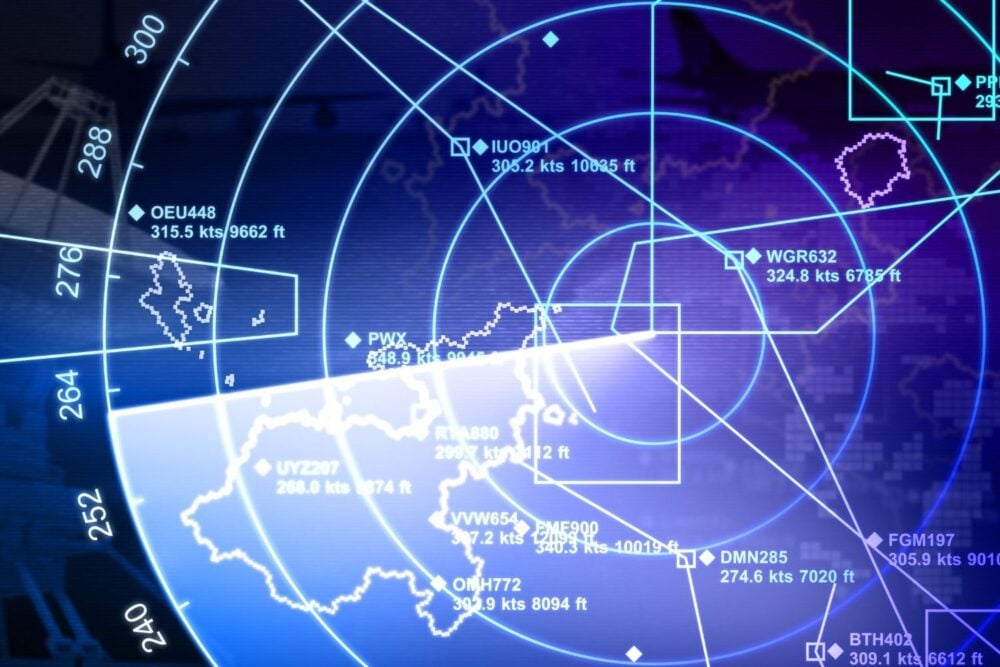
Modern encounters increasingly rely on radar, infrared, and electronic sensor systems. While these technologies are advanced, they are not immune to error or misinterpretation.
Calibration issues, software glitches, and environmental interference can all create misleading signals. Investigators must carefully separate genuine objects from technical artifacts, a process that often introduces uncertainty instead of clarity.
6. Declassification does not equal full transparency

When UFO files are released, sensitive information is often redacted. Details related to surveillance capabilities, sensor performance, or intelligence methods are usually removed to protect national security.
As a result, the public typically sees summaries rather than raw data. This limits independent analysis and can leave important questions unanswered, even after a document is officially declassified.
7. Whistleblower claims appear but remain unverified

Some individuals have publicly claimed that governments possess recovered craft or non-human materials. These assertions attract attention but are not supported by publicly verifiable evidence.
Investigators distinguish carefully between testimony and documentation. Without physical proof, corroborated records, or independent confirmation, such claims remain allegations rather than established facts within official investigations.
8. Science demands repeatable, physical evidence

Scientific conclusions require physical samples, repeatable measurements, and independent verification. Government UFO files rarely provide this level of evidence.
Most records describe brief encounters or sensor readings rather than material objects that could be tested. This limitation prevents science from confirming extraordinary explanations, regardless of public interest or speculation.
9. Cold War fears shaped early investigations

Early UFO investigations were strongly influenced by Cold War anxieties. Officials feared sightings could represent foreign aircraft, experimental weapons, or surveillance platforms from rival nations.
That security-first mindset shaped how reports were collected and analyzed. Even today, modern investigations continue to prioritize identifying potential threats over exploring speculative or cosmic explanations.
10. Public pressure keeps disclosure moving forward

Growing public interest and political scrutiny have pushed agencies toward greater disclosure. Transparency is increasingly viewed as a way to maintain trust and counter misinformation.
Each new release reignites attention, even when the material is technical or inconclusive. The sustained demand for answers ensures the topic remains active within government and public discourse.
11. Pop culture inflates expectations

Movies, television, and books have conditioned audiences to expect dramatic revelations about alien contact. In reality, government files are often cautious, technical, and ambiguous.
This gap between expectation and reality explains why disclosures can feel anticlimactic to some readers while remaining deeply fascinating to others who value insight into the investigative process itself.
12. What a release would really offer

If additional UFO files are released, they are unlikely to confirm extraterrestrial visitation. Instead, they will likely reveal how governments document uncertainty and manage unexplained observations.
The true value lies in transparency. Understanding how officials handle unanswered questions may offer more insight into institutional decision-making than any single explanation ever could.