
It’s been traveling through space for decades, carrying messages meant for anyone ‘out there.’
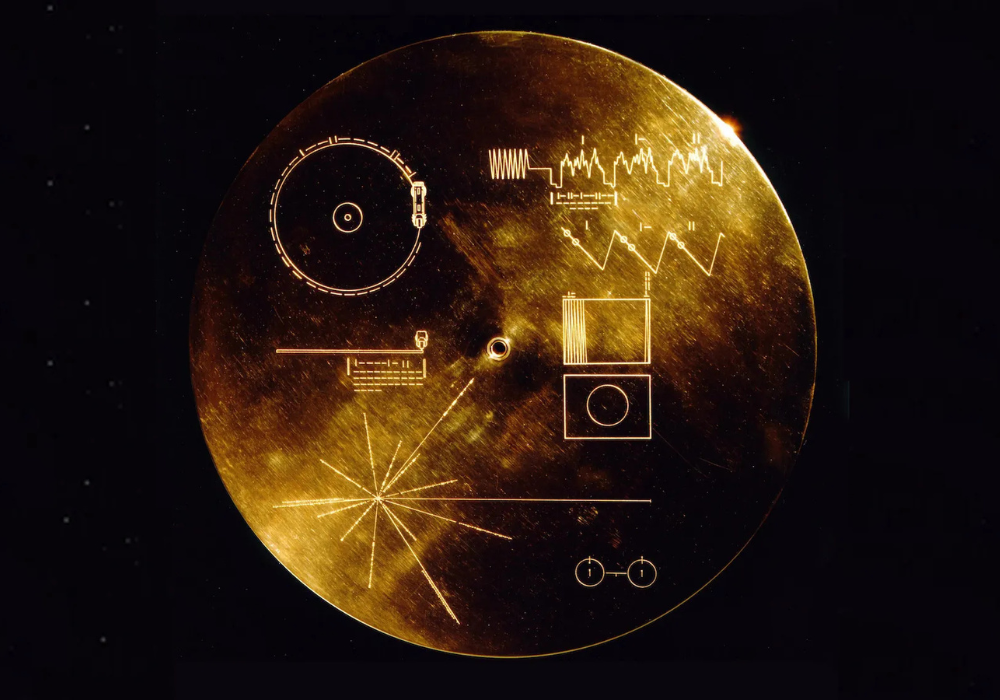
When the Voyager spacecraft launched in 1977, they carried more than scientific instruments bound for the outer planets. Scientists also attached a carefully curated message meant to speak for Earth long after the spacecraft finished their mission.
That message, known as the Golden Record, was designed to survive for billions of years as Voyager drifted through interstellar space. Its contents were chosen to represent life, culture, science, and sound on Earth, while accepting that no single record could ever capture everything.
Click through and discover what was placed on the Golden Record, what was deliberately left out, and what those choices reveal about how humanity saw itself decades ago.
1. The Golden Record was created as a message to the unknown
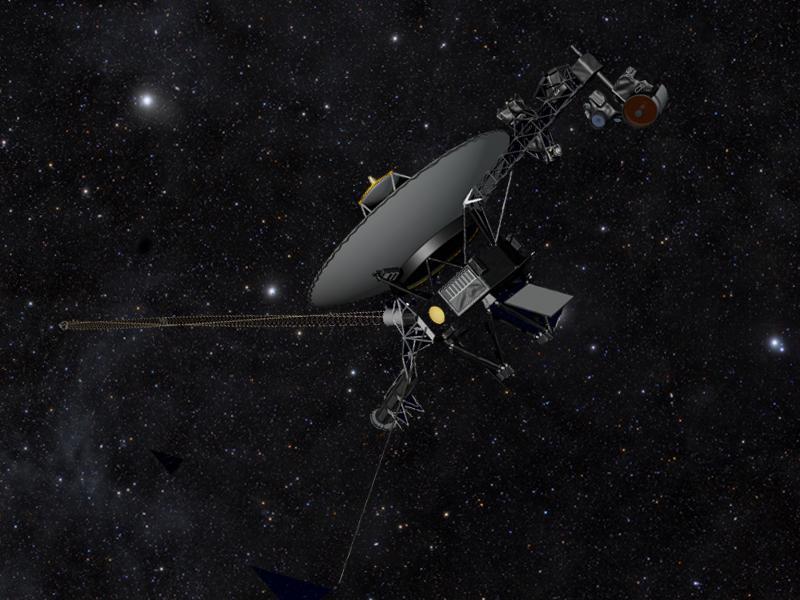
The Voyager Golden Record was conceived as a kind of cosmic greeting, not a scientific data dump. Its goal was to communicate what Earth is like to any intelligent beings that might encounter it.
The team behind it focused on universals—sound, images, math, and physics—rather than language or politics, hoping those elements would transcend culture.
Follow us and access great exclusive content every day
2. The cover includes detailed playback instructions
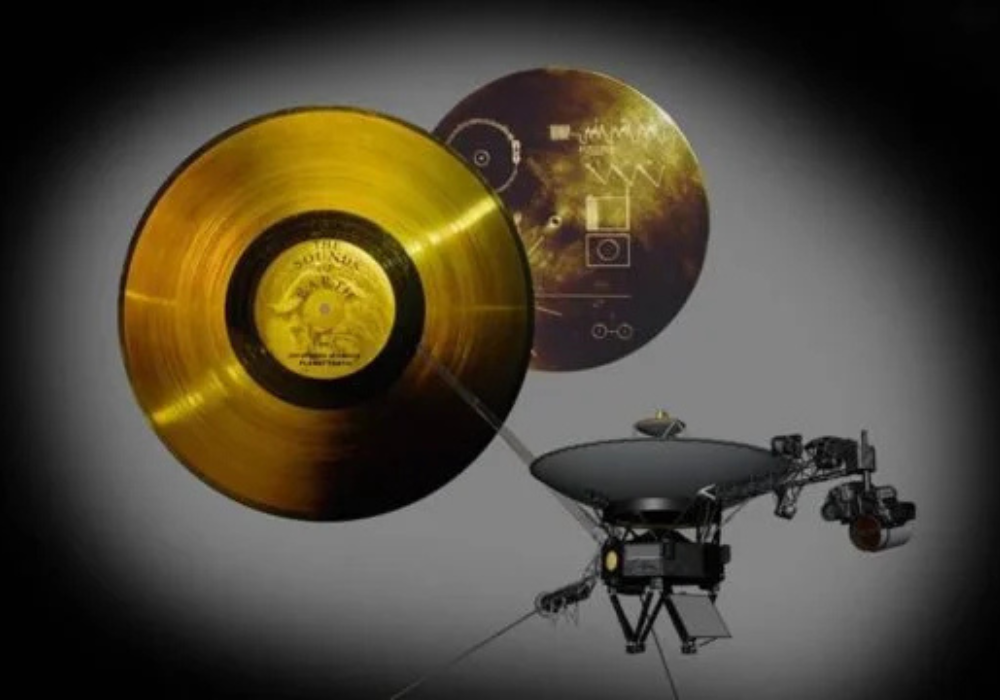
Because no one knew who might find the record, scientists engraved clear instructions onto its protective cover. These diagrams explain how to build a stylus, how fast to spin the record, and how to decode the images.
They rely on physical constants, such as hydrogen’s properties, that any technologically advanced civilization would likely recognize.
3. Greetings from Earth were recorded in dozens of languages

The record includes spoken greetings in more than 50 languages, ranging from major world languages to those spoken by smaller communities.
Rather than using formal diplomatic messages, the greetings are simple and human, meant to convey welcome, peace, and curiosity rather than authority.
4. Natural sounds were chosen to represent the planet itself

Listeners would hear sounds such as wind, rain, thunder, waves crashing, birdsong, insect noises, and animal calls.
These recordings were meant to communicate Earth’s environment emotionally and sensorially, offering a sense of what the planet feels like beyond visuals or words.
Follow us and access great exclusive content every day
5. Music was selected to reflect global culture, not trends

The Golden Record includes 27 musical tracks drawn from different cultures and time periods. These range from Bach and Beethoven to traditional folk music, Indigenous chants, and non-Western instruments.
The selections emphasize rhythm, structure, and emotional expression rather than contemporary popularity, aiming to show music as a shared human language across cultures.
6. Human voices were included to show everyday life

Beyond formal greetings, the Golden Record contains sounds of ordinary human experiences. These include laughter, footsteps, a baby crying, a mother speaking to her child, and even a kiss.
The intent was to communicate intimacy and emotion, not just information. These moments were chosen to show that humanity is defined as much by relationships and daily life as by technology or achievement.
By including unpolished, familiar sounds, the creators hoped to convey what it feels like to be human, rather than presenting an idealized or overly technical portrait of Earth.
7. Hundreds of images explain science and daily activities

The record includes 116 encoded images that illustrate mathematics, physics, chemistry, and biology, including diagrams of DNA and human anatomy.
Other images show people eating, working, playing, building homes, and interacting with one another, providing visual context for human life.
8. Earth’s location was mapped using pulsars
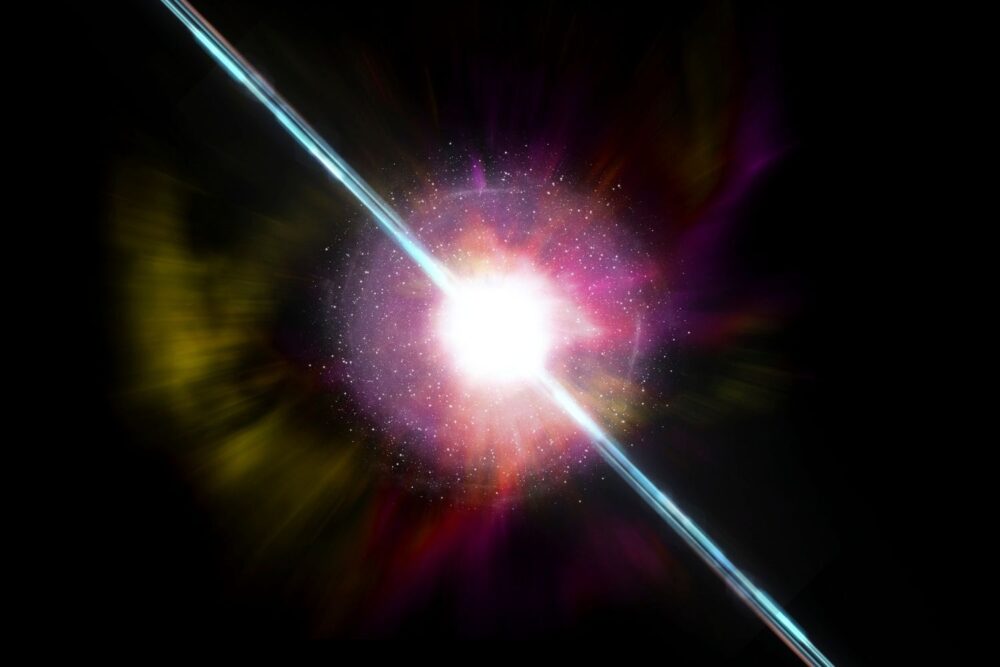
To explain where the record came from, scientists used pulsars as reference points. These rapidly rotating stars emit signals at unique, measurable frequencies.
By mapping Earth’s position relative to known pulsars, the record provides a cosmic address that could be decoded millions or even billions of years later.
Follow us and access great exclusive content every day
9. The record reflects the era in which it was made

Created during the Cold War, the Golden Record avoids national flags, weapons, or political messages.
Instead, it presents Earth as a single world, emphasizing cooperation and shared identity at a time when global tensions were high.
10. Some things were deliberately left off
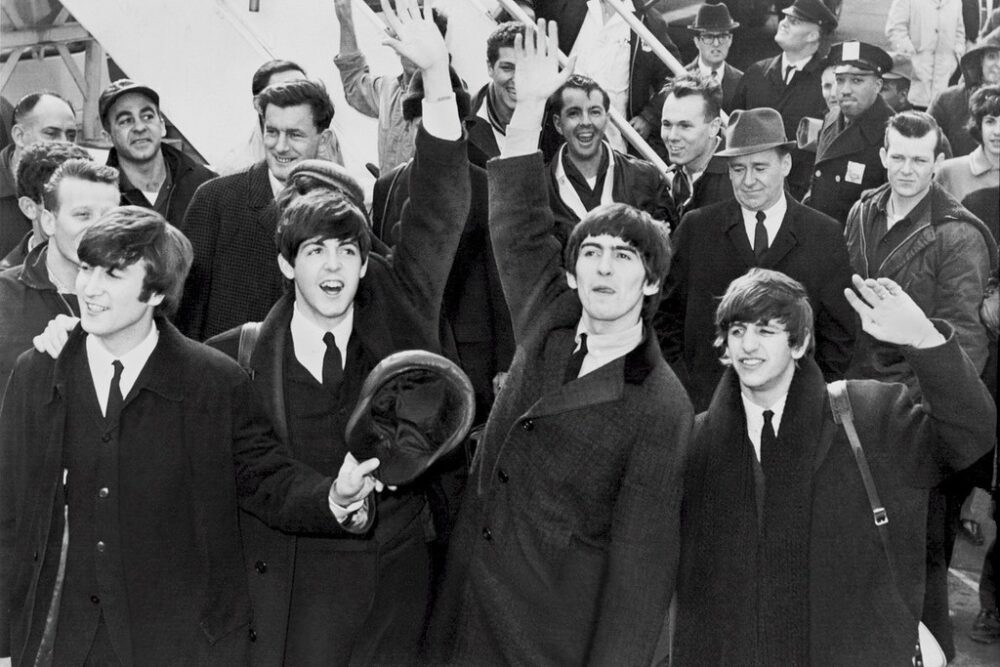
Notably, the record includes no modern rock or pop music. Songs by artists like the Beatles were discussed but excluded due to copyright concerns.
This omission highlights how legal and practical limits shaped the message, leaving out entire genres that later generations might consider culturally defining.
11. Voyager now carries the record beyond the solar system
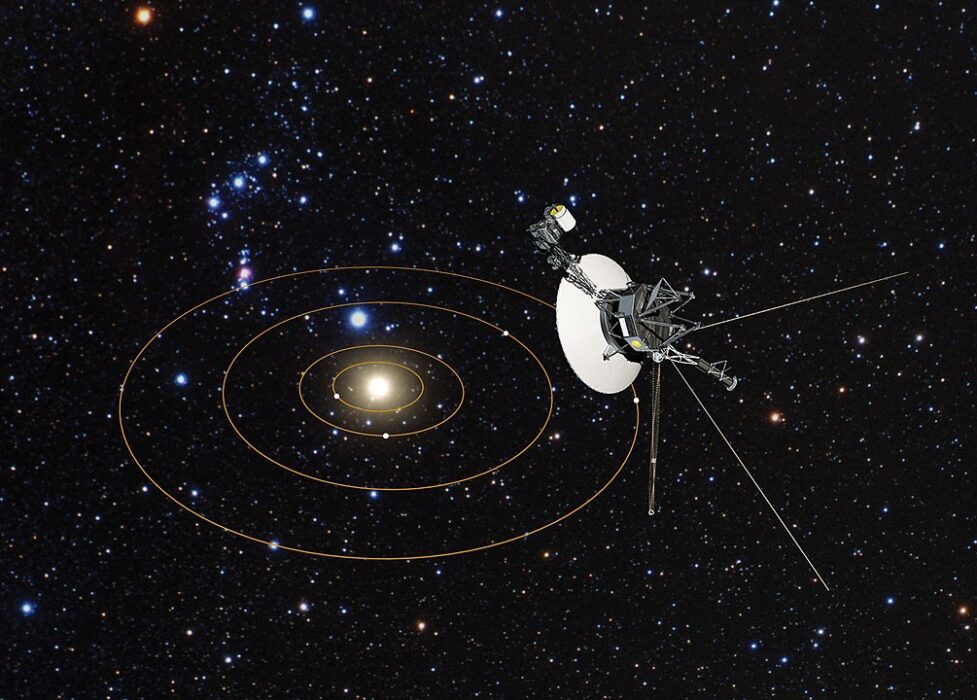
Both Voyager 1 and Voyager 2 have crossed into interstellar space, meaning the Golden Record is now traveling beyond the Sun’s influence.
The spacecraft are expected to drift through the Milky Way for billions of years, far longer than human civilization has existed.
12. The Golden Record is ultimately a mirror of humanity
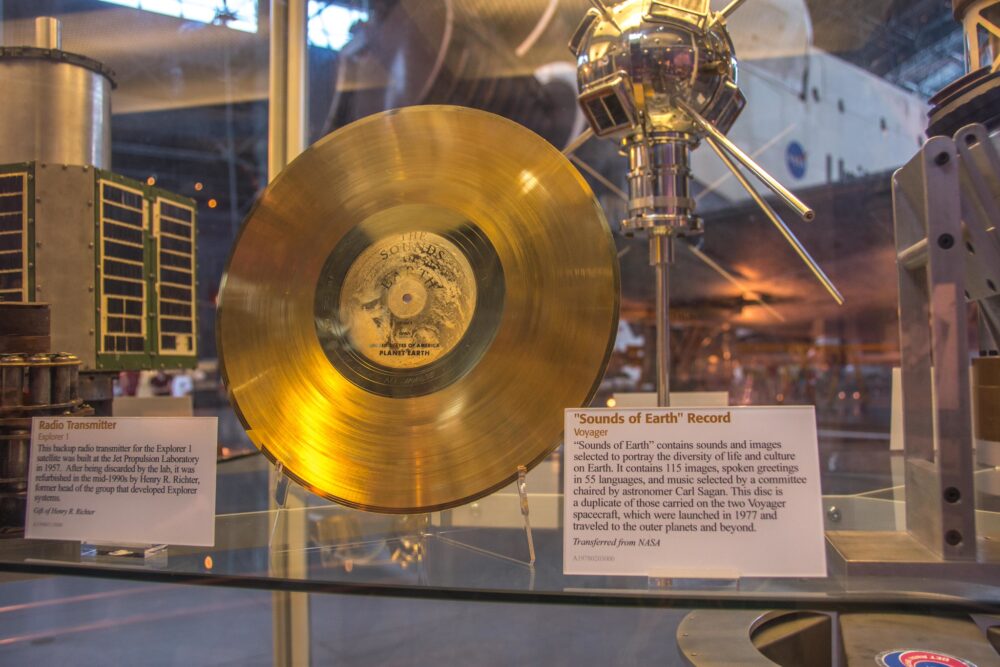
Whether or not it is ever found, the Golden Record reveals how humans chose to represent themselves at a specific moment in time.
It captures curiosity, humility, and hope, showing not a perfect world, but one that wanted to be understood.