
The ground beneath us is shifting in ways we never predicted.
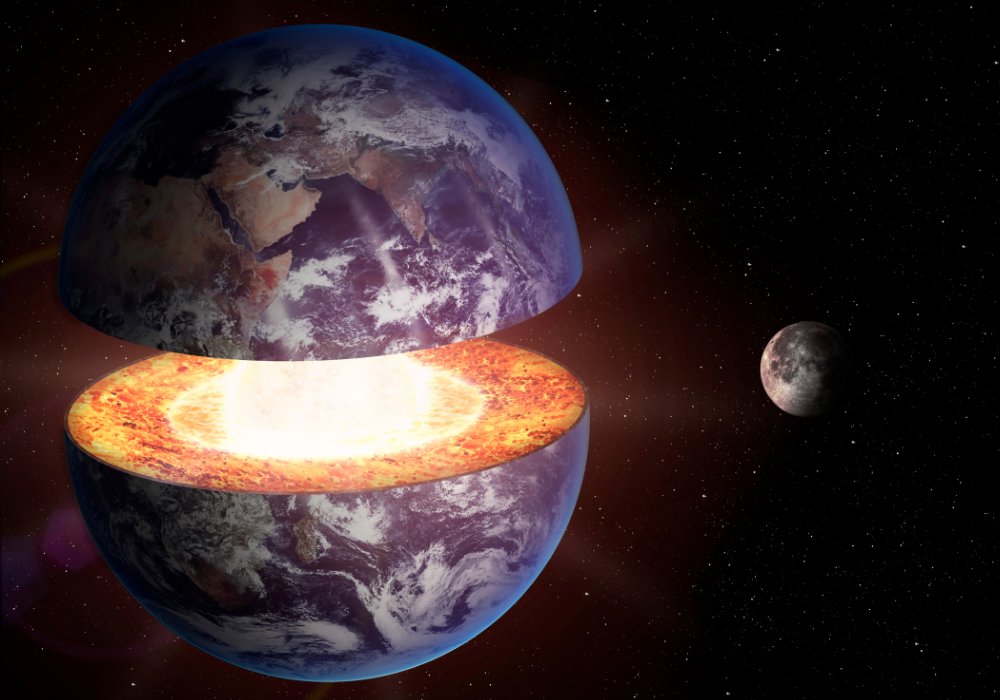
For most of human history, the Earth’s core was treated like background noise—important, sure, but steady. Solid. Predictable. It was the part of the planet we couldn’t touch or see, so we assumed it was unchanging. But that assumption is starting to crack. Scientists are uncovering signs that the core isn’t as calm or consistent as we thought. In fact, it might be changing faster than anyone expected.
These shifts aren’t just deep-earth trivia. What happens thousands of miles below the surface can affect magnetic fields, tectonic behavior, even the planet’s rotation. New seismic readings, magnetic anomalies, and heat flow measurements are challenging long-held theories about the core’s structure and stability. And while we’re just beginning to understand what’s happening, one thing is clear: the ground beneath us isn’t as solid as it used to feel.
1. Earth’s inner core may have stopped spinning—and might be reversing.
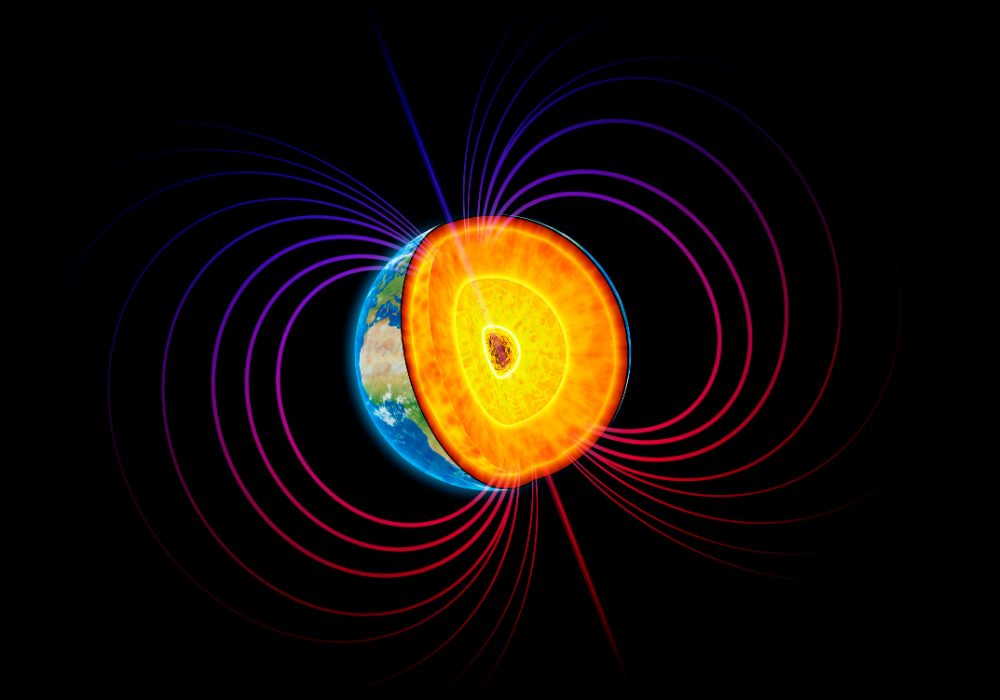
In early 2023, researchers analyzing seismic wave data found evidence that the Earth’s solid inner core may have recently paused its rotation. Even more startling? It might now be rotating in the opposite direction.
This isn’t the core falling apart—it’s a complex part of its natural cycle. Until recently, many scientists believed the core’s rotation remained relatively constant over long periods, but findings by Yi Yang and Xiaodong Song in Nature Geoscience suggest it actually reverses direction every few decades. This matters because the movement of the core influences Earth’s magnetic field and affects how seismic waves travel during earthquakes.
A change in its rotation speed—or direction—could alter the timing of these waves, complicating how we detect and interpret seismic activity. The discovery forces a reevaluation of core dynamics and suggests that deep-earth behavior is more variable than long believed.
2. The core is cooling faster than expected.
Deep inside the planet, the core is losing heat—and that’s normal. What’s not normal is the speed. Researchers cited by David K. Li in NBC News reported that heat transfer at the boundary between the outer core and lower mantle may be happening up to three times faster than scientists previously believed. That kind of rapid cooling could speed up core solidification, which has major implications for the future of Earth’s geodynamics.
Why does that matter? Because the movement of molten metal in the outer core drives Earth’s magnetic field. If the core cools too quickly, it could weaken that field, leaving the planet more exposed to solar radiation and atmospheric erosion. It might not happen in our lifetime—but it changes how we model the planet’s future and highlights just how active the deep Earth really is.
3. Seismic waves travel differently through the core than we thought.
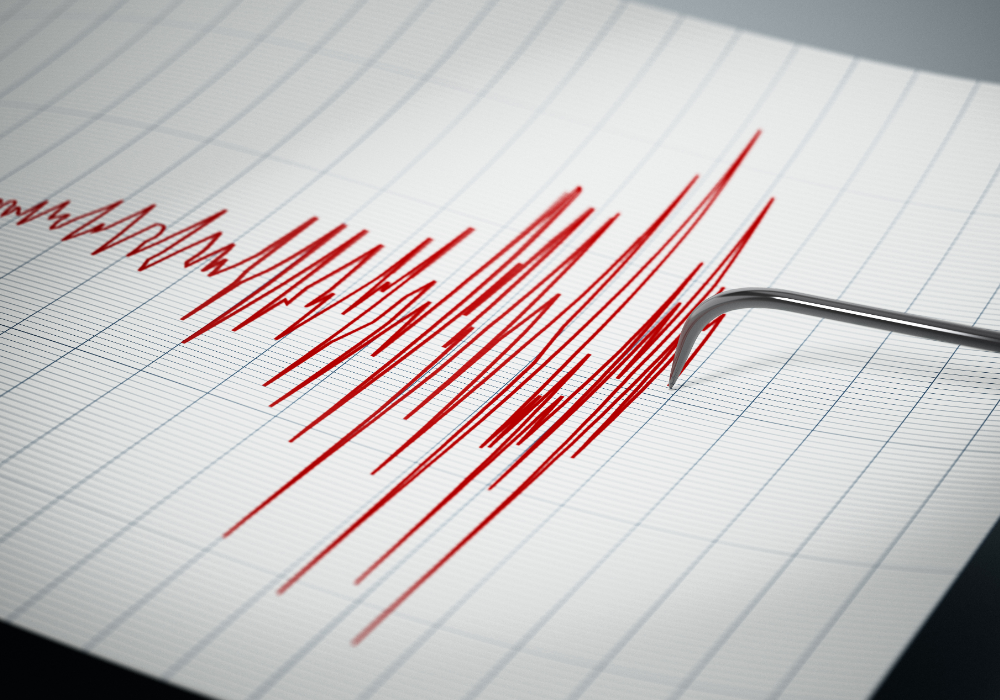
For decades, scientists believed that seismic waves passed evenly through the Earth’s inner core. But new studies suggest that wave speeds vary depending on direction—meaning the core may have an uneven or layered structure, or even regions of different materials. A 2021 study by Sheng Wang and Hrvoje Tkalčić in Geophysical Research Letters found that waves move faster through the core when they travel top to bottom, instead of side to side—hinting that the inner core isn’t as uniform as scientists once thought.
This discovery complicates earlier models that treated the inner core as a uniformly solid sphere. It also suggests that internal growth is lopsided—faster in some areas, slower in others. That imbalance could reshape how we think about heat flow, magnetic activity, and even how the inner and outer layers of the Earth interact. The core isn’t just spinning—it’s developing its own strange interior landscape.
4. The magnetic poles are moving faster—and the core may be why.

The magnetic North Pole isn’t where it used to be. In recent years, it’s been drifting at a much faster rate than scientists expected—up to 40 miles per year. While the magnetic field is always shifting, this kind of rapid movement hints at something deeper.
Many geophysicists believe changes in the flow of molten iron within the outer core are behind the acceleration. This flow generates Earth’s magnetic field, and even subtle shifts can lead to major changes at the surface. Faster pole movement can throw off navigation systems and requires more frequent updates to global magnetic models used in everything from GPS to aviation. If core dynamics continue changing, the poles could keep drifting—or even flip entirely, something that has happened in Earth’s past.
5. Strange seismic “echoes” hint at hidden structures near the core.

In 2020, scientists detected unexpected seismic reflections—waves that seemed to bounce off unknown structures deep inside the planet, just above the core. These anomalies were discovered beneath the Pacific Ocean and are known as “ultralow-velocity zones” because seismic waves slow dramatically when passing through them.
Their composition remains a mystery. Some believe they could be remnants of ancient tectonic plates or extremely dense patches of material formed billions of years ago. Others suggest they might be made of partially melted rock. Whatever they are, they hint at a more complex interaction between the mantle and the core than we’ve ever understood. And that complexity could influence everything from volcanic activity to the evolution of the planet’s internal heat engine.
6. The core’s growth is uneven—and it’s skewing Earth’s shape.

Researchers have discovered that Earth’s inner core isn’t growing symmetrically. It’s solidifying faster on one side—beneath Indonesia—than on the other side beneath Brazil.
This uneven growth could be changing the way heat is distributed through the mantle and may even be affecting Earth’s overall balance and rotation over time. While the planet remains roughly spherical, this kind of internal asymmetry matters. It may explain slight shifts in the Earth’s axis, changes in day length, or how mantle plumes rise toward the surface—impacting everything from volcanoes to plate tectonics.
Scientists are still piecing together the cause of the lopsided growth, but it’s a sign that even the planet’s most central layer is dynamic and evolving in ways we’re only beginning to understand.
7. Deep-earth “jets” of molten metal are changing direction.

Hidden beneath our feet, high-speed flows of molten iron known as “jet streams” circulate within the Earth’s outer core. These flows are crucial for generating the magnetic field, but recent studies show they’re not as consistent as once believed. In fact, some of these jets have reversed direction within just a few decades—an unexpected twist for something so far below the surface.
These changes could influence the movement of the magnetic poles and might even affect how quickly the field weakens or recovers. It’s another signal that the deep Earth isn’t quietly humming along—it’s churning, shifting, and sending subtle shockwaves into systems we rely on without even thinking. The behavior of these metallic currents challenges old assumptions and points to a more volatile core than we imagined.
8. Earth’s core may leak helium—and that’s not normal.
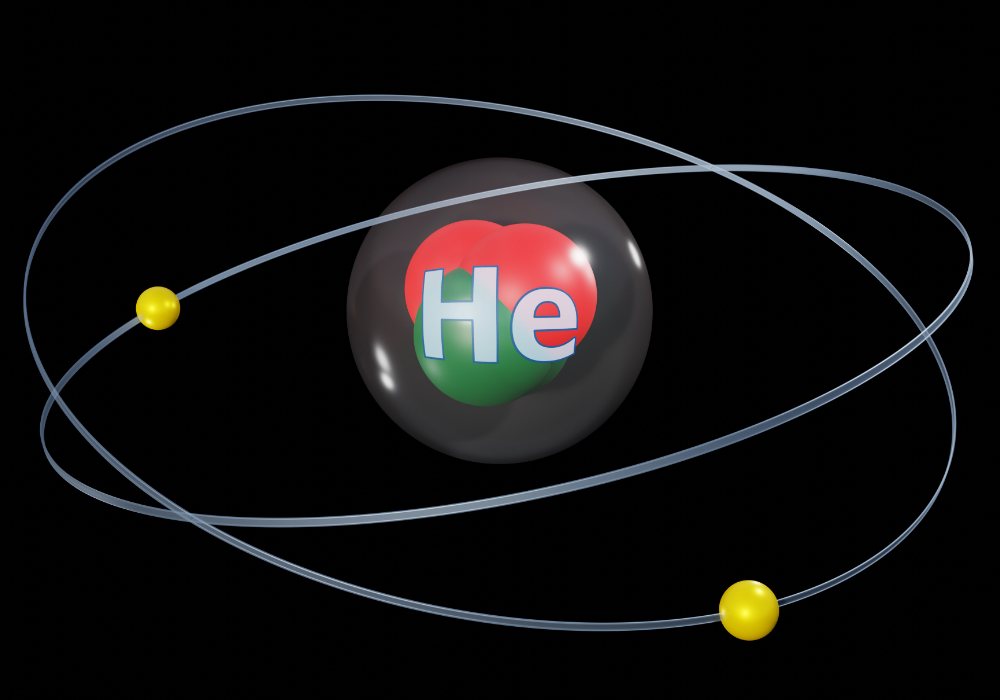
Helium-3 is a rare isotope scientists believe was trapped deep inside Earth during the planet’s formation. It’s usually locked away in the core and mantle, but small leaks have been detected at volcanic sites. That suggests the core isn’t as sealed off as once assumed. Material is moving—albeit slowly—from deep within the planet to the surface. This kind of leak challenges our understanding of how isolated the core really is. If helium and other primordial elements can escape, it means there are pathways through the mantle we didn’t know existed.
These leaks could reshape how we study volcanic systems, mantle dynamics, and the deep Earth’s chemistry. It’s a quiet signal, but one that hints at far more connection between layers than models predicted.
9. Day length is shifting—and the core might be responsible.

You probably don’t notice it, but Earth’s day length isn’t fixed. It varies slightly from year to year, and one possible reason lies deep underground. Changes in the core’s rotation, particularly if it speeds up or slows down relative to the planet’s surface, can alter Earth’s moment of inertia—causing tiny shifts in how long it takes the planet to complete one rotation.
We’re talking milliseconds, but the fact that the core can influence something as fundamental as time is striking. These fluctuations aren’t just curiosities. They matter for satellite systems, global positioning, and astronomical calculations. As we learn more about how the core moves, we’re also learning that even timekeeping isn’t immune to the changes happening thousands of miles below our feet.
10. Some scientists believe a hidden “inner inner core” may exist.
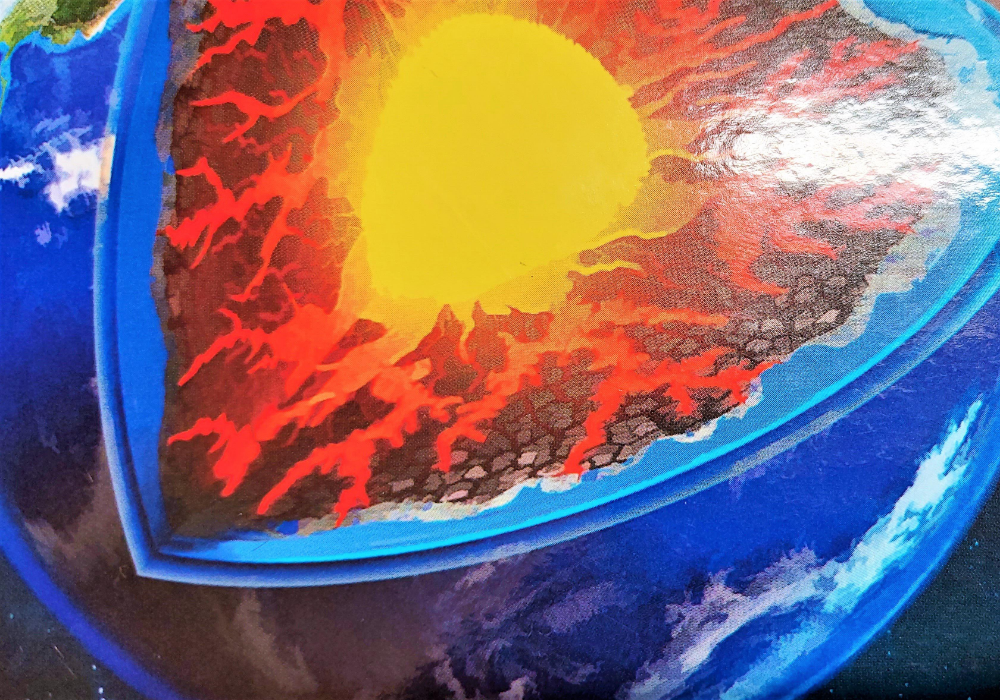
Just when you think Earth’s core structure is mapped out, new data suggests something deeper still—a smaller, distinct region within the inner core itself. This “inner inner core” appears to reflect seismic waves differently, suggesting it may be made of a different phase or alignment of iron crystals. It could also represent a separate stage in Earth’s cooling history. If confirmed, this hidden layer would add another chapter to the story of how our planet formed and evolved. It may help explain irregularities in magnetic field behavior or core rotation.
And it raises bigger questions: What else is still hidden beneath the surface? How many assumptions have we built on top of incomplete data? One thing’s for sure—the deeper we look, the less settled things become.