
A new tracking study reveals how hidden threats are pulling Nevada’s golden eagles into a deadly population trap.

Scientists set out to answer a straightforward question about golden eagles in Nevada: why were so many dying young. By fitting the birds with GPS transmitters, researchers hoped to pinpoint causes like collisions, poisoning, or habitat loss. What they uncovered instead was far more alarming.
The data revealed a “death vortex,” a cycle in which eagles are drawn into a landscape that looks suitable but quietly exposes them to repeated dangers. Young birds keep arriving, but too few survive long enough to replace those lost, creating a population sink that threatens the region’s iconic raptors.
1. A simple tracking project uncovers a deeper problem

The research began as a standard wildlife study. Scientists attached tracking devices to golden eagles to monitor their movements, survival rates, and causes of death across Nevada.
What the data showed quickly raised red flags. Eagles were not just dying randomly. Many were spending time in the same areas and dying at rates too high for the population to sustain, pointing to a systemic problem rather than isolated incidents.
2. What scientists mean by a “death vortex”

A death vortex occurs when animals are attracted to a habitat that appears favorable but is actually dangerous. Food may be abundant, but hidden threats overwhelm the benefits.
In Nevada, golden eagles were drawn into landscapes altered by human activity. While these areas looked productive, the risks stacked up, pulling birds into a cycle where losses outpaced reproduction year after year.
3. Why young eagles keep flying into danger

Golden eagles disperse widely when they leave their parents. Young birds search for territory and food, often settling temporarily in unfamiliar landscapes.
The tracking data showed that juveniles repeatedly moved into the same high-risk zones. Because the danger is not obvious from the air, new birds keep arriving, unaware that survival odds there are far lower than elsewhere.
4. Power lines emerged as a major killer

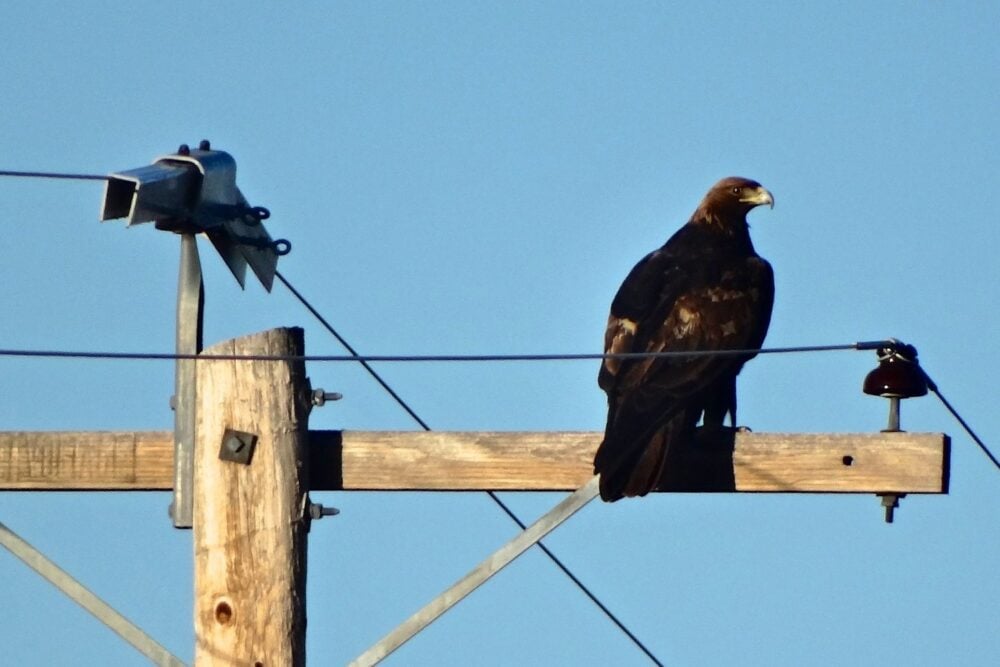
One of the leading causes of death identified by the study was electrocution on power lines. Eagles perch on tall structures, and poorly designed equipment can deliver fatal shocks.
In areas with dense energy infrastructure, deaths accumulated quickly. Even a small number of hazardous poles can have outsized effects when many birds use the same corridors and perching sites.
5. Poisoning added another hidden threat

The study also linked eagle deaths to poisoning, often from ingesting animals killed with toxic substances. Eagles are scavengers as well as hunters, making them especially vulnerable.
These poisonings are difficult to detect without tracking data. Carcasses may disappear quickly, and deaths can be misattributed unless researchers know exactly where and when a bird stopped moving.
6. Wind energy played a complex role

Wind turbines were another factor, though not always the dominant one. Some eagle deaths were tied to collisions, especially in areas where turbines overlapped with flight paths.
The findings highlight that renewable energy development must consider wildlife behavior. Poor placement can unintentionally turn useful habitat into a danger zone for large birds.
7. Why the population looks stable but isn’t

At first glance, eagle numbers in parts of Nevada did not appear to be collapsing. That illusion comes from constant immigration of young birds.
The tracking data revealed the truth. New eagles keep arriving, but too many die before breeding, masking long-term decline until it becomes severe and harder to reverse.
8. How GPS data changed the conservation picture
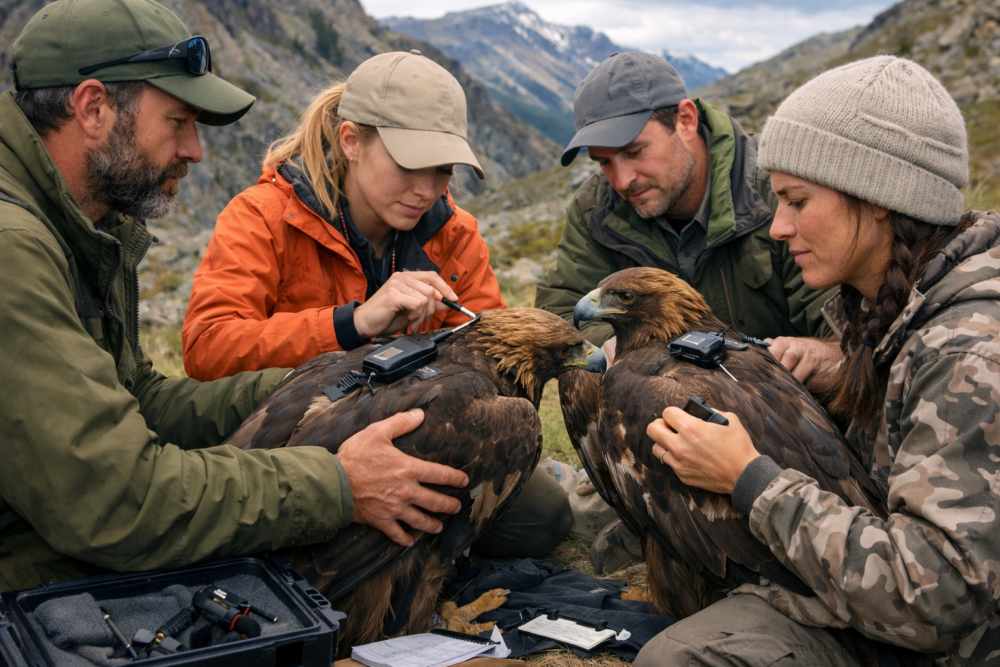
Without tracking, many of these deaths would have remained invisible. GPS transmitters allowed researchers to recover bodies, identify causes, and map danger hotspots.
This level of detail transformed anecdotal concerns into clear patterns. It showed exactly where intervention could save the most birds, rather than relying on broad assumptions.
9. Fixes exist but require targeted action
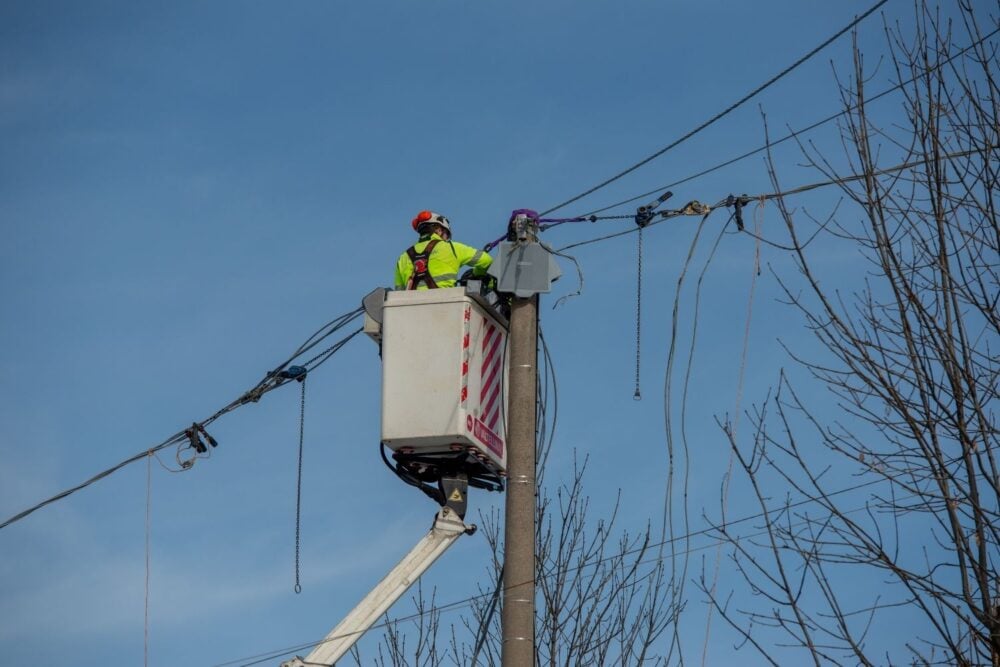
The good news is that many risks are fixable. Power poles can be retrofitted, toxic practices reduced, and turbine placement adjusted to avoid key flight zones.
The challenge is prioritization. The study suggests that focusing on a relatively small number of high-risk areas could dramatically improve survival rates.
10. Why this matters beyond Nevada

Golden eagles range across much of North America, and similar conditions exist elsewhere. The death vortex identified in Nevada could be happening in other regions without being detected.
This research provides a blueprint for how to find and address hidden population sinks before they cause widespread declines.
11. A warning and an opportunity
The discovery of a death vortex is sobering, but it also offers clarity. Scientists now know where and why these eagles are dying.
With that knowledge comes opportunity. Targeted conservation could break the cycle, turning deadly landscapes back into viable habitat and giving golden eagles a real chance to recover.