
Ignoring AI could mean missing out on the biggest personal and professional shift of our time.
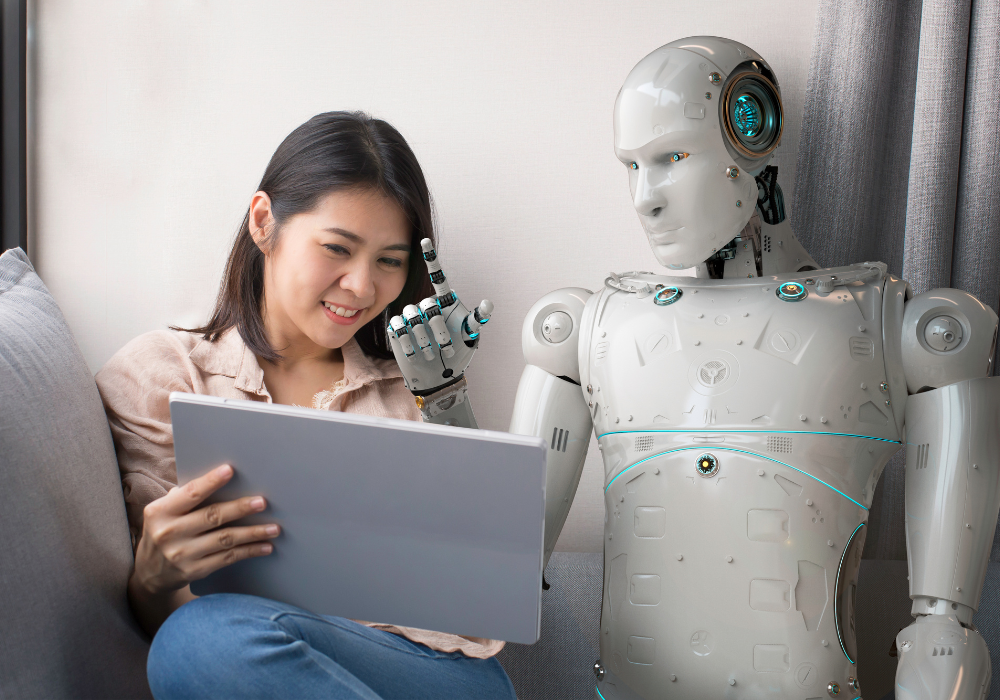
You might think artificial intelligence is just for coders, big tech companies, or sci-fi fans—but AI is already woven into your daily life in ways you’ve probably overlooked. From how you shop and travel to how you learn, create, and communicate, AI is quietly shaping your world behind the scenes. And it’s not slowing down. The truth is, you don’t have to be a tech expert to benefit from AI—you just need to know where it’s showing up and how it can work for you. These 13 eye-opening examples might just change your mind—and show you AI is more personal than you think.
1. AI already helps you write better—without you realizing it.

Every time you rely on autocorrect, grammar checkers, or email suggestions, you’re using AI. Tools like Grammarly, Microsoft Editor, and Google’s Smart Compose analyze language in real time, offering grammar fixes, tone adjustments, and even full sentence predictions. These AI models are trained on vast amounts of writing and language data, making them surprisingly accurate—and often lifesavers during busy workdays.
Whether you’re crafting a resume, an email, or a social post, AI is quietly making you a sharper, clearer communicator. You don’t need to master AI—it’s already helping you master your words.
2. Personalized recommendations are powered by AI—and saving you time.

When Netflix suggests your next binge-worthy series, Spotify builds you a playlist, or Amazon shows you that item you didn’t know you needed—AI is behind it. These systems analyze your behavior, preferences, and patterns to serve up options tailored just for you.
It’s not magic—it’s machine learning. These personalized suggestions make browsing easier, reduce decision fatigue, and help you discover new favorites without the guesswork. Even news feeds and online recipes are curated this way. So while AI may sound technical, it’s quietly making your daily decisions feel smarter and more intuitive.
3. AI is revolutionizing healthcare—and may even save your life.

Doctors and researchers are using AI to detect diseases earlier, predict treatment outcomes, and personalize patient care. AI-powered tools can analyze X-rays, CT scans, and lab results with incredible speed and accuracy—sometimes spotting problems human eyes miss. It’s also used to track disease outbreaks, optimize hospital workflows, and even remind patients to take medication.
From diagnosing cancer to managing chronic conditions, AI is quietly becoming one of the most powerful tools in modern medicine. And as the technology improves, it won’t just help doctors—it’ll help you stay healthier, longer.
4. AI assistants are streamlining how you manage your day.

Whether you’re asking Siri to set a reminder, using Alexa to play your favorite song, or relying on Google Assistant to check traffic, AI is working behind the scenes to make life easier. These voice-powered tools use natural language processing to understand your requests, learn your habits, and even anticipate your needs.
They can control smart home devices, send texts, answer questions, or build shopping lists—all without you lifting a finger. You don’t need to “know AI” to benefit from it. If you’ve ever said, “Hey Google,” you’re already in the club.
5. AI is transforming education for learners of all ages.

From personalized learning apps to real-time tutoring tools, AI is reshaping how we learn. Platforms like Duolingo, Khan Academy, and Quizlet use AI to adapt content based on your progress, offering just the right challenge to keep you moving forward.
AI can identify learning gaps, suggest review materials, and even create practice quizzes on the spot. In classrooms, teachers are using AI tools to track student performance and customize instruction. Whether you’re a student, a parent, or a lifelong learner, AI is making education more accessible, efficient, and tailored to how you learn best.
6. AI helps keep your money safer—and smarter.

Banks and financial apps use AI to detect fraud, predict spending habits, and recommend smarter budgeting choices. Ever gotten an alert for suspicious activity on your credit card? That was AI in action, monitoring your spending patterns and flagging unusual transactions.
Apps like Mint or Cleo analyze your expenses, categorize them, and offer insights into where your money’s going. AI also powers robo-advisors that help you invest based on your goals and risk tolerance. Far from being cold or complex, AI in finance is about giving you more control—and fewer surprises—when it comes to your money.
7. AI is streamlining job searches and resume writing.

Looking for a job? AI is helping you every step of the way. Resume builders like Rezi or Teal use AI to tailor your resume to job listings, optimize formatting, and even predict how applicant tracking systems will rank you. Job platforms use AI to match you with openings that fit your skills and interests.
Some companies even use AI to screen resumes and schedule interviews. By learning how these systems work, you can better position yourself in a crowded market. AI isn’t replacing the job hunt—it’s helping you navigate it more strategically.
8. AI tools are making creativity more accessible than ever.

You don’t need to be a professional designer, writer, or musician to create amazing work anymore. AI-powered tools like Canva, ChatGPT, and Adobe Firefly assist with everything from writing articles and generating art to editing videos and composing music.
These tools lower the barrier to creativity by offering templates, suggestions, and automation that make content creation faster and more fun. Whether you’re designing a wedding invitation or drafting a novel, AI gives you the boost to bring your ideas to life—no degree in graphic design or creative writing required.
9. AI is improving accessibility for people with disabilities.

AI-powered features like real-time captioning, voice-to-text, and text-to-speech are changing the game for people with hearing, visual, or mobility impairments. Apps like Seeing AI help visually impaired users navigate the world by describing people, objects, and even text in real time. AI also enables customized interfaces, predictive typing, and hands-free device control—all of which help level the playing field.
These aren’t just convenient—they’re life-changing tools for millions of people. As AI continues to advance, it has the power to make the world more inclusive and accessible for everyone.
10. AI is helping fight climate change and protect the planet.

Researchers are using AI to analyze climate data, optimize renewable energy systems, and track deforestation and wildlife populations. AI models can predict extreme weather, improve energy efficiency in buildings, and guide smarter farming practices that reduce emissions.
It’s also helping scientists identify areas most vulnerable to rising sea levels or heatwaves. While AI alone can’t solve the climate crisis, it’s a powerful ally in understanding and responding to it. The more we use AI to track, model, and act on environmental data, the better chance we have at protecting the planet for future generations.
11. AI makes customer service faster and more helpful.

You’ve probably chatted with an AI-powered customer service bot—whether you realized it or not. These bots can answer questions, process returns, and resolve issues 24/7, often faster than a human. More advanced systems even understand tone and context, making conversations feel surprisingly natural. While not perfect, these tools are getting better at delivering helpful support without long hold times or frustrating transfers.
Behind the scenes, companies use AI to analyze customer feedback, predict issues, and improve service overall. That quick resolution you got? Thank a tireless AI assistant working behind the scenes.
12. AI is giving people back their time.

One of AI’s most powerful (and underrated) benefits is automation. It takes repetitive, time-consuming tasks—like data entry, calendar scheduling, or sorting through emails—and handles them instantly.
Whether it’s auto-categorizing your inbox or summarizing long documents, AI gives you more time to focus on what matters. Tools like Zapier, Notion AI, and even smart email replies save minutes that add up to hours each week. Time is one of our most limited resources, and AI is quietly helping you reclaim more of it every day.
13. AI is evolving rapidly—and it’s better to engage than be left behind.

You don’t need to become a tech expert overnight, but ignoring AI altogether is no longer an option. As AI becomes more embedded in jobs, education, healthcare, and daily life, understanding the basics will help you stay empowered, not overwhelmed. Learning how AI works—and how to use it responsibly—puts you in the driver’s seat.
The good news? Many tools are free, intuitive, and designed for everyday users like you. The AI future isn’t coming—it’s already here. And once you see what it can do, you’ll realize it was never just for someone else.