
Nature followed no obvious rules when these landscapes took shape.
Earth is filled with places that seem to break visual rules we take for granted. Some landscapes look sculpted by design, others feel mathematically precise, and a few resemble scenes from science fiction rather than real locations you can visit. What makes them so unsettling is that no one planned them.
These formations emerged through erosion, pressure, heat, chemistry, and time working slowly over thousands or millions of years. When those forces align in just the right way, nature produces results that feel intentional even when they aren’t.
Together, these strange places reveal how unfamiliar the planet can look when natural processes are allowed to reshape it on a massive scale.
1. The Wave makes solid stone look like flowing liquid
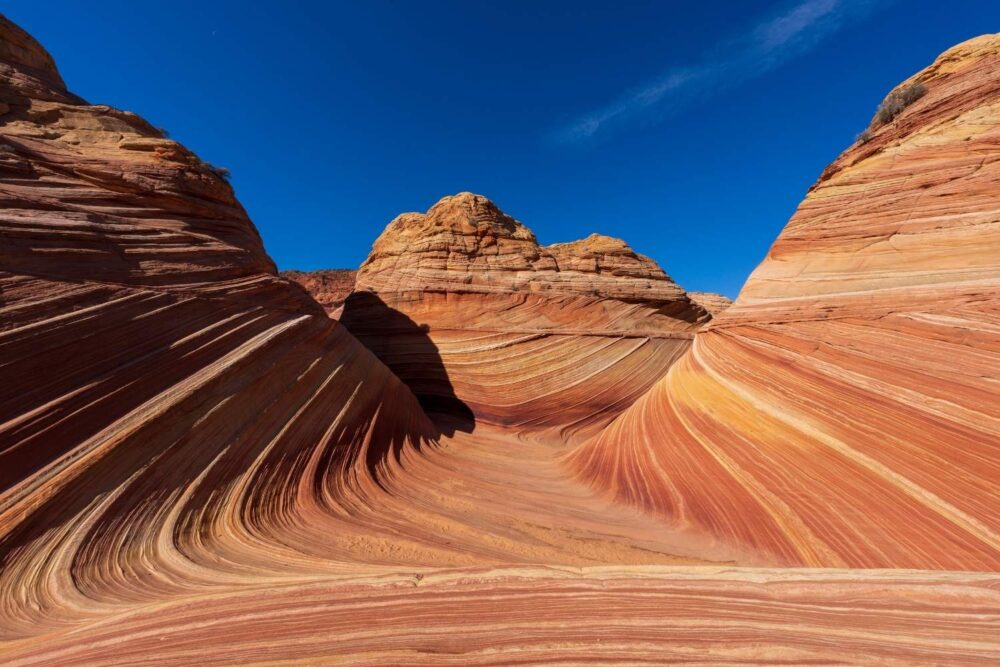
At The Wave in Arizona, bands of red and orange sandstone curve and ripple as if frozen mid-motion. These shapes formed from ancient sand dunes that hardened into rock before being sculpted by wind and rain over millions of years.
The surface appears almost animated despite its age. Because the rock is extremely fragile, access is tightly limited, which only adds to the feeling that this formation shouldn’t really exist.
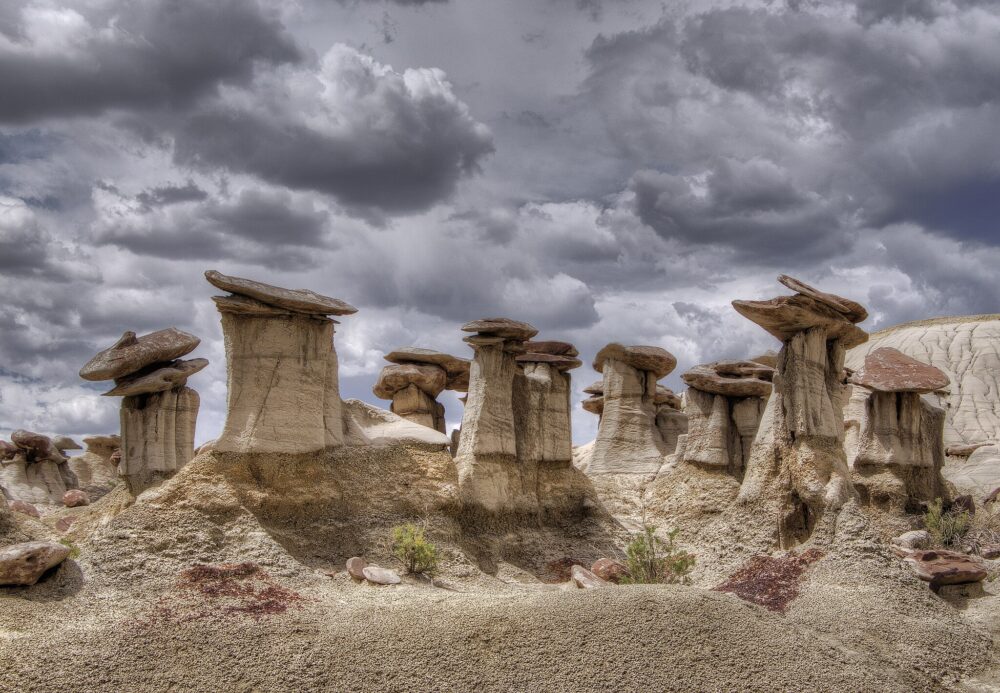
2. Ah-Shi-Sle-Pah Wilderness looks like a landscape assembled from another planet

In northwestern New Mexico, the Ah-Shi-Sle-Pah Wilderness is filled with bizarre hoodoos, mushroom-shaped rocks, and layered spires that feel almost deliberately sculpted. The name comes from the Navajo language and roughly translates to “salt flats,” though the terrain looks anything but flat.
These formations developed as softer sediment eroded away beneath harder caps, leaving behind tall, narrow columns balanced in improbable ways. Sparse vegetation, twisted rock layers, and shifting colors make the area feel alien, reinforcing the sense that Earth can still surprise us when erosion and time are left to work uninterrupted.
3. Cappadocia’s fairy chimneys rise like natural sculptures

The cone-shaped rock towers of Cappadocia fairy chimneys formed as softer volcanic rock eroded beneath harder stone caps. Over time, entire valleys filled with these spires.
Their whimsical shapes feel deliberate even though erosion alone created them. Humans later carved homes and churches into the rock, further blurring the line between nature and design.
4. The Pinnacles Desert looks carefully arranged by hand

In Western Australia, the Pinnacles Desert contains thousands of limestone pillars rising from golden sand, many spaced with uncanny regularity. Some stand several meters tall.
They formed when seashell-rich sands hardened into limestone and later eroded unevenly. The result resembles an outdoor art installation rather than a natural desert.
5. Zhangye Danxia paints hills in impossible colors
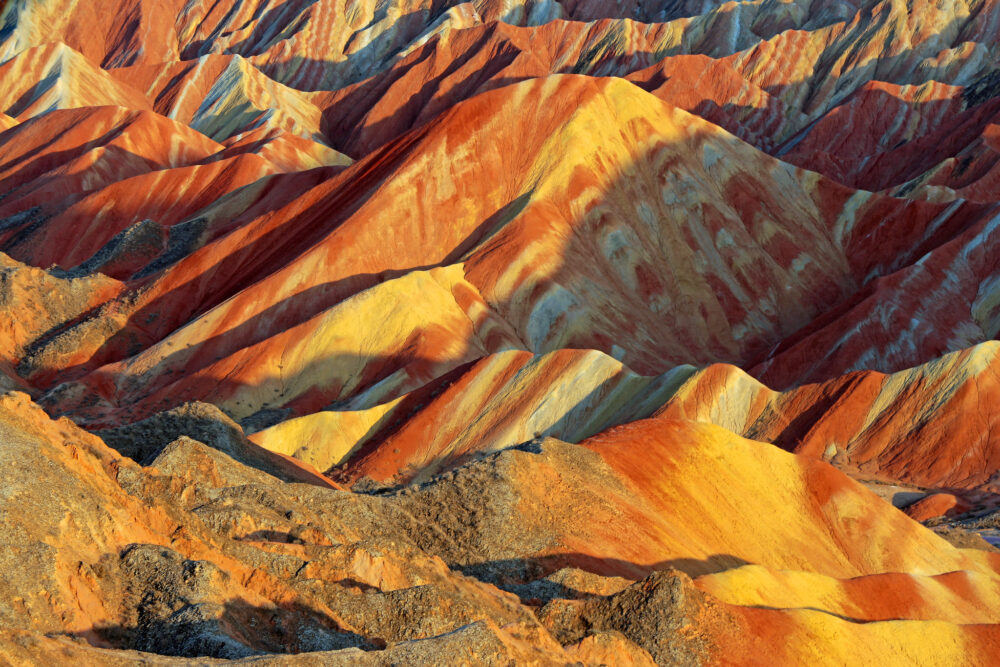
The rolling hills of Zhangye Danxia display vivid bands of red, yellow, and green created by mineral layers laid down over millions of years. Tectonic uplift later exposed them.
The colors look digitally enhanced but are entirely natural, making this one of the clearest examples of geology producing something that feels unreal.
6. Giant’s Causeway breaks nature into perfect geometry

Along Northern Ireland’s coast, Giant’s Causeway is made up of tens of thousands of tightly packed hexagonal stone columns. Many form walkable paths that fit together like an enormous stone puzzle.
These columns formed when molten lava cooled rapidly and contracted. As it hardened, fractures spread evenly through the rock, creating repeating geometric shapes without any guiding hand.
Even with a clear scientific explanation, the precision feels unsettling. The formation looks engineered rather than eroded, which is why myths once credited giants instead of geology.
7. Deadvlei preserves a forest frozen in time

At Deadvlei preserves in Namibia, blackened tree skeletons stand on a white clay pan surrounded by towering red dunes. The trees died centuries ago when water sources disappeared.
Because the climate is extremely dry, the wood never decayed. The stark contrast and silence make the landscape feel suspended outside normal time.
8. Arches National Park balances stone against gravity
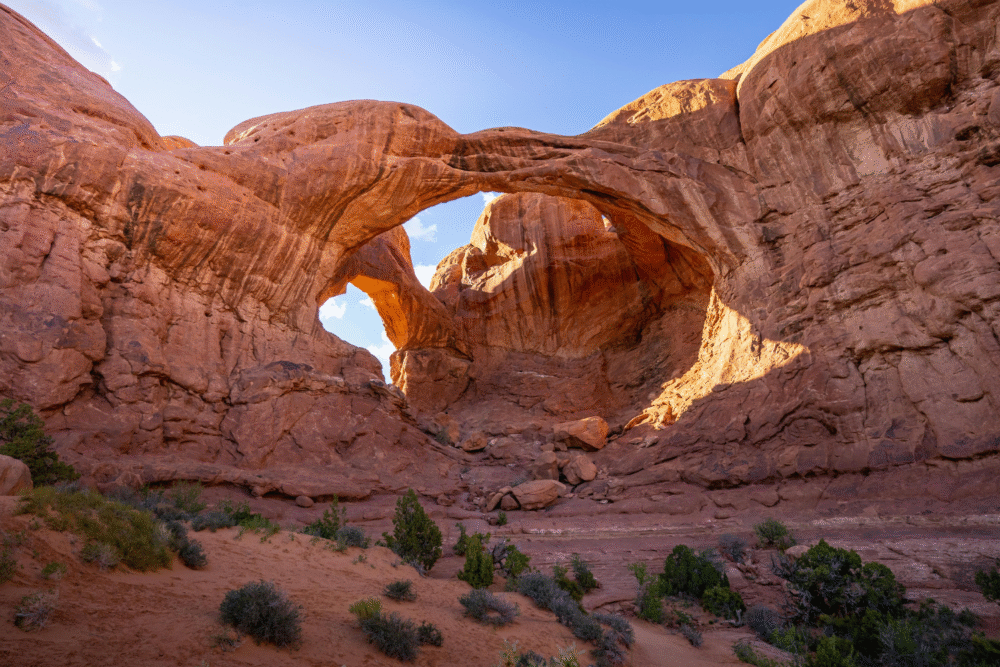
In Arches National Park, massive stone arches span open space while resting on surprisingly thin supports. Wind, water, and freeze-thaw cycles slowly carved these openings.
Some arches eventually collapse, reminding visitors that even the most improbable formations are temporary on geological timescales.
9. Reynisfjara turns lava into rigid coastal walls
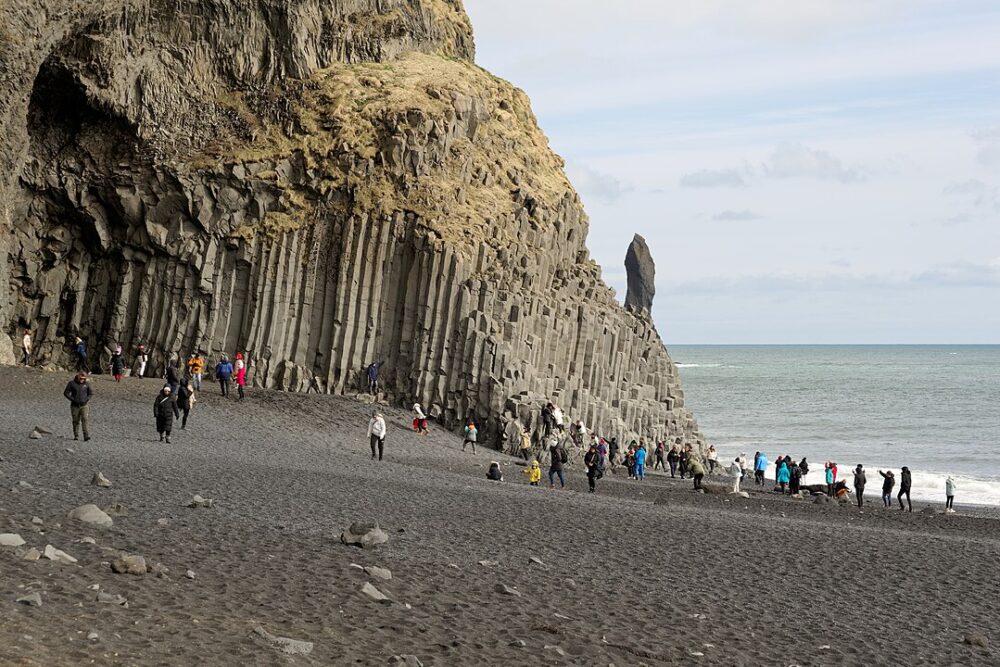
On Iceland’s coast, Reynisfjara features towering basalt columns rising sharply from black sand. The angular shapes feel artificial and severe.
They formed as lava cooled and fractured, with ocean waves later exposing the columns. The harsh setting amplifies their stark geometry.
10. Carlsbad Caverns hides glittering architecture underground

Inside Carlsbad Caverns, enormous chambers are filled with stalactites and mineral formations that shimmer under light. Some structures appear translucent and sculpted.
These shapes grew as mineral-rich water dripped slowly over thousands of years. The scale and symmetry make the caves feel constructed rather than formed.
11. Bryce Canyon’s hoodoos defy fragile appearances

The towering hoodoos of Bryce Canyon hoodoos rise from amphitheaters of stone, balancing on narrow bases. Frost wedging and erosion carved them over time.
Despite their delicate look, many hoodoos persist for thousands of years, constantly reshaped but rarely destroyed.
12. Tojinbo Cliffs fracture Japan’s coastline into steps

The jagged Tojinbo Cliffs plunge into the sea in sharp, column-like formations. The fractured rock looks intentionally cut.
These cliffs formed as volcanic rock eroded along natural fracture lines. The repeating shapes make the coast feel carved, ending the list with another reminder that nature often builds stranger things than people ever would.