
From early philosophers to medieval astronomers, some ancient predictions about technology, science, and society have proven remarkably accurate.

Throughout history, civilizations have tried to imagine the world to come—and some got it surprisingly right. From Greek thinkers who envisioned robots to Renaissance scholars who described space travel centuries before rockets existed, ancient predictions sometimes aligned with the realities of modern life. Archaeological evidence, translated manuscripts, and early scientific writings reveal how past minds foresaw advances like artificial intelligence, communication networks, and global change long before technology made them possible—proof that imagination often precedes invention.
1. Aristotle Imagined Self-Operating Machines
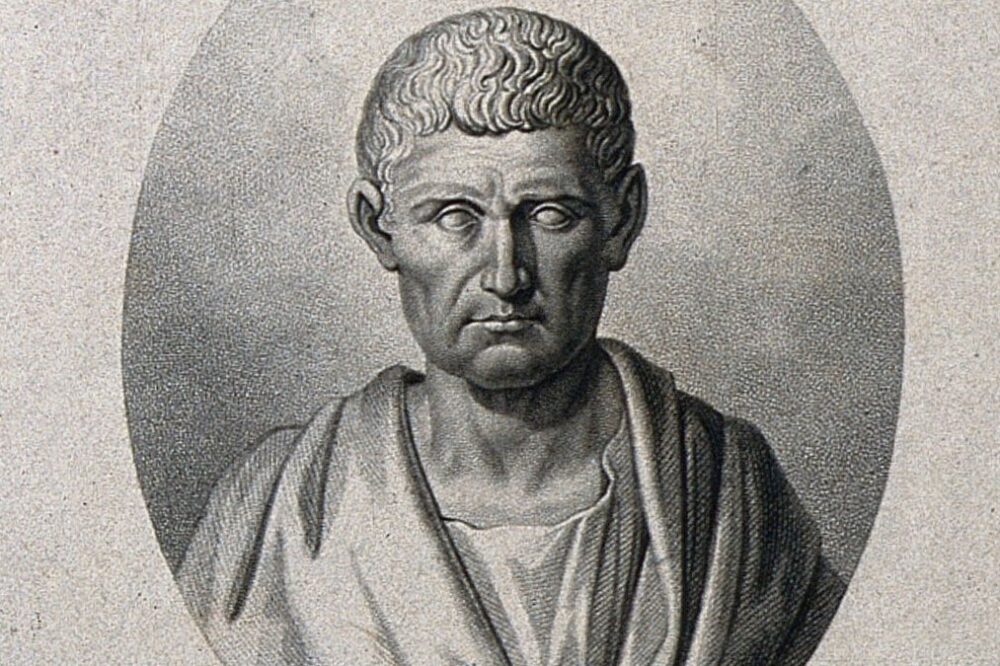
Over 2,000 years ago, the Greek philosopher Aristotle wrote that one day “every tool could accomplish its own work.” In his work Politics, he speculated that if looms and instruments could function by themselves, human labor would no longer be necessary.
Many historians see this as one of the earliest conceptualizations of automation—centuries before robotics became reality. Today’s self-operating systems, from factory robots to AI-driven software, reflect Aristotle’s vision of machines performing complex tasks without human intervention.
2. Heron of Alexandria Designed the First Automatic Door
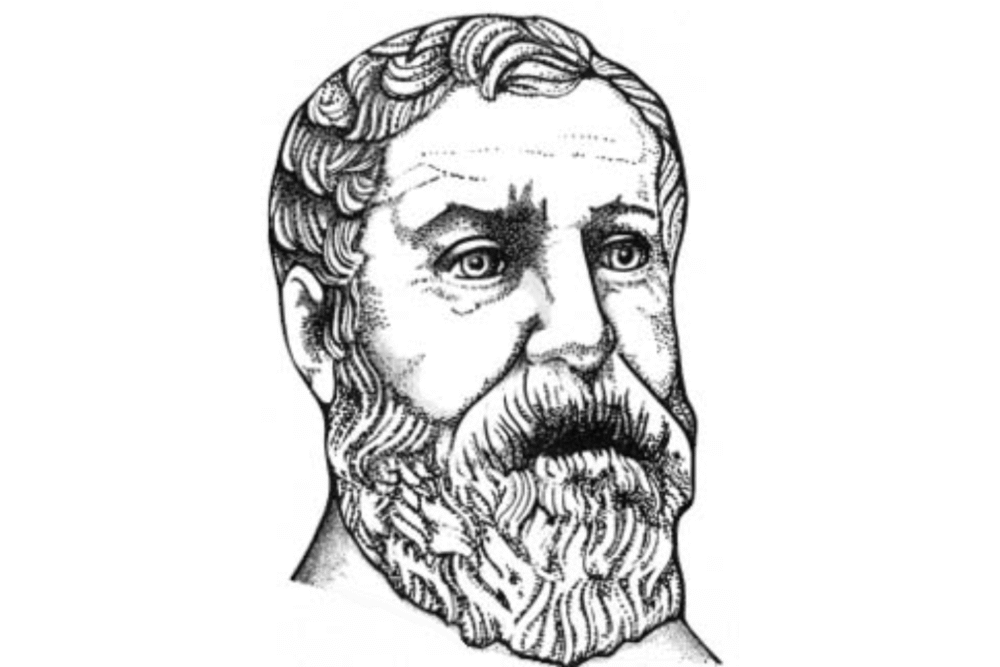
Around the 1st century CE, the Greek engineer Heron of Alexandria created mechanical inventions that seemed to predict the age of robotics. Among his most famous designs was an automatic temple door that opened when worshippers lit a fire on an altar.
Using heat, pulleys, and steam pressure, Heron’s mechanism was an early precursor to automated technology. His other inventions—including coin-operated machines and self-filling wine vessels—demonstrated principles of engineering that anticipate modern robotics and mechanical systems.
3. Leonardo da Vinci Sketched Concepts of Flight

During the late 15th century, Leonardo da Vinci drew detailed plans for flying machines based on his studies of bird anatomy. His “ornithopter” designs featured wings that flapped using human power, centuries before airplanes became reality.
While Leonardo’s machines never flew, his drawings reveal a deep understanding of aerodynamics that foreshadowed modern aviation. His visionary sketches—alongside his studies of parachutes and gliders—showed that humanity’s dream of flight was already grounded in science long before the Wright brothers succeeded.
4. Roger Bacon Predicted Cars and Airplanes
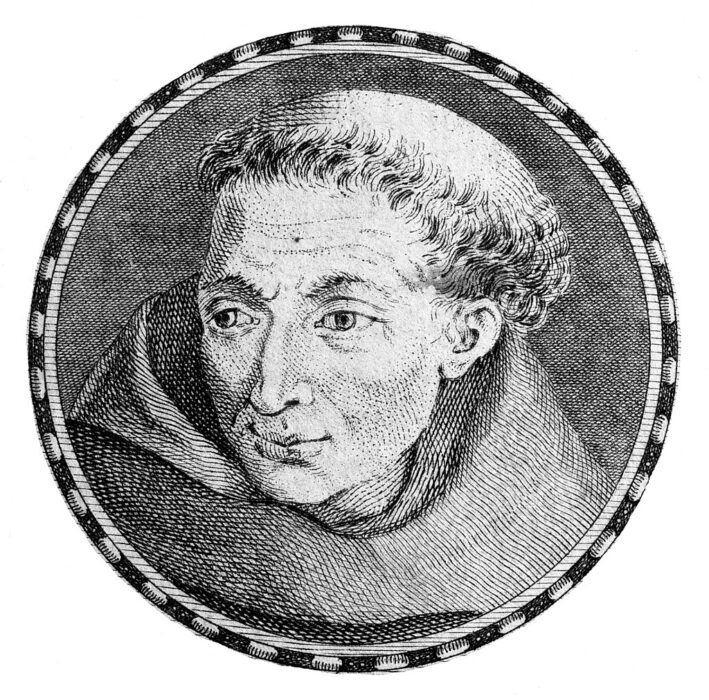
In the 13th century, English philosopher Roger Bacon described inventions that sound distinctly modern. He wrote that “machines for flying” and “chariots moving without horses” would one day exist, powered by internal forces.
Historians believe Bacon’s predictions stemmed from his experiments with early mechanics and his study of motion. Though speculative, his writings predated the invention of the automobile and airplane by more than 600 years, demonstrating an extraordinary grasp of the possibilities of applied science.
5. Johannes Kepler Imagined Space Travel
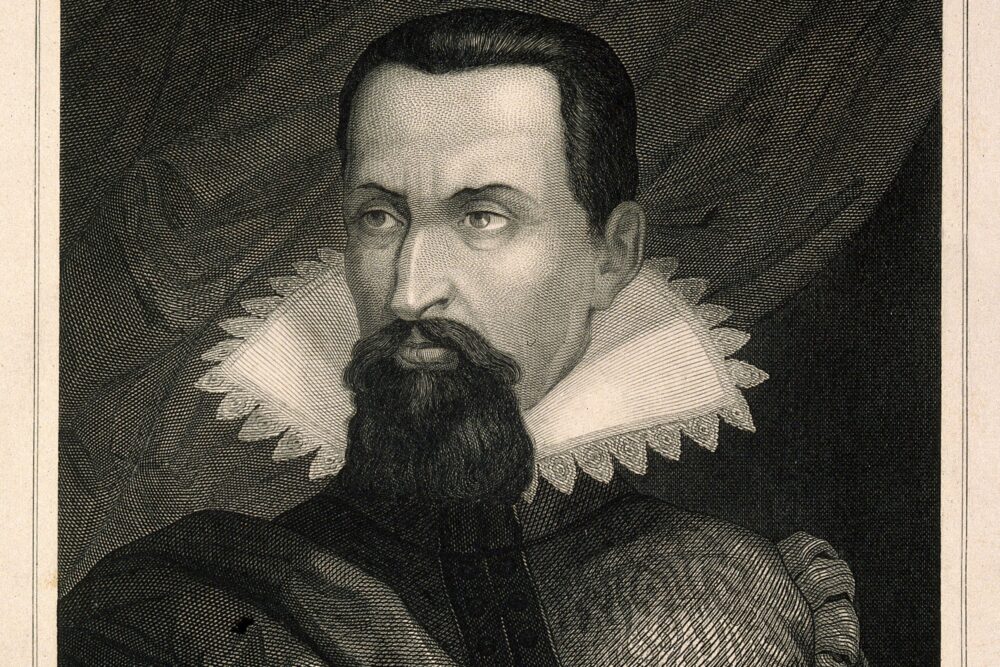
In 1608, German astronomer Johannes Kepler wrote Somnium, a fictional story about a voyage to the Moon. In it, he described weightlessness, changing light, and the challenges of space travel with surprising scientific accuracy.
Though presented as a dream narrative, Somnium was grounded in Kepler’s astronomical research and gravitational theories. His depiction of space conditions closely mirrors what astronauts later experienced, earning him recognition as one of the earliest thinkers to envision interplanetary travel.
6. The Mayans Predicted Eclipses and Planetary Movements
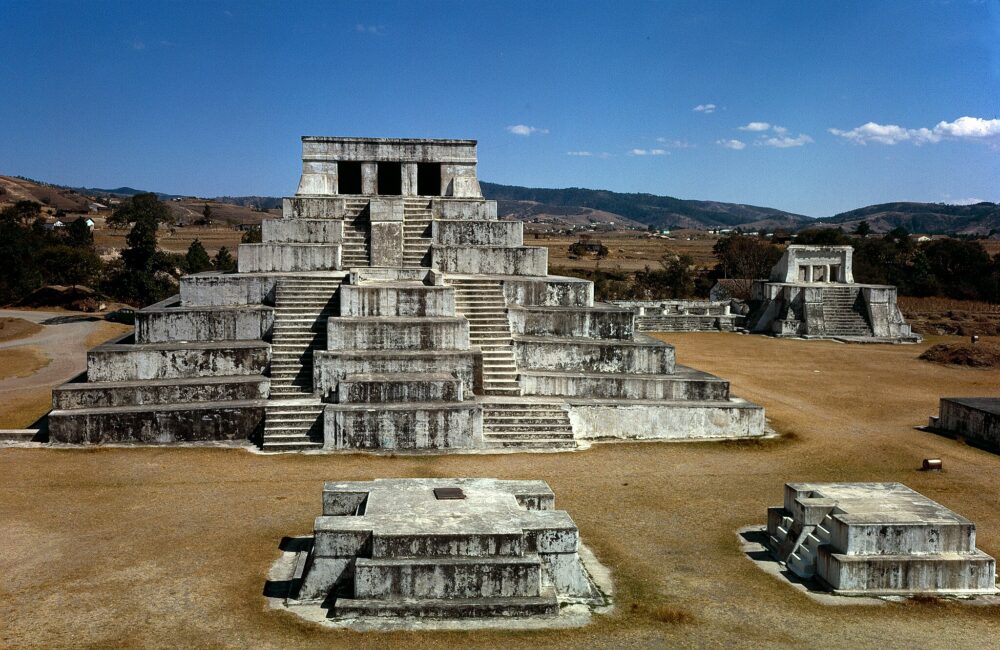
The ancient Maya, through careful observation of the heavens, created calendars capable of predicting solar and lunar eclipses with remarkable precision. Their astronomical tables, carved into stone and painted in codices, accurately tracked Venus’s orbit and other celestial events.
Far from mystical prophecy, these predictions were based on centuries of systematic sky-watching. Modern astronomers have confirmed that Maya calculations align closely with present-day astronomical data—evidence of a civilization deeply attuned to celestial mechanics long before modern science.
7. Nostradamus Accurately Described Key Historical Events

Michel de Nostredame, known as Nostradamus, published Les Prophéties in 1555—hundreds of poetic quatrains that many interpret as predictions. While often vague, some writings appear to describe real future events, including the Great Fire of London in 1666 and the French Revolution.
Historians debate his accuracy, noting that his language allows multiple interpretations. However, some correlations—like his references to “fire in the great city” and “blood on the streets”—bear striking similarity to later events, cementing his place in popular history.
8. The Hindu Mahabharata Described Advanced Weapons

The Mahabharata, an ancient Sanskrit epic composed over 2,000 years ago, contains vivid descriptions of weapons resembling modern technology. Passages mention “iron thunderbolts,” blinding flashes, and immense heat—elements some interpret as early imaginings of explosives or even nuclear energy.
Scholars agree these descriptions were metaphorical, symbolizing divine power rather than actual devices. Still, the language reflects a deep human fascination with destructive force and energy—concepts that later emerged in physics and warfare technology.
9. H. G. Wells Predicted the Atomic Bomb

In his 1914 novel The World Set Free, H. G. Wells described a powerful weapon that released “atoms of uranium” in an unending explosion. His fictional “atomic bombs” eerily foreshadowed the development of nuclear weapons three decades later.
Wells drew inspiration from early atomic theory, but his depiction of chain reactions and global consequences proved scientifically sound. Physicists like Leo Szilard later cited his work as one of the first cultural references to nuclear energy and its dangers.
10. The I Ching Anticipated Binary Code

The I Ching, or “Book of Changes,” is an ancient Chinese text dating back over 3,000 years. Its system of broken and unbroken lines—representing yin and yang—forms 64 hexagrams that symbolize universal patterns of change.
Mathematicians and computer scientists, including Gottfried Wilhelm Leibniz in the 17th century, later recognized that the I Ching’s structure mirrors binary code: the foundation of modern computing. This ancient philosophical framework unexpectedly anticipated the logic underlying today’s digital world.
11. Jules Verne Envisioned Submarines and Spacecraft
French novelist Jules Verne wrote Twenty Thousand Leagues Under the Sea (1870) and From the Earth to the Moon (1865), works that predicted technological advances far beyond his era. His descriptions of submarines, space capsules, and electric engines were remarkably precise.
Verne’s fictional submarine Nautilus closely resembled early 20th-century designs, while his moon-launch scenario—complete with astronauts, a launch site in Florida, and a splashdown return—parallels NASA’s Apollo missions. His blend of science and imagination continues to inspire inventors and engineers.