
As climate disasters grow, experts ask why denial and apathy still shape how millions respond to a burning planet.

Record-breaking heatwaves are killing thousands, hurricanes are destroying entire cities, and wildfires are turning forests into ash – yet millions of people seem more concerned about their favorite TV show than the planet melting around them.
Nearly 15% of Americans deny that climate change is real, while climate apathy is especially high among younger men who should be the most worried about their future. The disconnect between the urgency of our climate crisis and public indifference is staggering and terrifying.
1. Young men are giving up on climate action more than anyone else
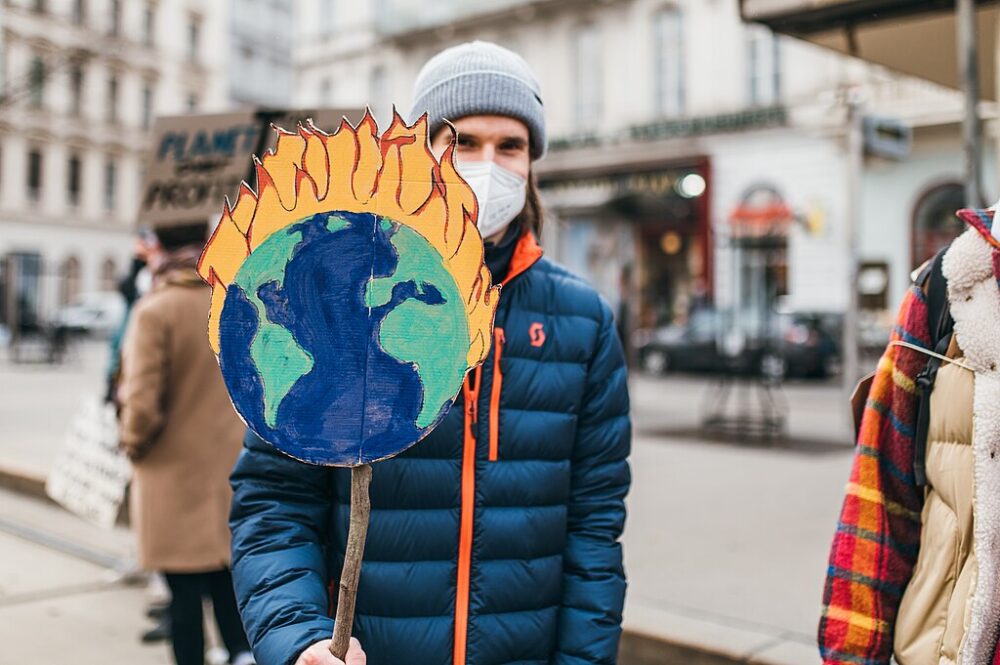
New data shows elevated climate apathy and fatalism among millennial and Generation Z men compared with older generations and women. This is particularly alarming because young people have the most to lose from climate change, yet many young men seem to be checking out of the conversation entirely. Social media algorithms and cultural messaging are creating a generation of climate fatalists.
The psychological impact of constant climate doom has created a “why bother” mentality among people who should be leading the charge for change. Young men are increasingly turning to distractions and denial rather than engaging with solutions. This demographic shift toward apathy threatens the political coalition needed for meaningful climate action, especially since these voters will be making decisions for the next 50 years.
2. Social media algorithms are feeding people climate misinformation every day

Climate misinformation on social media is undermining climate action and eroding public trust in science, with platforms allowing false information to spread unchecked during major climate events. Every conspiracy theory and distorted fact creates an obstacle to the collective effort needed for meaningful action. The algorithms prioritize engagement over accuracy, meaning outrageous climate denial gets more views than boring scientific facts.
Climate misinformation spreads unchecked on platforms like TikTok, especially in user comments where false information gets amplified without fact-checking. People are getting their climate information from influencers and random social media posts rather than scientists and journalists. This creates an alternative reality where climate change seems debatable instead of settled science, paralyzing public support for necessary policies.
3. Climate change has disappeared from news headlines despite worsening impacts

The climate issue has faded from the headlines in 2024 even as extreme weather events become more frequent and severe. Other concerns like politics and the economy are dominating news cycles, pushing climate stories to the back pages. People can’t prioritize what they’re not hearing about, and the media’s climate fatigue is creating public climate fatigue.
News organizations treat each hurricane, wildfire, and heatwave as isolated events rather than symptoms of a larger crisis. Without constant coverage connecting these dots, people see extreme weather as just bad luck instead of a pattern that’s getting worse. The lack of sustained climate coverage allows people to forget about the crisis between disasters, preventing the sustained public pressure needed for policy changes.
4. Only 21% of Americans are truly engaged with climate issues
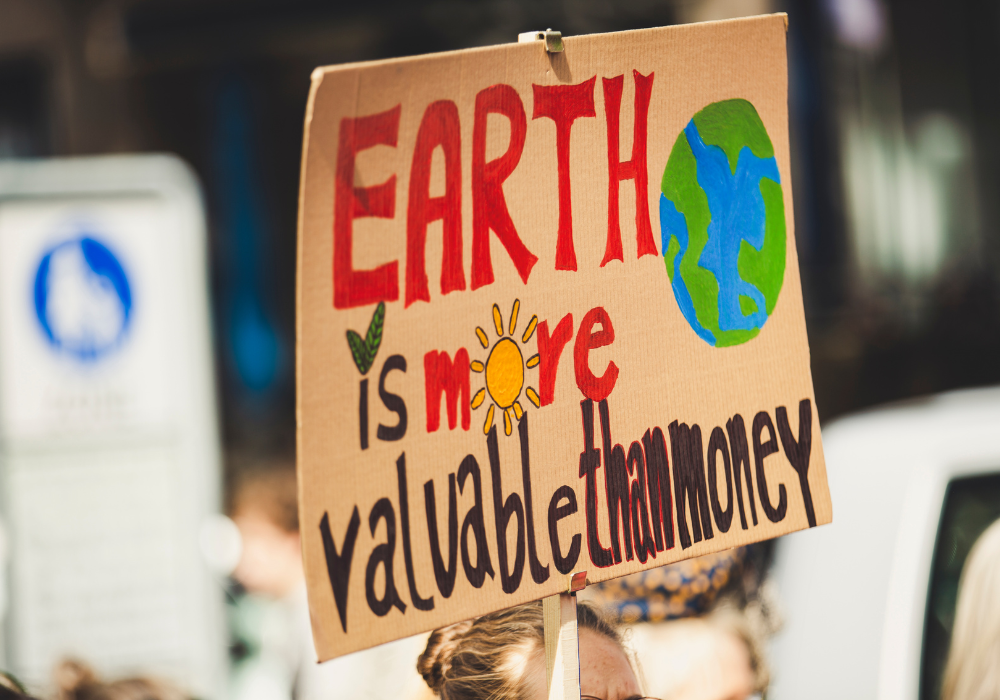
The “global warming issue public” makes up just 21% of Americans – people who pay careful attention to climate news and actively support policy changes. This means nearly 80% of the country is either uninformed, uninterested, or actively opposed to climate action. Without broader public engagement, politicians have no incentive to prioritize climate policies over more popular issues.
This small engaged minority carries the entire burden of climate advocacy while the majority remains distracted or disengaged. The 21% who care deeply are fighting an uphill battle against indifference rather than active opposition. Building a broader coalition requires reaching people who currently see climate change as someone else’s problem or a distant future concern rather than an immediate threat to their own lives.
5. People think corporations and politicians should fix climate change without them
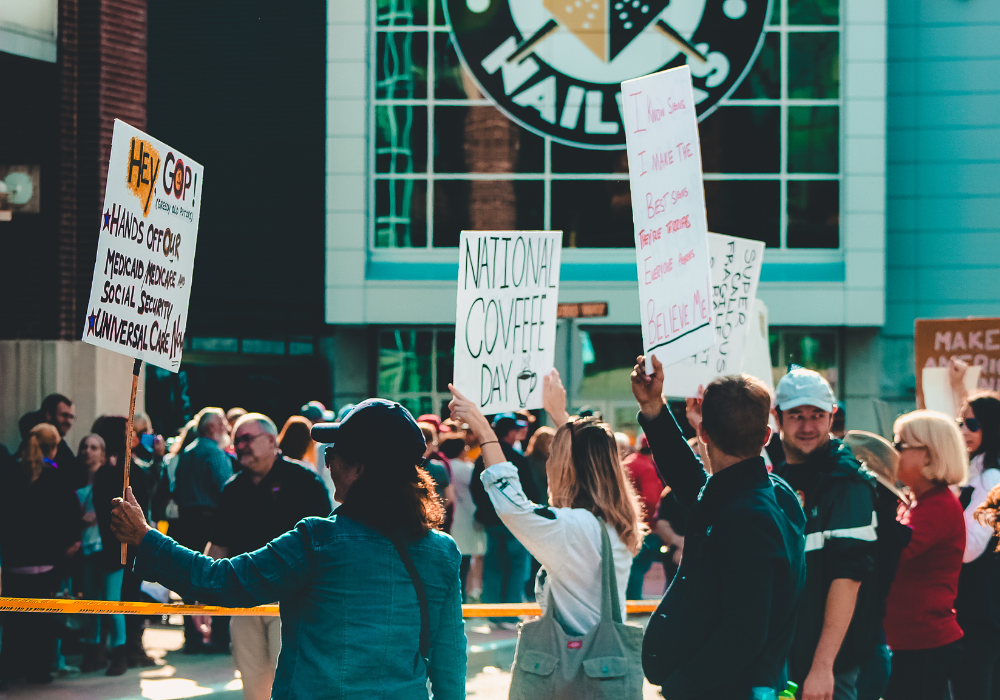
69% of Americans say large businesses and corporations are doing too little on climate, while 60% say the same about elected officials. This creates a convenient excuse for personal inaction – people can blame others while continuing their high-carbon lifestyles. The expectation that someone else will solve the problem reduces individual motivation to change behavior or demand action.
This blame-shifting mentality prevents the comprehensive approach needed to address climate change. While corporations and governments do need to lead, meaningful progress requires changes at every level including individual choices about transportation, energy use, and consumption. When people see climate action as someone else’s responsibility, they become passive spectators rather than active participants in necessary solutions.
6. Climate denial content is making millions for social media platforms

YouTube potentially makes up to $13.4 million annually from ads on climate denial videos, giving platforms a financial incentive to allow misinformation to spread. Major brands are unknowingly funding climate denial by placing ads on these videos. This creates a perverse economic system where lies about climate science generate revenue for tech companies.
The financial incentives are completely backwards – platforms make money from engagement regardless of whether the content is true or false. Climate denial videos often get more views and comments than factual climate content because controversy drives engagement. Until platforms change their business models to prioritize accuracy over engagement, they’ll continue profiting from climate misinformation while the planet burns.
7. Americans are focused on immediate concerns while ignoring long-term threats

People prioritize immediate problems like inflation and crime over long-term threats like climate change, even though climate impacts are already affecting daily life. The human brain struggles to process gradual threats that don’t trigger immediate fight-or-flight responses. Climate change feels abstract and future-focused even as it’s causing current extreme weather, food price increases, and insurance costs.
This psychological bias toward immediate concerns allows people to ignore mounting climate evidence in favor of more pressing daily worries. Politicians exploit this tendency by focusing campaigns on short-term issues while avoiding long-term planning. Without connecting climate change to immediate concerns like economic security and public safety, it remains a “someday” problem that never gets prioritized.
8. Climate fatigue is making people tune out environmental news entirely

Constant exposure to climate disaster stories is creating psychological exhaustion that makes people shut down rather than take action. The overwhelming scale of the problem makes individual actions feel pointless, leading to learned helplessness. Many people are simply tired of hearing about climate change and have mentally moved on to more manageable concerns.
This fatigue is compounded by the lack of positive climate stories showing successful solutions and progress. When all climate news feels hopeless, people protect their mental health by avoiding the topic entirely. The media’s focus on doom and disaster without highlighting solutions creates a cycle where climate stories make people feel powerless, leading them to disengage from climate issues altogether.
9. Many people still don’t connect extreme weather to climate change

Despite overwhelming scientific evidence, many Americans still see hurricanes, wildfires, and heat waves as natural disasters unrelated to human activity. This disconnect prevents people from understanding that climate change is already affecting their lives rather than being a future problem. Without making these connections, extreme weather doesn’t motivate climate action.
Weather has always been variable, so people dismiss unusual events as normal fluctuations rather than signs of a changing climate. This allows people to experience climate impacts firsthand while still not supporting climate policies. The failure to connect current extreme weather to climate change maintains the illusion that this is someone else’s problem happening somewhere else.
10. Social media influencers have more climate credibility than scientists

Social media influencers play an outsized role in shaping climate beliefs, often having more impact on public opinion than actual climate scientists. People trust personalities they follow on social media more than peer-reviewed research or expert consensus. This gives random influencers the power to spread climate misinformation to millions of followers.
The parasocial relationships people develop with influencers make their opinions feel more credible than institutional sources. When a trusted influencer dismisses climate science, followers are more likely to believe them than government agencies or universities. This dynamic allows misinformation to spread rapidly through trusted networks while actual expertise gets dismissed as agenda-driven propaganda.
11. People are overwhelmed by climate solutions and don’t know where to start

The complexity of climate change makes people feel helpless about taking meaningful action. When everything from diet to transportation to energy use affects climate, people get overwhelmed and do nothing rather than trying to make imperfect changes. This paralysis-by-analysis keeps well-meaning people stuck in high-carbon lifestyles because they can’t figure out the “right” way to help.
Without clear, simple guidance about effective individual actions, people either make symbolic changes that don’t matter much or give up entirely. The perfect becomes the enemy of the good, preventing incremental progress that could add up to significant impact. Climate advocacy often fails to provide practical, achievable steps that make people feel empowered rather than overwhelmed.
12. Climate change feels too big and abstract for most people to grasp

The global scale of climate change makes it feel abstract and unmanageable compared to local problems people can see and touch. When impacts are described in terms of global temperature averages and sea level rise over decades, people struggle to connect these concepts to their daily lives. Abstract statistics don’t motivate action the way concrete, personal threats do.
This scale problem is compounded by the fact that climate change affects different regions differently, making it easy for people in less-affected areas to see it as someone else’s problem. Without localizing climate impacts and making them personally relevant, the issue remains too big and distant for most people to prioritize over immediate concerns like jobs, health, and family security.