
When a massive star suddenly disappeared, scientists thought their telescopes were broken — until they weren’t.

In 2019, astronomers studying a distant galaxy made an extraordinary discovery — or rather, a disappearance. A massive star, 2.5 million times brighter than the Sun, had simply vanished. No supernova explosion. No fading embers. Just gone. Using data from the European Southern Observatory’s Very Large Telescope in Chile, scientists confirmed the star had been there for decades — and then it wasn’t. Some believe it may have collapsed directly into a black hole, an event rarely observed in real time. If true, it could rewrite what we know about how the universe ends its brightest lives.
1. A Star Unlike Any Other
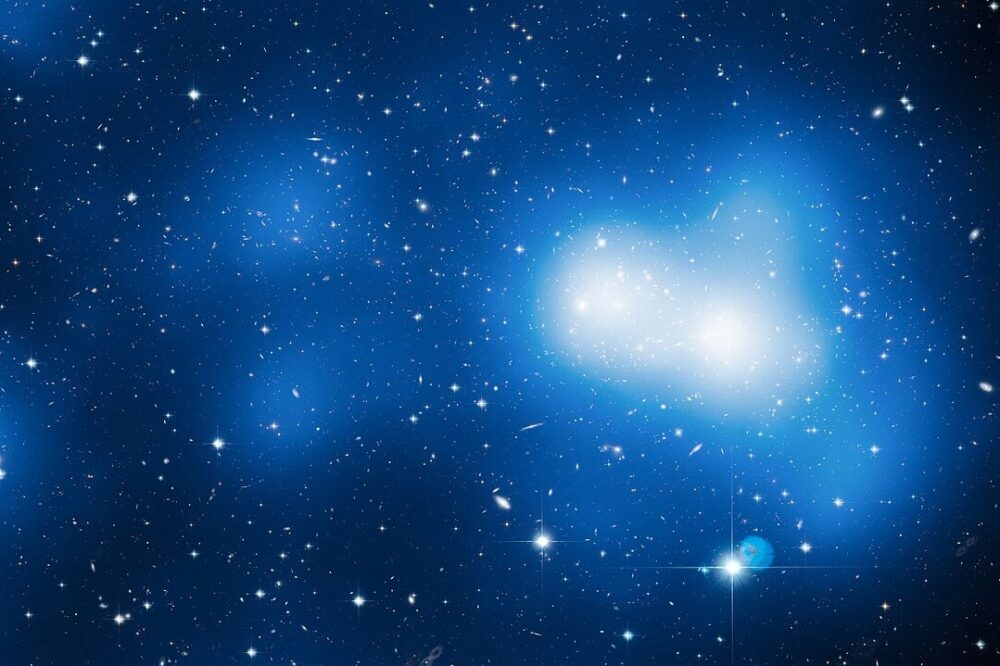
The missing star was located in the Kinman Dwarf Galaxy, about 75 million light-years away. Classified as a “luminous blue variable,” it was one of the most massive and unstable types of stars ever observed — known for violent eruptions that can briefly outshine entire galaxies.
These cosmic giants are rare and short-lived. They usually end their lives in spectacular supernova explosions, leaving behind a dense remnant such as a neutron star or black hole. But this one skipped the fireworks entirely, vanishing without a trace or warning sign.
2. The Discovery That Made Scientists Question Everything

For nearly two decades, astronomers had tracked the star using the European Southern Observatory’s telescopes in Chile. Then, in 2019, a research team led by Dr. Andrew Allan noticed something strange — the brilliant light that once marked its position was gone.
At first, scientists assumed an error: a calibration issue, dust interference, or equipment malfunction. But after rechecking data and comparing images from earlier years, the evidence was clear. The star wasn’t hidden — it was missing entirely. The discovery sent shockwaves through the astrophysics community.
3. How a Star Can Simply Disappear
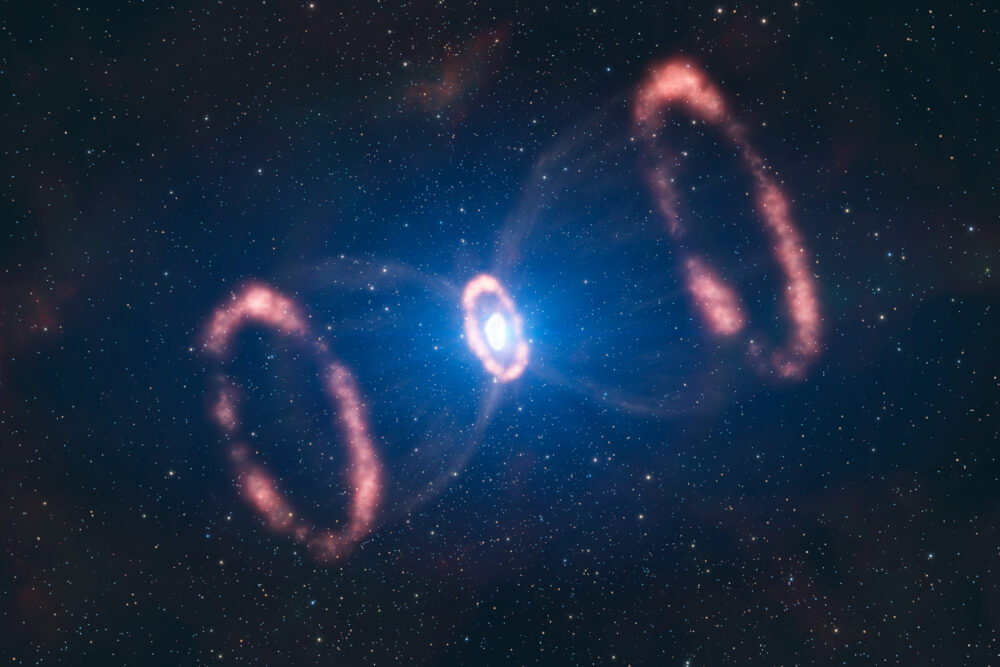
The most likely explanation, according to researchers, is that the star collapsed directly into a black hole — a process called a “failed supernova.” Instead of exploding outward, the star’s gravity pulled its mass inward, swallowing itself in silence.
This phenomenon has long been theorized but rarely observed. Most massive stars produce bright supernovae when they die, making them visible across galaxies. A direct collapse would be nearly invisible, leaving only faint X-ray traces or gravitational ripples. Detecting one in progress is a remarkable cosmic coincidence.
4. The Clues Hidden in Old Light
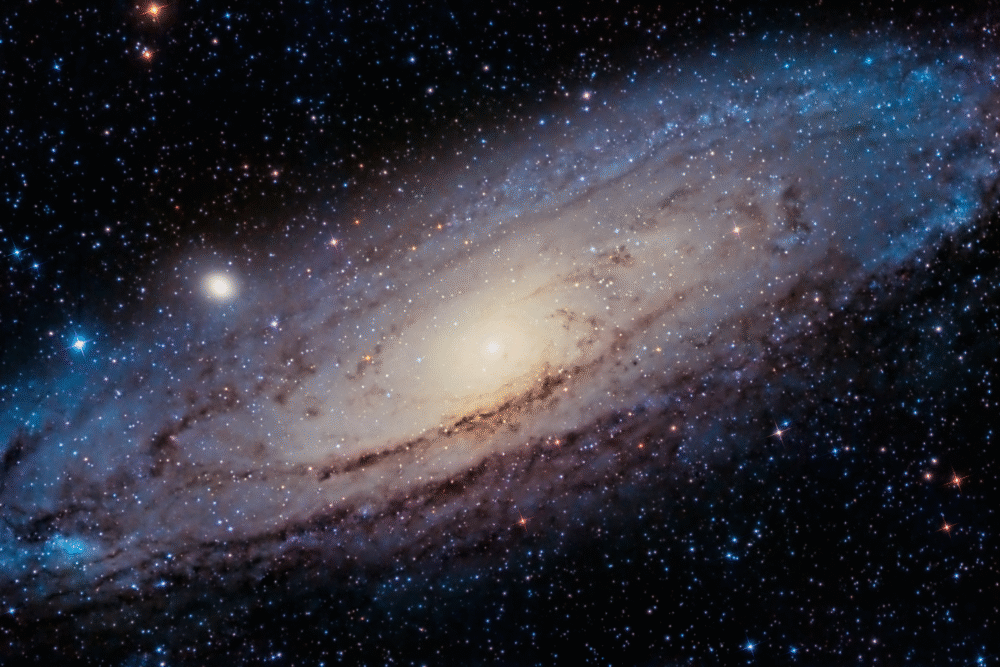
By comparing spectral data — the unique “fingerprint” of a star’s light — scientists confirmed the vanished object’s identity. Older records showed it emitting intense hydrogen and helium signatures consistent with an unstable blue variable nearing the end of its life.
After the disappearance, those signatures vanished, replaced only by the faint glow of the surrounding galaxy. No residual supernova, dust cloud, or explosion debris appeared in subsequent observations. It was as if the star had blinked out of existence — leaving behind only its recorded history.
5. Why Failed Supernovae Are So Hard to Catch

Failed supernovae may be common in theory, but nearly impossible to spot. When a star collapses quietly, there’s little visible light to detect. Unless astronomers happen to be observing at just the right moment, the event goes unnoticed.
In 2015, a similar case was reported in the NGC 6946 galaxy, where another red supergiant seemed to disappear. That incident, combined with the Kinman Dwarf case, strengthens evidence that some of the universe’s biggest stars die invisibly — slipping directly into black holes without a final blaze of glory.
6. The Role of the Very Large Telescope

The European Southern Observatory’s Very Large Telescope (VLT) is one of the most powerful optical instruments on Earth. Its ability to capture high-resolution spectra allowed researchers to study the vanished star long before and after it disappeared.
Data from 2001 to 2011 showed a steady brightening pattern typical of an unstable blue variable star. When the VLT returned to the same coordinates in 2019, the light had dropped by more than 90%. That sudden absence, confirmed by multiple instruments, made it clear the change wasn’t just a passing phenomenon — something permanent had occurred.
7. Could Dust or Gas Be Hiding It?

Not everyone agrees the star is gone for good. Some astronomers propose it might be cloaked behind a thick veil of dust and gas produced by one of its own eruptions. Massive stars often eject clouds of material that can obscure their light for years or even decades.
Infrared telescopes — which can see through dust — have searched for residual warmth from such a shroud but found little evidence. If dust is the culprit, it would have to be extraordinarily dense and stable, which makes this theory less likely but not impossible.
8. The Collapse Into Darkness
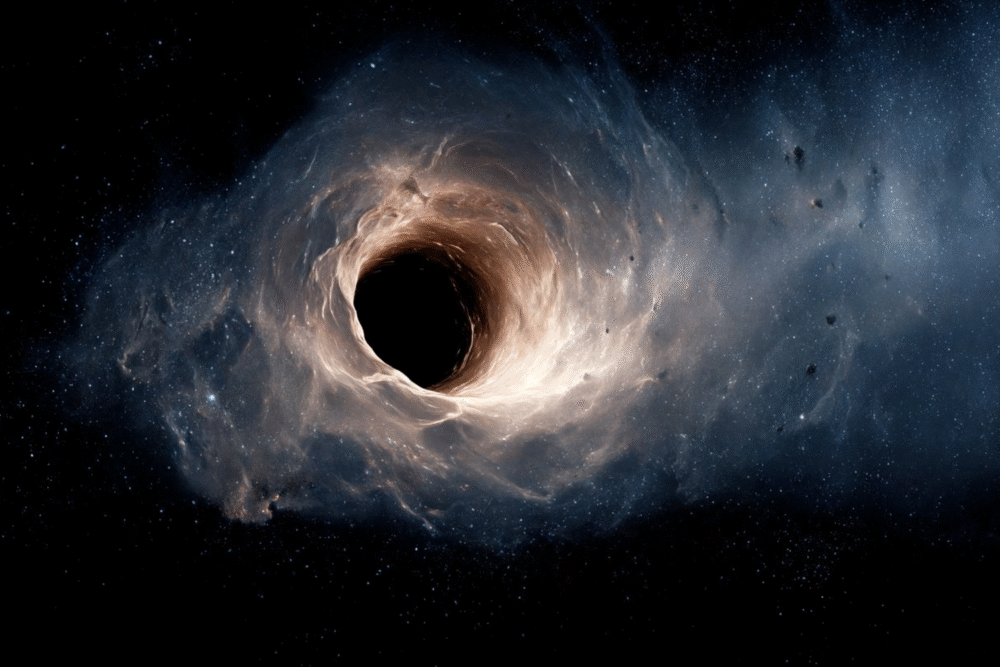
If the star truly collapsed into a black hole, it would represent one of the universe’s most extreme transitions. In seconds, an object millions of miles wide could have shrunk to a point of infinite density. The process would release immense energy — but little light — as gravity overpowered every atomic force within.
Astrophysicists hope that gravitational-wave detectors like LIGO and Virgo might one day catch the subtle vibrations from such an event. That would provide the first direct evidence of a star’s “silent death,” where creation’s brightest objects end not in fire, but in silence.
9. What the Disappearance Teaches Us About Stellar Death

Until recently, scientists believed that all massive stars ended in visible supernovae. The Kinman Dwarf discovery challenges that assumption and suggests the universe may be full of dark remnants we’ve never seen.
This revelation changes how astronomers estimate black hole populations. If many stars vanish this way, black holes may be far more common than previously thought. It also hints that the cosmic cycle of birth and destruction is even more varied — and mysterious — than textbooks once suggested.
10. The Search for More “Missing Stars”
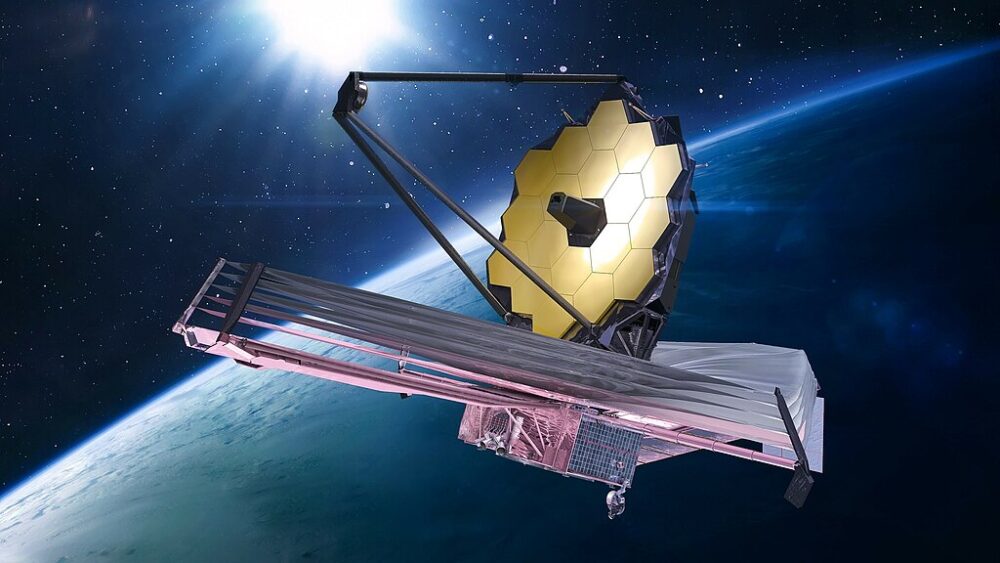
Inspired by this case, researchers have launched new sky surveys designed to monitor thousands of luminous stars across multiple galaxies. Using both ground-based telescopes and space observatories, they hope to catch more examples of failed supernovae in real time.
Each detection could help scientists better understand how mass, temperature, and chemical composition determine a star’s final fate. It’s a long game — requiring years of patience — but astronomers say these quiet disappearances may hold the key to understanding how the universe recycles its most powerful creations.
11. A Reminder of How Little We Still Know

The vanishing star of the Kinman Dwarf Galaxy remains one of the most puzzling discoveries in modern astronomy. Whether it collapsed into a black hole or hid behind cosmic dust, it challenges our confidence in understanding the universe’s most basic processes.
For astronomers, it’s both humbling and exhilarating. Even with advanced telescopes, there are still phenomena that defy explanation — stars that can shine brighter than a million suns one decade and then fade into nothing the next. In that silence, the cosmos reminds us how much of its story remains unwritten.