
Small changes in weather, water, and land are already pushing families to move — often without headlines.

You may not see it in the news, but climate change is already reshaping where people live. Rising seas, intensifying storms, droughts, and shifting farmland are quietly nudging whole communities to relocate. For many families, the move starts as an extra flood, a failed crop, or a handful of dry wells. Over time, those small losses add up—and force decisions about leaving homes behind in search of somewhere safer and more stable.
1. Newtok, Alaska — A Village Literally Losing Land

In western Alaska, the Yup’ik village of Newtok has been disappearing at an alarming rate. The combination of thawing permafrost and stronger storms has caused the shoreline to erode by as much as 70 feet each year. Roads, homes, and the local school have already been lost to the encroaching river.
In 2003, residents voted to relocate their entire community nine miles inland to a safer site called Mertarvik. By 2024, most families had moved, marking one of the first complete climate-driven relocations in the United States.
2. Tebunginako, Kiribati — Moving Inland as the Sea Encroaches

On the Pacific island of Abaiang in Kiribati, rising seas and coastal erosion have slowly swallowed the village of Tebunginako. Families once lived close to the shore, but saltwater now floods their homes and contaminates wells that once provided fresh drinking water.
Over the past two decades, the community has gradually moved inland, rebuilding their homes and reestablishing crops. The remains of the original village now sit underwater just offshore, serving as a stark reminder that climate migration is already a reality in small island nations.
3. Vunidogoloa, Fiji — A Village Relocated by Rising Seas
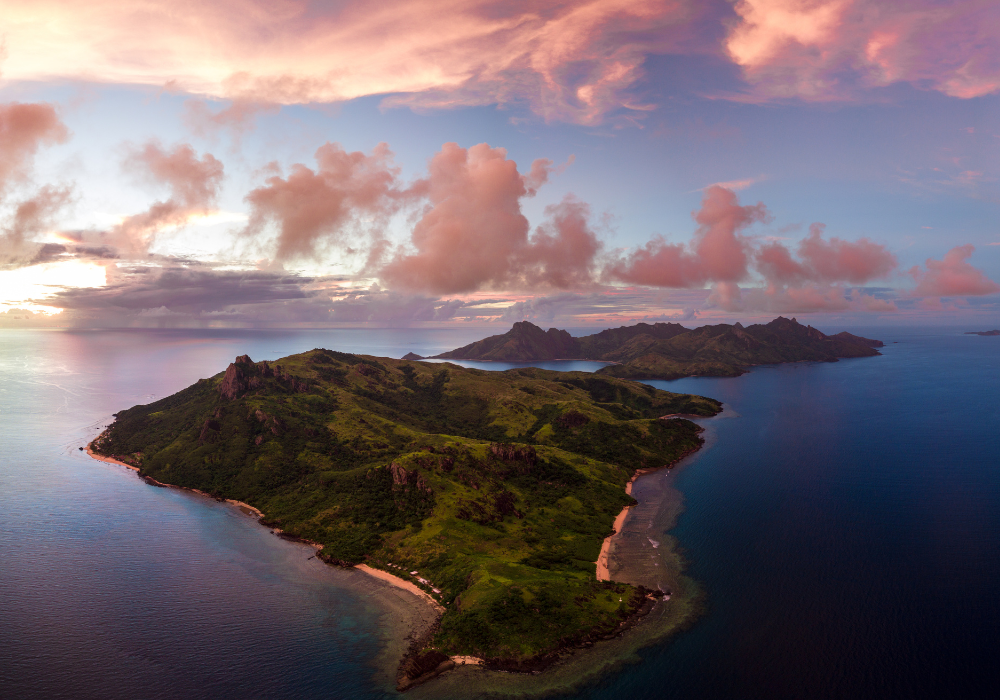
In 2014, the coastal Fijian village of Vunidogoloa became one of the first in the world to be fully relocated because of climate change. Years of flooding, stronger storms, and coastal erosion made life near the sea impossible. After repeated losses, the government and local leaders decided to move the village to higher ground two kilometers inland.
New homes, farmland, and community buildings were constructed, and residents successfully resettled. The relocation of Vunidogoloa has since inspired similar moves across the Pacific as other vulnerable villages face the same threats.
4. Samjung, Nepal — A Himalayan Village Running Dry
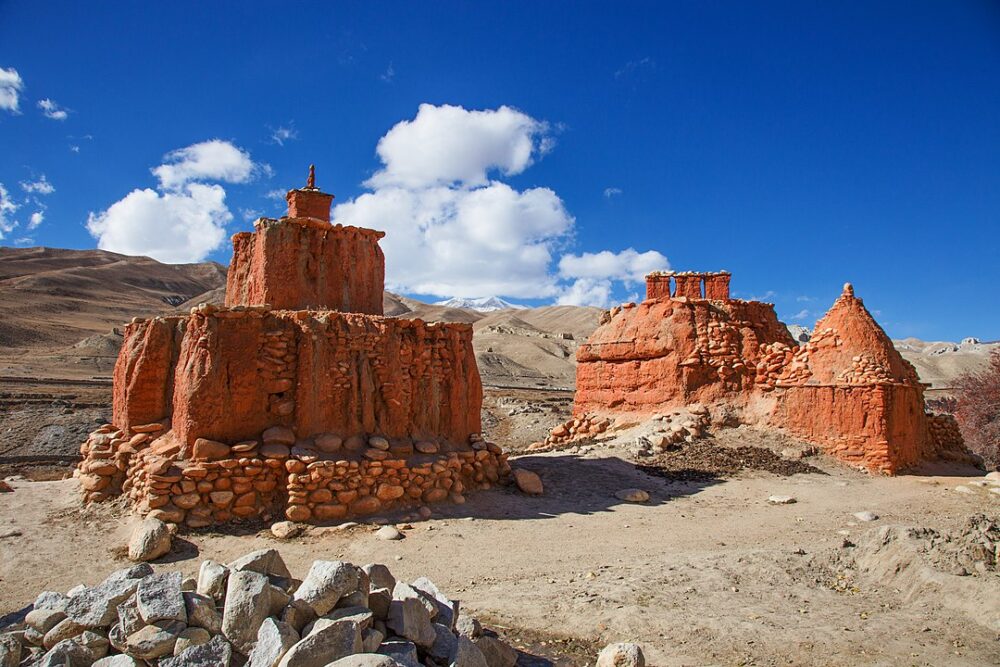
High in Nepal’s Upper Mustang region, the mountain village of Samjung has been slowly abandoned as its water sources vanish. Once fed by glacial meltwater, the springs and streams that sustained life here have dried up due to rising temperatures and shrinking glaciers.
With little water for crops or livestock, families began leaving one by one, moving to lower-altitude towns with more reliable rainfall. Today, much of the village stands empty — a silent example of how even the world’s highest communities are being reshaped by climate change.
5. Isle de Jean Charles, Louisiana — America’s First “Climate Refugees”
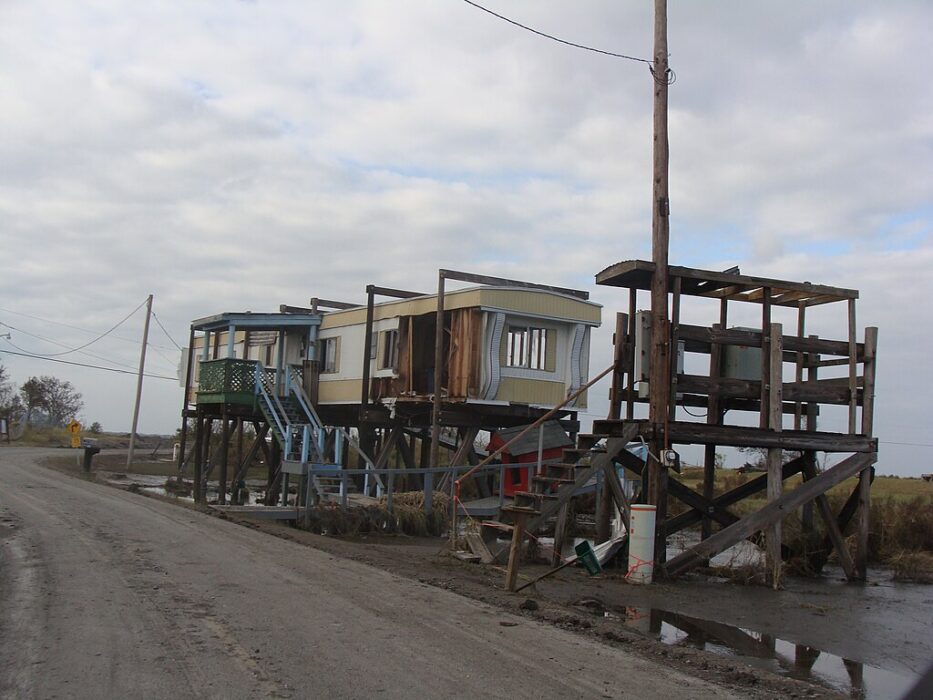
Located along Louisiana’s Gulf Coast, Isle de Jean Charles has lost more than 90 percent of its land since the 1950s due to rising seas and coastal erosion. Once home to a thriving Native American community, it has become one of the most visible examples of climate displacement in the United States.
After repeated flooding and storm damage, residents began relocating to higher ground with federal assistance. The project represents one of the first government-supported climate migrations in the country — and a preview of what many other coastal towns may soon face.
6. Shishmaref, Alaska — Sinking Beneath Melting Permafrost
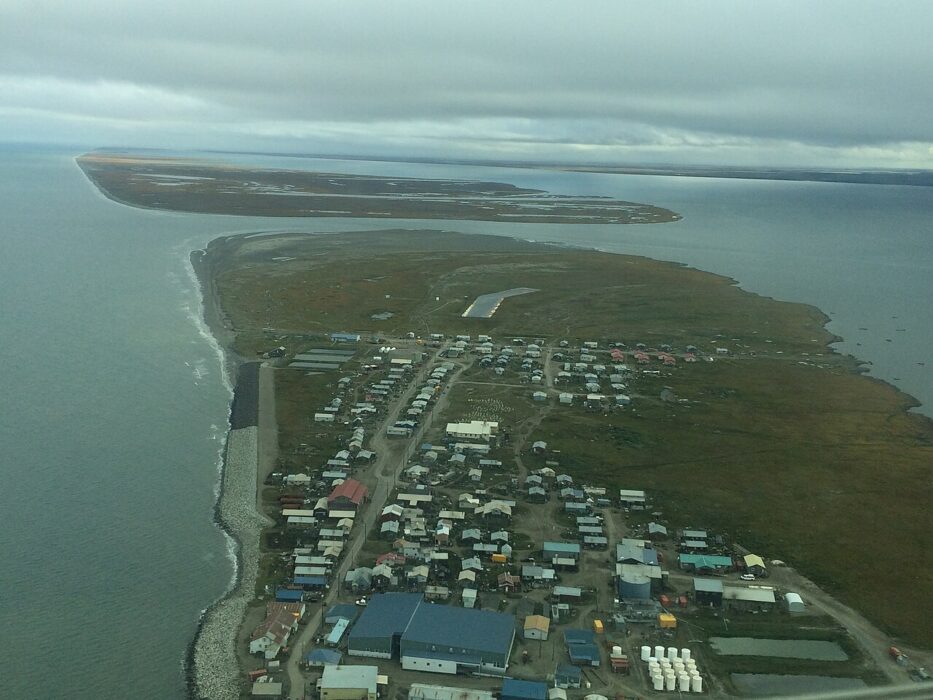
Shishmaref, a small Inupiat village north of the Bering Strait, is another Alaskan community losing its land to rising seas and thawing permafrost. Once protected by sea ice for much of the year, the coastline now erodes rapidly as storms batter unprotected shores.
Houses have already fallen into the ocean, and the community has voted to relocate several times. But the move has been delayed by high costs and logistical challenges. With each passing winter, the island shrinks further, highlighting the growing urgency of managed retreat in the Arctic.
7. Riverbank Villages, Bangladesh — Homes Washed Away Yearly

Along the Brahmaputra and Ganges rivers in Bangladesh, entire villages vanish each year as floodwaters eat away at riverbanks. Millions of people have already been displaced by these slow-moving disasters. Families rebuild farther inland until the next flood arrives, repeating the cycle over generations.
Unlike sudden storms, this displacement happens quietly, without international attention. As farmland and homes disappear, residents move to crowded cities like Dhaka or Chattogram, where climate refugees already make up a large part of the growing urban population.
8. Moroccan Oasis Towns — Desertification Driving Migration

In Morocco’s southeastern Tafilalet region, ancient oasis towns that once flourished with date palms and agriculture are drying out. Groundwater levels have fallen dramatically due to persistent drought and higher temperatures. Wells that sustained families for centuries have run dry.
As the desert encroaches, residents have been forced to abandon villages and move toward larger cities. The abandoned mud-brick homes crumble under the sun, leaving ghost towns scattered across the desert — quiet evidence of how a warming climate is redrawing human settlement patterns in North Africa.
9. The Solomon Islands — Vanishing Nations in the Pacific
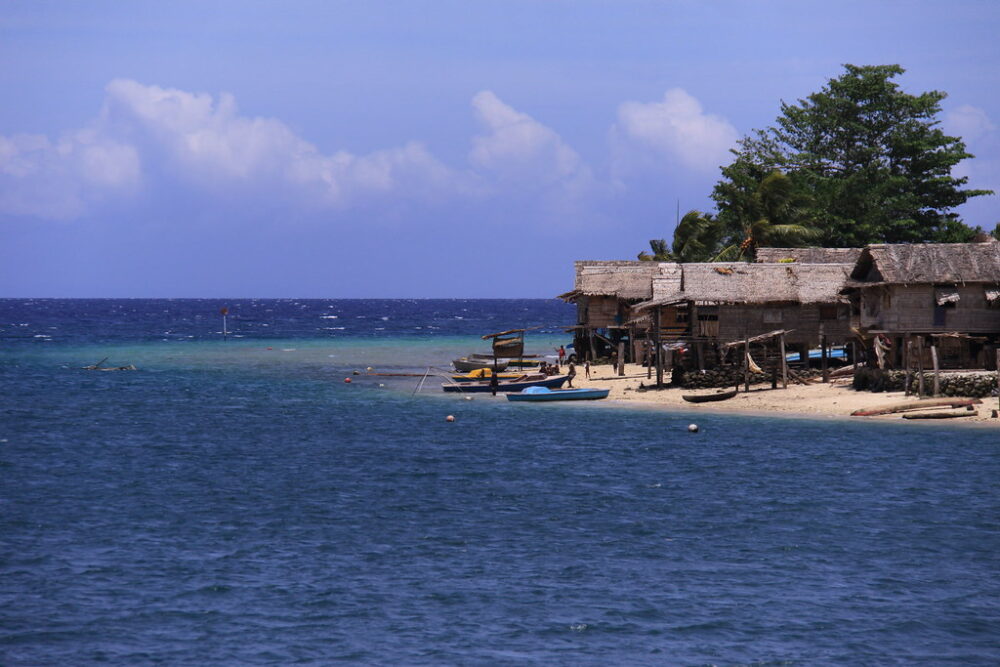
In parts of the Solomon Islands, rising sea levels have already erased entire islands from the map. Families have had to move to higher ground as shorelines retreat and freshwater sources become contaminated with salt. Some communities have relocated entirely to neighboring islands, losing ancestral lands in the process.
Scientists studying these changes say the islands’ disappearance is among the clearest indicators of climate displacement already underway. For Pacific Islanders, this slow-motion exodus isn’t theoretical — it’s an existential challenge happening in real time.
10. The American Midwest — Towns Relocating After Repeated Flooding

In the United States, flooding along the Mississippi and Missouri Rivers has forced numerous small towns to move inland. After the Great Midwest Flood of 1993, several Missouri towns, including Valmeyer, relocated to higher ground with federal assistance. Similar moves have followed major floods in Iowa, Illinois, and Wisconsin.
These relocations rarely make national news, but they represent a growing trend of “managed retreat.” Residents who once rebuilt after every flood are now choosing to move permanently, acknowledging that extreme weather is no longer a rare event.
11. Central Appalachia — Leaving Behind a Changing Landscape

In parts of Central Appalachia, population decline has accelerated as climate pressures compound existing economic struggles. Increasing flooding, landslides, and shifting weather patterns are damaging infrastructure and farmland across Kentucky, West Virginia, and Virginia.
Many younger residents are leaving for more stable areas with reliable water, jobs, and healthcare. Though less visible than coastal relocations, this internal migration reflects how climate stress can amplify other hardships — creating a steady but quiet exodus from regions already stretched thin by economic and environmental change.