
Alex the African grey parrot shattered assumptions about animal minds—and left a legacy still studied today.
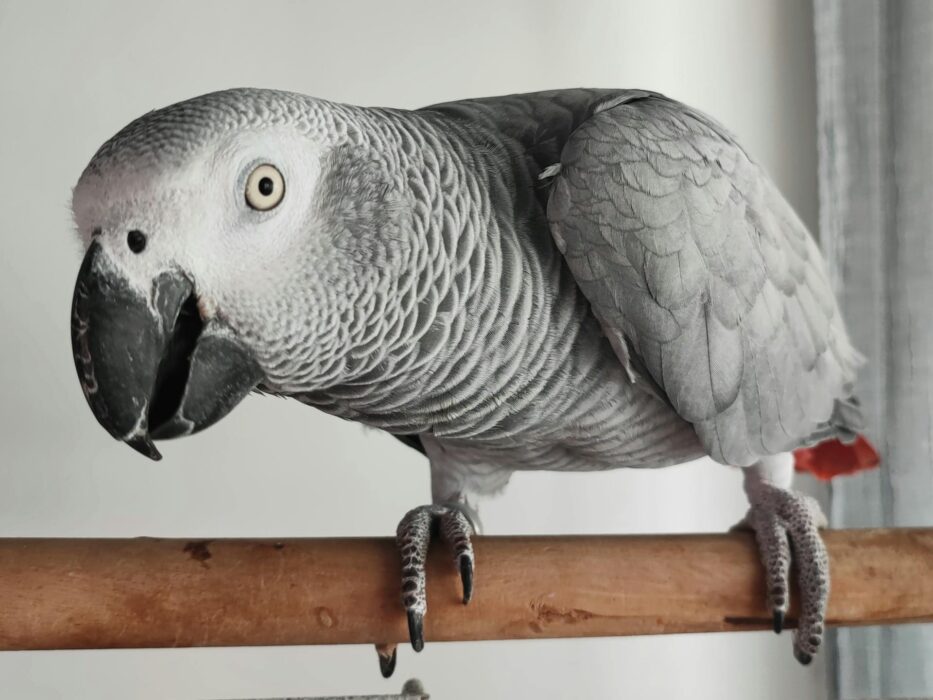
When psychologist Irene Pepperberg began studying an African grey parrot named Alex in the late 1970s, few scientists believed birds were capable of true reasoning or language comprehension. But Alex proved them wrong. Over three decades, he learned to identify colors, shapes, numbers, and even express understanding of abstract concepts like “same” and “different.” His astonishing abilities forced researchers to rethink animal intelligence—and raised profound questions about the boundaries between human and animal thought.
1. A Parrot Who Changed the Course of Science
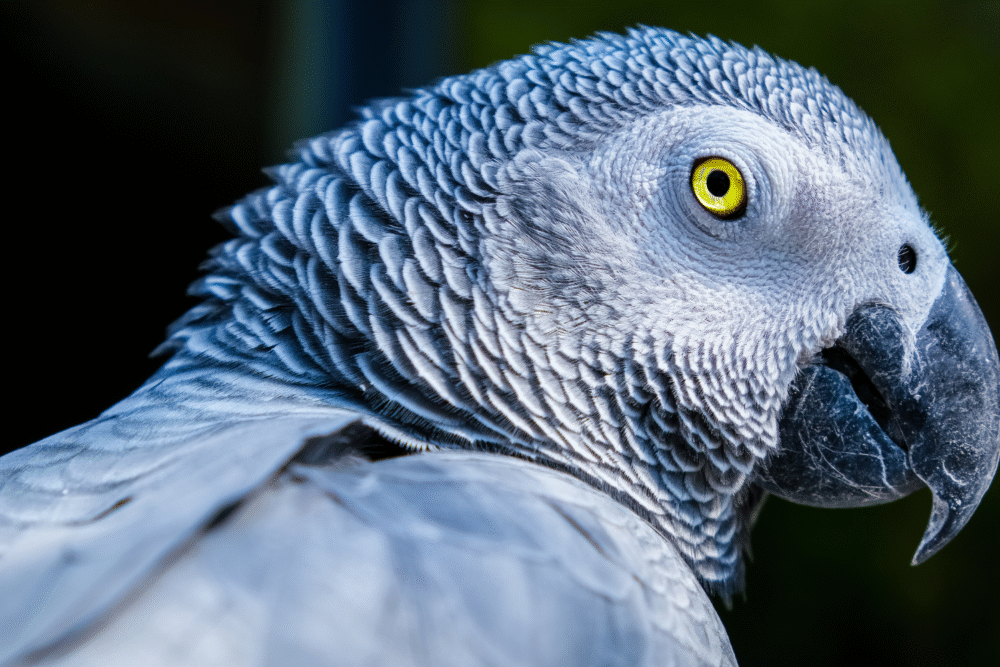
When Alex the African grey parrot entered the Harvard lab of researcher Irene Pepperberg in 1977, few believed birds could possess real intelligence. Most scientists at the time thought animal communication was limited to instinct or mimicry.
Over the next 30 years, Alex would defy every expectation. Through structured experiments and daily interaction, he demonstrated reasoning, memory, and emotional awareness—traits once considered uniquely human. His work transformed how scientists study cognition across the animal kingdom.
2. Irene Pepperberg’s Revolutionary Approach
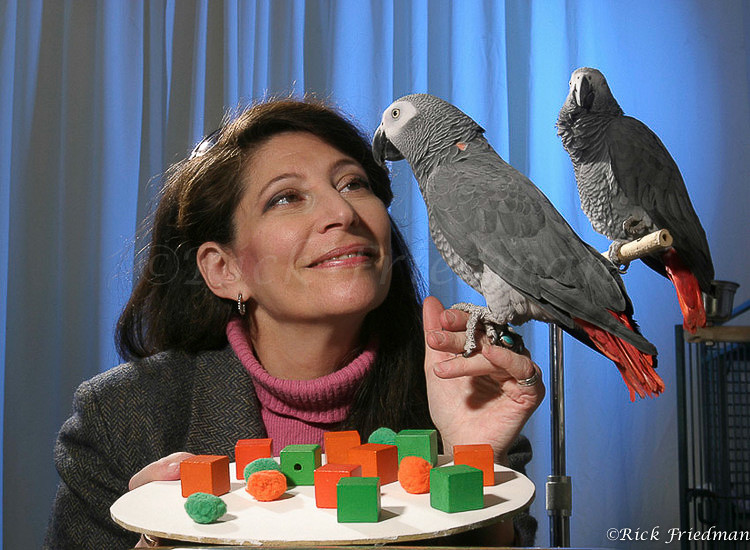
Instead of treating Alex as a test subject, Pepperberg engaged him as a learning partner. Using the “model/rival” method, two humans interacted while Alex observed and competed for attention, motivating him to understand words rather than just repeat them.
This approach mirrored how children learn language through social engagement. By modeling communication rather than enforcing repetition, Pepperberg unlocked Alex’s ability to understand meaning, marking a breakthrough in animal-learning research.
3. Alex Could Identify Objects by Color, Shape, and Material

Through years of training, Alex learned to name more than 100 objects and describe their attributes. He could correctly answer questions such as “What color is the key?” or “What shape is the block?”
Even more remarkably, he sometimes corrected his human trainers when they misspoke. His precise responses showed comprehension—not mimicry—suggesting that animals could grasp symbolic representation, a fundamental aspect of human intelligence.
4. He Understood Numbers and Could Count Accurately

Alex was the first non-human animal proven to recognize numbers up to eight and understand the concept of quantity. When asked “How many?” he could count items correctly, even when their arrangement changed.
In later studies, he demonstrated an understanding of “zero” as a numerical value—a cognitive milestone once thought limited to humans and great apes. His grasp of math concepts forced researchers to reconsider what “advanced intelligence” really means in animals.
5. He Grasped Abstract Concepts Like “Same” and “Different”

One of Alex’s most remarkable breakthroughs was understanding relational concepts. When shown two objects, he could identify whether they were the same or different by color, shape, or material.
This abstract reasoning required flexible thinking and memory—cognitive skills previously unrecorded in birds. His success revealed that complex thought processes were not limited to species with mammal-like brains, challenging long-held assumptions about intelligence hierarchy in nature.
6. Alex Formed Emotional Bonds and Showed Personality

Those who worked with Alex described him as curious, mischievous, and sometimes stubborn. He often displayed affection for familiar people and frustration when bored or ignored.
He even coined his own phrases, once combining words to say “want banana” when the fruit wasn’t available. Such spontaneous communication suggested emotional depth and creative problem-solving, blurring the line between instinct and self-awareness.
7. His Memory and Reasoning Surprised Researchers

Alex could remember past conversations and apply prior knowledge to new situations. When presented with unfamiliar objects, he frequently generalized their properties based on earlier experience, showing adaptive reasoning.
In tests, he also demonstrated delayed gratification—choosing to wait for a better reward rather than taking an immediate one. These behaviors mirrored human-like executive function, reinforcing the idea that complex decision-making isn’t exclusive to primates.
8. Alex Helped Redefine What “Language” Means
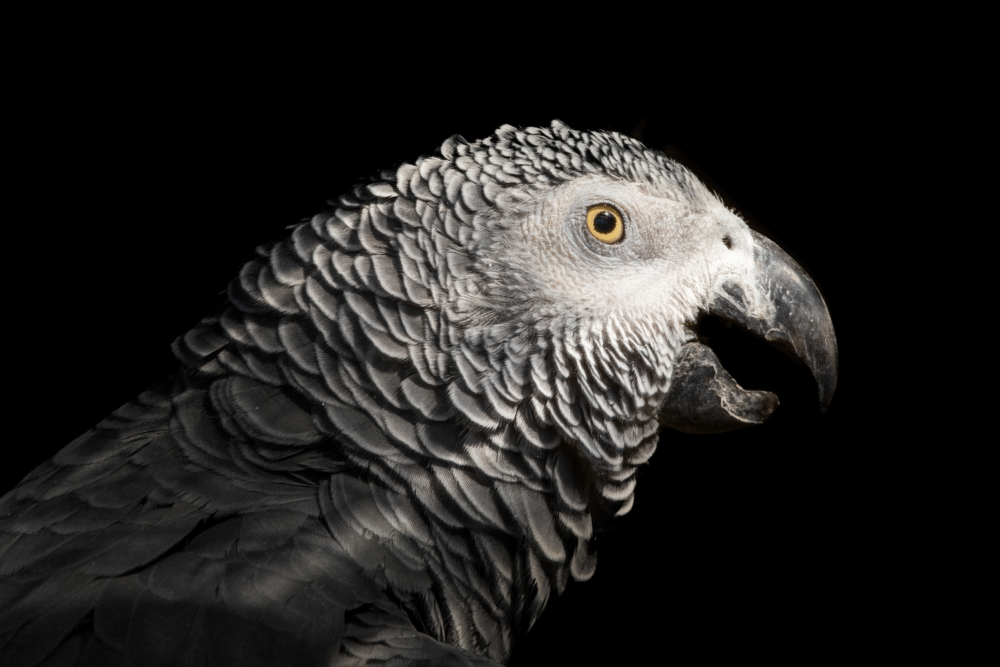
Scientists once thought language required syntax, grammar, and symbolic thought—all uniquely human traits. But Alex showed that meaningful communication can exist without full human speech structure.
His ability to use words purposefully—to request, refuse, or describe—proved that understanding meaning and context was possible in other species. His achievements influenced linguistic theory, prompting researchers to expand how they define and measure “language” across animals.
9. His Work Changed How Scientists View Bird Brains

The avian brain, once dismissed as primitive, is now recognized as capable of advanced cognition. Studies of parrots, crows, and ravens reveal neural structures analogous to those found in primates.
Alex’s performance helped inspire this shift. Brain imaging and comparative anatomy studies now confirm that birds possess dense neuron clusters that support reasoning, planning, and memory—proving that intelligence can evolve through different biological pathways.
10. His Final Words Moved the World

On the night before his unexpected death in 2007, Alex’s last recorded words to Irene Pepperberg were, “You be good. See you tomorrow. I love you.” Those simple phrases became symbolic of his extraordinary bond with humans.
His passing was widely mourned in both scientific and public circles. For many, Alex represented not just an intelligent bird, but a reminder that empathy, emotion, and understanding may be far more universal than we once believed.
11. His Legacy Continues to Inspire New Research

Today, researchers studying animal cognition continue to build on Alex’s foundation. Projects involving parrots, corvids, and dolphins draw heavily from Pepperberg’s methods to explore how animals perceive language, numbers, and emotion.
Alex’s influence extends to ethics as well, prompting scientists to rethink how intelligent animals are treated in captivity and research. His work laid the groundwork for a broader understanding of consciousness across species.
12. Alex’s Story Changed How We See Ourselves

Ultimately, Alex didn’t just expand our view of animal intelligence—he redefined humanity’s place in nature. His ability to think, feel, and communicate revealed that intelligence is not a straight ladder but a vast web of possibilities.
By breaking the barrier between human and animal minds, Alex taught the world a humbling lesson: that awareness and understanding are not confined to our species, but shared across the living world in ways we are only beginning to comprehend.