
The ecological grief pandemic silently sweeping through a generation.
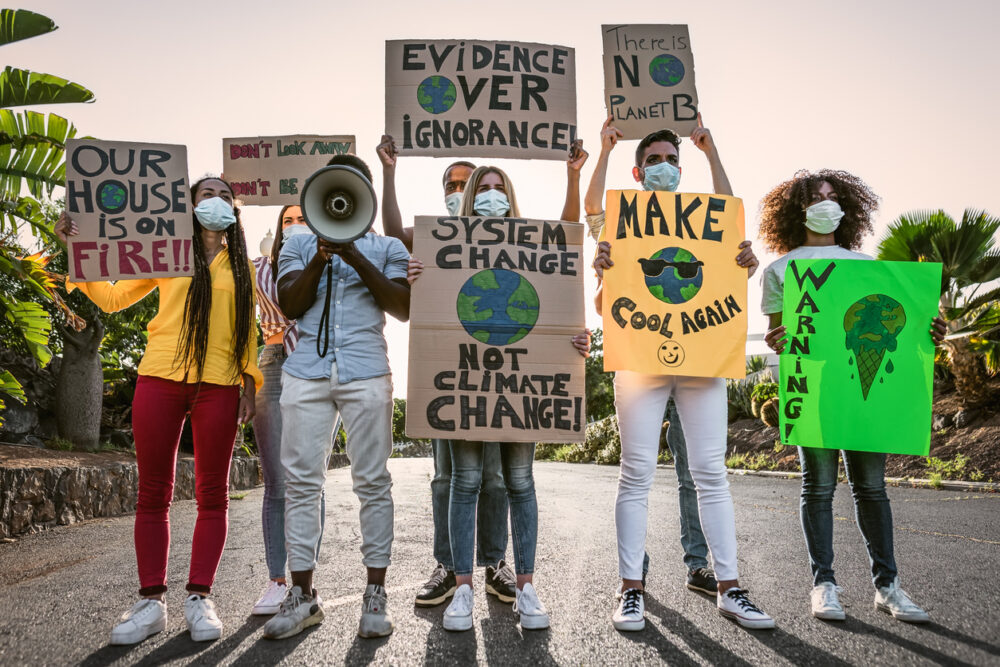
They were once the unstoppable force—school-striking teenagers chaining themselves to corporate doors, twenty-somethings abandoning career paths for climate advocacy. Yet across environmental circles, a troubling pattern emerges: passionate activists quietly disappearing from the frontlines.
Behind this retreat isn’t just ordinary burnout, but something emerging research in climate psychology identifies as more profound: paralyzing existential dread born from the cognitive dissonance between scientific understanding and societal inaction. These young activists aren’t simply tired—they’re grief-stricken, carrying the emotional burden of witnessing ecological collapse while society continues its carbon-fueled party. Their silence isn’t surrender; it’s the psychological toll of seeing too clearly a reality most still deny.
1. Climate doomerism enters the mainstream.

Five years ago, suggesting we’d passed critical planetary tipping points marked you as an extremist even among environmentalists. Today, such perspectives have migrated from scientific journals to TikTok feeds, becoming increasingly common among young people who follow climate science.
What activists once dismissed as unhelpful pessimism has evolved into a widespread interpretation of our current trajectory. The evidence surrounds us— World Economic Forum says Arctic sea ice is disappearing faster than models predicted, carbon budgets shrink with each IPCC report, and global emissions still rise despite decades of climate negotiations.
For young people immersed in this information while watching world leaders deliver speeches instead of action, maintaining hopeful activism requires increasingly elaborate psychological resilience. The gap between scientific urgency and political response creates a cognitive dissonance that’s increasingly difficult to sustain.
2. Ecological grief defies traditional healing paths.

Unlike conventional grief that follows a predictable pattern toward acceptance, ecological grief represents uncharted psychological territory—mourning that exists in anticipation of losses still unfolding, with no clear endpoint and no socially recognized rituals for processing. This phenomenon can be understood as a form of “disenfranchised grief”—profound sorrow that goes unacknowledged by the broader community.
Adding complexity, this grief operates alongside the practical demand to remain solution-focused and publicly optimistic. Many activists experience an internal contradiction: feeling genuine devastation about ecological damage while simultaneously recognizing that expressing such grief might undermine movement momentum. This creates internal fragmentation as they project hope publicly while privately processing despair. Without recognized frameworks for metabolizing these complex emotions, many eventually retreat toward protective withdrawal, focusing on smaller spheres where impact feels more tangible than trying to redirect the entire global economy.
3. Disaster imagery traumatizes without empowering.

Today’s young activists grew up bombarded with apocalyptic climate imagery—starving polar bears, burning forests, flooded cities—without corresponding narratives about successful interventions. This constant exposure creates a form of secondary traumatic stress similar to what healthcare workers experience, but without the professional boundaries and support systems. Neuroscience research shows that repeated exposure to threatening information without actionable response options triggers trauma responses including emotional numbing and eventually complete avoidance.
Climate psychology researchers describe this as a “doom barrier.” The brain’s self-protective mechanisms simply shut down processing of frightening information that feels unsolvable. For young activists who’ve dedicated themselves to climate solutions only to witness continued political obstruction, this neurological self-protection eventually overrides even the strongest commitment.
4. Society structurally undermines sustained activism.

Our economic and social structures remain fundamentally hostile to sustained climate activism, creating practical barriers that eventually exhaust even the most committed advocates. In a system where survival requires full-time employment in a growth-based economy, long-term unpaid or underpaid activism becomes an unsustainable privilege.
Meanwhile, jobs in environmental organizations often feature precarious funding, overwhelming workloads, and constant exposure to distressing information. Additionally, conventional success metrics—career advancement, financial stability, homeownership—still operate on assumptions of business-as-usual.
This creates painful contradictions for young people trying to build lives while believing such futures may be fundamentally compromised. Many former activists eventually retreat into conventional paths not because their convictions change, but because society offers no viable alternative for building security in a world they believe is headed for instability.
5. Industries weaponize helplessness by design.

Perhaps the most insidious force driving activist retreat isn’t the climate crisis itself but the well-documented campaign to make citizen action feel pointless. Research into fossil fuel company communications strategies has revealed systematic efforts to shift responsibility to individuals while making systemic change appear impossible—a sophisticated evolution from denying science to fostering collective helplessness.
Often, industry messaging subtly reinforces fatalism: emphasizing technology’s “eventual” solutions, positioning climate action as economically threatening, and promoting superficial individual changes while opposing systemic reforms. These strategic communications approaches can make climate activism feel increasingly futile, especially against institutions with vast resources dedicated to maintaining the status quo.
6. Universities teach climate problems, not solutions.

Academic institutions have become unlikely incubators for activist burnout, places where young people gain sophisticated understanding of ecological crises while rarely developing equivalent skills for effective intervention. Environmental curricula excel at teaching planetary collapse while offering precious little on how to actually change the systems causing it. This academic approach creates what sociologist Kari Norgaard calls “implicatory denial”—where people fully accept scientific facts but cannot integrate them into meaningful action plans.
The resulting cognitive dissonance becomes particularly acute for students who graduate with student debt. This burden often necessitates employment in the very systems they recognize as destructive—an intellectual trap that eventually becomes too painful to occupy.
7. Environmental groups ironically foster burnout.

In a painful irony, many climate organizations internally mirror the patterns they oppose externally—demanding unsustainable commitment, measuring success through constant growth, and treating activist energy as an unlimited resource to be harvested. This contradiction creates particular disillusionment among young activists who expect movement spaces to embody the systems they advocate.
The burnout playbook looks painfully familiar: climate groups preach planet care while burning through people like fossil fuels. Activists find themselves in a world of midnight emails, glorified exhaustion, and the unspoken rule that personal needs must take a backseat to saving the world.
When you’re already carrying the emotional equivalent of a melting glacier in your backpack, this “more-sacrifice-equals-more-commitment” culture becomes the final straw. No wonder so many young advocates eventually retreat to places where caring doesn’t require self-destruction.
8. Algorithms favor doom over solutions.

Social media algorithms feed young activists a steady diet of climate catastrophe, simply because our horrified reactions boost engagement metrics. Research on social media algorithms suggests that apocalyptic climate content consistently generates stronger emotional responses than nuanced solution frameworks, creating inadvertent amplification of doom narratives.
Think of it as climate TikTok’s dirty secret: that wildfire video will always outperform the community solar explainer. Our phones serve up ecological collapse like digital candy – not because it’s more important, but because our horrified doom-scrolling keeps the ad dollars flowing. This bias creates a particularly toxic environment for young climate advocates already struggling with eco-anxiety. It’s not that solutions don’t exist – they absolutely do – but they don’t trigger the emotional algorithms that keep us clicking.
9. Climate deadlines create unprecedented pressure.

Climate activism operates against scientifically-defined timelines that create a unique psychological burden. Carbon budgets shrink with each passing year of insufficient action, creating an accelerating sense of urgency that shapes activists’ emotional landscape.
Imagine organizing a campaign where the stakes keep escalating every time a new IPCC report drops. Climate advocates face a daunting calendar – a decade to halve emissions, warming targets becoming harder to reach, tipping points with their unforgiving physics that won’t negotiate extensions. The science of climate change imposes deadlines that exist regardless of political will or social readiness. It’s activism with relentless feedback from natural systems, where each missed climate target narrows the path forward and adds another psychological weight to already burdened young advocates. The countdown clock keeps ticking whether we acknowledge it or not.
10. Activists retreat to personal resilience building.

Rather than complete surrender, many former climate activists describe their retreat as shifting from systemic transformation to personal adaptation—redirecting energy toward developing skills and communities they believe will provide resilience in increasingly unstable times. This manifests in growing interest in local food systems, transition town initiatives, permaculture communities, and practical subsistence skills.
When you’ve spent years screaming “Fire!” while watching the world order extra marshmallows, there comes a point where your energy naturally flows toward building fireproof houses instead. The migration from political campaigns to community gardens isn’t giving up – it’s a strategic reallocation of precious life force toward tangible results you can actually taste. It’s the sustainability version of “be the change you wish to see” – with a side of self-preservation that comes from finally admitting that growing your own tomatoes provides more immediate satisfaction than yet another disappointing UN climate conference.