
New research reveals how our brains are wired to seek personal drama over global danger — even in a crisis.

Psychologists say it’s no mystery why celebrity gossip dominates headlines while climate change struggles for clicks. Research led by Elke U. Weber, Professor of Psychology and Public Affairs at Princeton University, finds that climate risks often feel abstract, distant in time or space — and our brains discount them accordingly. In contrast, stories about people, relationships, and social drama trigger dopamine and empathy circuits that keep us hooked. One recent study found that climate-change articles actually increased concern among skeptics — but only when the topics were framed in immediate, personal terms. Understanding this psychological bias may be the first step toward making climate news as compelling as celebrity gossip.
1. Our Brains Favor Social Drama

Humans evolved to prioritize stories about relationships, reputation, and survival within groups. Psychologists say this instinct makes us naturally drawn to narratives involving people — especially when conflict or emotion is involved. Celebrity gossip fits that pattern perfectly, offering social context and emotional payoff.
Climate change, by contrast, deals with abstract systems, data, and timelines that don’t easily connect to daily life. Without a clear social focus or individual drama, our brains find it harder to engage. It’s not indifference — it’s biology favoring personal over planetary storytelling.
2. Climate Change Feels Abstract and Distant

Researchers have found that people perceive climate risks as “psychologically distant,” happening to others, elsewhere, or far in the future. When threats feel remote, the brain downplays their urgency, focusing instead on immediate, personal concerns.
Celebrity stories, on the other hand, take place in the here and now. They involve familiar figures whose emotions and choices we can instantly understand. This immediacy keeps us engaged in a way global warming cannot — at least not until its impacts are felt directly and personally in our own environments.
3. Gossip Activates Reward Pathways

Neuroscientists have shown that gossip triggers the brain’s dopamine system — the same network that processes pleasure and reward. Hearing about others’ successes or missteps gives the brain a sense of social insight and belonging, reinforcing the urge to keep listening.
Climate news doesn’t activate those same pathways. It often evokes worry, guilt, or helplessness — feelings we’re wired to avoid. The result is a psychological mismatch: gossip feels good because it’s socially rewarding, while climate news feels daunting, complex, and emotionally taxing to absorb.
4. Climate News Lacks Narrative Appeal

Gossip stories follow a simple and powerful structure: characters, conflict, and resolution. Climate reporting, though vital, often lacks these human anchors. It deals in probabilities, models, and collective outcomes, which are difficult for audiences to visualize or emotionally grasp.
Without personal characters or resolution, the narrative tension that drives curiosity is missing. That’s why stories focusing on individual climate heroes, disasters, or communities tend to perform better — they humanize the issue and tap into the same narrative instincts that make gossip so addictive.
5. We Prefer Certainty Over Complexity

Celebrity gossip offers clear outcomes — who said what, who apologized, who won. Climate change stories, however, are full of uncertainty and complex causality. The scale of the problem defies simple explanation, and there’s rarely a clear villain or resolution.
This ambiguity makes it harder for readers to feel emotionally satisfied. Psychologists say humans crave closure, and gossip provides it. By contrast, climate change forces us to confront ongoing uncertainty, which can trigger anxiety or disengagement. It’s easier, and more comforting, to follow stories with neat conclusions.
6. Media Algorithms Reward What We Click

News and social media algorithms prioritize engagement — and gossip reliably delivers clicks, comments, and shares. The more people react, the more such content spreads, creating a feedback loop that reinforces short-term, emotionally charged stories.
Climate news doesn’t always generate the same instant reactions. Its stakes are high but diffuse, lacking the punchy drama algorithms are built to amplify. As a result, gossip gets surfaced again and again, while slower, fact-based reporting about the planet is buried under the weight of digital popularity metrics.
7. We Seek Emotional Comfort, Not Cognitive Effort

Reading about climate change demands mental energy and emotional endurance. It asks us to process complex systems, confront moral responsibility, and imagine grim futures. Gossip, by contrast, offers lightness, humor, and a sense of social participation.
When people are stressed, they gravitate toward media that feels easy and affirming. Gossip satisfies that need perfectly — it’s emotionally charged yet psychologically safe. Climate news often evokes the opposite: discomfort and helplessness. This emotional contrast explains why, even for environmentally concerned readers, gossip remains the more tempting click.
8. Gossip Feels Personal — Climate Doesn’t

For most people, climate change is still an impersonal threat. Few have experienced its worst effects firsthand, making it easy to relegate the topic to the background of daily life. Gossip, meanwhile, feels intimate. It involves names, faces, and emotions we recognize.
Psychologists call this the “identifiable victim effect” — we care more about individuals than abstract populations. When the subject is a celebrity, our emotional connection is amplified by familiarity and repetition. The result is that gossip feels relevant to our social world, while climate news feels remote and impersonal.
9. The Power of Group Identity

Sharing gossip reinforces social bonds. When we discuss the same celebrity scandal or viral moment, we participate in a shared cultural language. Climate conversations, however, can feel divisive, political, or overwhelming — topics many people avoid in casual settings.
This social divide affects engagement. People are more likely to share and comment on content that unites rather than divides. Gossip creates cohesion, a sense of belonging to the same conversation. Climate stories, while urgent, don’t provide that same collective comfort and are less likely to spread organically online.
10. The Weight of Helplessness

Psychological research shows that when people feel powerless to solve a problem, they often disengage emotionally. Climate change fits that description — it’s massive, complex, and demands systemic action beyond individual control.
Gossip, however, restores a sense of agency. Readers can form opinions, express judgment, and participate in a conversation with clear moral boundaries. It’s a small but satisfying form of control in an uncertain world. This contrast helps explain why people retreat into social stories when faced with the anxiety of global-scale issues.
11. Our Brains Reward Novelty and Emotion

Gossip constantly introduces new information — fresh scandals, relationships, and revelations. Each update gives the brain a jolt of novelty, which fuels attention and memory. Emotional variety keeps us scrolling for the next surprise.
Climate news, though often dire, can feel repetitive. The themes — warming, drought, melting — don’t change much day to day, which dulls our sensitivity. Psychologists call this “compassion fatigue,” the tendency to tune out prolonged crises. Without novelty or resolution, audiences disengage, even when the stakes are high.
12. Making Climate News More Human
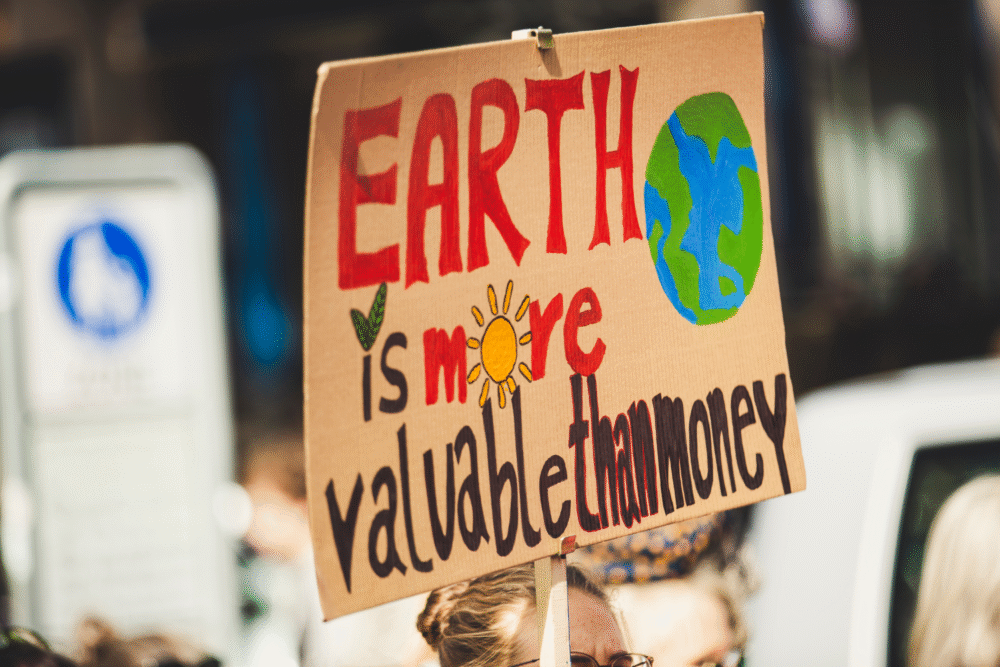
Researchers say the solution isn’t to compete with gossip but to borrow its storytelling strengths. Climate communication that focuses on people, emotion, and local impact performs far better than abstract data alone.
When readers can see faces, communities, and personal stakes, engagement rises sharply. Stories that blend facts with empathy — like profiles of those adapting to floods or inventing green technology — activate the same social circuits that make gossip irresistible. The key isn’t to sensationalize the issue but to rehumanize it.