
Our evolutionary “dates” might be off by more than we want to admit.

Science loves timelines because they make chaos feel orderly. But when it comes to evolution, some researchers think our clock has been quietly lying to us, not maliciously, just mathematically. The problem is that DNA doesn’t always change at a steady, predictable rate, especially during major bursts of new life.
A newer model suggests evolution can speed up during explosive diversification, which could compress big milestones by millions of years. That would make genetic timelines line up better with the fossil record’s frustrating gaps.
1. The molecular clock may not tick at a steady pace.
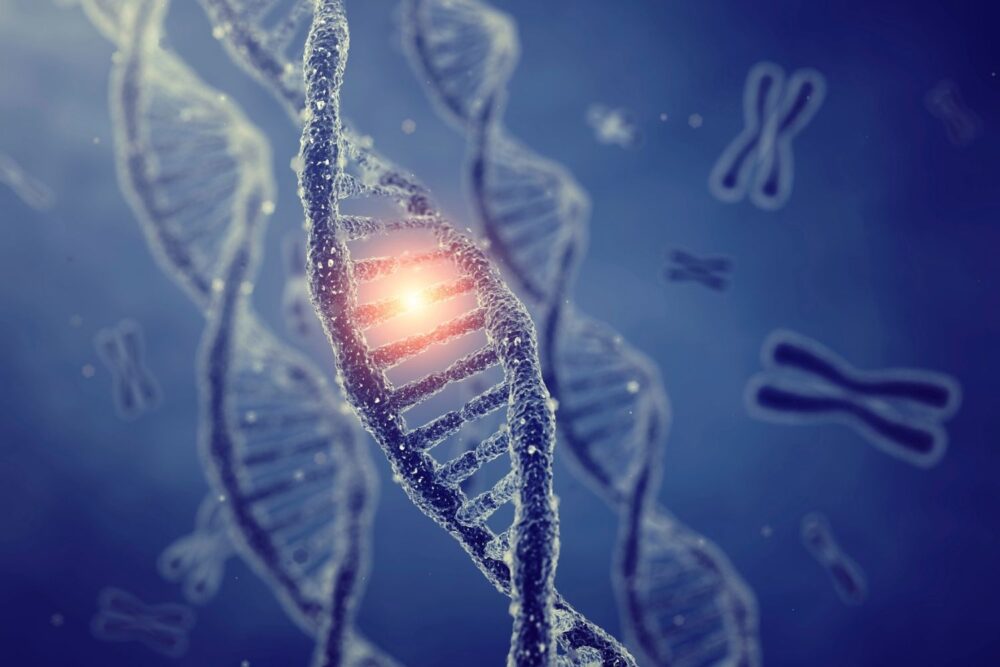
The molecular clock is built on a simple assumption: mutations accumulate at a fairly constant rate, so comparing genetic differences can estimate how long ago species diverged. It’s elegant, and it works reasonably well in some cases, which is why it became so popular.
The issue is that evolution isn’t always smooth and steady like a metronome. If mutation rates speed up or slow down depending on what’s happening in nature, that clock starts giving dates that look precise but might be systematically off, especially during major evolutionary turning points.
2. A new model argues evolution speeds up during big radiations.

The newer idea is that evolution accelerates when major organism groups diversify quickly. Instead of assuming a calm, constant tempo, it suggests the early phases of big clades are more like a sprint than a leisurely stroll.
This approach is sometimes described as a covariant evolutionary tempo model, and it treats the pace of genetic change as something that can rise during bursts of diversification. That matters because early life was often chaotic and experimental, and a fast-evolving ancestor can make modern species look older than they really are.
3. “Speeding clocks” could make origins look artificially ancient.

If early ancestors mutated rapidly, their descendants today would show lots of genetic distance even if less time actually passed. The molecular clock would interpret that distance as deep time, not rapid change, and it would push origins farther back than reality.
That could explain why genetic estimates often suggest complex animals existed long before we find convincing body fossils. In this view, the timeline isn’t wrong because fossils are missing everything. The timeline is inflated because the clock assumed constant speed during a period that may have been unusually fast.
4. Bilaterian animals might have emerged later than we think.

Standard molecular clock estimates often place the divergence of bilaterian animals somewhere around 600 to 700 million years ago. Bilaterians are animals with a left and right side, basically the blueprint behind worms, insects, and us.
The newer model predicts something tighter and more recent, closer to 550 to 580 million years ago. That’s a big deal because it nudges early animal origins closer to the Cambrian boundary around 538 million years ago, shrinking the awkward gap between genes and fossils without needing imaginary missing eons.
5. The fossil gap may be smaller than genetic timelines suggest.

One long-running headache in evolutionary biology is the mismatch between genetic divergence dates and the fossil record. DNA sometimes implies modern animal lineages were around tens of millions of years before we have clear body fossils proving it.
This new tempo model helps resolve that tension. It suggests genetic data can “overshoot” into earlier time because it’s reading the effects of fast early evolution as extra time. That turns the mystery into something less mystical: modern diversity might come from fast-evolving ancestors whose rapid change makes deep history look deeper than it was.
6. The Cambrian explosion might reflect visibility, not sudden creation.

The Cambrian explosion has always sounded like life hit a giant red button and instantly produced animals everywhere. In reality, it may be more about preservation, ecology, and timing than a sudden appearance out of nowhere.
Trace fossils around 545 million years ago, like evidence of early animal movement, can make the pre-Cambrian look more “animal-ish” than people assumed. If the timeline gets compressed and ghost lineages get shorter, the Ediacaran-to-Cambrian transition becomes easier to explain as a rapid ecological radiation rather than a magical moment of origin.
7. Shorter “ghost lineages” make evolution feel less strained.

A ghost lineage is basically the evolutionary equivalent of a missing receipt. Genetics says a group existed, but fossils haven’t shown up yet, so you’re stuck with a long invisible stretch on the timeline.
Variable evolutionary tempos can shorten those ghost lineages, making it more plausible that early animals existed for 20 to 50 million years before becoming obvious in the fossil record. That’s still a long time, but it’s not the kind of absurdly huge blank period that makes people start imagining improbable stasis or a fossil record that’s completely useless.
8. This doesn’t throw out Darwin, it just recalibrates the math.
It’s tempting for headlines to go full drama and suggest the whole evolutionary story is collapsing. That’s not really what’s happening here. The core idea of evolution by natural selection stays intact, and gradual change is still the foundation.
What’s being challenged is the assumption that genetic change rates are constant enough to act like a universal stopwatch. This is more like fixing a scientific tool than burning it down. The timeline might shift later by millions of years in some places, but it’s still evolution, just with a more realistic speedometer.
9. The model can be tested, which is the best part.

A theory is only as good as its ability to survive real testing. Researchers can evaluate this model using clade-specific rate analyses, phylogenomics, and fossil-calibrated simulations to see if the “speeding clock” pattern actually shows up consistently.
If it holds, it could shorten parts of Precambrian animal history without breaking everything we know. If it fails, it still forces scientists to confront how messy timekeeping gets when biology, environment, and preservation all pile onto the same timeline.
10. The deep past is still uncertain, especially before the Ediacaran.

Even with smarter models, the earliest chapters of multicellular life remain hazy. Fossils are scarce, oxygen conditions mattered, and soft-bodied creatures often leave almost nothing behind.
So no, this isn’t a clean rewrite where everything suddenly makes perfect sense. It’s more like tightening a blurry photo. The Ediacaran and Cambrian periods might align better with genetics than before, but earlier events will still carry uncertainty because nature didn’t leave us great records. Evolution happened either way, and we’re still learning how to read its timestamps.