
Scientists suggest a gravitational ripple may be the echo of a black hole collision from a different universe.
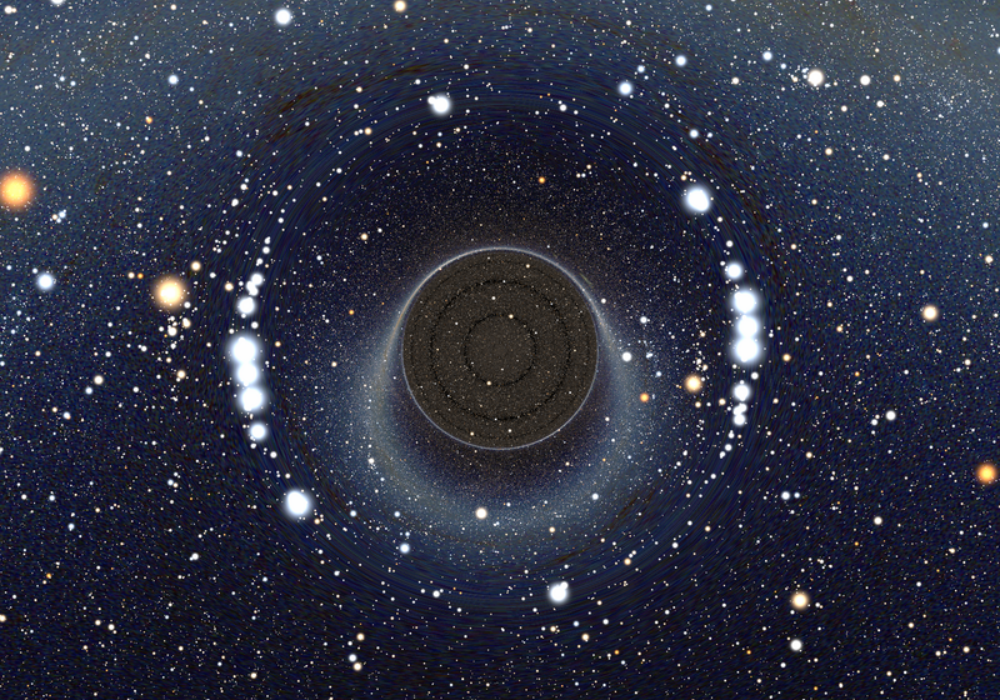
In 2019, scientists at the Chinese Academy of Sciences studied a strange signal picked up by the LIGO and Virgo observatories. Most experts believe it came from two black holes crashing together, but the researchers suggested a far more mind-bending idea.
The signal might have been the echo of a black hole collision in another universe, briefly opening a wormhole that linked their cosmos to ours.
While many scientists still lean toward the black hole explanation, this daring theory gained attention because the signal seemed to fit slightly better with the wormhole model.y.
1. A Mysterious Signal Shook the Science World

Back in 2019, the LIGO and Virgo observatories picked up an unusual gravitational wave. It lasted just a fraction of a second and looked different from most black hole collisions scientists had studied before. The short, sharp signal caught researchers off guard and left many wondering if they were seeing something entirely new.
Most experts concluded it was two massive black holes smashing together. But the unusual shape of the signal left room for other interpretations, sparking debates about whether the universe was hiding something even stranger.
2. Why the Signal Didn’t Quite Add Up

When black holes merge, scientists usually detect a distinctive “chirp” as the two objects spiral closer before colliding. With this event, that telltale buildup was missing. Instead, the signal seemed to appear suddenly and vanish almost as quickly. That made some researchers pause and look more closely.
The lack of a clear inspiral phase suggested this might not be a standard black hole crash. Instead, it could point to something else entirely, opening the door to bold new ideas about the source of this mysterious cosmic noise.
3. The Wormhole Hypothesis Emerges
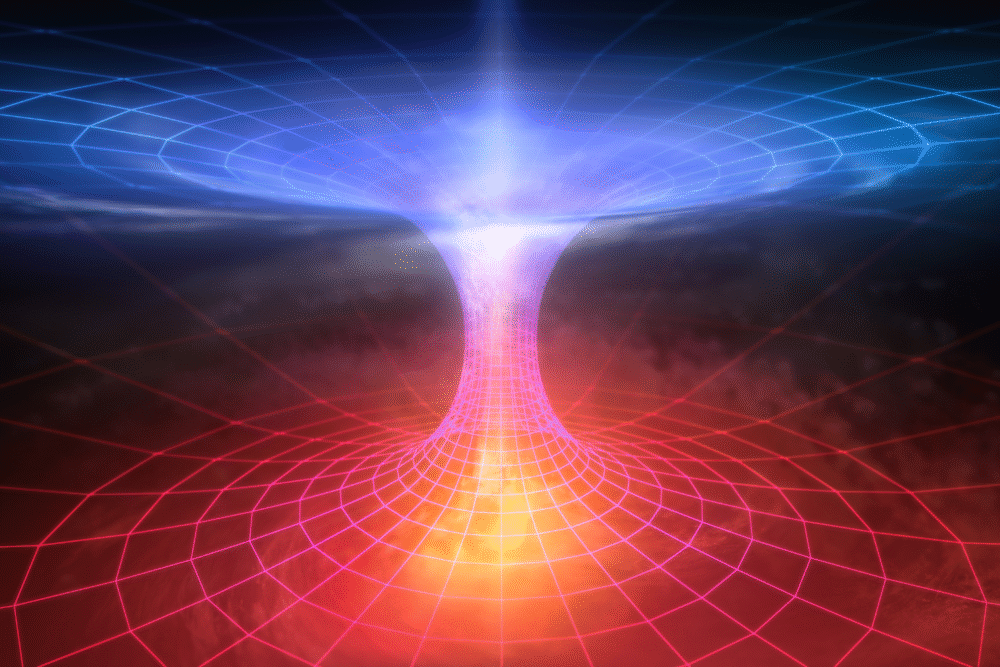
A group of scientists proposed a daring explanation: the signal might have been the echo of a black hole collision in another universe. According to this idea, the collision’s energy traveled through a wormhole and spilled into our universe, showing up as the strange signal.
Wormholes are theoretical shortcuts through space and time. If they exist, they could connect distant points—or even entirely different universes. The possibility that this signal came through such a cosmic tunnel quickly captured imaginations and stirred heated debate among researchers.
4. How the Researchers Tested the Theory

To see if their idea held weight, scientists created computer models of what a wormhole “echo” might look like. They then compared those models to the actual signal captured by the detectors. To their surprise, the match was slightly better than the fit for a standard black hole merger.
That doesn’t mean wormholes have been proven. The difference in fit was small, and the black hole explanation is still strong. But the fact that the wormhole model lined up at all was enough to keep the conversation alive.
5. Why Black Holes Are Still the Safer Bet
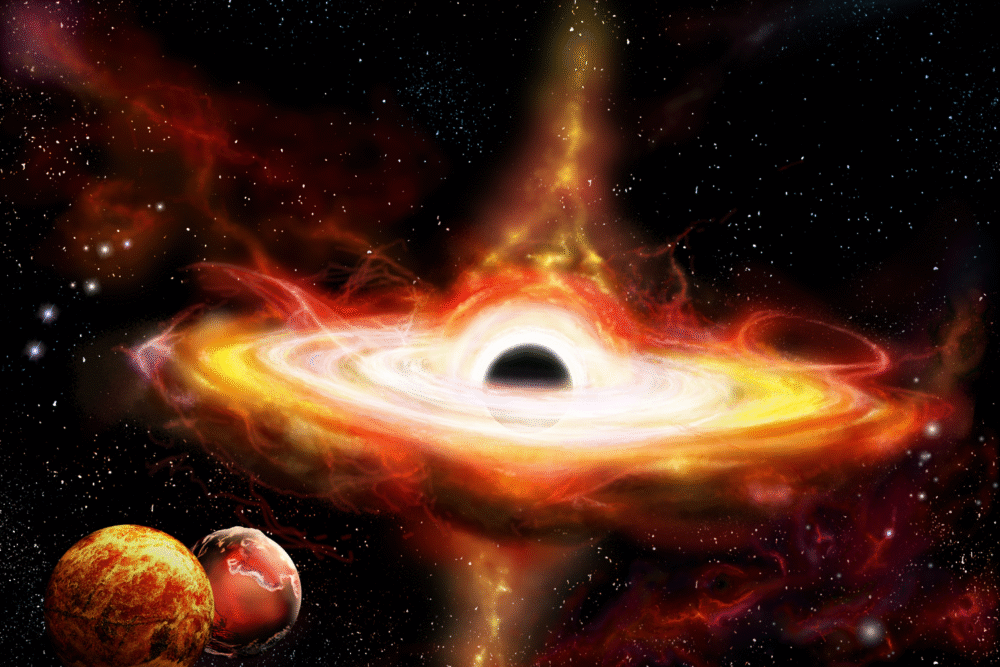
Even though the wormhole theory sounds exciting, most scientists still favor the black hole merger explanation. Black holes are well studied, and dozens of confirmed collisions have been recorded in the past decade. They provide a reliable framework for understanding gravitational waves.
The wormhole idea, on the other hand, is highly speculative. There’s no direct evidence that wormholes even exist. While the unusual signal raised eyebrows, the simpler explanation—that it was a fast, massive black hole collision—remains the most likely scenario according to mainstream astrophysicists.
6. The Second Strange Signal in 2023
The story didn’t end with the 2019 event. In 2023, detectors picked up another unusually short signal that looked oddly familiar. Once again, it didn’t perfectly match the patterns of a typical black hole collision. For some, this was a clue that something deeper might be happening.
Others caution that strange signals aren’t uncommon, and quirks in the data can cause confusion. Still, the possibility of two odd events in just a few years added fuel to the wormhole speculation, keeping the debate very much alive.
7. What Makes Wormholes So Fascinating
Wormholes have long been a favorite of science fiction stories, from “Interstellar” to countless TV shows. In theory, they could act as shortcuts across space or even bridges to entirely new universes. For scientists, they represent one of the most intriguing possibilities of Einstein’s equations.
If wormholes are real and detectable, they could revolutionize our understanding of space and time. Instead of being confined to our universe alone, the cosmos might be part of a much larger, interconnected system of realities, each linked by hidden tunnels.
8. Why Proving Wormholes Is So Difficult
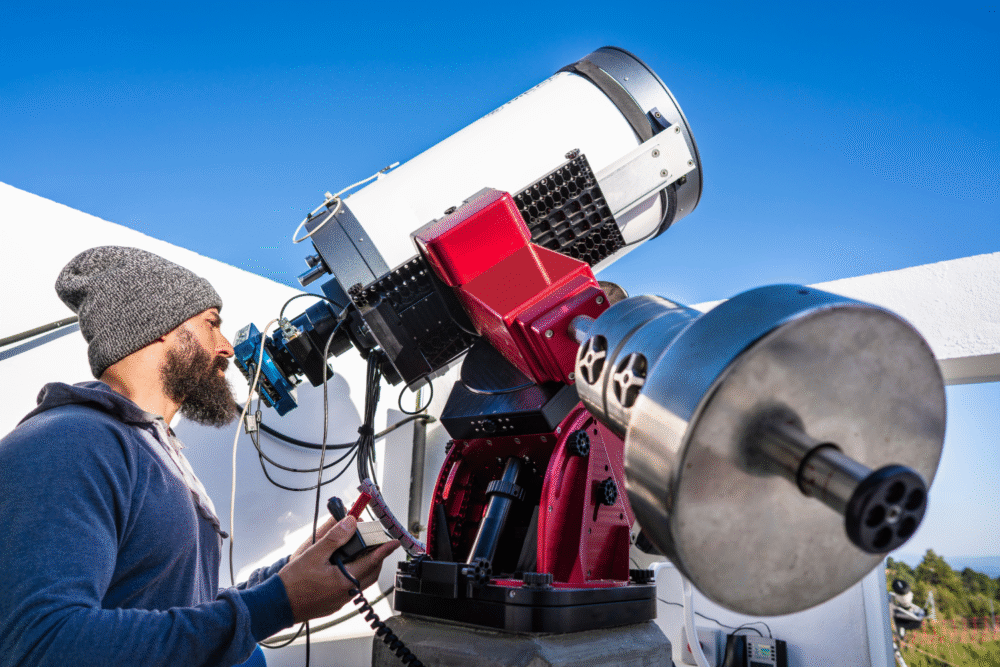
Detecting a wormhole isn’t as simple as pointing a telescope into space. By their very nature, wormholes would be nearly invisible. Scientists can only look for indirect signs, like unusual gravitational waves, that hint at something more than black holes at work.
Even then, separating those signs from noise or alternative explanations is extremely hard. That’s why, despite decades of speculation, no one has been able to confidently say they’ve found one. For now, wormholes remain an idea that fascinates researchers but frustrates their efforts to prove.
9. The Tools Watching the Skies

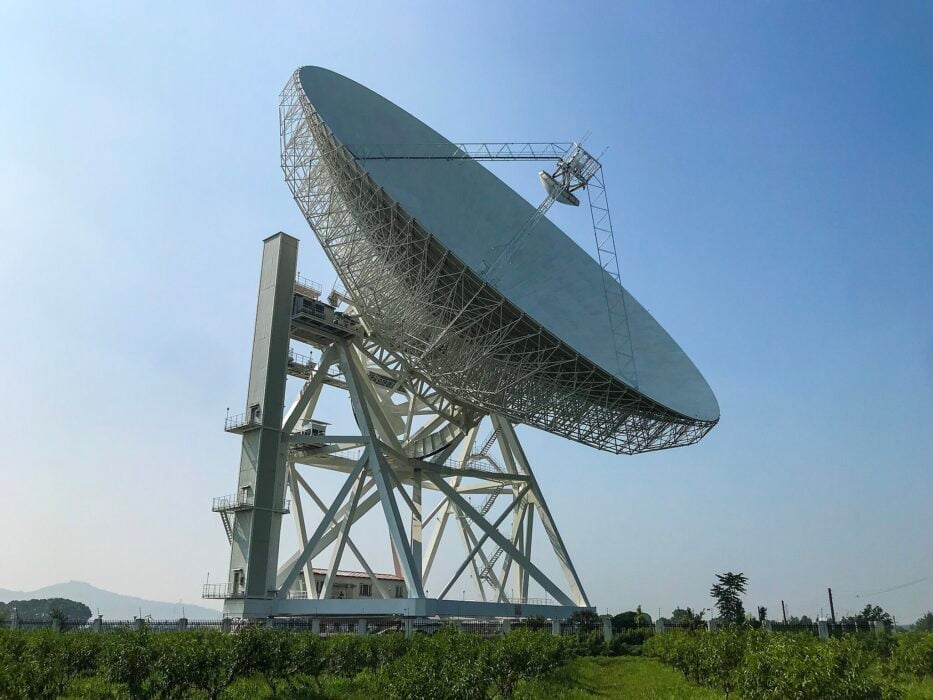
Gravitational wave observatories like LIGO in the United States and Virgo in Europe are at the heart of this search. These facilities use incredibly sensitive lasers to measure tiny ripples in space-time caused by cosmic events. Since their first detection in 2015, they’ve revealed dozens of black hole and neutron star collisions.
Each new signal expands our picture of the universe. But these tools also push the limits of technology. Their ability to catch fleeting signals like GW190521 shows just how far science has come in listening to the faintest whispers of space.
10. What More Data Could Reveal
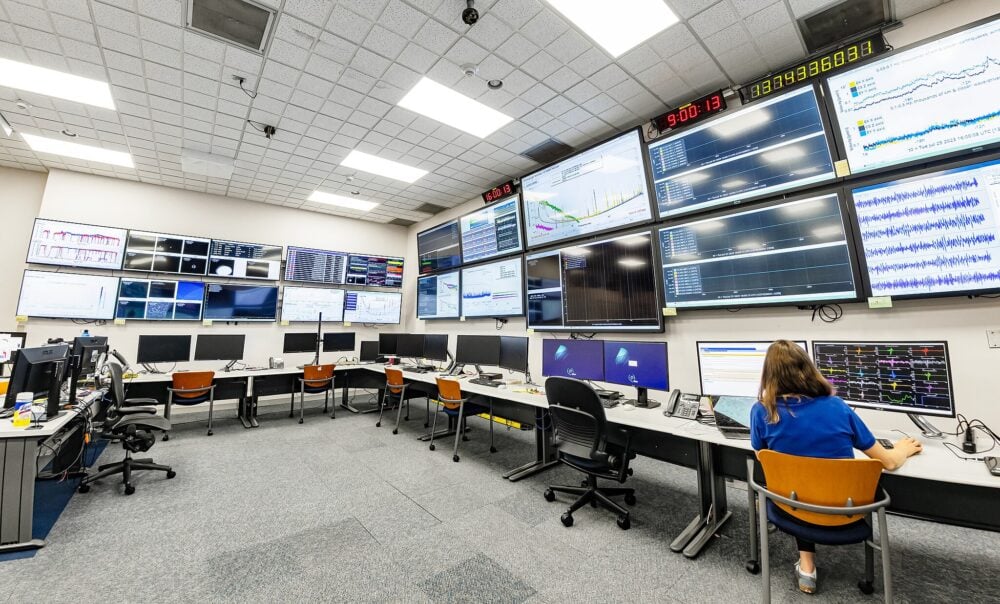
Scientists know that one signal isn’t enough to make bold claims. To confirm or deny the wormhole hypothesis, they’ll need many more detections of similar events. Patterns across multiple signals could reveal whether something unusual is happening or if these are just rare black hole cases.
Upcoming upgrades to detectors promise greater sensitivity, meaning more events will be recorded. Each detection adds a new piece to the puzzle, inching researchers closer to understanding whether wormholes are real or simply a fascinating theoretical idea.
11. Why the Discovery Matters for All of Us
Even if wormholes aren’t proven soon, the search highlights how much more there is to learn about the universe. Every strange signal challenges scientists to test their ideas and push the boundaries of what we know. That curiosity drives discoveries that can reshape our view of reality.
For the public, the idea of wormholes connects science with imagination. Whether they turn out to be real or not, they remind us that the cosmos is full of mysteries waiting to be explored—and that we may have only just begun to scratch the surface.