
A massive experiment in Brazil lets scientists fast-forward time to study the rainforest’s warming future.
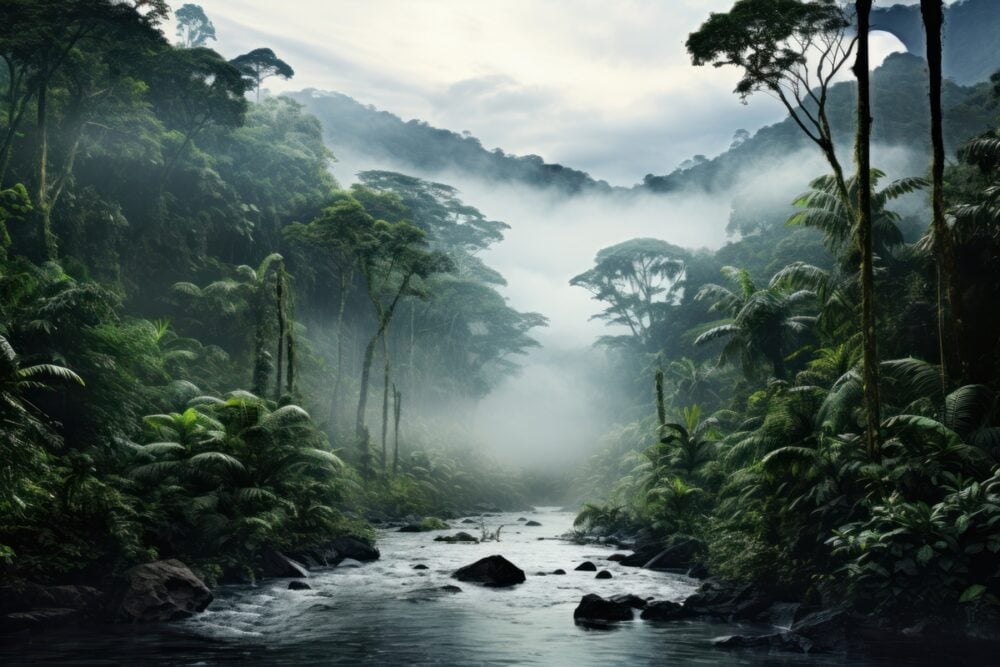
Deep in the Amazon rainforest, scientists have constructed one of the world’s most ambitious climate experiments—a “time machine” that simulates future conditions on Earth. Using giant open-air chambers, researchers are heating and enriching sections of the forest with carbon dioxide to mimic the atmosphere decades from now. The goal is to understand how rising temperatures and greenhouse gases will affect one of the planet’s most vital ecosystems—and what those changes could mean for the global climate.
1. The Amazon Is Ground Zero for Climate Research
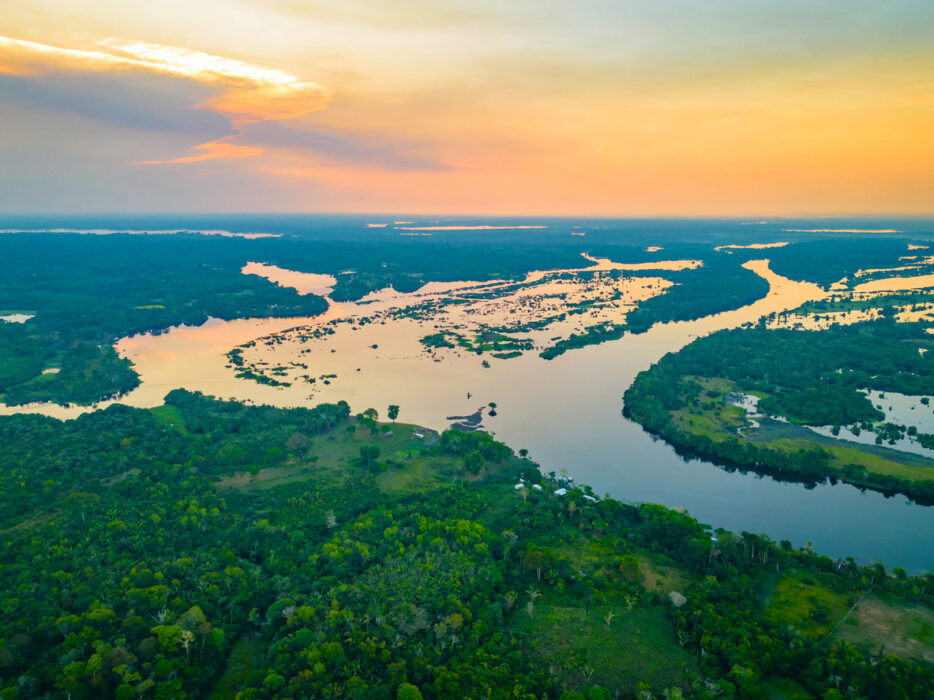
The Amazon rainforest plays a critical role in regulating the planet’s climate, absorbing vast amounts of carbon dioxide and releasing oxygen. Scientists warn that rising temperatures and deforestation could push the region toward an irreversible tipping point, transforming much of it from dense rainforest into savanna-like grassland.
To understand how this transformation might unfold, researchers are studying how trees, soil, and microbes respond to higher temperatures and carbon dioxide levels. The goal is to predict how the Amazon will function in a warmer, more carbon-rich world—and what that means for global stability.
2. The Experiment Is Known as AmazonFACE
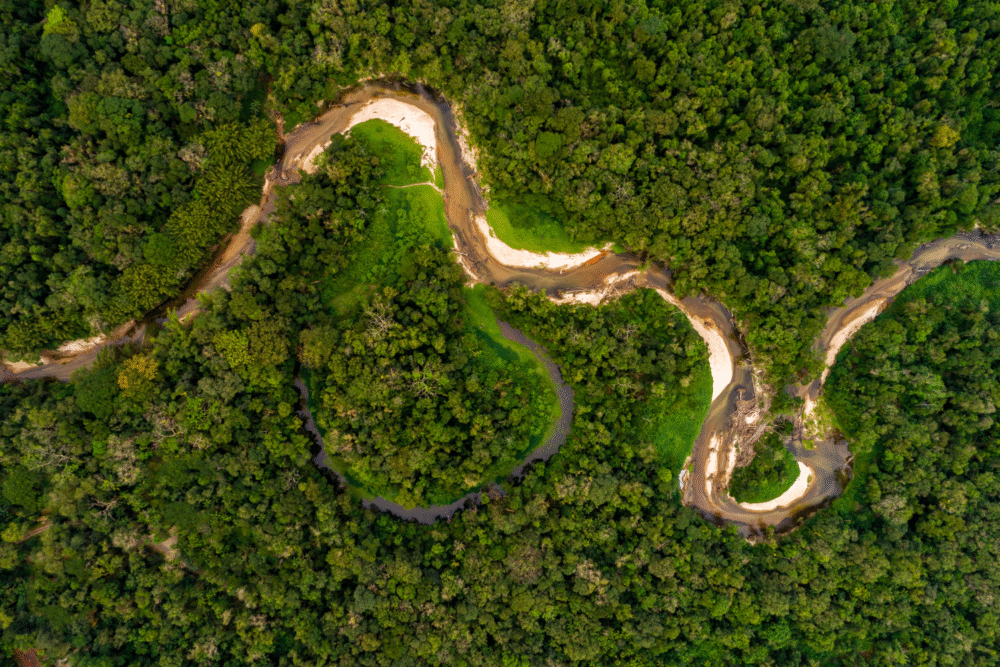
Located near Manaus, Brazil, the Amazon Free-Air CO₂ Enrichment experiment, or AmazonFACE, is one of the most advanced climate experiments ever attempted. It’s funded by the Brazilian government with collaboration from international researchers and NASA’s Jet Propulsion Laboratory.
The project exposes parts of the rainforest to elevated levels of carbon dioxide—similar to what scientists expect by 2050—to simulate future atmospheric conditions. By observing how the ecosystem reacts, the team hopes to understand how global warming could affect the Amazon’s carbon storage, growth, and biodiversity.
3. Giant Rings Pump Carbon Dioxide Into the Forest
At the center of the experiment are six enormous metal rings, each roughly 100 feet across and standing taller than the trees themselves. These structures release controlled amounts of carbon dioxide into the air, surrounding the forest in an artificial “future atmosphere.”
Unlike a greenhouse, the system doesn’t enclose the trees, allowing natural sunlight, rainfall, and wind to interact as usual. This design helps researchers observe the forest’s response under realistic conditions, providing insights that lab experiments or computer models can’t replicate.
4. Simulating the Atmosphere of the Future
The amount of carbon dioxide released into the rings mimics levels expected by the middle of the century—about 40 percent higher than today’s concentrations. This allows scientists to observe how trees absorb, process, and store excess carbon in a warming world.
Early data show that not all species react the same way. Some trees grow faster with added carbon dioxide, while others show little benefit or even signs of stress. Understanding these differences is essential to predicting how the Amazon’s ecosystem balance might shift over time.
5. Researchers Are Testing the Forest’s Resilience

A major question guiding the project is whether the Amazon will continue to absorb carbon dioxide or eventually release more of it than it stores. As trees die and decay, they emit carbon, potentially turning the rainforest from a carbon sink into a carbon source.
The experiment tracks soil chemistry, microbial activity, and tree growth to determine how resilient the system really is. If the forest loses its ability to store carbon, global warming could accelerate dramatically, making the Amazon’s fate central to Earth’s climate trajectory.
6. The Data Could Transform Climate Modeling
The AmazonFACE project is providing real-world measurements that improve the accuracy of global climate models. Until now, scientists have relied heavily on computer simulations to predict how forests respond to increased carbon dioxide.
With direct experimental data, researchers can refine these models to better forecast future climate scenarios. The findings will help policymakers understand how much warming the planet might face under different emission pathways—and how much time remains to avoid the worst outcomes.
7. The Experiment Could Reveal a Tipping Point

One of the most important outcomes scientists hope to identify is whether the Amazon has a threshold beyond which recovery becomes impossible. If deforestation and warming exceed certain limits, the forest could collapse into a degraded state, releasing massive amounts of carbon.
Researchers are carefully tracking water use, root systems, and canopy health to see how far the ecosystem can stretch before it fails. The results may determine not just the Amazon’s fate, but also how much additional carbon the planet can safely emit.
8. Climate Change Is Already Stressing the Region
Even without artificial testing, the Amazon is showing signs of strain. Droughts are becoming more severe, rainfall patterns are shifting, and wildfires are spreading farther than ever before. These changes are reducing the forest’s ability to store carbon naturally.
The experiment offers a controlled way to examine how continued warming will magnify these stresses. By understanding how drought, heat, and high carbon levels interact, scientists can anticipate the long-term risks to water cycles, agriculture, and biodiversity across South America.
9. Local Communities Are Watching Closely

The AmazonFACE project has drawn attention from local and Indigenous communities who depend on the forest for food, water, and cultural identity. While the experiment poses no threat to people or wildlife, it symbolizes how deeply climate change is intertwined with daily life in the region.
Researchers have worked to build trust through outreach and transparency, inviting community members to participate in discussions and education programs. For many locals, the experiment highlights the urgent need to protect the rainforest from deforestation and uncontrolled climate shifts.
10. International Collaboration Is Key to Its Success

The project brings together scientists from Brazil, the United States, and several European countries. This collaboration reflects the global importance of the Amazon, which affects weather patterns, carbon balance, and biodiversity across the planet.
Each research group contributes specialized expertise—from satellite monitoring to plant physiology—creating one of the most comprehensive ecosystem studies ever attempted. The multinational effort underscores that the Amazon’s health is not a local issue but a shared global responsibility.
11. Early Findings Show Both Hope and Concern
Preliminary results suggest that while some trees thrive under higher carbon dioxide, others grow weaker due to nutrient limitations in the soil. This means that extra carbon in the atmosphere may not boost forest growth as much as once hoped.
Researchers are also finding that water availability plays a decisive role. In drought conditions, even resilient trees struggle to absorb carbon effectively. The results indicate that the forest’s response will depend heavily on rainfall—another variable being altered by climate change.
12. The Amazon’s Fate Will Influence the Entire Planet

The Amazon stores more than 100 billion metric tons of carbon—roughly a decade’s worth of human emissions. If the forest weakens, that stored carbon could reenter the atmosphere, amplifying global warming.
Scientists say that protecting and understanding the Amazon is crucial to stabilizing Earth’s climate. The AmazonFACE experiment offers a rare glimpse into the future, revealing not only what may be lost but also how targeted conservation and innovation could help preserve one of the planet’s most vital ecosystems.