
Minted for a powerful queen, lost for centuries, and now worth hundreds of thousands.
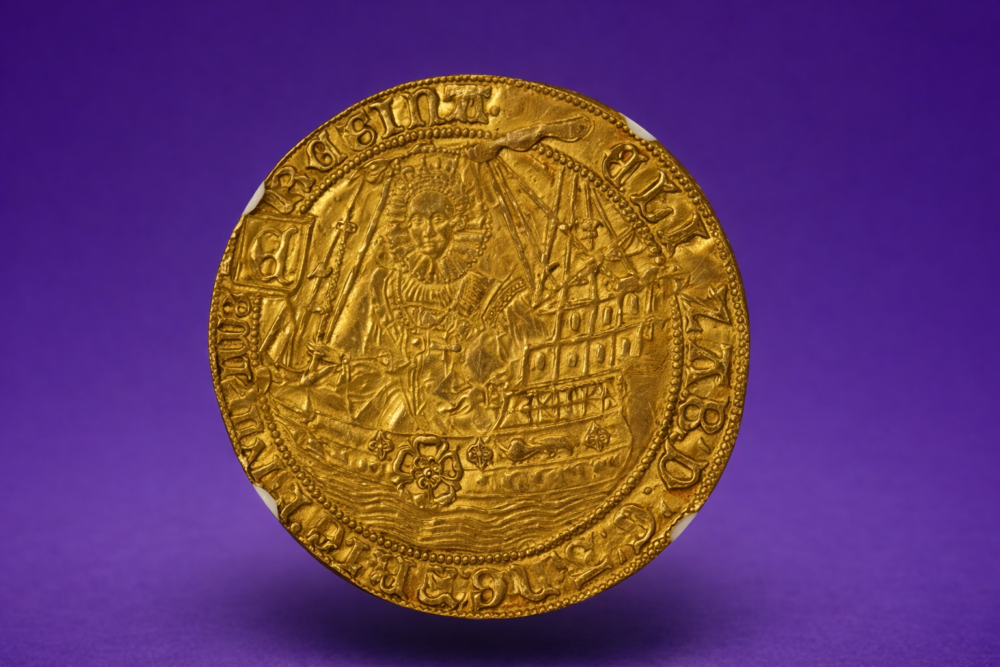
Most coins pass through our hands without leaving an impression. But once in a while, a single coin survives for centuries and suddenly pulls history into focus. That’s what happened when a rare Elizabethan gold coin reappeared and stunned collectors with both its story and its price.
Struck more than 400 years ago during the reign of Elizabeth I, the coin wasn’t made for ordinary spending. It was a message in gold, created at a time when England was asserting itself as a rising naval power and carefully shaping how it wanted to be seen.
When this coin sold for hundreds of thousands of dollars, it wasn’t just because it was old. It was because it captured ambition, power, and survival in a form small enough to fit in the palm of your hand.
1. A gold coin from a turning point in English history

The coin dates to the 1580s, when England was expanding its reach through trade, exploration, and naval strength. This was a competitive era, with European powers fighting for control of sea routes and influence.
Gold coins like this were part of that story. They weren’t just currency; they were statements of confidence. Every detail, from the metal used to the imagery stamped onto it, reflected a nation testing its place on the world stage.
2. What a ryal actually was
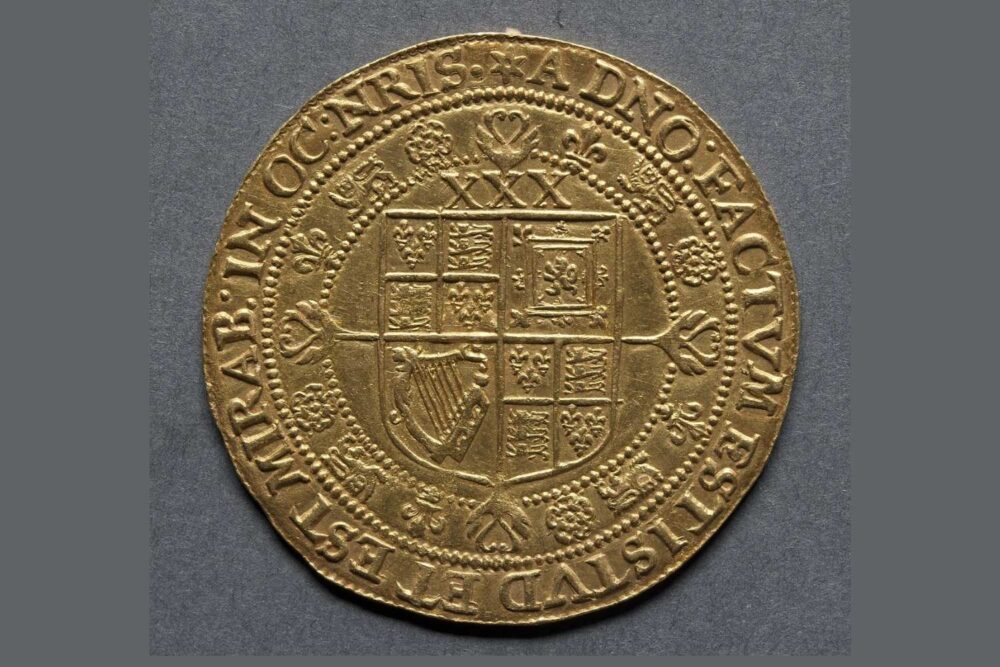
This coin is known as a gold ryal, sometimes called a “ship” ryal because of its design. In Elizabethan England, a ryal had a face value of 15 shillings, a substantial amount at the time.
To put that in perspective, most everyday transactions relied on silver or copper coins worth only a fraction of that amount. A single gold ryal represented serious money, well beyond what ordinary workers would ever carry in their pockets.
3. Why ordinary people rarely touched coins like this
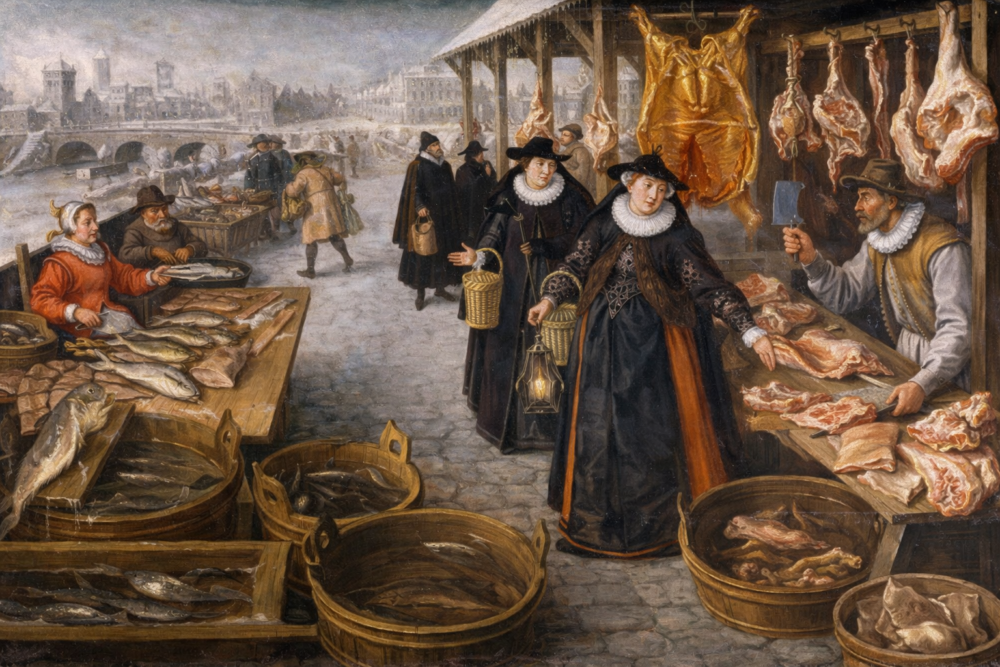
Because of its high value, the ryal wasn’t meant for daily use. It was more likely used for large payments, official transactions, or high-level exchanges tied to trade or the crown.
That limited circulation explains why so few survived. Many gold coins were later melted down during economic hardship or recoinage. Each surviving example today avoided destruction through a mix of chance, care, and circumstance.
4. The ship design that sent a clear message
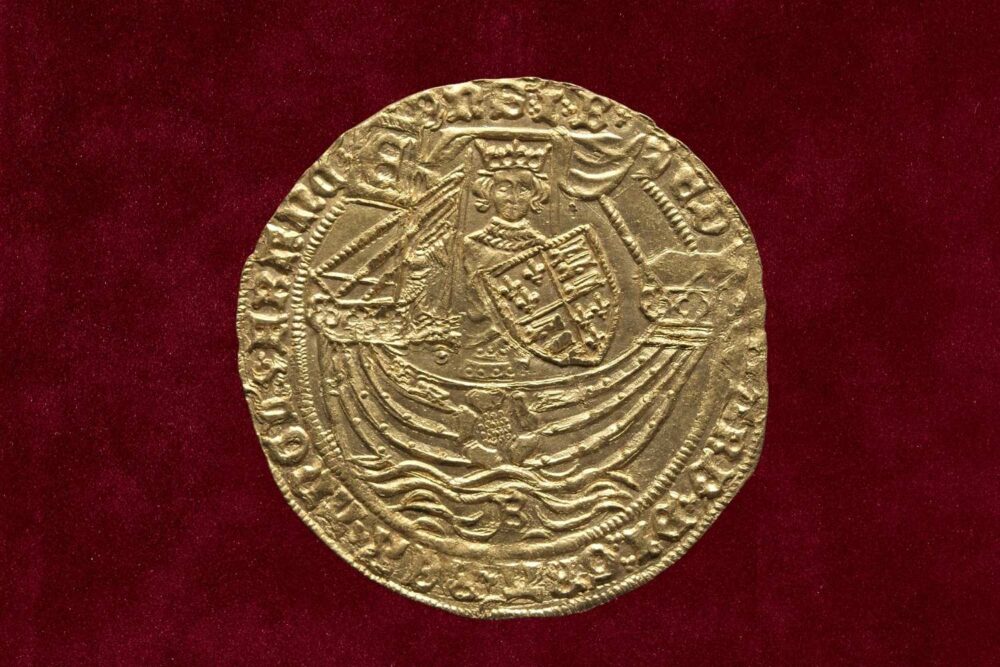
One side of the coin shows the queen standing aboard a ship. This wasn’t decorative flair—it was political symbolism.
England was presenting itself as a maritime nation, capable of defending trade routes and projecting power overseas. Putting a ship on gold currency turned every coin into a traveling statement about naval ambition and national identity.
5. Elizabeth I’s image as controlled messaging

Elizabeth I carefully managed how she appeared on official objects, including coins. Her portrait emphasized authority and legitimacy at a time when challenges to her rule were constant.
Coins were one of the few objects that carried her image widely and consistently. This ryal reflects that strategy, blending royal authority with imagery tied to exploration, strength, and stability during a tense and transformative period.
6. How this particular coin survived, and why that matters

This ryal’s survival is remarkable in itself. Gold coins from the Elizabethan era were routinely melted down during recoinage periods, wars, or economic stress, when the metal mattered more than the history stamped into it. Many were never meant to last centuries.
This example avoided that fate. Its sharp details suggest it was either carefully stored, passed through very few hands, or deliberately set aside because someone recognized its value early on. That kind of preservation over more than 400 years is extremely rare.
Condition matters because it preserves the message. Clear imagery allows historians and collectors to see the original symbolism as it was intended, turning the coin into a far more powerful historical artifact than a worn or damaged survivor.
7. The auction that made headlines

When the coin went to auction, it immediately drew intense interest from collectors. The sale took place at Heritage Auctions, during a major international coin event.
Bidding quickly exceeded expectations, and the coin ultimately sold for $372,000. That price set a new auction record for this type of Elizabethan gold ryal, reflecting both its rarity and its historical importance.
8. Why collectors were willing to pay so much

Collectors weren’t just buying gold. They were competing for a tangible link to a defining era in English history.
The coin combines several qualities collectors prize: extreme scarcity, strong condition, clear symbolism, and direct association with a famous ruler. Objects that check all those boxes rarely appear on the market, which drives fierce competition when they do.
9. What this coin reveals about money in the past

Today, money is mostly functional. In the Elizabethan era, coins were storytellers. They carried political messages at a time when literacy was limited and printed media was scarce.
This ryal communicated who ruled, what England valued, and how the nation wanted to be perceived. In that sense, it functioned as both currency and propaganda, quietly reinforcing power with every exchange.
10. Why finds like this still reshape history

Even centuries later, coins like this can refine understanding of the past. Details such as design choices, metal quality, and survival patterns offer clues about economics, politics, and daily life.
Each rediscovered example adds another piece to the puzzle. That’s why historians and collectors pay close attention when rare coins surface—they often tell stories written nowhere else.
11. More than an expensive piece of gold
At face value, this coin is worth hundreds of thousands of dollars. But its real value lies in what it represents.
It captures a moment when England was defining its future, projecting power through imagery and metal. Long after the ships have vanished and the empire has faded, this small coin remains—quiet proof that history sometimes survives in the smallest, most unexpected ways.