World First: Australia Just Banned Kids From Social Media and Other Countries May Follow

Australia becomes the first country to block under-16s from social media, forcing platforms to verify ages or face steep fines.

©Image license via Canva

Australia has officially enacted a world-first law banning children under 16 from using social media, marking one of the most sweeping youth-protection moves ever taken against Big Tech. Starting this week, platforms such as TikTok, Instagram, YouTube, and Snapchat must verify users’ ages and deny access to minors or face heavy fines. The government says the ban aims to shield kids from cyberbullying, sexual exploitation, and mental-health harms. Global regulators are watching closely, and experts predict other nations may adopt similar restrictions.


Read more

Japan Issues Rare ‘Megaquake’ Advisory After 7.5-Magnitude Quake Strikes

Experts say the latest quake may signal a far more dangerous seismic event capable of triggering towering tsunami waves.

©Image license via Planet Sage/Chat GPT

Japan’s government has issued a rare advisory warning that a “megaquake” could hit the country’s northern coast after a powerful 7.5-magnitude earthquake struck the region. Officials say the concern comes from new data showing increased seismic activity along a fault line capable of producing a massive quake and a devastating tsunami. Some models suggest waves could reach nearly 100 feet in the worst-case scenario. While experts emphasize that such events are unpredictable, the advisory urges residents to stay alert and review emergency plans.

Read more

Why Gen Z and Millennials Are Saying No to Kids and Why It Matters, A Lot

The choice not to have kids isn’t just personal—it’s a cultural earthquake.

©Image license via Canva

Think it’s just a trend that young people aren’t having kids? It’s way bigger than that—it’s a full-blown generational shift that could upend everything from the economy to elder care. Gen Z and Millennials are saying “no thanks” to the traditional life script, and it’s not just about money (though that’s a huge piece of the puzzle). They’re rethinking what it means to build a meaningful life—and kids aren’t always part of that picture.

This isn’t some passing phase. Birth rates are plummeting, and the ripple effects are going to hit hard in ways most people haven’t even considered. If you think this only impacts parents, think again. A world with fewer babies affects all of us—sooner than you might expect.

Read more

10 Celebrities Who Are Changing the World in Ways You Didn’t Know About

From humanitarian work to environmental activism, these stars are using their influence to drive real change.

©Image license via GoodFon

Many celebrities are known for their talent, but some are just as committed to making a difference in the world as they are to their careers. Whether they’re fighting for human rights, building schools, protecting the planet, or funding lifesaving research, their impact reaches far beyond red carpets and award shows. These stars use their platforms to raise awareness, support vulnerable communities, and help solve global challenges. Here are 10 celebrities whose work offscreen and offstage is genuinely changing lives.

Read more

Could Your “Gut Feelings” Actually Be Memories From the Future? Scientists Say It’s Possible

New theories about time and consciousness suggest the mind may process information before events actually happen.

©Image license via Canva

Scientists are taking a fresh look at one of the strangest questions in human experience: why do some people feel they “know” something before it happens? New research into consciousness and time suggests that our perception of events may lag behind what our brains register, creating the illusion of intuitive foresight. Physicists studying the nature of time and psychologists exploring unconscious processing both point to a possibility that challenges everyday assumptions. While not evidence of true future-seeing, these ideas reveal how the brain and the universe may operate in ways far more complex than we realize.

Read more

Cut Your Calories by 30% — New Study Says It Could Slow Brain Aging

Researchers found that long-term calorie reduction may help protect the brain from age-related decline.

©Image license via Canva

A major long-term study led by researchers at the National Institute on Aging has uncovered a striking connection between calorie intake and brain health. The team found that reducing daily calories by about 30% helped protect the brain from many normal signs of aging, including structural decline and cognitive slowdown. While these findings come primarily from controlled animal research, they offer an intriguing possibility: eating a little less over time may help keep the brain sharper, healthier, and more resilient as we grow older.

Read more

The 2025 ‘Soft Life’ Explosion: Why People Are Choosing Slow Living Over Hustle Culture

Burnout, rising stress, and a craving for balance are pushing millions toward a slower, more intentional life.

©Image license via Canva

A growing number of people are stepping away from nonstop grind culture and embracing what’s known as the “soft life.” This movement focuses on reducing stress, prioritizing well-being, and choosing a lifestyle that feels sustainable rather than overwhelming. As burnout rates climb and remote work reshapes daily routines, soft living has become more than a trend—it’s a cultural shift. In 2025, millions are exploring slower routines, simpler pleasures, and a healthier work–life balance that challenges the old hustle-first mindset.

Read more

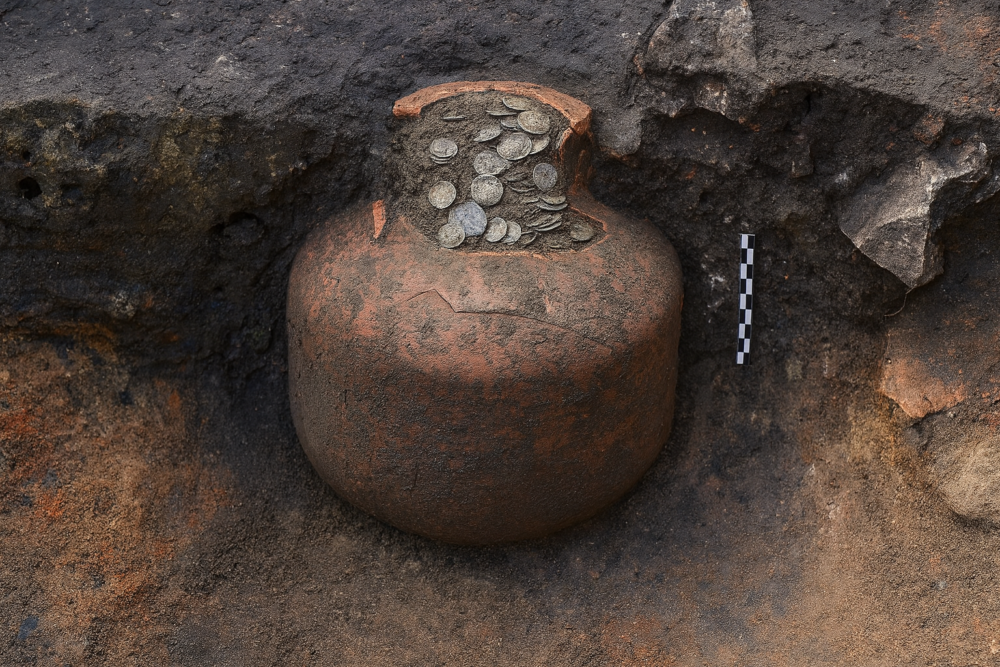
Archaeologists Unearth 1,800-Year-Old Roman “Piggy Banks” Packed With Coins

A surprising find beneath a rural French property is revealing how ordinary Romans saved their money centuries ago.

©Image license via ChatGPT

A renovation project in a small French village has uncovered an extraordinary window into everyday Roman life. Workers unearthed two 1,800-year-old ceramic jars buried beneath a household floor, each packed with Roman-era coins that had been hidden since the 2nd or 3rd century AD. Archaeologists believe the jars functioned as ancient “piggy banks,” offering a rare glimpse into how ordinary families saved money nearly two millennia ago. The discovery is helping researchers better understand rural Roman life far from the empire’s bustling cities.

Read more

Did Divers Just Find the Most Perfectly Preserved Shipwreck in American Waters?

A stunning 19th-century schooner found intact on the lake floor is rewriting what experts thought possible.

©Image license via Picryl

A team from the Peninsula Underwater Rescue Unit recently uncovered a remarkably preserved 1800s schooner resting upright at the bottom of Lake Ontario. The find has stunned maritime historians, who say the cold, low-oxygen waters helped protect the vessel for more than a century. Its intact masts, hull, and fittings offer an extraordinary glimpse into the region’s shipping era. The discovery is already being called one of the most impressive shipwrecks ever found in the Great Lakes.

Read more

Scientists Say Summer in Europe Could Be 42 Days Longer by the End of the Century

New research reveals that rapid Arctic warming may stretch Europe’s warm season deep into spring and autumn.

©Image license via Canva

New research suggests that summers across Europe could lengthen by as much as 42 extra days by the end of the century if warming continues at its current pace. Scientists analyzed ancient lake sediments and modern climate patterns to understand how seasonal boundaries shift during warm periods. The findings show that rapid Arctic warming is a major driver of longer European summers, with heat arriving earlier in spring and lingering well into autumn. While this estimate applies specifically to Europe, similar trends of extended warm seasons are emerging worldwide.

Read more