Scientists Just Pulled the Deepest Rock Core Ever From Antarctic Ice. What They Found Could Change Everything

A record-breaking Antarctic drill reveals ancient climate clues that could reshape predictions of Earth’s future.
©Image license via Planet Sage/Chat GPT

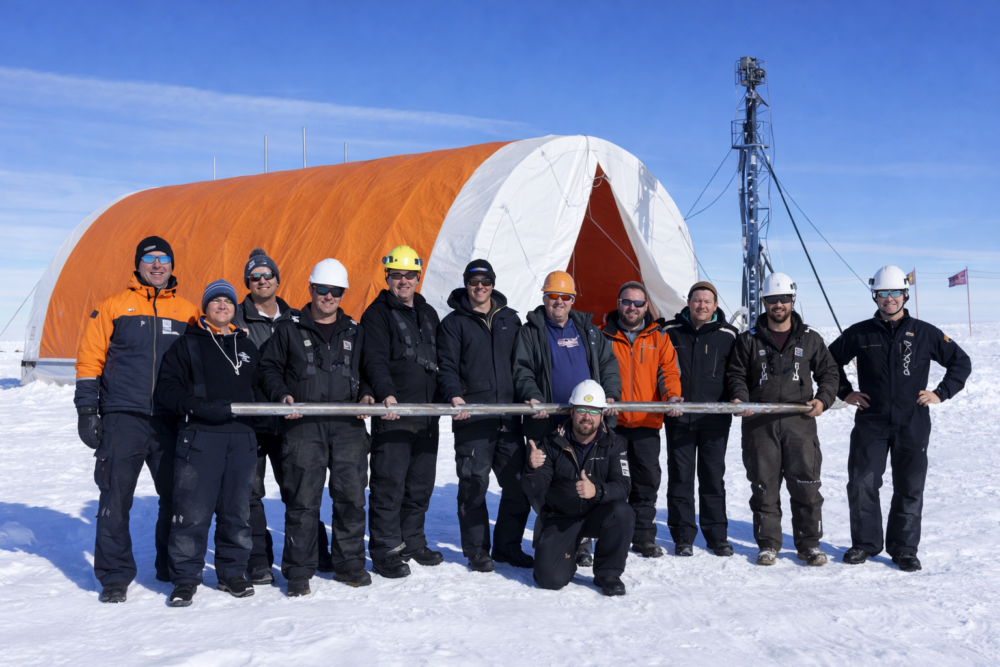
A team of international scientists has successfully drilled the deepest rock and sediment core ever recovered from beneath an ice sheet, capturing roughly 23 million years of Earth’s climate history in frozen mud and rock. The 228-meter core was extracted from beneath about 523 meters of ice at Crary Ice Rise on the edge of the West Antarctic Ice Sheet, a region that holds enough ice to raise global sea levels by several meters if it were to melt.

Unlike ice cores, which only extend back hundreds of thousands of years, this sediment core preserves direct physical evidence from much warmer periods in Earth’s past. Scientists believe it could help clarify how sensitive Antarctic ice is to warming and whether certain temperature thresholds trigger irreversible ice loss.

Read more

Chilling Letters Reveal What Pompeii’s Destruction Looked Like in Real Time

One Roman’s letters offer the only firsthand account of Pompeii’s final hours.

©Image license via Picryl

When Mount Vesuvius erupted in 79 A.D., few lived to describe the horror. But a 17-year-old Roman named Pliny the Younger witnessed the disaster from across the Bay of Naples and later recorded every terrifying detail in letters to the historian Tacitus.

His words paint a vivid picture of black skies, falling ash, and desperate escape—an event that claimed thousands of lives, including his uncle, Pliny the Elder. Nearly two millennia later, his haunting letters still define how the world remembers Pompeii.

Read more

How Ancient Egyptians Lived Their Lives Preparing for Death and the Afterlife

Death was a journey guided by gods, rituals, and moral tests.

©Image license via Canva

For the ancient Egyptians, death was not an end—it was a transformation. They believed that life, death, and rebirth formed a continuous cycle governed by divine law and cosmic order. From elaborate burial rituals to sacred texts like the Book of the Dead, Egyptians prepared meticulously for the afterlife, ensuring the soul could navigate the challenges awaiting it beyond the tomb.

Their complex beliefs, rituals, and monuments reveal not only their fear of death but their profound hope for immortality in a world shaped by gods, balance, and eternal renewal.

Read more

Did Easter Island’s Giant Statues Really Walk? Scientists Revisit the Mystery

New research points to an unexpected method that may explain how the moai were moved.

©Image license via PickPik

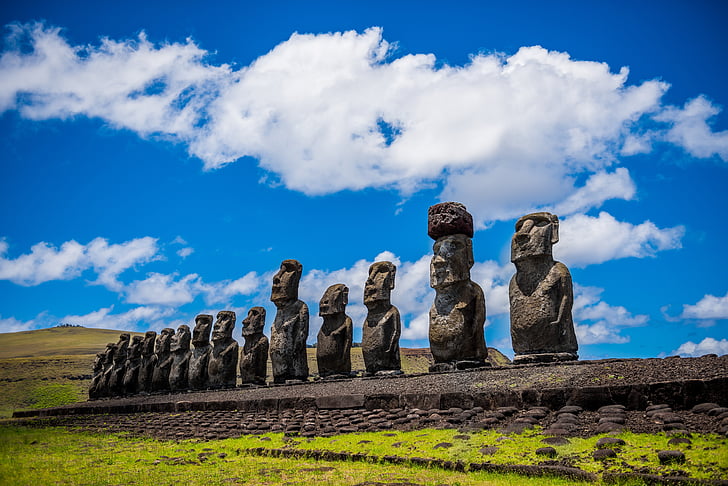
For centuries, the Polynesian people of Easter Island told European explorers their giant statues “walked” — a claim long dismissed by scholars. But new experiments and physics-based modeling are breathing life into that legend.

Researchers have now moved a replica moai upright for 300 feet in just 40 minutes using a rope-rocking method, and they argue that ancient builders engineered the statues to tilt forward slightly, enabling controlled side-to-side rocking. If accepted, this may rewrite how we understand ancient engineering on Rapa Nui.

Read more

A New Theory Suggests an Earth-Sized Planet May Be Hiding Much Closer to Home

Astronomers say subtle signals point to an unseen world hiding behind Neptune and closer than Planet Nine.

©Image license via Canva

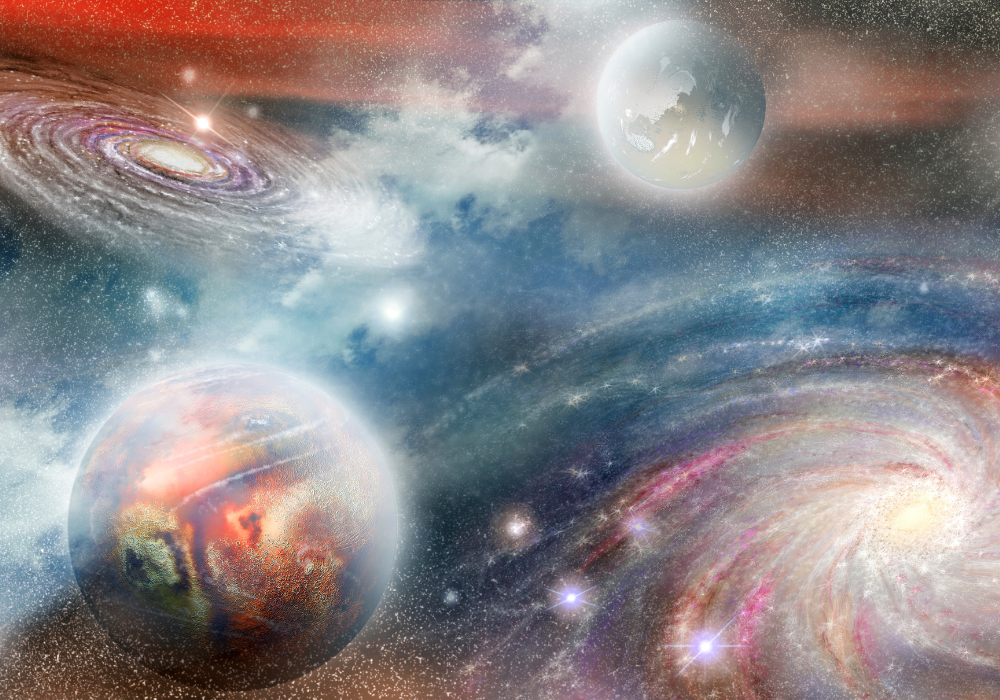
Astronomers have proposed a new hypothesis called “Planet Y” to explain the strange tilt of distant objects orbiting beyond Neptune. This theory suggests that a hidden, Earth-sized planet may exist much closer to the Sun than the long-hypothesized Planet Nine.

If true, it could reshape how scientists understand the outer reaches of our solar system and the forces shaping it. While the idea is intriguing, researchers emphasize that Planet Y remains unconfirmed—and so far, unseen.

Read more

These 2-Million-Year-Old Hands Are Forcing Scientists to Rethink Human Evolution

Ancient hand fossils show a surprising blend of ape-like power and human dexterity.

©Image license via Wikimedia Commons

Deep in South Africa’s Rising Star cave system, scientists have uncovered the first known hand fossils of Homo naledi, an extinct human relative that lived about two million years ago. The bones show a surprising blend of traits, including long, curved fingers suited for climbing and a thumb structured for delicate manipulation.

Experts say this unique combination challenges the idea that tool use and dexterity evolved only in modern humans, offering new insight into how early relatives may have lived, worked, and survived.

Read more

You Think Reality Is Solid. Scientists Are Not So Sure

Scientists say our brains construct reality together, and that shared model may be more fragile than we realize.

©Image license via Planet Sage/Chat GPT

For most of us, reality feels fixed and objective. We see the world around us, hear its sounds, and trust our senses to guide us. But some researchers argue that what we call reality is actually a model our brains construct by predicting what’s out there. When enough people build similar models, a shared experience emerges, what we collectively accept as real.

This idea is not just philosophical. If our shared reality is shaped by internal mental processes rather than direct access to the world itself, perception may be more fragile than we assume. Under extreme cognitive stress, social pressure, or distorted information, the same system that keeps us oriented could begin to unravel.

Read more

What Would Happen if a Massive Solar Storm Hit Earth Today

A rare solar superstorm could disrupt power grids, satellites, and daily life. Are we truly ready?

©Image license via Flickr/NASA’s Marshall Space Flight Center

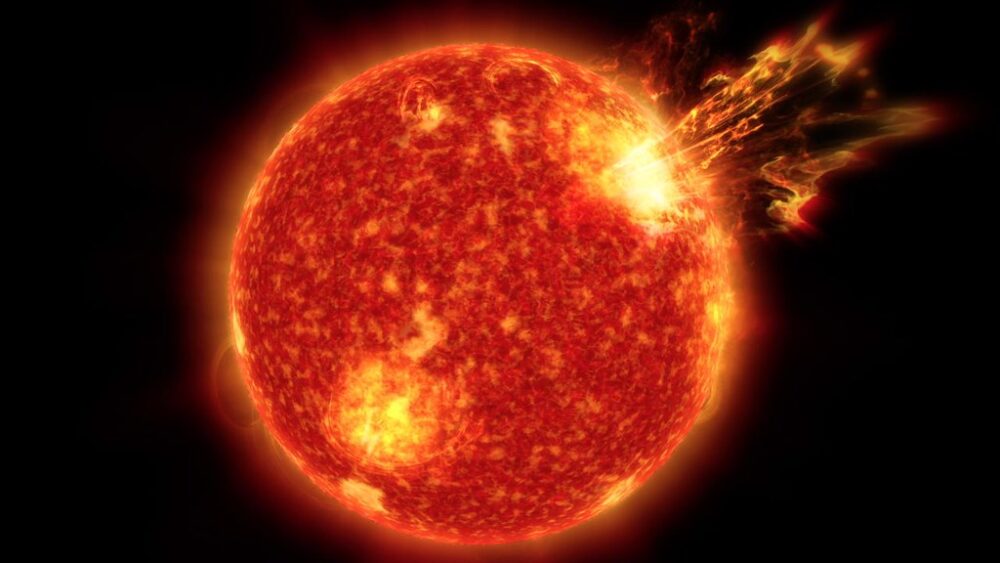
When the sun erupts, it is not just a beautiful aurora story. A rare, powerful solar storm can shove enormous energy into Earth’s magnetic field, triggering geomagnetic disturbances that strain power grids, disrupt satellites, and scramble radio and GPS signals.

Scientists often point to the 1859 Carrington Event as the historical benchmark. A storm of that scale today would hit a world that depends completely on electricity and space-based technology. Forecasting has improved, and grid operators have response plans, but the question remains: if a truly extreme event arrives, will preparation be enough?

Read more

Could a 50-Mile Seabed Curtain Save the “Doomsday Glacier”?

A massive underwater barrier could slow ice loss at Antarctica’s most dangerous glacier and buy time against rising seas.

©Image license via Wikimedia Commons/NASA

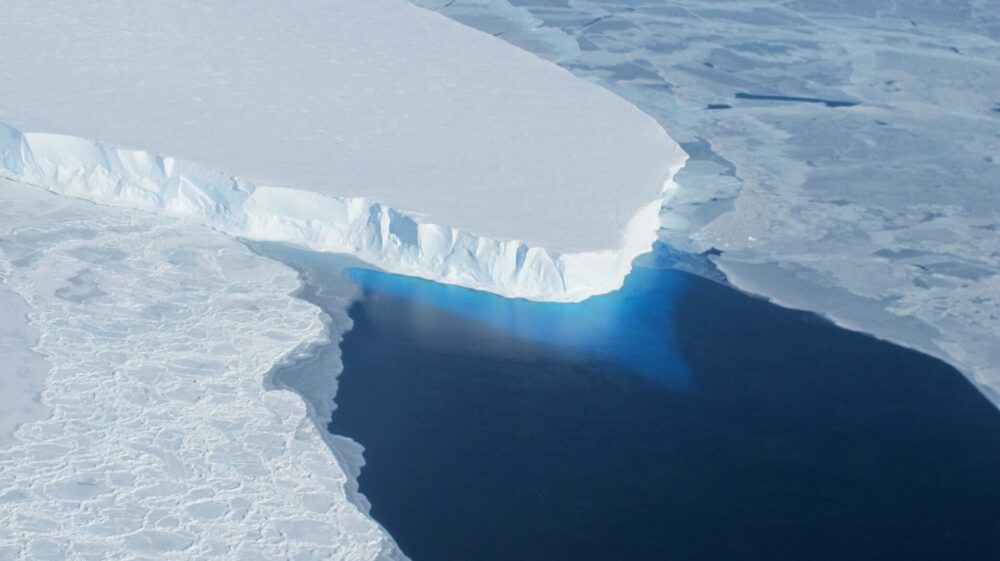
Scientists are exploring an audacious idea to slow the rapid melting of Thwaites Glacier in West Antarctica, often called the Doomsday Glacier. Warm ocean water is eating away at the ice from below, weakening its grip on the seafloor and accelerating sea level rise that threatens coastal communities worldwide. To counter this, engineers have proposed building a vast underwater “seabed curtain” designed to block or slow that warm water before it reaches the glacier’s base.

The idea is not a fix for climate change, and it would not stop melting altogether. Instead, supporters argue it could buy precious time, giving societies decades more to adapt, protect coastlines, and reduce emissions before the most severe impacts unfold.

Read more

This Monster With Crushing Teeth and Hooves Once Roamed Earth, and Its Story Is Still a Mystery

A giant skull, hoofed feet, and crushing teeth have left scientists debating what this prehistoric beast really was.

©Image license via Wikimedia Commons

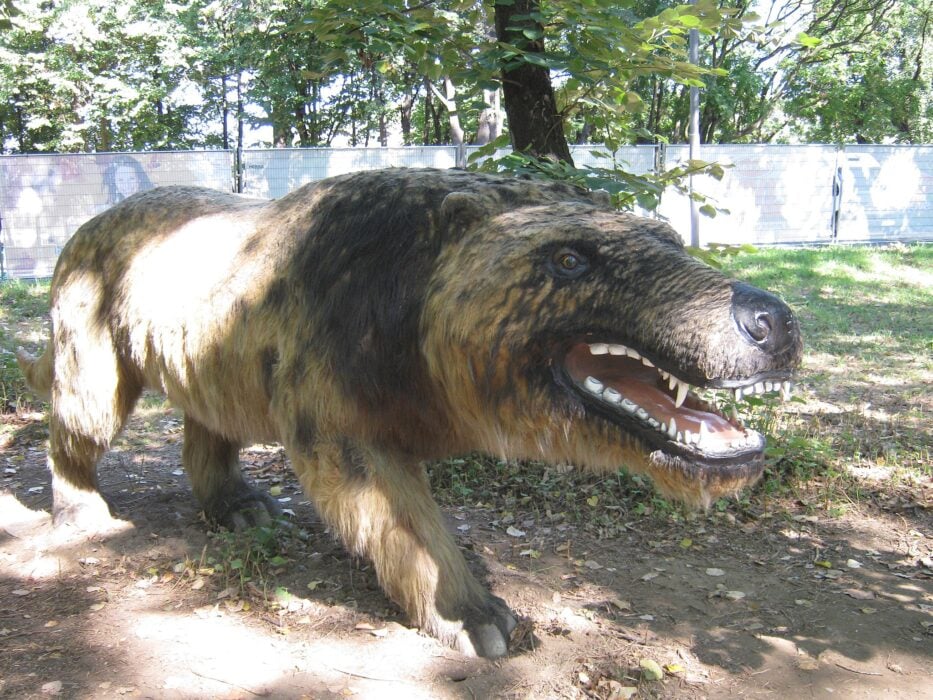
In 1923, a fossil hunter in what is now Inner Mongolia uncovered a skull so large and strange it immediately captured scientific attention. The fossil belonged to Andrewsarchus, a massive carnivorous mammal that lived roughly 37 to 47 million years ago, long before modern predators like wolves and big cats dominated the landscape.

The problem is that almost everything we know about Andrewsarchus comes from that single skull. Over the decades, scientists have proposed wildly different identities for the animal, ranging from a hoofed wolf-like hunter to a pig-like scavenger or even a distant relative of whales. Today, researchers are still trying to piece together its true nature.

Read more