It Looks Weird, But Fruit Bagging Makes Fruit Taste So Much Sweeter

The old farming trick that protects fruit while shaping how it tastes.

©Image license via Wikimedia Commons

If you’ve ever bitten into a piece of fruit that looked perfect but tasted disappointingly bland, you’re not alone. Many people assume sweetness is all about the variety or how ripe fruit looks, but growers have known for generations that flavor is shaped long before harvest.

One technique, which looks odd at first glance, is quietly making a return because it tackles several problems at once. It changes how fruit handles sunlight, pests, and even stress while it’s still on the tree.

Once you understand what’s happening inside that growing fruit, the idea suddenly makes a lot more sense—and you may never look at an orchard the same way again.

Read more

Who Really Controls Your Food, and Why It Matters More Than You Think

Inside the global push for food sovereignty and who benefits from it.

©Image license via Canva

Most of us think we “choose” what we eat, but many choices are pre-made—by seed patents, commodity markets, supermarket contracts, and rules that shape what farmers can grow.

Food sovereignty is a movement that asks a blunt question: who should control food systems—global markets, or the people who grow, distribute, and eat the food? It was popularized by La Via Campesina in the 1990s and later shaped by the Nyéléni Declaration.

Today it shows up in debates about land, seeds, Indigenous rights, climate resilience, and corporate concentration in the grain trade. The idea isn’t just “local food”—it’s power, and who gets it.

Read more

What Archaeology Reveals About the Biblical Fall of Jericho

What lies beneath Jericho’s ruins may complicate a famous story.

©Image license via Planet Sage/Chat GPT

Jericho is one of the world’s oldest cities, and its “walls falling” story is one of the Bible’s most famous scenes. But archaeologists don’t argue about faith so much as dates, layers, and what the ruins can actually show.

The key site is Tell es-Sultan near modern Jericho. Kathleen Kenyon’s 1950s excavations found a burned destruction layer, but dated it to about 1550 BCE—earlier than the biblical timeline many readers expect.

Radiocarbon tests on charred grains from that destruction also point to an earlier window, though a minority view argues the pottery fits later. Here’s what’s solid, and what’s still debated.

Read more

Scientists Are Looking at the Moon as a Cosmic Pit Stop

How lunar ice and resources could be used to refuel spacecraft on deep-space missions.

©Image license via Planet Sage/Chat GPT

Calling the Moon a “gas station” sounds like sci-fi, but the idea is surprisingly practical: if you can make fuel in space, you don’t have to haul every pound up from Earth, again and again.

Scientists focus on the lunar poles because permanently shadowed craters can trap water ice. Dig it up, heat it, capture the water, and split it into hydrogen and oxygen, and you’ve got the same propellants many rockets rely on.

NASA and its partners are already testing drilling and ice-hunting tech on the Moon, because a dependable refueling stop could make lunar missions—and eventually deeper ones—cheaper, safer, and more frequent.

Read more

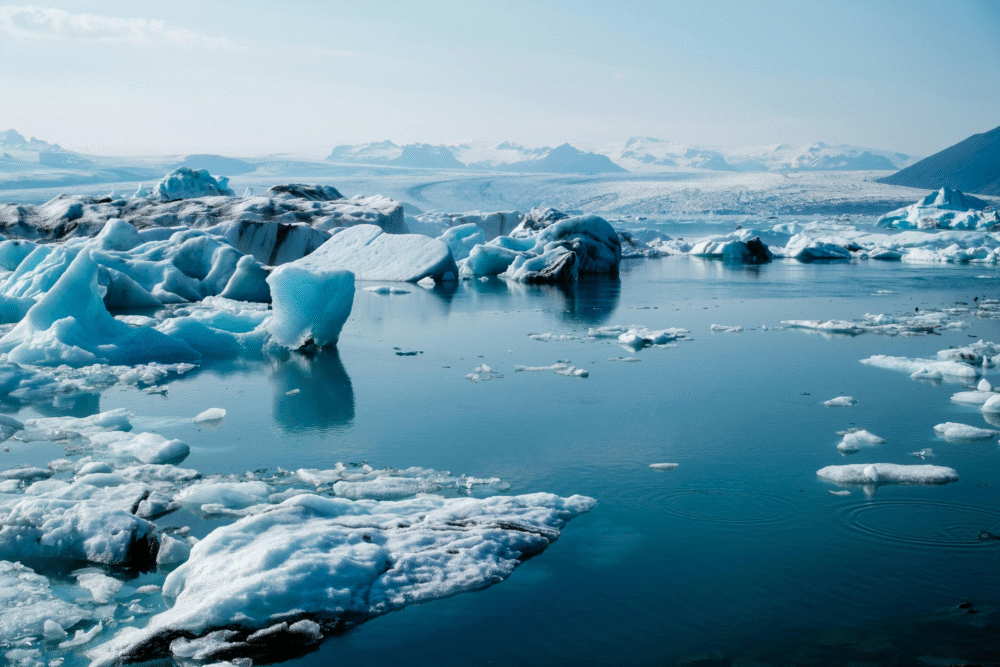
What 20 Years of Data Reveal About the Arctic’s Alarming Climate Shift

Decades of reporting show rapid warming, vanishing ice, and cascading impacts beyond the polar region.

©Image license via Canva

Twenty years ago, the Arctic “report card” was a yearly check-in. Now it reads more like an emergency update. NOAA’s latest Arctic Report Card shows a region warming much faster than the rest of the planet—and changing in ways you can feel far beyond the polar circle.

The report says that from October 2024 to September 2025, Arctic surface air temperatures were the warmest since at least 1900. Sea ice hit a record-low winter peak, and most of the oldest, thickest ice is already gone.

Add thawing permafrost, “rusting” rivers, and a warmer, saltier Arctic Ocean, and the message is blunt: what happens up there doesn’t stay up there.

Read more

The Mystery of Earth’s Lost Giant Ape May Finally Have an Answer

New clues from ancient caves reveal when the giant ape vanished and what ultimately doomed it.

©Image license via Planet Sage/Chat GPT

Gigantopithecus blacki, the largest ape ever known, has long been a prehistoric mystery. We have teeth, a few jawbones, and a nagging question: how could an animal that massive simply vanish?

A study published in Nature tackled it by dating fossil teeth and the cave sediments around them from a network of caves in southern China. Using several modern dating techniques, the team pinned down the extinction window and compared it with signs of shifting habitats.

The picture that emerges is a slow squeeze, not a sudden disaster: climate-driven forest changes that left a huge, highly specialized ape with too few good options.

Read more

Astronomers Say Dark Energy May Be Changing. It Could Alter the Universe’s Fate

New data hints the universe’s expansion may be shifting, challenging a core idea in cosmology.

©Image license via Wikimedia Commons

For decades, astronomers have worked with the idea that the universe’s expansion is speeding up under a steady, unchanging force called dark energy. That assumption has shaped everything from cosmic timelines to predictions about how the universe might eventually end.

Now, early results from the Dark Energy Spectroscopic Instrument (DESI) are adding an unexpected wrinkle. DESI maps millions of galaxies to track how space has stretched over time, and its latest data suggests that acceleration may not be behaving exactly as expected.

If the expansion is slowing even slightly, it hints that dark energy may not be a simple constant after all.

Read more

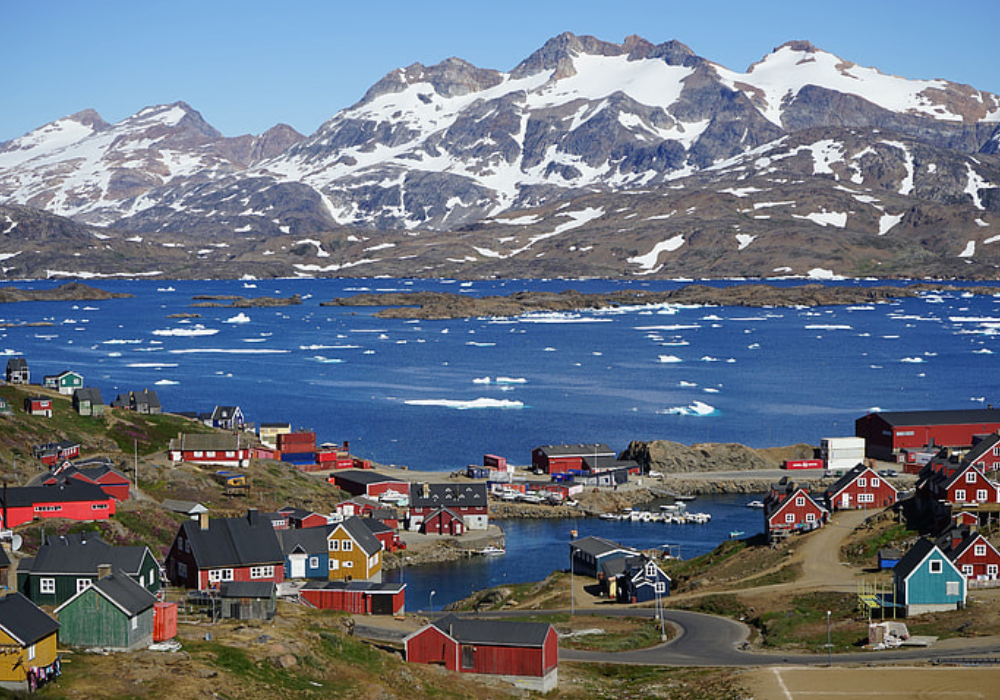
The Greenland “Prize” Everyone Talks About, And What It Really Hides Beneath the Ice

What ancient landscapes, hidden ecosystems, and rising seas reveal about Greenland’s true importance.

©Image license via PickPik

Greenland gets talked about like a prize on a map, but the biggest story isn’t politics; it’s what the island hides under its ice. Beneath miles of frozen water is a record of past warm spells, lost ecosystems, and landscapes that look paused in time.

Scientists have analyzed sediments from beneath the ice and found fragile plant remains, showing parts of Greenland once supported tundra. Airborne radar surveys, including NASA’s Operation IceBridge, have also revealed buried canyons and an ancient lakebed.

If Greenland’s ice melted nearly completely, global sea level would rise about 7 meters, roughly 23 feet, reshaping coastlines worldwide.

Read more

If You’re Being Unfairly Criticized at Work, Here’s How to Handle It

When feedback feels personal, knowing how to respond can protect your job and your confidence.

©Image license via Canva

If you’re criticized at work and it feels unfair, the emotional reaction can hit fast. Confusion, frustration, embarrassment, and self-doubt often arrive together, especially when the feedback feels personal or disconnected from your actual performance. It can be hard to tell whether you should defend yourself, stay quiet, or push back.

Situations like this matter right now because many workplaces are under strain. Teams are leaner, communication is faster, and feedback is often delivered casually or in public settings where tone and nuance get lost.

That makes misunderstandings more likely and emotional fallout more intense. How you respond in these moments can quietly shape your reputation, your confidence, and future opportunities.

Read more

Delusional Disorder: When Beliefs Feel Unshakably Real But Aren’t

How the brain can form beliefs that feel absolutely true, even when they aren’t.

©Image license via Canva

Delusional disorder is often misunderstood because, on the surface, many people who live with it appear completely functional. They may work, socialize, and manage daily life normally, all while holding one belief that feels absolutely true to them, even when evidence says otherwise.

What makes the condition especially confusing is that the belief isn’t bizarre in the way people expect. It may involve jealousy, persecution, illness, or relationships, and it can quietly shape decisions and behavior over time.

Understanding how the disorder unfolds helps explain why it’s so convincing, why it’s different from schizophrenia, and why loved ones can sometimes be pulled into the belief as well.

Read more