11 Game-Changing Meditation Practices to Quiet Your Busy Brain

Meditation isn’t just for monks—it’s for anyone who’s mentally exhausted.

©Image license via Canva

Trying to meditate with a mind that won’t shut up feels like trying to nap in a hurricane. You sit still, close your eyes, and your brain immediately starts scrolling through every embarrassing thing you’ve ever said. Sound familiar? That’s because most people don’t have the luxury of a calm inner world. Life is noisy, and your brain didn’t get the “quiet down” memo.

But meditation doesn’t have to mean perfect stillness or an empty mind. It just means pausing long enough to notice what’s going on in there—and learning how to ride it out without spiraling. These practices are for real people with real stress and way too many tabs open, mentally and emotionally. You don’t need incense or an hour of silence. You just need a few minutes, a little curiosity, and the willingness to try something that might actually help.

Read more

10 Times Astrology and Politics Collided in History—And What It Warns About Our Future

The sky has been a political map longer than most people realize.

©Image license via Canva

Long before poll numbers and pundits, leaders watched the stars for signs of what lay ahead. Astrology wasn’t a side hobby—it was stitched into the fabric of political power. Kings had court astrologers. Revolutions were timed to cosmic alignments. Even now, when astrology is often written off as frivolous, it quietly shapes public moods and political momentum more than people admit.

Cycles repeat. What once guided emperors still sparks conversations today, from Saturn returns in election years to eclipses landing right on moments of upheaval. These historic intersections between astrology and politics aren’t just fascinating stories—they’re reminders that humanity has always searched for meaning in chaos. The patterns don’t control us, but they reflect us, illuminating fears, hopes, and power struggles that never really go away. These ten moments reveal just how often the sky and power have moved in tandem.

Read more

Life Doesn’t Let Up—But These 13 Tools Will Strengthen Your Emotional Resilience

You can’t stop the chaos, but you can change how you carry it.

©Image license via Canva

Resilience doesn’t mean pretending you’re okay all the time. It’s not about being tough or unaffected—it’s about learning how to move through life’s hard moments without losing yourself. And in a world that rarely slows down, building emotional resilience isn’t just helpful. It’s essential.

You don’t need to be naturally calm, endlessly patient, or wired for optimism to become more resilient. These tools are learnable. They’re practical. And they meet you exactly where you are—even if that place is exhausted, scattered, or on the edge of burnout. They won’t make life easy, but they can make you sturdier. They can help you feel less like you’re bracing for the next hit and more like you can handle what’s coming. If the chaos isn’t going anywhere, it matters how you carry it.

Read more

Your Grandchildren May Never Witness Wild Animals Roam Free—12 Forces Destroying Their Habitats

The countdown to extinction is speeding up.

©Image license via Canva

The quiet is spreading faster than anyone expected. Places once alive with birdsong, hoofbeats, and rustling undergrowth are falling silent, emptied out by forces that never sleep. It’s not a far-off threat waiting for future generations—it’s already happening. Habitat loss is carving away at wild spaces daily, shrinking the living world into smaller, more desperate corners. And no matter how many nature documentaries soften the blow, the reality is far starker than it looks on screen.

What’s happening isn’t random. It’s systematic, fast, and driven by decisions made in boardrooms and ballot boxes. Forests aren’t disappearing by accident. Grasslands aren’t vanishing on their own. These places are being devoured, cleared, and fragmented by human ambition, leaving wildlife with nowhere to go. If we’re not careful, future generations will inherit a world where wild animals exist only in books and fading memory, their homes long since erased.

Read more

The Truth About ‘Eco-Friendly’ Products—And 12 Reasons They’re Dangerous Lies

The planet keeps burning while companies cash in on fake promises.

©Image license via Canva

Let’s be honest: the eco-friendly label is everywhere now, slapped onto everything from water bottles to fast fashion like it’s a moral free pass. It’s tempting to believe it works. Who wouldn’t want to shop their way to a cleaner planet? But most of these products aren’t solutions—they’re distractions dressed up in green packaging. Behind the soft marketing language is the same old system, still driven by profit, still built on waste.

The problem runs deeper than empty slogans. Companies have figured out how to sell us environmental anxiety and make it feel like progress. They promise biodegradable plastics, “natural” fabrics, and low-emission everything, but the truth is messier. These products might look like answers, but they do little to slow the damage. Worse, they lull people into a false sense of action, keeping real change out of reach while the crisis accelerates around us.

Read more

The ‘Scary Mental Illness’ Stereotype Needs to Die—11 Steps Toward Real Care and Understanding

When fear replaces empathy, stigma does more damage than the illness.

©Image license via Canva

We’ve all seen the headlines: violent crime, mass chaos, and a vague mention of “mental illness” tacked on like an explanation. But real mental health struggles rarely look like the stories we’re fed. Most people with diagnoses like schizophrenia, bipolar disorder, or borderline personality disorder aren’t dangerous. They’re exhausted. Misunderstood. Isolated. The scary stereotype doesn’t just miss the mark—it actively harms the people it claims to describe.

When the world treats you like a threat, you stop feeling safe asking for help. Hospitals get replaced with handcuffs. Support turns into suspicion. And the more fear takes up space, the harder it becomes to offer real care. This list isn’t about fixing everything overnight—it’s about naming the harm, undoing the myths, and creating a culture where people don’t have to choose between hiding their symptoms or being treated like a monster.

Read more

Don’t Fall for the Hype—These 13 Wellness Trends Sell What You Can Get for Free

The real scam is convincing you healing has to be expensive.

©Image license via Canva

The wellness industry has mastered the art of selling you back things you already had. Grounding? Now available in mat form for $199. Breathwork? Rebranded into a six-week course with a subscription fee. Even stillness has been commodified—turn off your phone, they say, with an app you paid for. Healing isn’t the problem. It’s the pricing model.

What you actually need often costs nothing: nervous system regulation, connection, movement, rest. But that doesn’t fill a marketing funnel, so you’re told you’re incomplete unless you buy your way into balance. This list isn’t about shaming what you love. It’s about pulling the curtain back and reminding you that your body already knows how to heal—and a lot of the support it craves isn’t for sale. Before you drop $80 on crystal-infused bath salts, check this list. You might already have what you’re looking for.

Read more

Are Leftists Really Doomsday Prepping Now? 12 Clues Something’s Shifting

When hope feels thin, preparation starts looking like common sense.

©Image license via Canva

Prepping used to conjure up images of bunkers, canned beans, and conspiracy theories scrawled across dry erase boards. It was something associated with libertarians, militia types, or people certain the world was ending in fire and FEMA camps. But lately, the energy’s shifted. More and more left-leaning folks are quietly taking notes, stocking supplies, and building networks—not because they’ve abandoned hope, but because they’ve been paying attention.

When you see institutions failing in real time—climate disasters, infrastructure breakdowns, housing crises—it starts to feel less like paranoia and more like practicality. This isn’t about fantasizing over collapse. It’s about staying grounded when systems don’t. These aren’t folks hoarding ammo in a cabin. They’re gardeners, mutual aid organizers, off-grid experimenters, and tired people who know that community care might be the only safety net left. If you’re seeing these signs around you, you’re not imagining things—something’s shifting.

Read more

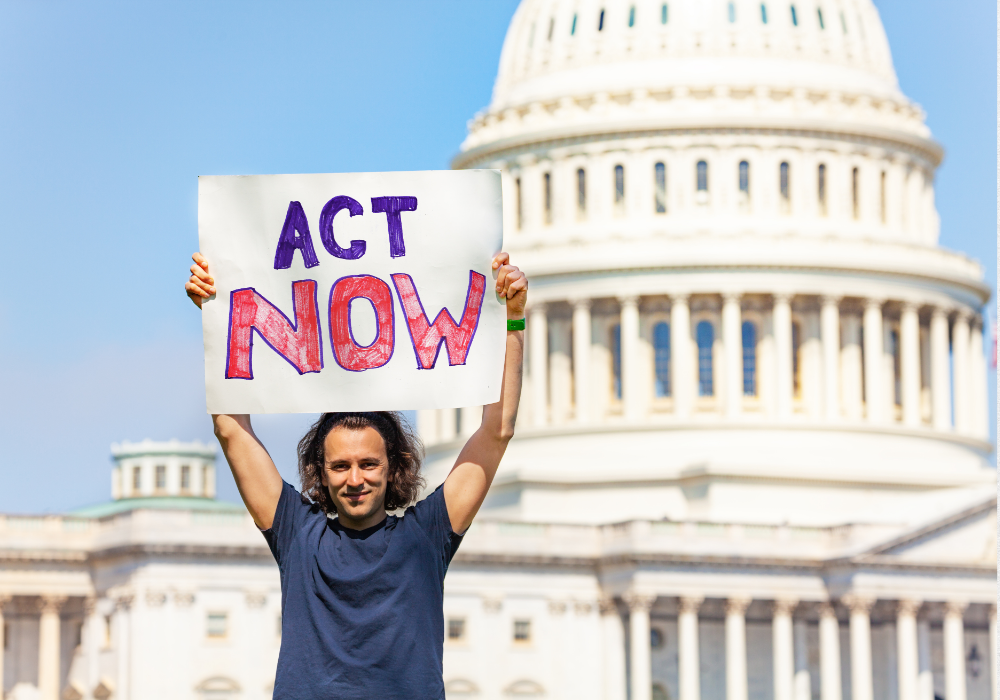
Still Want to Fight for Something? These 10 Acts of Resistance Stand Up to Trump’s Agenda

Speaking out still matters, even when it feels like shouting into the void.

©Image license via Canva

It’s easy to feel burned out. After all, the headlines keep coming, the policies keep getting worse, and Trump’s agenda didn’t disappear just because the election cycle did. Even outside of office, his influence drags on—through climate rollbacks, attacks on civil rights, stacked courts, and amplified hate. The chaos feels endless, and so does the exhaustion that comes with it. But if there’s one thing history keeps teaching, it’s this: persistence matters, even when progress feels out of reach.

These acts of resistance aren’t about quick wins. They’re about keeping the fire alive when the world tries to smother it. Each action chips away at the narrative of helplessness and reminds you that collective power still exists. Small steps matter. Local action matters. What you build now, even quietly, will outlast the noise. The goal isn’t perfection—it’s momentum that refuses to die out.

Read more

From Aries to Pisces: How the 12 Signs Cope with Stress and Anxiety

The way you cope might be written in your birth chart, not your personality.

©Image license via Canva

Everyone handles stress differently, and astrology might hold the answers. Your zodiac sign shapes your emotional habits, influencing how you respond when life gets overwhelming. Aries leaps into action, Taurus doubles down on routine, and Gemini starts chatting a mile a minute. Each sign’s approach makes sense through the lens of astrology, providing valuable insights into managing stress better.

The key is understanding these patterns clearly. By recognizing how each sign naturally deals with anxiety, it becomes easier to channel that energy into healthier outlets. Instead of getting caught in cycles of panic or burnout, learning the unique ways your sign copes with stress can lead to greater balance and clarity. Astrology doesn’t just predict behavior—it explains the underlying reasons, helping everyone better understand their stress triggers and uncover healthier ways of navigating life’s pressures.

Read more