
New research suggests a long-lost family document once linked to William Shakespeare may not belong to his father after all.

Evidence now points to a surprising and largely overlooked member of the Shakespeare family, opening a fresh chapter in a centuries-old mystery. For generations, scholars believed a mysterious parchment found inside Shakespeare’s childhood home revealed secret religious convictions at a dangerous moment in English history. But closer analysis of the document’s language, structure, and origins now suggests it was written decades later than previously thought.
That shift has led researchers to a new conclusion: the document was likely created by Shakespeare’s sister, not his father. If correct, the finding reshapes how historians understand the Shakespeare household and highlights how modern research tools can overturn long-standing assumptions.
1. A hidden document with a big reputation

For nearly 150 years, a folded parchment discovered inside the family home in Stratford-upon-Avon was treated as a rare and dramatic artifact tied to William Shakespeare’s father, John Shakespeare. Scholars believed it offered rare insight into the private beliefs of a man living during a time when religious conformity was closely watched.
The document gained fame because it appeared to suggest secret Catholic devotion in Protestant England, a risky stance in the late 16th century. This interpretation added intrigue to Shakespeare’s background and fueled speculation about how religious tension may have shaped the playwright’s world.
2. Where the document came from

The parchment was reportedly discovered around 1770 by a laborer working inside the Shakespeare family home. It had been hidden within the structure itself, folded tightly and tucked away, suggesting it was intentionally concealed.
After its discovery, the document passed through several private hands before scholars began studying it seriously. Its survival alone was remarkable, but its signature — “J. Shakespeare” — became the key detail that shaped decades of interpretation.
3. A religious tract, not a personal letter

The document is not a letter or diary entry. Instead, it reads like a formal religious declaration, outlining pledges of faith and preparation for death in deeply devotional language.
Such texts were common in Catholic Europe but dangerous in England at the time. This tone reinforced the belief that the document reflected secret religious resistance rather than casual personal belief, making it seem especially significant if written by Shakespeare’s father.
4. Why scholars began to question the old story

Recent research took a closer look at the wording, structure, and sources behind the text. When scholars compared it to known religious writings from different periods, they noticed striking similarities to devotional works that circulated later than John Shakespeare’s lifetime.
These comparisons suggested the document could not have been written when historians once believed. The language aligned more closely with religious texts produced decades later, forcing researchers to reconsider who could have authored it and when.
5. A surprising new author emerges

Once the timeline shifted, attention turned to another family member who lived in the Shakespeare home long after William’s death: his sister, Joan Shakespeare Hart. Unlike her famous brother, she remained in Stratford for most of her life and would have had access to later religious materials.
If Joan authored the document, it reframes the artifact not as evidence of a hidden patriarchal secret, but as a deeply personal expression from a woman navigating faith, family, and survival in a changing England. That possibility gives the document new meaning — and gives Joan a long-overdue place in Shakespeare history.
6. Why Joan Shakespeare Hart’s role matters

Joan Shakespeare Hart has long existed on the margins of literary history, mentioned mainly in relation to her famous brother. If she was the author of the document, it gives historians a rare glimpse into the inner life of a woman from Shakespeare’s immediate family.
Her voice has largely been absent from the historical record. This document, if hers, offers a personal expression of belief and identity that challenges the assumption that meaningful historical traces must come from famous men.
7. What this discovery says about historical assumptions

For generations, scholars accepted the idea that the document belonged to Shakespeare’s father largely because it fit an appealing narrative. A secret Catholic patriarch living under religious pressure was compelling and dramatic.
The new analysis highlights how easily historical interpretation can harden into fact. It shows the danger of relying on assumptions without revisiting evidence as new tools and comparisons become available.
8. How digital research changed the investigation

The reassessment became possible through the digitization of rare religious texts scattered across European libraries. Researchers were able to compare the Shakespeare document against obscure works that had previously been inaccessible.
This broader comparison revealed patterns in phrasing and structure that tied the document to a later period. Without digital archives, those connections may never have been noticed.
9. A family story, not just a literary mystery
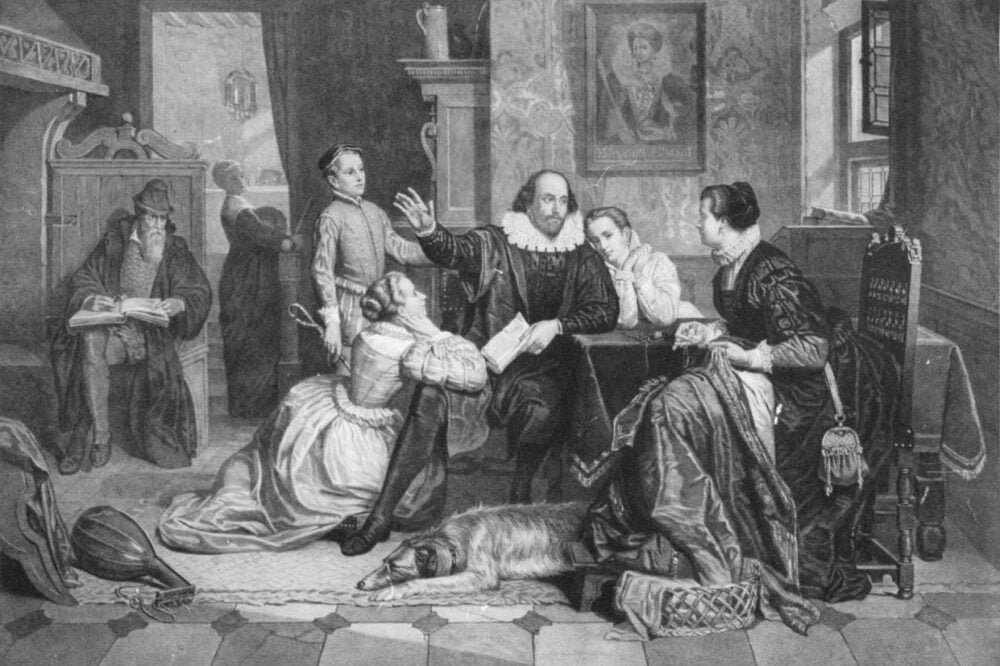
Rather than uncovering a secret about Shakespeare himself, the document now appears to tell a more intimate family story. It reflects how ordinary people navigated belief, fear, and identity during times of political and religious tension.
This shift transforms the artifact from a literary clue into a human one. It centers lived experience rather than fame, offering a fuller picture of life inside the Shakespeare household.
10. What this means for Shakespeare scholarship

The discovery reflects a broader change in how Shakespeare’s world is studied. Scholars increasingly combine traditional archival work with scientific and digital methods to reassess long-held beliefs.
This approach doesn’t diminish Shakespeare’s legacy. Instead, it enriches it by revealing the complex network of people and influences surrounding him.
11. Why the mystery isn’t fully solved

Even with strong evidence, the document’s authorship cannot be proven beyond doubt. Gaps in the historical record mean some questions may never have definitive answers.
Still, the reassessment opens new lines of inquiry and encourages scholars to keep questioning assumptions. Each discovery, even an uncertain one, adds depth to the story of England’s most famous playwright and his family.