
Automakers and regulators are eyeing a future where smart safety tech becomes standard in all vehicles.

Car features like blind spot monitors, emergency braking, and seat belt reminders have become increasingly common—but not all are actually required by law. As regulators respond to data on crash prevention and driver behavior, several of these technologies are being considered for future mandates. Understanding which items might move from optional to obligatory can help drivers stay informed, assess their current vehicle, and anticipate how new regulations might shape their next purchase.
1. Rearview cameras that give a clear view while backing up.

Rearview cameras use a small lens mounted on the back of the vehicle to display the area directly behind it. Most systems activate when the car is shifted into reverse, giving drivers a wide-angle view of obstacles, pedestrians, or curbs behind the bumper.
Although cameras like these are already required on newer models in some countries, regulators continue to study their effectiveness across different driving environments. A crowded supermarket parking lot, with tall SUVs on either side, can hide a sudden darting child—and that’s where camera range and clarity become life-saving factors.
2. Lane departure alerts to help drivers stay safely in their lane.
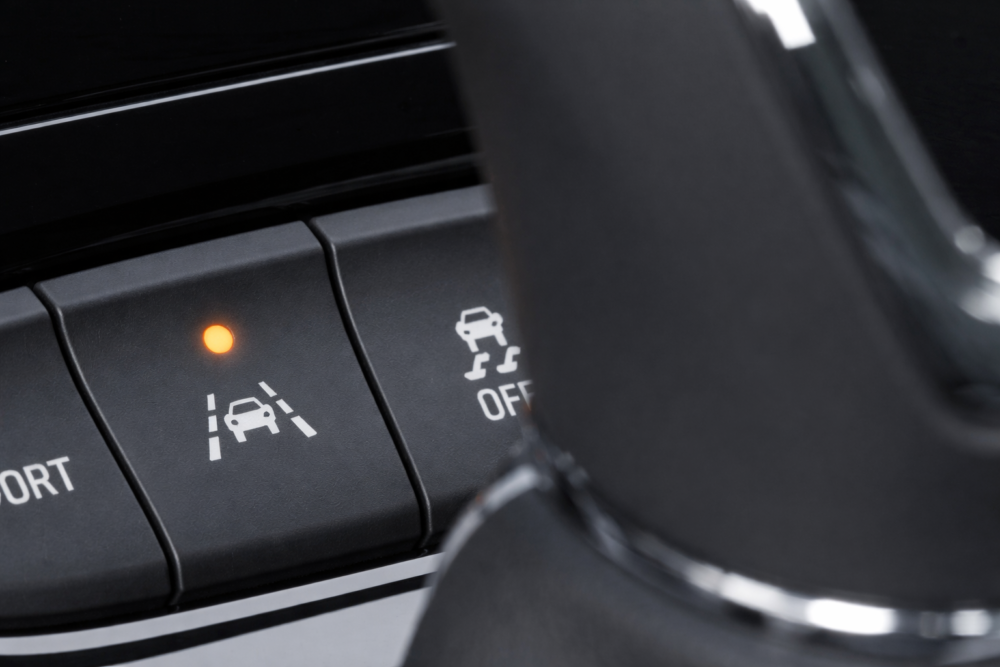
Lane departure alerts rely on cameras to track road markings and detect if the vehicle veers without signaling. By registering this drift, the system warns the driver using a beep, steering wheel vibration, or graphical cue on the dashboard.
In light rain or low light, lane markings can blur into the asphalt, and that’s precisely when the system’s role becomes critical. Some advances even nudge the steering gently to re-center the car, raising the bar from passive alert to active response in the name of safer commutes.
3. Tire pressure sensors that notify you before a flat happens.

Tire pressure monitoring systems use sensors inside each wheel to track air pressure in real time. If a tire begins to deflate—even slightly—the system alerts the driver before it becomes a full-blown flat or blowout on the highway.
A slow leak from a nail picked up at a construction zone might not feel obvious during the morning drive, but the sensor catches it early. Officials investigating crash patterns have flagged underinflated tires as a silent culprit in loss-of-control incidents, pushing for broader mandates on these systems.
4. Blind spot monitors that signal when another car is nearby.

Blind spot monitors use radar to scan zones alongside and behind the vehicle—areas that even large side mirrors often miss. When another car enters this space, a warning appears on the side mirror or dashboard, sometimes accompanied by a sound.
Merging onto a freeway with a delivery van riding just outside your mirror’s edge becomes less of a guess with these sensors. The push for mandatory implementation hinges on how often their presence prevents side collisions rather than simply enhancing driver convenience.
5. Emergency braking systems that activate when a collision is near.

Emergency braking systems react faster than human reflexes when a crash seems imminent. Using radar, cameras, or both, the system gauges distances and closing speeds, then activates the brakes automatically if the driver fails to respond in time.
A delivery truck stopping short around a blind curve gives little room for reaction—but an automated brake pulse can reduce both impact speed and injury risk. As traffic density rises, so too does the regulatory pressure to require this technology across a broader range of models.
6. Seat belt reminders for every seat, not just the front row.
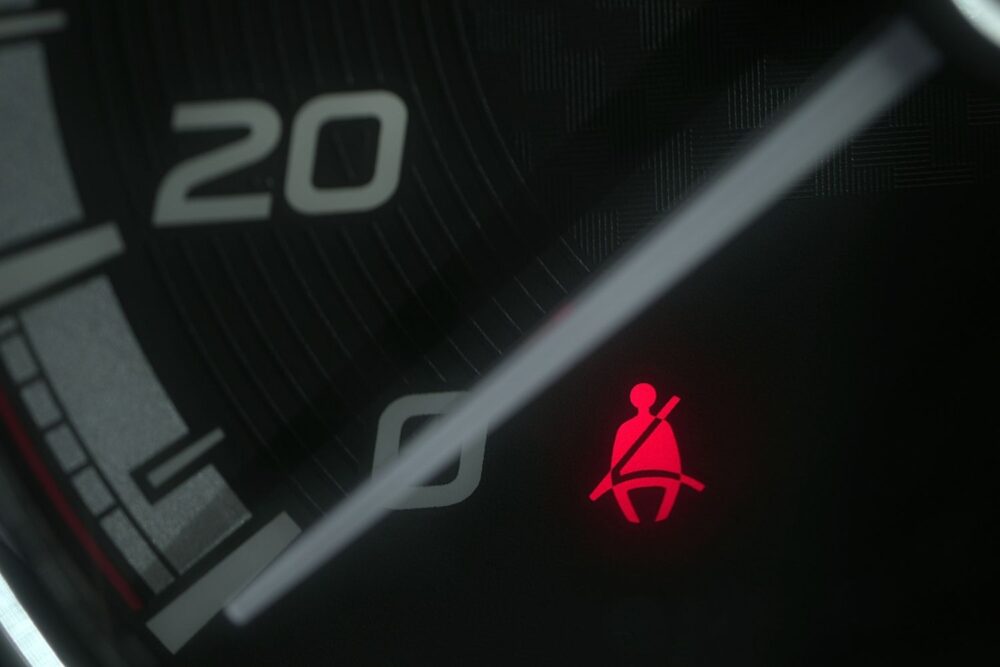
Seat belt reminders already exist in most vehicles, but typically focus only on the driver’s and front passenger’s seats. Expanded systems detect occupancy throughout the cabin and signal with chimes or warning lights until all belts click into place.
A family SUV with a chatty back seat of unbuckled teens would trigger persistent cues until everyone snaps in. As enforcement efforts increasingly turn to passive safety, officials see these full-cabin alerts as a logical nudge toward compliance—even for short neighborhood drives.
7. Hands-free calling systems to reduce distractions on the road.

Hands-free calling systems integrate with phones to allow voice control via dashboard buttons or steering wheel inputs. Some setups use microphones and speakers to create a virtual phone experience without physical handling.
In practice, a parent taking a call en route to soccer pickup may never touch the phone thanks to voice prompts and synced contacts. With distracted driving still a leading cause of crashes, regulators weigh whether standardizing these systems could reduce risk—while balancing concerns over interface complexity.
8. Adaptive cruise control that adjusts speed based on traffic flow.

Adaptive cruise control expands traditional cruise control by using sensors to maintain a safe following distance. If traffic slows, the system reduces speed accordingly; when the road clears, it resumes the preset pace without driver input.
Driving behind a tractor-trailer on a hilly stretch, the system gently taps the brakes on descent or accelerates on a flat—always keeping that buffer. As sensor tech matures and prices drop, transportation agencies evaluate whether simple automation like this could ease congestion and make long drives safer.
9. Built-in navigation tools that update automatically and work offline.
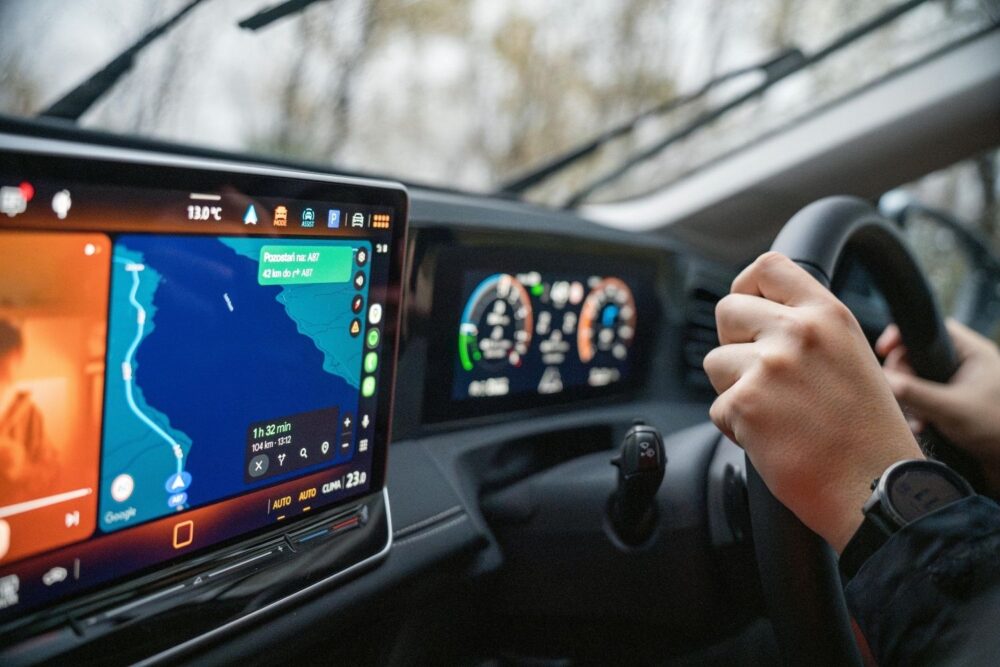
Built-in navigation tools have evolved beyond static maps to include real-time updates and offline capabilities. Unlike phone apps, built-in systems often connect directly with vehicle sensors to optimize routes based on driving habits or fuel levels.
Crossing into an underground garage or rural canyon used to mean signal loss, but updated onboard maps adjust without interruption. Regulators see potential not just for convenience but also for emergency routing during evacuations or disasters, especially in areas where cellular service remains spotty.
10. Alcohol detection systems that prevent driving while impaired.

Alcohol detection systems scan for signs of intoxication—either through embedded breath sensors or steering pattern analysis. If the system detects impairment, it may prevent the engine from starting or trigger an alert for additional verification.
A faint whiff on a breath sensor can halt the ignition before a decision becomes dangerous. Though long associated with conviction-related ignition interlocks, newer passive variants are under review for wider use as concerns grow around preventable, substance-related crashes.
11. Rear seat alerts to protect kids and pets left behind.

Rear seat alerts detect when a back door has opened before a trip and remind the driver at the end to check the rear seats. Some systems chime or flash a dashboard notice; others escalate with honking if no action follows.
A daycare run on a hot afternoon, followed by a routine stop at the pharmacy, could spell tragedy if memory fails. Developers aim to make these alerts standard, not optional, especially as new parents and pet owners call for stronger safeguards.