
NASA’s experimental X-59 jet just made history, paving the way for a new era of faster, quieter air travel.
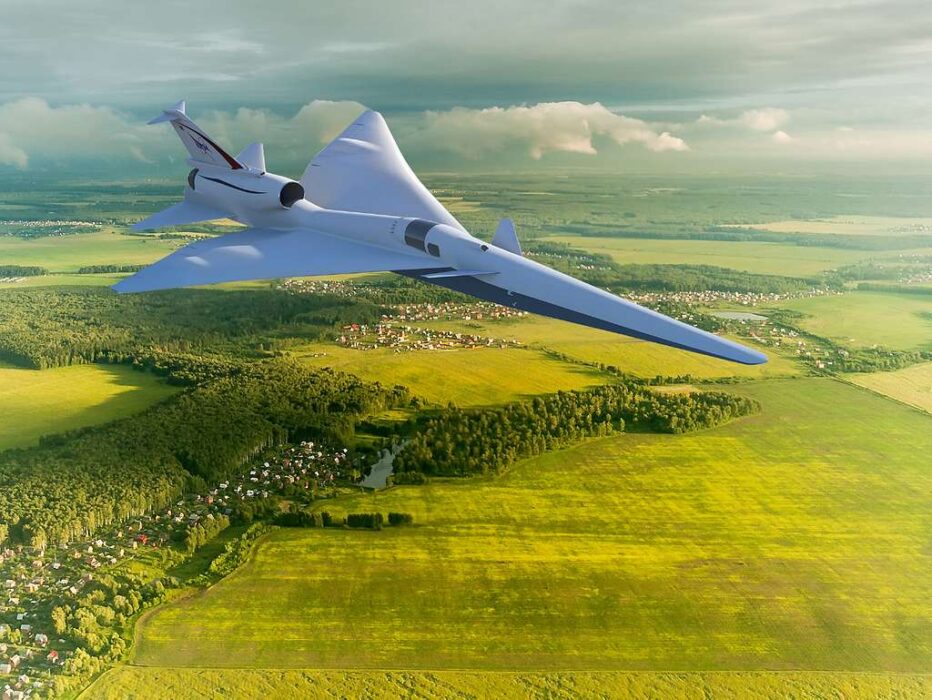
For the first time, NASA’s groundbreaking X-59 supersonic jet has taken to the skies—quietly rewriting aviation history. The sleek, needle-nosed aircraft is designed to travel faster than sound while dramatically reducing the thunderous “boom” that once made supersonic flight impractical over land. Engineers say this first flight marks a turning point for commercial aviation, one that could make cross-country or transatlantic travel twice as fast as today’s airliners—and nearly as quiet as a typical passenger jet.
1. NASA’s X-59 Is Designed to Fly Faster Than Sound—Quietly
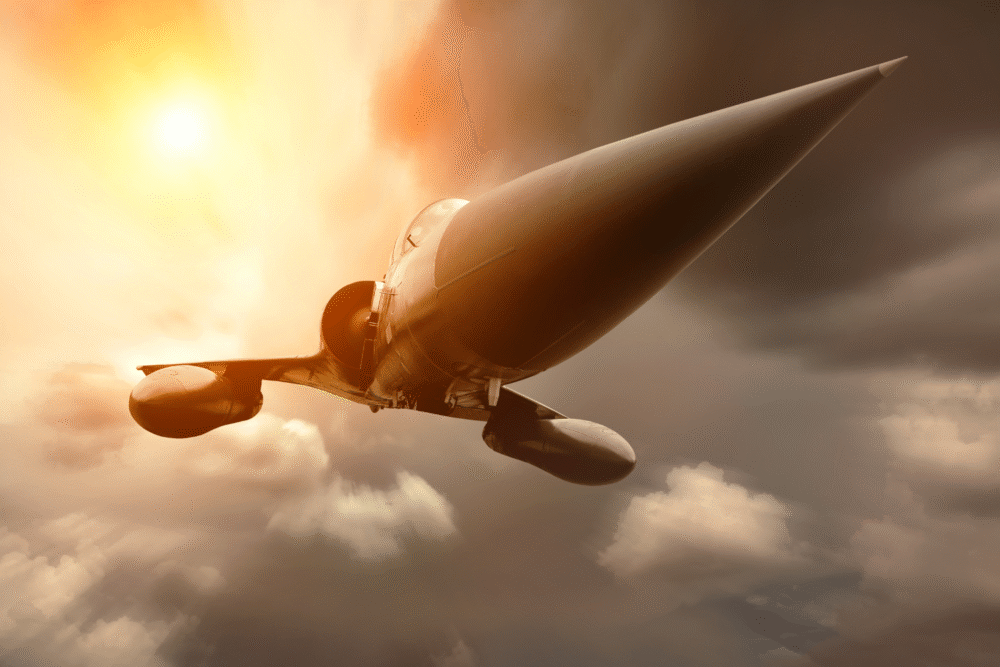
The X-59 QueSST (Quiet SuperSonic Technology) is NASA’s experimental jet built to demonstrate that breaking the sound barrier doesn’t have to come with a deafening boom. At nearly 100 feet long with a sharply pointed nose, the aircraft is engineered to reshape shockwaves so they reach the ground as a soft “thump” rather than a window-rattling explosion.
If successful, the design could pave the way for a new generation of supersonic passenger planes capable of flying over land without violating noise restrictions.
2. The Jet Just Completed Its Historic First Flight
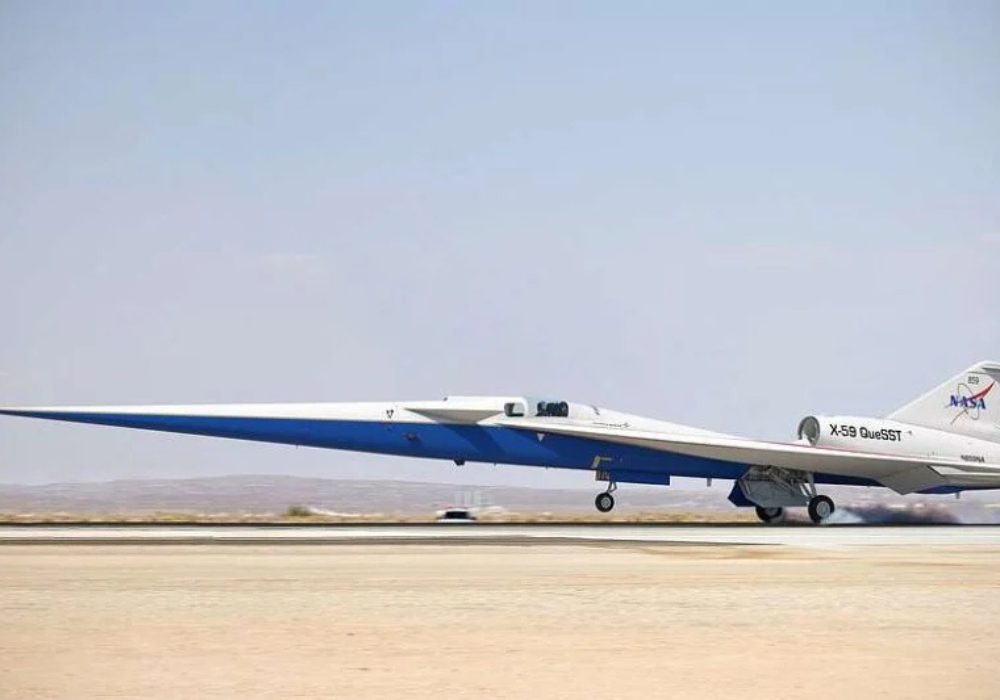
In early 2025, the X-59 completed its maiden flight from Edwards Air Force Base in California, marking a major milestone for NASA’s aeronautics program. The test lasted less than an hour but confirmed that the aircraft performed exactly as designed.
Pilots and engineers evaluated its handling, stability, and communication systems, laying the groundwork for future tests that will push the plane toward supersonic speeds. It was a cautious but critical first step toward proving the concept of “quiet supersonic” flight.
3. Built by NASA and Lockheed Martin Skunk Works

The X-59 was developed through a collaboration between NASA and Lockheed Martin’s Skunk Works division—the same legendary team behind aircraft like the U-2 and SR-71 Blackbird. Construction began in 2018 after years of aerodynamic modeling and acoustic testing.
Every curve and contour of the jet was shaped to control shockwaves. The long nose reduces pressure changes, while the engine placement on top of the fuselage helps deflect noise upward, away from the ground. The aircraft represents the most advanced aerodynamics Lockheed has ever produced.
4. Why Supersonic Flight Was Once Banned Over Land

When the Concorde and other early supersonic jets flew in the 1970s, they created powerful sonic booms that startled communities and damaged property. Public complaints led the U.S. Federal Aviation Administration (FAA) to ban commercial supersonic flights over land in 1973—a restriction that still stands today.
NASA’s X-59 aims to change that by proving that a sonic boom can be softened into a “sonic thump.” If the technology works, regulators could finally reconsider the decades-old ban, reopening the skies to faster passenger travel.
5. How It Silences the Sonic Boom
Instead of letting shockwaves merge into a single explosive boom, the X-59’s body spreads them out over time. Its long, narrow fuselage and precisely shaped nose cone disperse pressure waves, turning what would be a sharp crack into a dull thud.
NASA calls this effect “low-boom technology.” It’s not silent, but it’s roughly one-tenth as loud as a traditional sonic boom—about 75 decibels from the ground, similar to a car door closing rather than a thunderclap. That difference could make supersonic flight acceptable for populated areas.
6. Pilots Can’t See Directly Ahead

Because of its extended nose, the X-59’s cockpit has no traditional front-facing window. Instead, pilots use NASA’s eXternal Vision System (XVS)—a combination of forward-facing cameras and sensors that project a real-time image onto a large display screen inside the cockpit.
This innovation allows for a more aerodynamic shape without compromising safety. It’s one of the first fully functional digital vision systems in a test aircraft and could become standard in future supersonic or commercial planes with unconventional designs.
7. The X-59 Could Reach Speeds of Mach 1.4
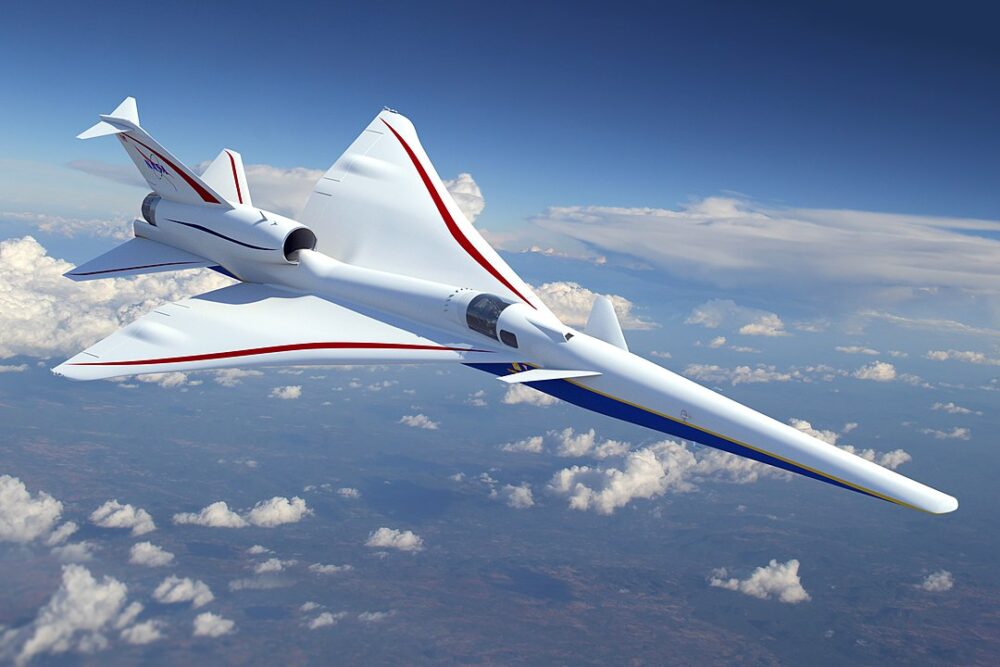
When testing reaches full speed, the X-59 is expected to cruise at about 925 miles per hour—roughly Mach 1.4, or 1.4 times the speed of sound. That’s more than twice as fast as today’s commercial jets, which typically cruise around 550 mph.
Although the X-59 won’t carry passengers, its speed and noise data will guide the design of next-generation aircraft. If commercial models adopt the same quiet technology, travelers could one day cross the United States in about two hours.
8. Testing Will Soon Involve Real Communities

NASA’s next phase, called the Quesst Mission, will send the X-59 to fly over several U.S. cities to measure public reactions to the softened sonic “thumps.” Communities will include both urban and rural test areas with sound sensors and public surveys to collect feedback.
The data will help the FAA and international regulators decide whether to update noise standards. If residents report that the sound is acceptable, it could be the green light for the return of overland supersonic passenger travel.
9. A Step Toward the Future of Fast, Sustainable Air Travel
NASA’s goal isn’t just speed—it’s smarter, cleaner aviation. The X-59’s technology could make future supersonic aircraft more fuel-efficient and climate-conscious. By refining aerodynamics and engine performance, researchers hope to reduce both noise and emissions.
Commercial partners are already exploring follow-up concepts for supersonic business jets and airliners that could be operational by the 2030s. The X-59’s success could spark a new generation of quieter, faster, and more environmentally responsible air travel.
10. The Beginning of a New Supersonic Era

The X-59’s first flight represents more than an engineering milestone—it’s the rebirth of supersonic dreams. After decades of restrictions and setbacks, NASA’s quiet-jet technology could redefine what’s possible in commercial aviation.
While the journey to passenger service is still years away, the concept of crossing oceans or continents in half the time is no longer science fiction. The silent thunder of the X-59 may soon mark the beginning of a new, faster, and quieter era in human flight.