
NASA’s flyby showed Pluto is far more complex and dynamic than anyone predicted.
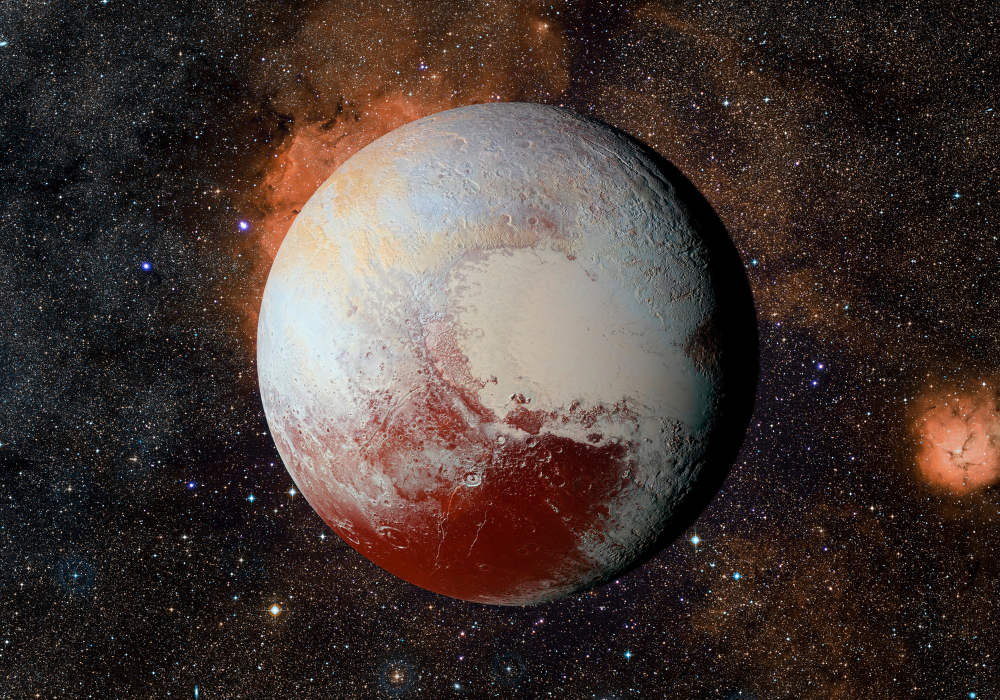
When NASA’s New Horizons spacecraft flew past Pluto in 2015, it gave humanity its first-ever close-up view of the mysterious dwarf planet. What scientists found defied expectations. Instead of a frozen, lifeless rock, Pluto revealed a dynamic, geologically active world covered in ice mountains, nitrogen plains, and blue skies. The data transformed Pluto from a distant point of light into a complex world with its own weather, chemistry, and hidden activity beneath the surface.
1. The Mission Took Nearly a Decade to Reach Pluto

NASA’s New Horizons launched in January 2006 and traveled more than 3 billion miles before its flyby in July 2015. It was the fastest spacecraft ever launched at the time, speeding past Pluto at over 30,000 miles per hour.
Because Pluto is so far away, New Horizons had only one chance to capture its images and data. The mission’s precise timing and years of planning paid off—returning more than 50 gigabits of data over several months.
2. Pluto Has a Vast, Heart-Shaped Glacier
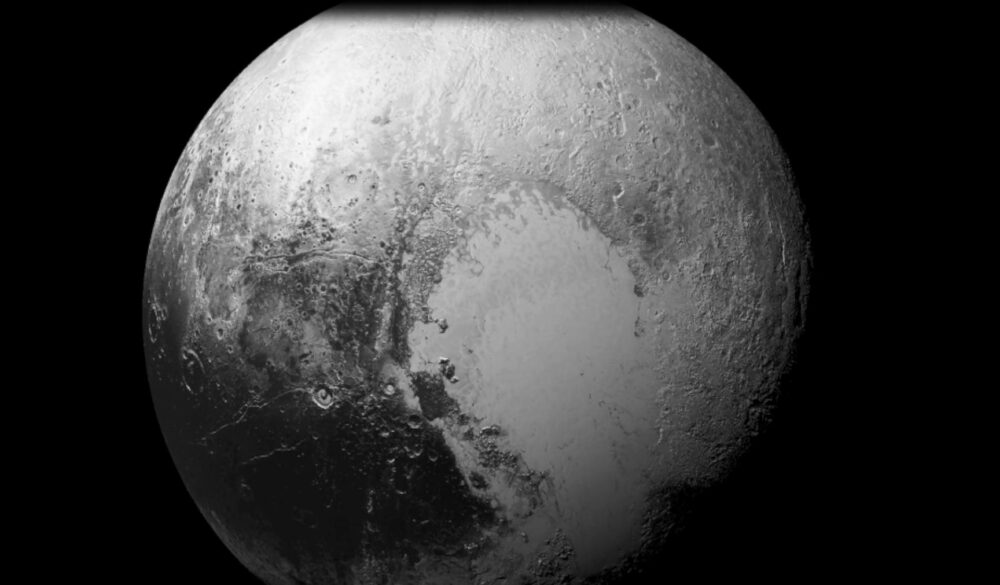
One of the first images sent back revealed a bright, heart-shaped region called Tombaugh Regio, named after Pluto’s discoverer, Clyde Tombaugh. The left half of the “heart,” known as Sputnik Planitia, is a massive nitrogen-ice glacier.
This plain shows no impact craters, meaning it’s geologically young—perhaps less than 10 million years old. The lack of craters shocked scientists, proving that Pluto is still reshaping its surface through internal activity long after it should have gone cold.
3. Mountains of Ice Tower Above the Plains

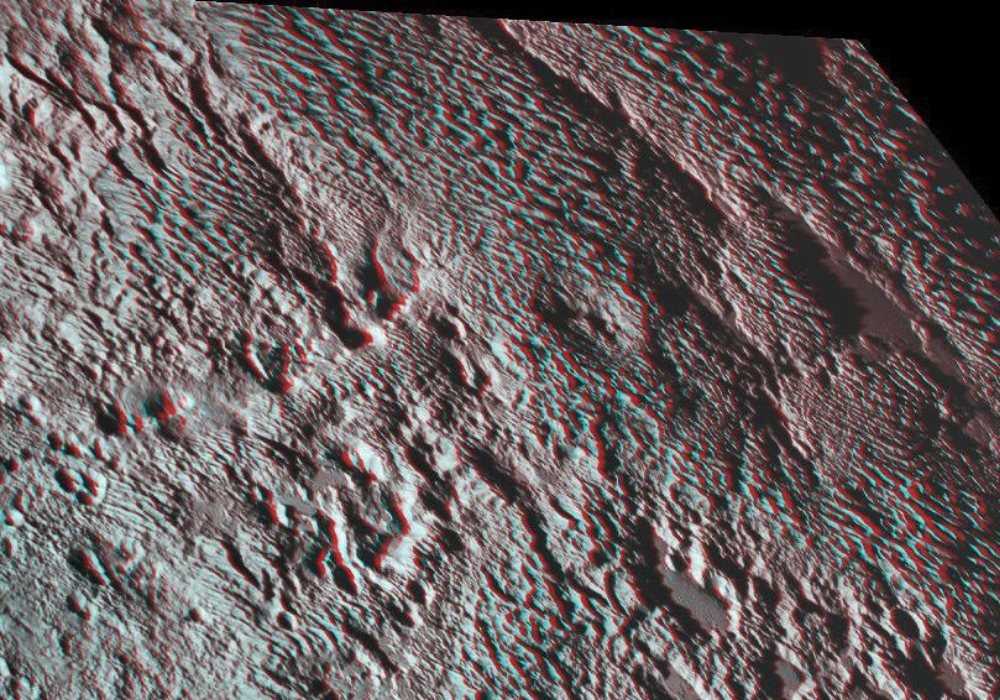
The flyby revealed mountain ranges rising as high as the Rocky Mountains, but made entirely of water ice. These peaks, some reaching 11,000 feet tall, stand on Pluto’s frozen crust like jagged sentinels.
Because water ice is strong at Pluto’s frigid temperatures, these mountains can support immense weight. Their sharp shapes suggest they are relatively young, further evidence that Pluto’s surface is active rather than static.
4. Pluto’s Surface Is Surprisingly Diverse

From nitrogen glaciers to dark methane-rich regions, Pluto’s surface is a patchwork of colors and textures. New Horizons detected plains, pits, ridges, and streaks that hint at complex geological and atmospheric processes.
This diversity surprised scientists, who had expected a uniform, cratered landscape. The presence of both young and ancient terrain shows that Pluto’s surface has been reshaped over time by internal and external forces.
5. It Has a Thin but Active Atmosphere
Before the flyby, scientists knew Pluto had a faint atmosphere, but New Horizons revealed it in detail. Composed mostly of nitrogen with traces of methane, the atmosphere extends hundreds of miles above the surface.
The spacecraft captured sunlight scattering through these gases, creating blue atmospheric hazes—similar in appearance to Earth’s sky, though formed by very different processes. As Pluto’s orbit moves farther from the Sun, this fragile atmosphere is gradually freezing and falling back to the surface.
6. There May Be a Hidden Ocean Beneath the Ice
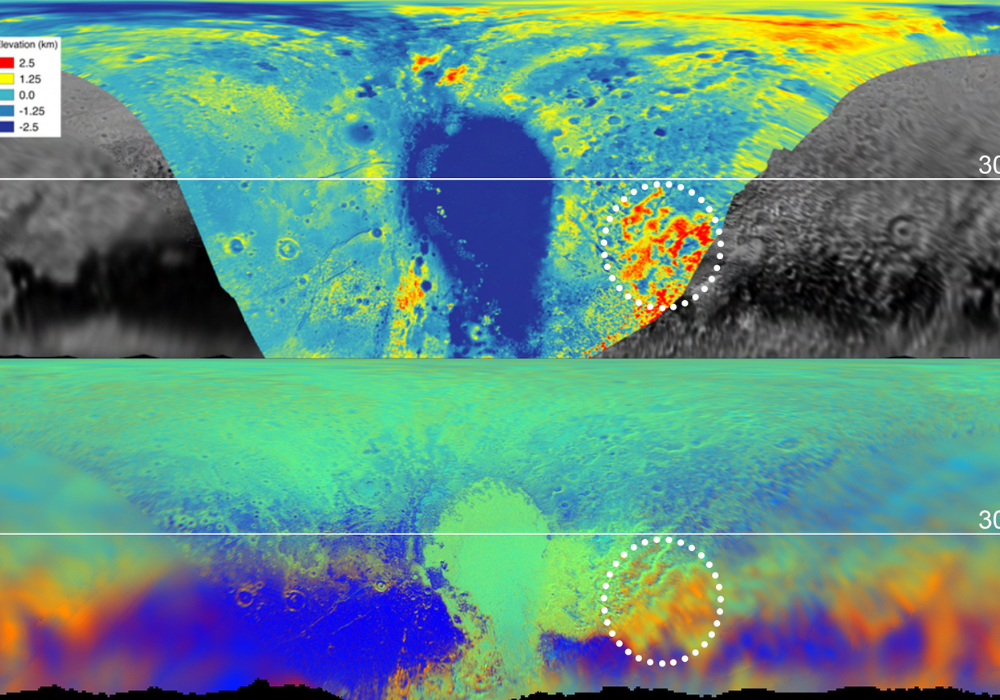
Gravity data from New Horizons suggest that Pluto’s icy shell sits above a denser interior—possibly a liquid water ocean trapped beneath layers of frozen nitrogen and methane.
This underground ocean, if confirmed, could have persisted for billions of years thanks to heat from radioactive decay inside Pluto’s core. The idea that such a distant, small world could still host liquid water challenges assumptions about where habitable conditions might exist in the solar system.
7. Pluto’s “Sky” Is Blue and Hazy

Images captured during the flyby’s departure showed Pluto backlit by the Sun, revealing a delicate blue halo around the planet. The haze layers are made of tiny hydrocarbon particles called tholins, which scatter sunlight in blue wavelengths.
These hazes fall slowly onto the surface, tinting Pluto’s plains and mountains in shades of red and brown. The discovery of a blue sky around such a distant world remains one of the mission’s most iconic and unexpected images.
8. Frozen Gases Flow Like Glaciers
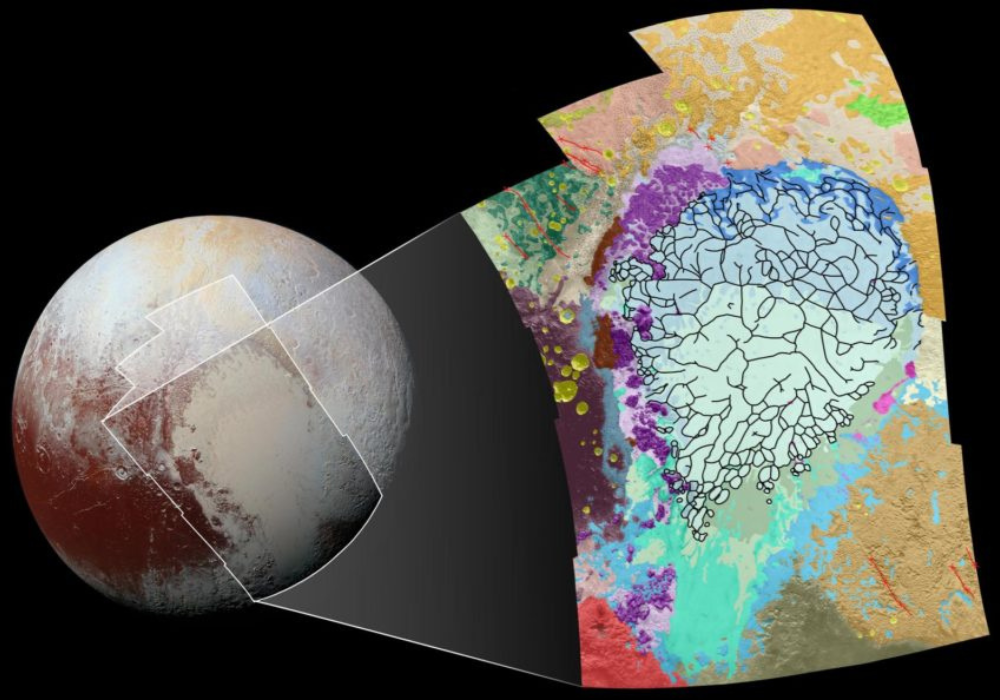
Despite its extreme cold—temperatures near –390°F (–235°C)—Pluto’s nitrogen and methane ices behave like glaciers on Earth. They slowly flow across the surface, carving channels and filling craters over time.
High-resolution images show smooth plains where these ices have pooled, as well as polygonal patterns suggesting convection beneath the surface. These features indicate active cycles of freezing, melting, and movement occurring even now on Pluto’s surface.
9. Pluto Has Weather and a Changing Climate

New Horizons detected signs of changing frost patterns and haze densities, suggesting Pluto experiences slow, long-term climate variations. As it moves along its elongated 248-year orbit, sunlight intensity changes dramatically.
During closer approaches to the Sun, surface ices sublimate—turning into gas—and later refreeze as Pluto drifts outward. This seasonal cycle means Pluto’s appearance and atmosphere evolve over decades, making it one of the most dynamic worlds in the outer solar system.
10. Pluto’s Moons Tell a Violent Origin Story
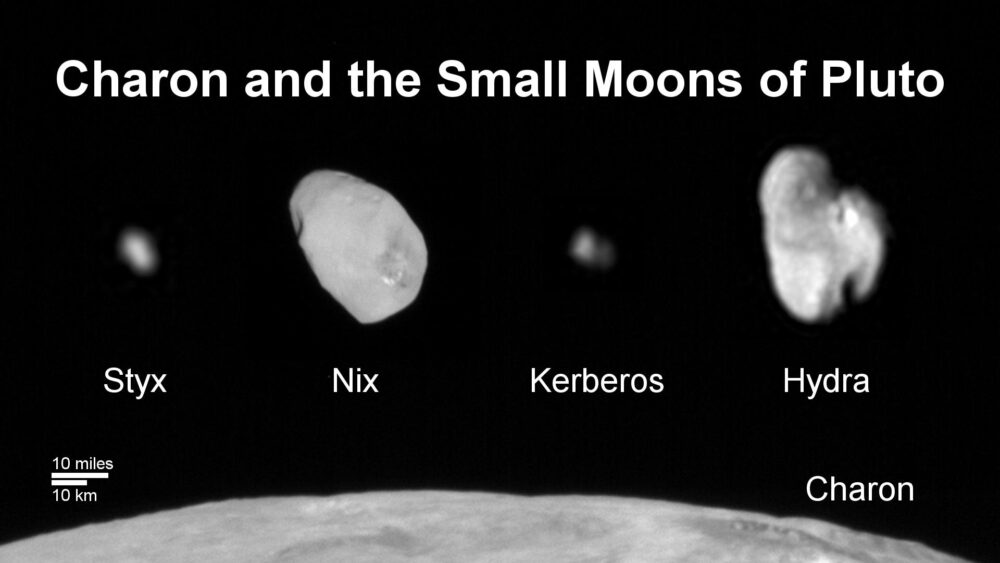
The mission also studied Pluto’s five moons, especially Charon, its largest companion. Charon’s fractured surface and massive canyon systems suggest it once had its own internal ocean that later froze and expanded, cracking the crust.
Scientists think Pluto and Charon formed from a giant collision between two early solar system bodies. The debris from that impact created the entire Pluto system—a miniature version of the Earth–Moon story playing out at the solar system’s edge.