
A decades-old museum mystery is finally solved by modern analysis.

For 70 years, two fossil “mammoth” bones sat quietly in an Alaska museum, tagged from a 1951 expedition near Fairbanks and treated as a rare clue to the last woolly mammoths in North America.
Then scientists took a closer look, and the story flipped. Isotope chemistry hinted at a marine diet, not a land grazer, so researchers dug into the records and ran ancient DNA testing.
The result was stranger than anyone expected: the fossils belonged to two different whales. Now the headline isn’t “young mammoth” at all, but a new mystery about how whale bones ended up deep in Alaska’s interior, miles from the coast.
1. A 1951 expedition started the confusion
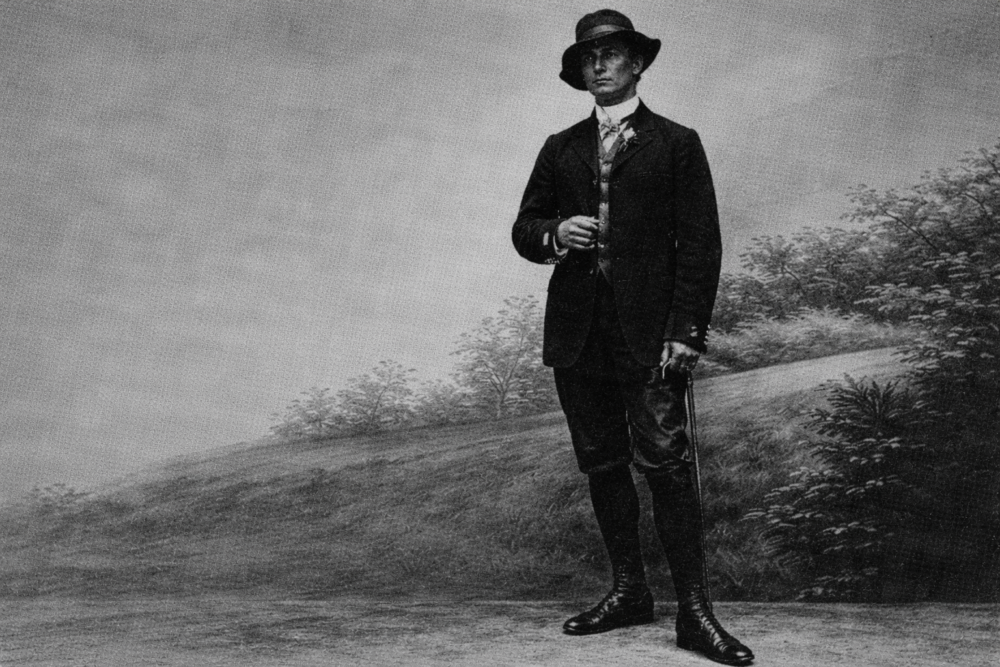
The bones were collected in 1951 by archaeologist Otto Geist and eventually stored at the University of Alaska Museum of the North. They were two round, spongy-looking plates from the ends of vertebrae, and they resembled mammoth spine pieces closely enough to be cataloged that way.
Because they were found in Alaska’s interior, the assumption felt reasonable for decades. No one thought to challenge the label until a recent effort to date and re-check museum mammoth specimens pulled these forgotten pieces back into the spotlight.
2. The “young mammoth” dates raised eyebrows fast
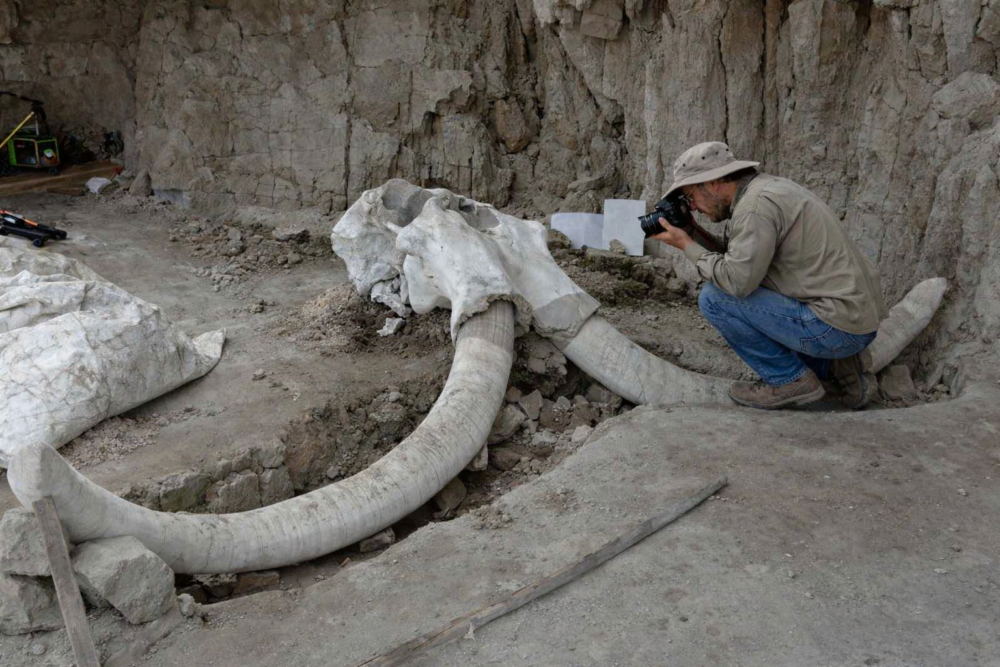
The mystery started when researchers ran radiocarbon dating and got surprisingly young ages, roughly 1,900 to 2,700 years old. If the bones really were mammoth, they might have been among the youngest mammoth remains ever reported in North America, which raised eyebrows fast.
Young dates can happen for many reasons, so the team did what good scientists do: they looked for a second line of evidence and double-checked the biology. That next step is what cracked the case wide open and changed the headline completely.
3. Isotopes hinted these bones came from the ocean
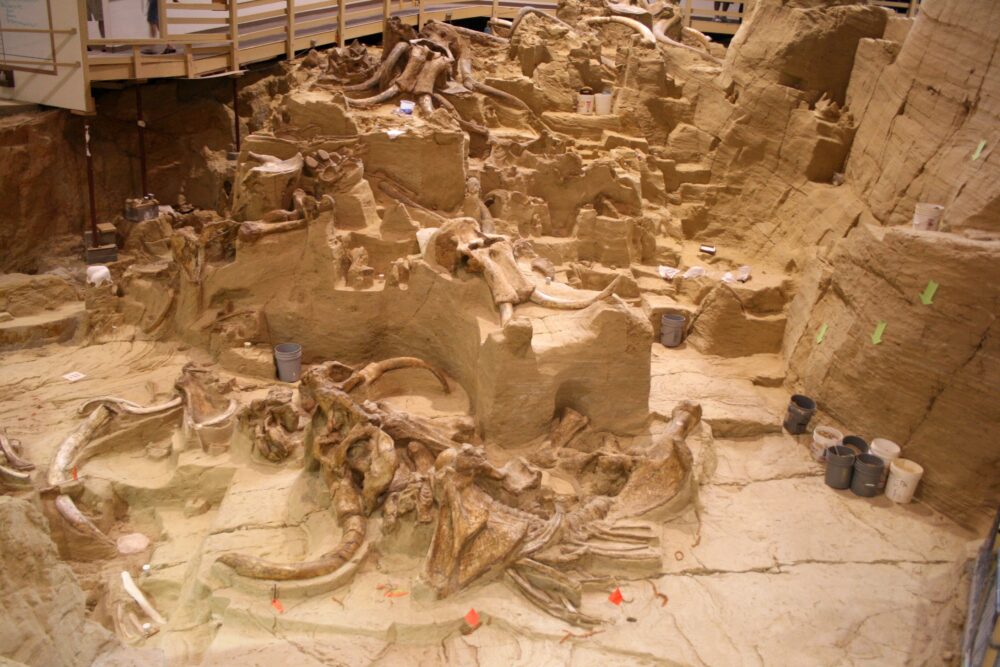
Stable isotope tests were the big clue. The carbon and nitrogen signatures in the bone didn’t match a grass-eating land mammal. Instead, they looked like the chemistry of an animal that fed in the ocean, where food webs leave a different isotopic fingerprint.
That result didn’t prove “whale” by itself, but it made “mammoth” hard to defend. Once you see a marine signal in a supposed tundra giant, the only honest move is to re-identify the specimen with stronger tools.
4. Ancient DNA delivered the real identity

Ancient DNA provided the strongest tool of all. When genetic material was recovered and analyzed, the verdict was clear: these were whale bones, not mammoth bones. Even better, they weren’t from the same whale.
Researchers identified one specimen as a minke whale and the other as a North Pacific right whale. Two species, two individuals, and both marine. Suddenly the story shifted from “last mammoths” to a new puzzle about provenance, mixing, and how these bones entered the collection in the first place.
5. Why the bones looked “mammoth” at a glance
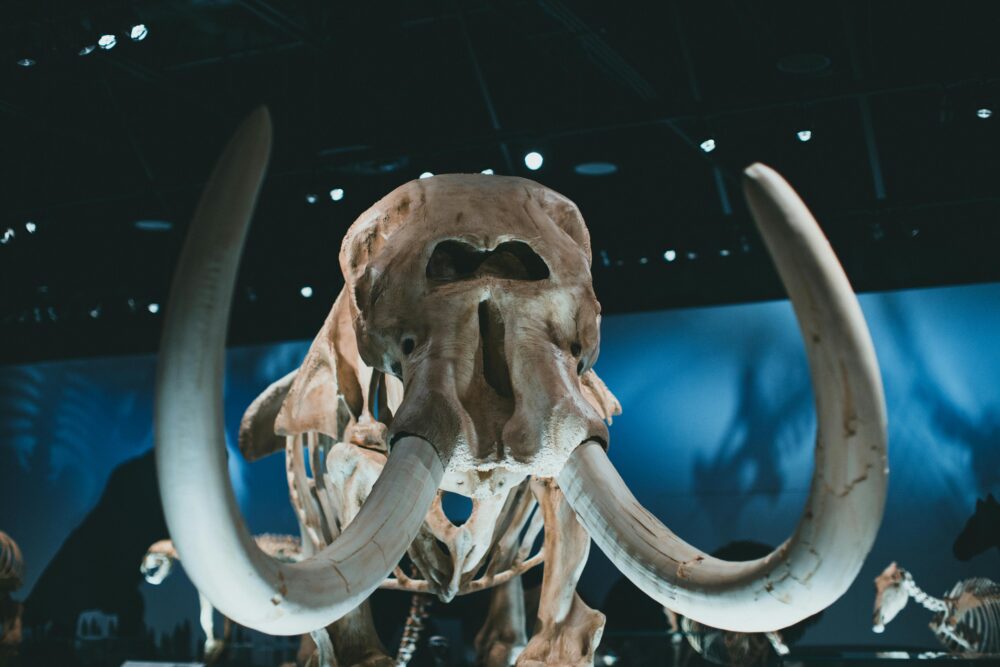
Part of the confusion is anatomical. Mammoths and whales both have vertebrae with broad, disk-like end plates that can look similar when isolated, especially after decades in storage. Without an attached skull, ribs, or limb bones, these pieces can be deceptively hard to place.
Back in the mid-1900s, scientists did not have routine DNA testing or isotope screening. Identification relied heavily on shape, context, and best guesses, which works often, but occasionally produces a fossil mix-up that lasts for generations.
6. A modern re-check finally put the label to the test

The breakthrough came when researchers decided to reexamine older museum specimens using tools that did not exist decades ago.
Radiocarbon dating, isotope analysis, and ancient DNA testing allowed scientists to move beyond surface appearance and test what the bones actually were at a molecular level. This review was part of a broader effort to better understand Alaska’s fossil record, not to discredit earlier researchers.
Instead, it showed how museums act as long-term evidence banks, preserving material until new technologies make deeper questions possible and long-standing assumptions testable.
7. The inland location is now the biggest mystery
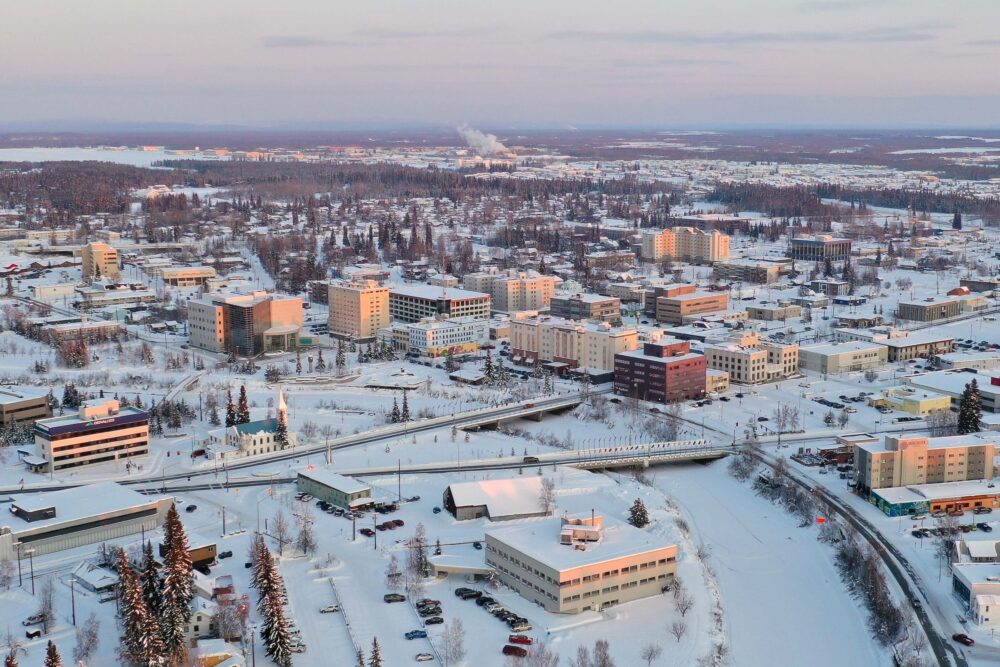
Now comes the question everyone asks first: how do whale bones end up near Fairbanks, hundreds of miles from the coast? One possibility is transport by people. Ancient communities sometimes moved large bones, and historic-era collecting could also scramble provenience.
Another idea is that the bones’ recorded location might be wrong. Otto Geist collected widely across Alaska, including coastal areas, and a cataloging slip could have reassigned a whale specimen to an interior site. The team is still weighing those scenarios.
8. Could rivers or ice have moved bones that far?
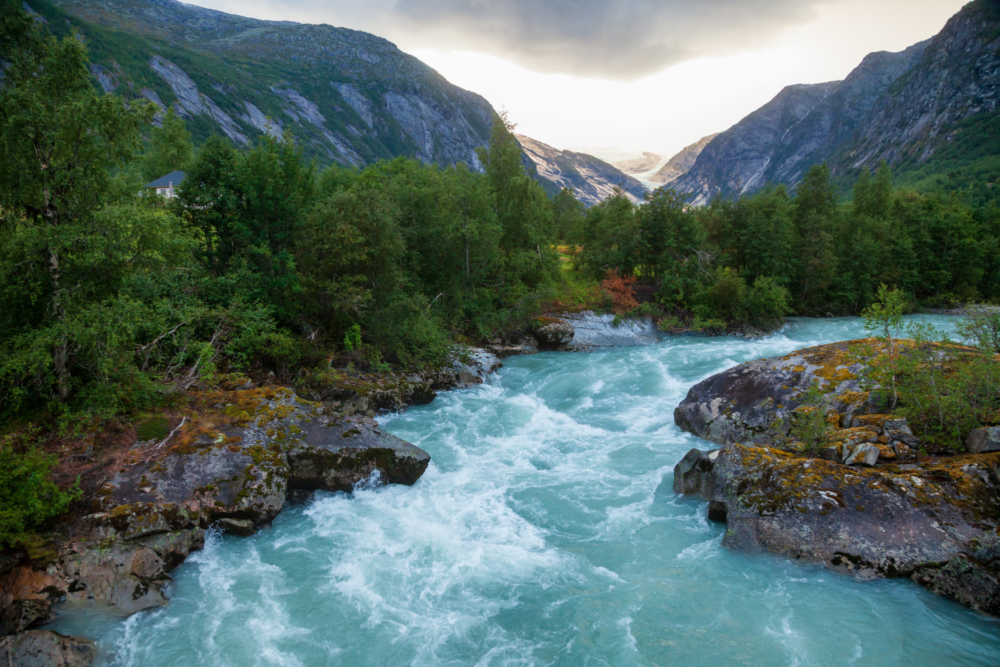
There is also a natural pathway that sounds wild but is not impossible: rivers. Large carcass parts can travel downstream, and over long time spans, flooding, ice movement, and erosion can relocate bones far from their original shoreline.
Still, right whales and minke whales are marine animals, so any natural transport theory has to explain a long journey inland. That’s why researchers treat the “how it got there” question as open, not solved. For now, the team is focusing on evidence they can actually test.
9. The “last mammoths” claim quietly disappears
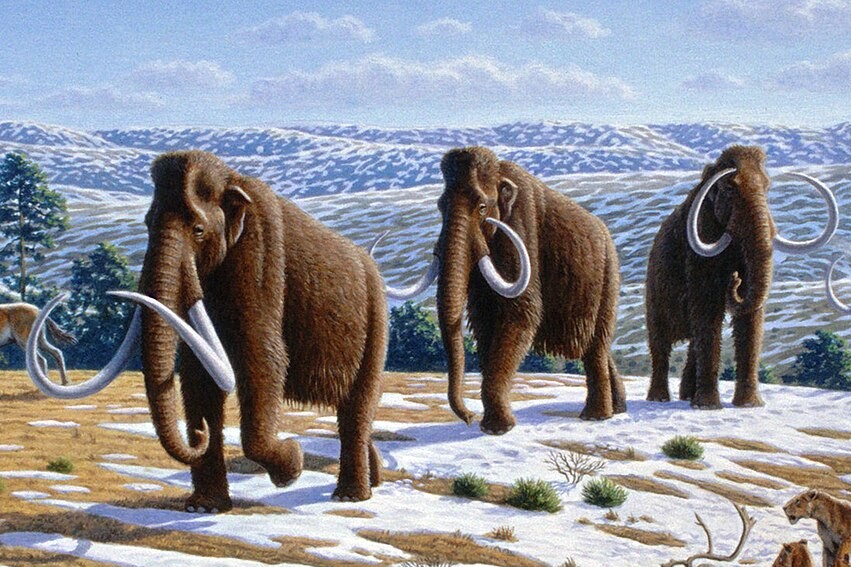
The discovery also matters for what it does to the mammoth timeline. Those young radiocarbon dates looked like a dramatic extension of mammoth survival. Once the bones became whales, that apparent late-surviving mammoth signal vanished.
That doesn’t change the broader story that mammoths persisted later in some regions than others, but it does remove one flashy data point. It is a reminder that extraordinary claims need extraordinary verification, especially when they rest on a couple of isolated bones and old paperwork.
10. Museums aren’t storage rooms, they’re evidence vaults
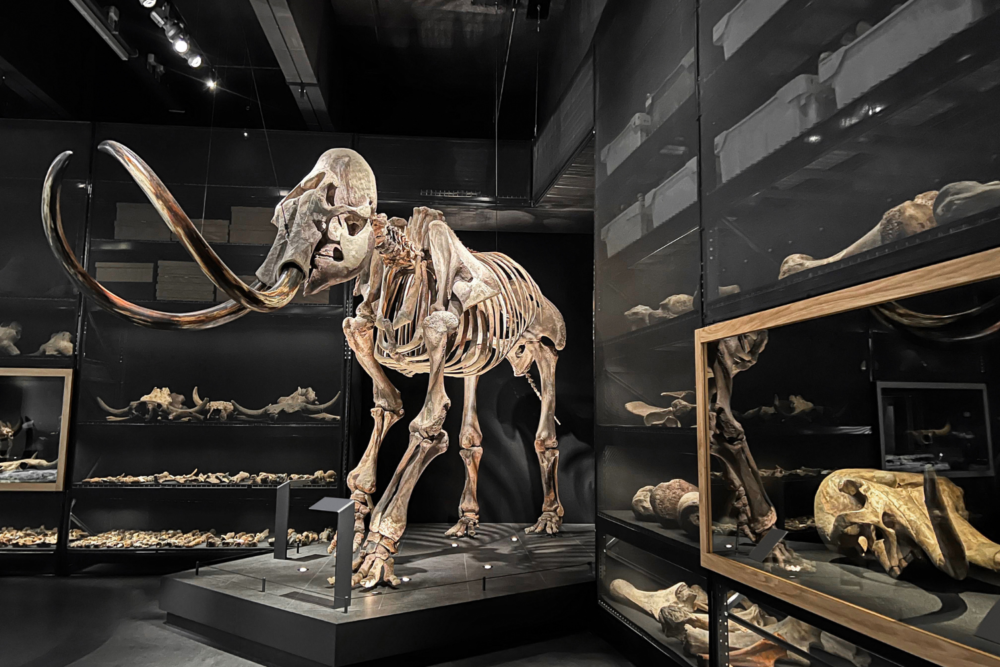
This is the best kind of scientific twist: it corrects the record and creates a better question. It also shows why museum collections are not dusty warehouses. They are libraries of physical evidence, and even small mislabels can be fixed when new tools appear.
Researchers increasingly re-test old finds with DNA, isotopes, and refined dating because older identifications were made with fewer options. Each correction helps future studies avoid building big theories on a small mistake. And it keeps science honest in a very practical way.
11. The next step is tracing the bones’ true backstory

Next, scientists want to narrow down the bones’ true origin story. That means rechecking field notes, box labels, and collection histories, and comparing these specimens to known whale material from Alaska’s coasts.
They also want to keep dating and verifying other “mammoth” specimens, because the goal remains the same: map when and where mammoths truly survived. The whale surprise does not end that search. It just proves the search has to be careful, methodical, and humble, every step of the way.