
Scientists are watching closely—because even a lunar impact could have surprising ripple effects on Earth.
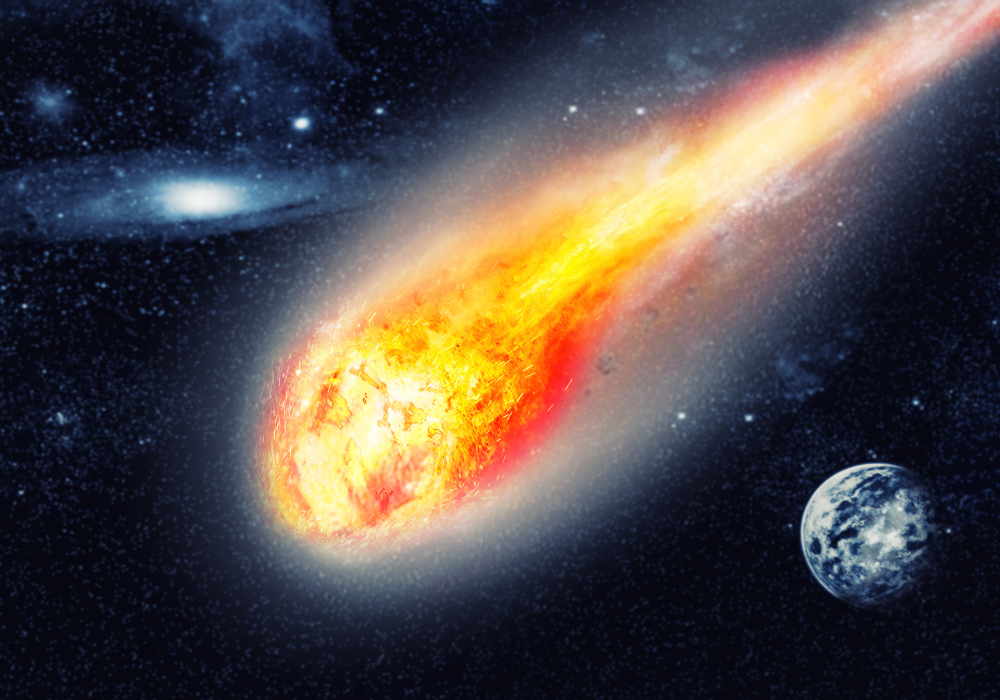
Scientists are keeping a close eye on asteroid 2024 YR4, a building-sized space rock that was once considered a potential threat to Earth. New data suggests the asteroid won’t strike our planet—but it might slam into the Moon.
Based on updated observations from the James Webb Space Telescope, there’s now a 4.3 percent chance the asteroid could hit the lunar surface on December 22, 2032. If it does, the impact would be powerful enough to leave a crater nearly a kilometer wide and eject millions of kilograms of debris into space.
While Earth isn’t in danger, the event could be dramatic—possibly even visible from our planet. More importantly, it could test our readiness for similar threats and reveal how fragile the boundary between cosmic coincidence and catastrophe really is.
1. NASA now gives asteroid 2024 YR4 about a 4.3% chance of hitting the Moon
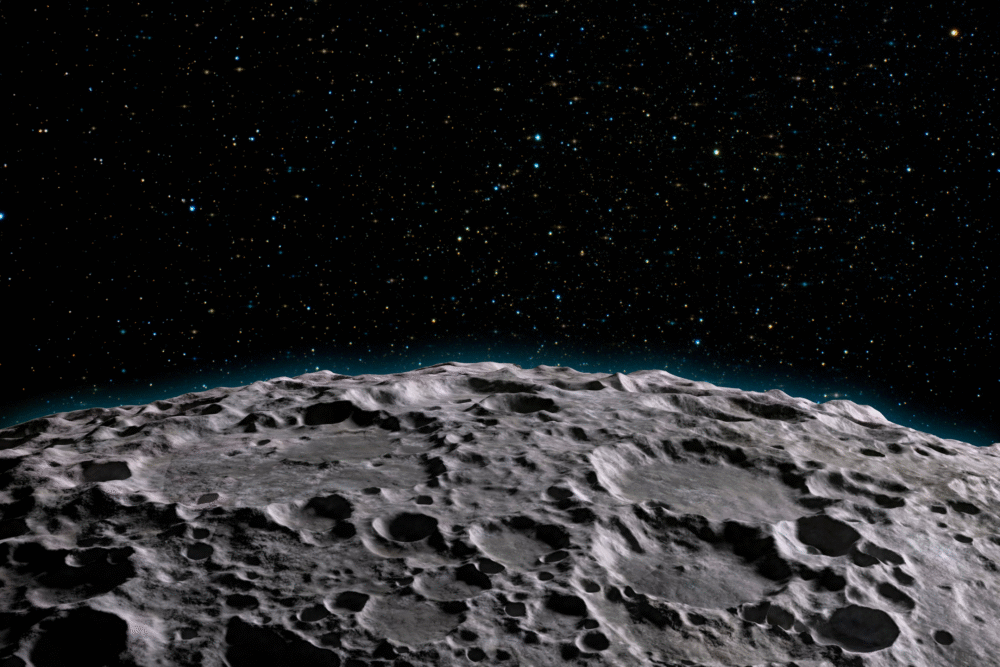
Recent calculations show the odds of asteroid 2024 YR4 hitting the Moon are higher than previously thought. Earlier estimates pegged the chance at around 1.7 percent, but new data has raised that to 4.3 percent.
That’s still relatively low, but not insignificant in astronomical terms. It means scientists are taking the possibility seriously, especially since it involves a direct hit on our only natural satellite. The trajectory update comes thanks to more precise tracking using space-based instruments.
Future observations, particularly when the asteroid becomes visible again in 2028, will help refine these predictions further. Until then, space agencies are watching closely to prepare for both the scientific opportunity and potential implications of a lunar impact.
2. If 2024 YR4 hits the Moon, it could release energy equivalent to millions of tons of TNT

The asteroid is estimated to be between 53 and 67 meters wide, making it large enough to pack a powerful punch. If it slams into the Moon, scientists estimate the explosion would release energy equal to 5 or 6 megatons of TNT.
That’s hundreds of times stronger than the atomic bomb dropped on Hiroshima. The force of impact could vaporize rock, send seismic waves across the lunar crust, and blast a crater up to a kilometer wide.
The energy would also launch massive amounts of debris into the Moon’s thin exosphere and possibly beyond. The brightness and violence of the collision would likely be observable from Earth, and researchers would get a rare chance to study a real-time planetary-scale impact.
3. The impact flash could be visible from Earth—possibly even during daytime

A lunar impact of this magnitude wouldn’t just be a scientific event—it could become a visual spectacle. If the asteroid strikes the side of the Moon facing Earth, the resulting flash could be bright enough to see without a telescope.
Some astronomers believe it might even be visible during the day, appearing as a sudden, brilliant burst of light followed by a dark plume rising from the surface.
Observatories and amateur astronomers would be able to track it in real time, and skywatchers across the globe could witness a one-of-a-kind celestial event. It would also spark massive interest in planetary defense and public fascination with space.
4. Satellite operators face potential risk from lunar ejecta

If the asteroid hits, the explosion could hurl as much as 100 million kilograms of rock and dust into space. While most of this debris would fall back to the lunar surface, a fraction could escape the Moon’s gravity and drift toward Earth.
Though the particles would be relatively small, they could pose a hazard to satellites in orbit. Operators of communication, navigation, and research satellites would need to prepare for potential collisions.
The event might also increase the amount of space dust in low Earth orbit for a time, raising concerns about equipment safety and tracking. Planning for this type of risk could help future missions become more resilient.
5. Lunar orbit and Earth won’t be affected by a Moon strike

Despite the asteroid’s size and the dramatic energy release it would cause, scientists say the Moon’s orbit won’t budge. The Moon is massive—more than 80 billion billion tons—so a collision with a 60-meter asteroid is like throwing a pebble at a mountain.
Earth’s orbit, gravity, tides, and other dynamics will remain completely unaffected. The only real change will be a new scar on the Moon’s surface and some extra dust in space.
Still, it’s a powerful reminder of the scale and durability of celestial bodies—and the need to understand their vulnerability to impacts, even if only on the surface.
6. The asteroid size makes it a “city-killer” if it hit Earth—but Earth is now safe

An object the size of 2024 YR4 could destroy a city if it collided with Earth. It’s in the same range as the asteroid that caused the Tunguska event in 1908, which flattened over 800 square miles of forest in Siberia.
For weeks, this asteroid was ranked among NASA’s top concerns. However, updated trajectory data has ruled out an Earth impact, relieving fears of a disaster. Now, attention has shifted entirely to the Moon.
Even though we’re in the clear, the scenario shows how fast an asteroid’s threat level can change—and how crucial accurate tracking is to preventing panic or being caught off guard.
7. This rare event offers scientists a live experiment in lunar impact science

If the asteroid hits the Moon, it would mark the first time in modern history we’ve been able to predict and observe a large lunar impact in real time. This provides a golden opportunity for scientists to gather data on crater formation, debris ejection, and lunar geology.
Satellites orbiting the Moon, like NASA’s Lunar Reconnaissance Orbiter, could photograph the site before and after the collision. Ground-based and space telescopes would watch the impact unfold.
The event could help calibrate simulation models and give researchers invaluable data for future planetary defense. In short, it’s an unexpected lunar lab experiment—and it might be coming soon.
8. The event underscores gaps in our planetary defense systems
The story of 2024 YR4 reveals just how hard it is to track and predict asteroid paths. The rock won’t be visible again until 2028, because it’s currently obscured by the Sun from our vantage point. That means five years of uncertainty about a potential impact.
The situation highlights the need for more robust detection systems, especially space-based telescopes that can see around the Sun’s glare. It also points to the importance of funding and international cooperation in tracking near-Earth objects. If this asteroid had been on course for Earth, we’d need those five years to prepare—and this case shows we can’t always count on having them.
9. Lunar colonization plans may need emergency protocols

Plans to establish a long-term human presence on the Moon are already in motion, with NASA’s Artemis program and other missions aiming for permanent lunar bases. But an asteroid strike like this could complicate those ambitions. If the impact occurs near planned landing zones or orbiting infrastructure, it could delay or damage critical operations.
Debris in orbit around the Moon could also pose a hazard for arriving spacecraft. This scenario shows that lunar colonization isn’t just about engineering habitats—it’s also about planning for natural hazards like impacts. Emergency procedures and risk models must now include asteroid threats as part of the equation.
10. Ground-based telescopes and JWST will keep refining YR4’s path until 2028

Though 2024 YR4 is out of sight for now, astronomers are gearing up to observe it again in 2028. That’s when it will emerge from behind the Sun and become visible through ground-based observatories and space telescopes. These new observations will dramatically improve trajectory accuracy. If the Moon impact remains likely, agencies could begin planning around the event. If not, the story may end with a cosmic near-miss.
Either way, the process shows how important long-term monitoring is. The ability to track small celestial bodies over years is essential not just for science, but for safety and space exploration planning.
11. Even a near-miss could deliver scientific opportunity and public wonder

Even if the asteroid misses the Moon, the event won’t be a waste. A close flyby would still allow scientists to refine trajectory models, study lunar dust disturbance, and capture rare footage of a near-lunar pass. It might even spark a brief meteor shower if small particles break off. Public interest would likely be high, providing a valuable moment to engage people with science and astronomy.
The attention could drive more support for asteroid research and highlight the need for continued investment in space science. Whether it hits or passes by, 2024 YR4 is already changing how we look at the sky.