
It’s a defining human trait with no clear survival advantage and no agreed-upon explanation.
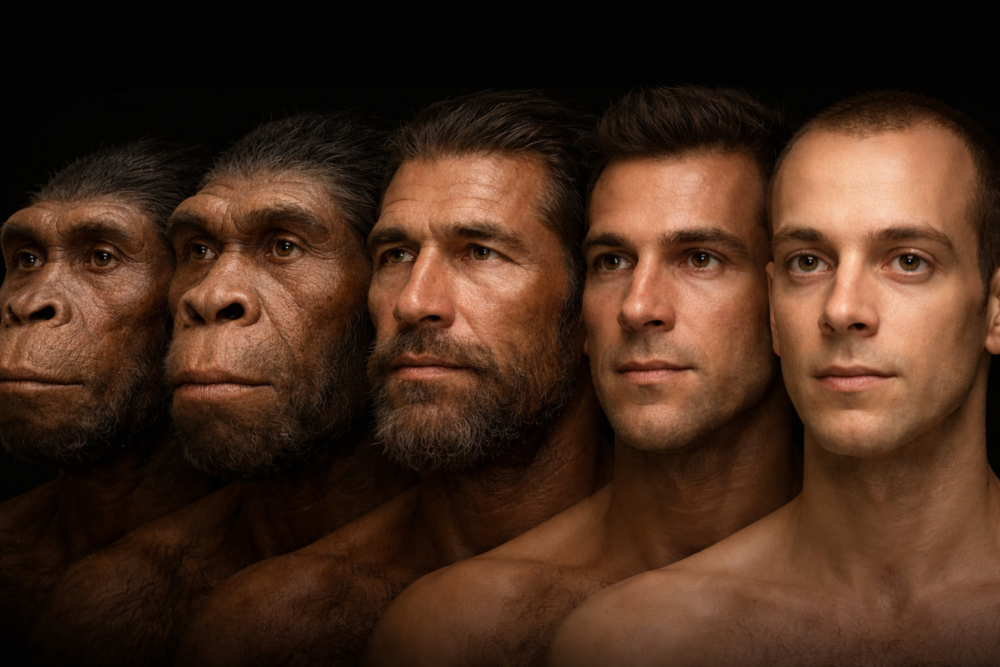
Take a close look at the human body and it feels familiar, even predictable. Two eyes, a nose, a mouth, limbs built for walking and grasping. At first glance, there’s nothing that seems radically different from what we see in other mammals. Yet hidden in plain sight is a feature so distinctive that it appears in no other living species.
Fossils show it arrived relatively late in our evolutionary story, and modern science still can’t agree on why it exists at all. This mystery matters because it quietly challenges how we think evolution works. We often assume every trait must serve a clear purpose, shaped by survival and reproduction. But this feature doesn’t fit neatly into that idea.
As researchers revisit old assumptions using better fossil evidence and modern imaging tools, it has become a reminder that evolution doesn’t always follow a clean or logical script.
Click through to learn the body part that sets humans apart.
1. A feature that sets humans apart without much notice

Most people assume the human body is just a slightly refined version of other animals. That belief makes sense, since we share so much anatomy with mammals and primates. But researchers have identified one structural trait that doesn’t appear anywhere else in the animal kingdom.
What makes this feature especially strange is how subtle it is. It doesn’t help us run faster or see better. You can live your entire life without thinking about it. Yet it appears in all modern humans, across regions and cultures, making it a true anatomical signature of our species.
2. The mystery shows up clearly in ancient skulls

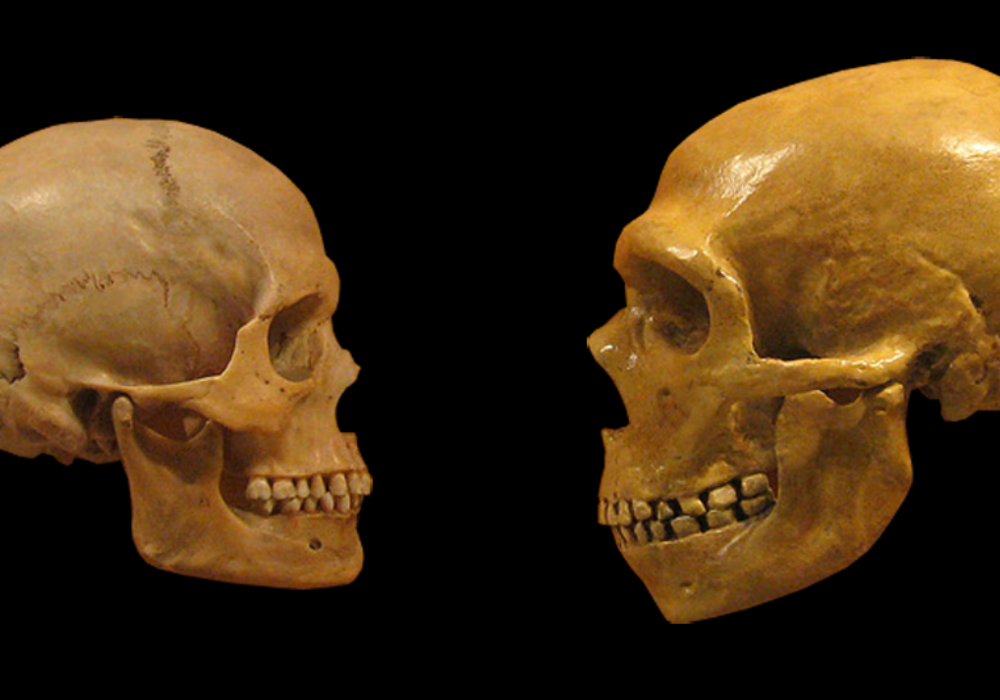
When scientists began closely comparing fossil skulls, they noticed something odd. Early human ancestors had faces that projected forward, with lower jaws that sloped back in a familiar animal pattern. Then, relatively late in the fossil record, a new shape began to appear at the front of the lower face.
This change didn’t line up with a dramatic survival breakthrough. There’s no evidence it helped early humans hunt better or avoid predators. It simply appeared and stayed. That persistence, without a clear benefit, is what makes the feature so puzzling to evolutionary researchers.
3. It’s the chin, and no other animal has one

That unique feature is the human chin. While many animals have jaws and some have prominent lower faces, none have a true chin that protrudes forward the way ours does. Even our closest living relatives lack it, as did other ancient human species that walked the Earth alongside us.
Anatomically, the chin is more than a sharp jawline. It’s a distinct bony structure at the front of the lower jaw. Its exclusivity makes it one of the clearest physical markers that separates modern humans from every other species, living or extinct.
4. Why the chin disrupts simple evolutionary logic

Evolution usually favors traits that clearly improve survival or reproduction. Stronger limbs, better vision, more efficient breathing. The chin doesn’t obviously do any of those things. It doesn’t protect vital organs, enhance eating, or improve physical performance.
That’s what unsettles scientists. If a trait provides no clear advantage, why would it become universal? The chin forces researchers to consider that not every human feature was directly selected for. Some may exist because they were never selected against.
5. Facial reshaping may have accidentally created it
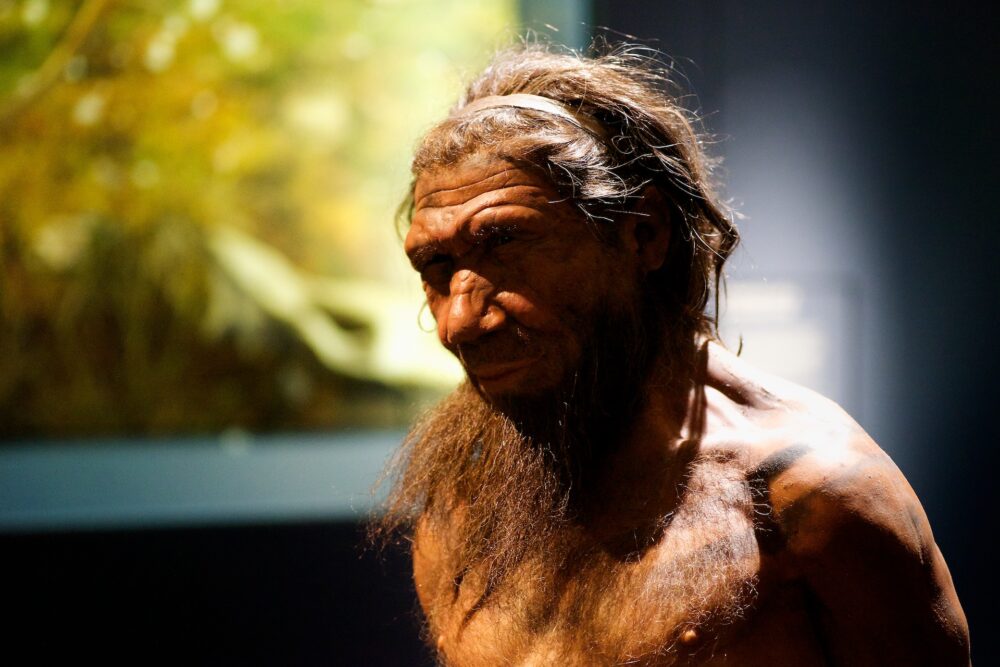
One leading explanation suggests the chin formed as a side effect of broader changes in the human face. Over time, our faces became shorter and flatter compared to earlier ancestors. As this happened, the lower jaw may have reorganized itself to maintain structural stability.
Bone accumulated in certain areas as the jaw adjusted to new proportions. Much like architectural support beams appearing where stress concentrates, the chin may simply be the result of forces acting on a shrinking face.
6. Speech and chewing theories fall apart under scrutiny

Another long-standing idea links the chin to speech. Because humans rely heavily on spoken language, some researchers wondered if the chin helped stabilize muscles used for talking. Others proposed it improved chewing efficiency as diets softened and cooking became common.
When tested, however, these ideas don’t hold up well. People with very small or recessed chins speak clearly and chew without difficulty. Other animals vocalize and process complex diets without anything resembling a chin.
While these theories are appealing, evidence suggests the chin is not essential for speech or eating, making them unlikely explanations on their own.
7. Attraction and social signaling may have mattered
Some scientists think the chin survived because it became socially or sexually appealing. Over long periods, traits associated with maturity or strength can spread through populations even if they don’t improve survival. A prominent chin may have signaled adulthood or health.
This idea is difficult to prove, especially across deep evolutionary time. Fossils can’t tell us what early humans found attractive. Still, sexual selection remains a possibility, particularly since chin size and shape vary widely among people today.
8. The chin may simply be evolutionary excess

An increasingly common explanation is that the chin is an evolutionary byproduct. As teeth became smaller and jaws shortened, bone distribution changed. The chin may be what remained after other structures shifted into new positions.
This challenges the idea that evolution is always efficient or purposeful. Sometimes traits persist not because they help, but because they don’t cause enough harm to be eliminated. The chin may be one of those neutral leftovers.
9. Why an unexplained trait still matters
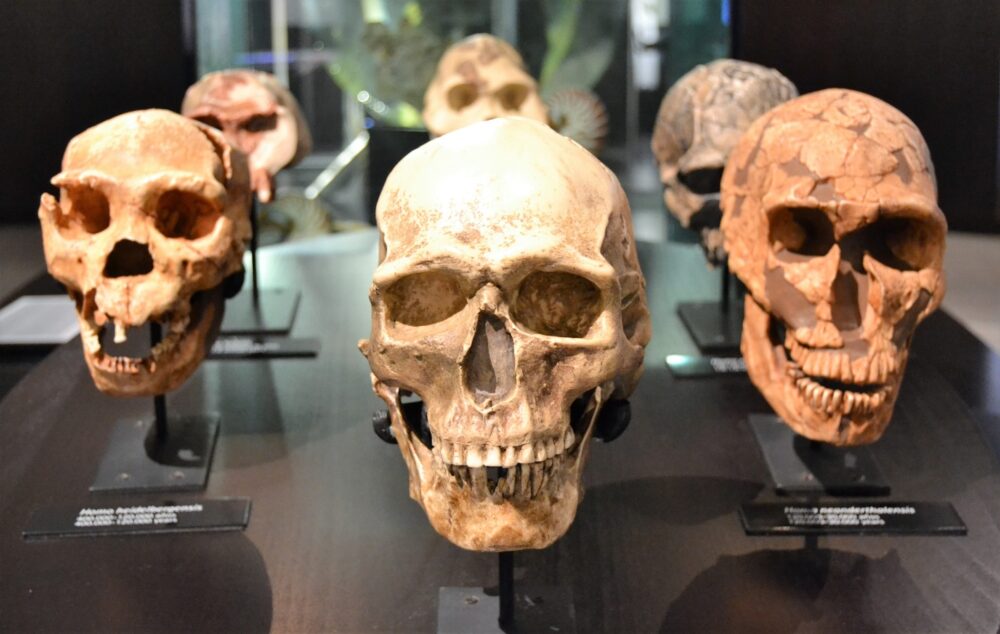
At first glance, the chin seems insignificant. But its unexplained presence has broader implications. It reminds researchers that human evolution wasn’t a clean sequence of upgrades. Some changes were accidental, constrained, or carried along for reasons we still don’t fully grasp.
Studying features like this helps prevent oversimplified stories about evolution. It encourages scientists to look beyond easy explanations and accept uncertainty where evidence is incomplete.
10. A small feature that reflects a bigger truth

The chin stands as a rare example of something that makes us uniquely human without an obvious reason. It’s a physical marker of our species that resists tidy explanations and neat evolutionary narratives.
As new fossils are uncovered and analytical tools improve, researchers may one day resolve this mystery. Until then, the human chin remains a quiet reminder that even in our own bodies, evolution has left behind unanswered questions.