
From mounting global debt to unstable markets, experts say the world’s financial foundations may be weaker than most people realize.
Economists around the world are growing increasingly uneasy about the state of the global economy. With record-high national debts, rising interest rates, and widening inequality, they warn that the system supporting modern prosperity is showing signs of serious strain. Global supply chains remain fragile, and inflationary pressures continue to test central banks’ limits. While no single factor guarantees collapse, experts caution that today’s interconnected financial web may be one major shock away from an economic reckoning.
1. Global Debt Has Reached Record Highs

Global debt has climbed to an estimated $338 trillion in 2025, according to the Institute of International Finance. That’s roughly 330% of global GDP—an unprecedented figure driven by years of government borrowing, corporate expansion, and consumer credit. Many economies are now paying more in interest than on essential public programs.
This mounting debt leaves nations with less flexibility to respond to new crises. If another global recession or financial shock hits, highly indebted governments could struggle to stabilize markets, creating a domino effect that spreads across industries and borders.
2. Central Banks Are Running Out of Tools
Central banks propped up economies for over a decade with ultra-low interest rates and massive bond purchases. While these measures prevented deeper recessions, they also fueled asset bubbles and encouraged risky lending.
Now, with inflation still above target levels and borrowing costs already high, policymakers have limited options. Economists warn that central banks may face a difficult trade-off: cutting rates to stimulate growth could reignite inflation, while keeping them elevated risks tipping economies into stagnation.
3. Inflation Is Still Eroding Household Wealth

Inflation has cooled from its 2022 peak, but prices for everyday essentials remain stubbornly high. Food, housing, and healthcare costs have risen 20–30% above pre-pandemic levels, while wage growth has failed to keep pace. Many middle-income households report spending a greater share of earnings just to maintain basic living standards.
Savings rates have dropped, and consumer debt is climbing. The cumulative impact of years of higher prices means many families are effectively poorer than they were five years ago, even if their paychecks are slightly larger.
4. Corporate Debt Is Becoming a Major Risk

During the years of cheap credit, many corporations borrowed heavily to finance buybacks and acquisitions. Those debts are now maturing at far higher interest rates, squeezing profits and cash flow.
Credit analysts warn that corporate defaults could increase, especially among firms with “junk” or near-junk ratings. A wave of failures could rattle credit markets and trigger job losses, particularly in sectors like commercial real estate and manufacturing that rely heavily on financing.
5. The Housing Market Is Deeply Unbalanced

U.S. housing affordability remains near its worst level in decades. As of late 2024, only about 38% of homes were affordable to median-income buyers, according to the National Association of Home Builders. Home prices remain near record highs even as mortgage rates hover above 7%.
This imbalance has frozen much of the market. Homeowners with low-rate mortgages are reluctant to sell, and first-time buyers can’t afford to enter. Economists caution that such pressure could eventually push prices downward, straining local economies built around real estate.
6. Global Trade Is Losing Momentum

After a brief rebound in 2024, the World Trade Organization projects global trade growth to slow again in 2025 amid new tariffs and rising geopolitical tensions. Supply chain disruptions and protectionist policies continue to reshape how goods flow between major economies.
Slower trade weakens global growth and increases prices for consumers. Export-driven economies, especially in Asia and Europe, face heightened risk of contraction if demand continues to soften. Economists warn that prolonged stagnation in trade could amplify the next global downturn.
7. Inequality Is Widening Around the World

Economic inequality has widened sharply since the pandemic. According to Oxfam, the world’s five richest men have more than doubled their wealth since 2020, while billions of people struggle to afford housing, food, or healthcare.
This growing divide has serious consequences. Societies with high inequality often experience weaker economic growth and higher political instability. When wealth becomes too concentrated, consumer spending declines, social trust erodes, and democratic institutions can weaken—factors that all contribute to systemic fragility.
8. Stock Markets May Be Living on Borrowed Time

Global stock indexes remain near record highs, fueled by investor optimism and the dominance of large technology companies. Yet many analysts warn that valuations are stretched well beyond historical norms, leaving markets vulnerable to sudden corrections.
If corporate profits falter or interest rates stay high, investors may quickly retreat. A sharp selloff could ripple through retirement accounts, consumer confidence, and credit markets—potentially setting off a cycle of reduced spending and slower growth.
9. Climate Disasters Are Driving Economic Instability

Climate-related disasters caused about $318 billion in global economic losses in 2024, according to Swiss Re. From wildfires in Canada to floods in Asia, extreme weather is disrupting agriculture, insurance systems, and supply chains at an accelerating pace.
Governments are increasingly forced to spend billions rebuilding damaged infrastructure. These unplanned costs divert resources from investment and push public debt higher. Economists warn that if climate-related losses continue to grow, they could undermine global financial stability within the next decade.
10. Geopolitical Conflicts Are Disrupting Stability

Ongoing conflicts—from the war in Ukraine to tensions in the Middle East and Asia—are reshaping trade and energy flows. Sanctions, supply constraints, and shifting alliances have made global markets far more volatile than before.
This instability affects everything from fuel prices to semiconductor production. As nations prioritize security over efficiency, costs rise and supply chains fragment, adding persistent uncertainty to global growth forecasts.
11. Automation and AI Are Transforming the Job Market

Artificial intelligence and automation are boosting productivity but also displacing traditional jobs. The World Economic Forum estimates that 83 million roles could be eliminated and 69 million created by 2027, leading to a net loss of 14 million jobs globally.
While new tech-driven roles will emerge, not all displaced workers can transition easily. The adjustment period could widen wage gaps and strain social safety nets, especially in industries like manufacturing, retail, and logistics that employ millions of middle-income workers.
12. Confidence Is the Final Domino
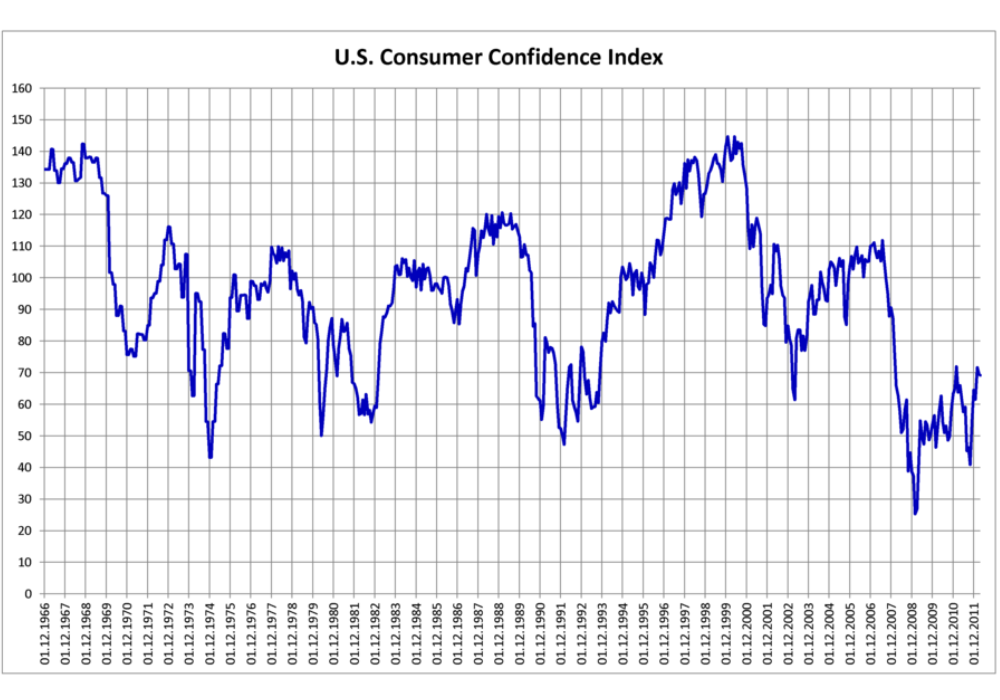
Modern financial systems depend on confidence—belief that banks are stable, currencies hold value, and markets will recover. Once that confidence weakens, even healthy economies can spiral into crisis.
History shows that collapses often begin quietly, with ignored warning signs that later trigger panic. Economists say the global system is more complex but no less vulnerable than in 2008. If trust in institutions erodes further, the resulting chain reaction could be swift and far-reaching.