
Earth quietly captures small space rocks into temporary orbits far more often than most people realize.

Earth doesn’t just have one moon—astronomers say it regularly picks up small “mini-moons” that slip into our orbit before drifting away again. Most are only a few feet across and remain invisible to all but the most advanced telescopes. Yet these temporary moons reveal surprising details about the asteroids constantly moving through our neighborhood. As new sky surveys come online, scientists expect to find many more of these hidden companions quietly looping around Earth at any given moment.
1. Earth Regularly Captures Temporary Mini-Moons
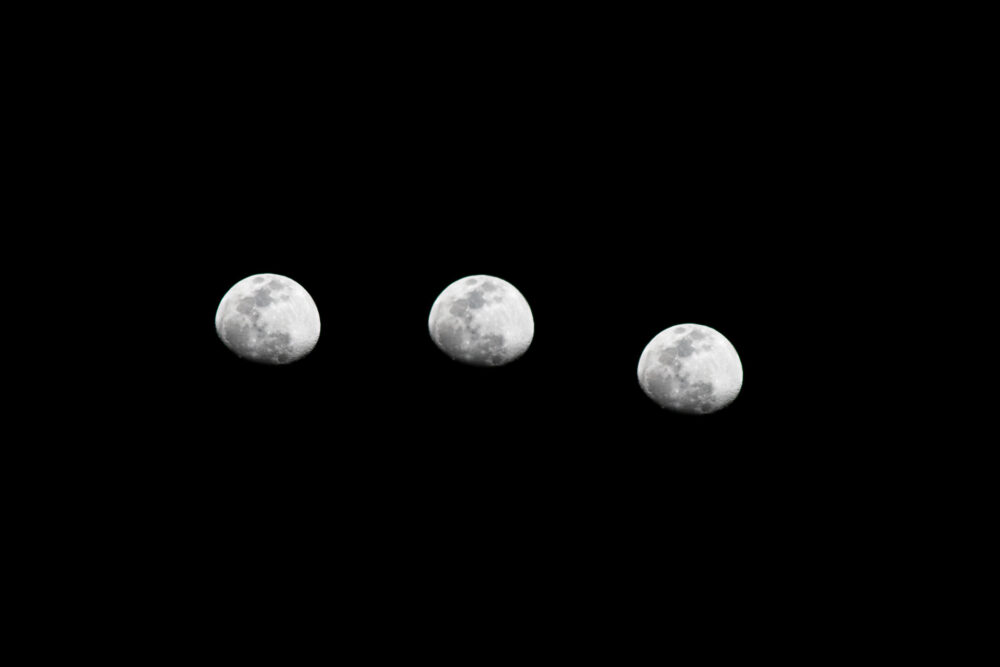
Astronomers call these objects “temporarily captured orbiters”—small asteroids that slip into Earth’s gravitational grip for a short time. They orbit our planet for weeks to years before drifting away again. Most are only a few feet across, making them extremely hard to detect with ground-based telescopes.
Scientists confirmed the first well-documented mini-moon, 2006 RH120, in 2006. Since then, researchers have identified additional candidates and believe many more are passing unnoticed. Improved survey telescopes are expected to reveal these captures happen far more often than previously thought.
2. The First Confirmed Mini-Moon Was Detected in 2006
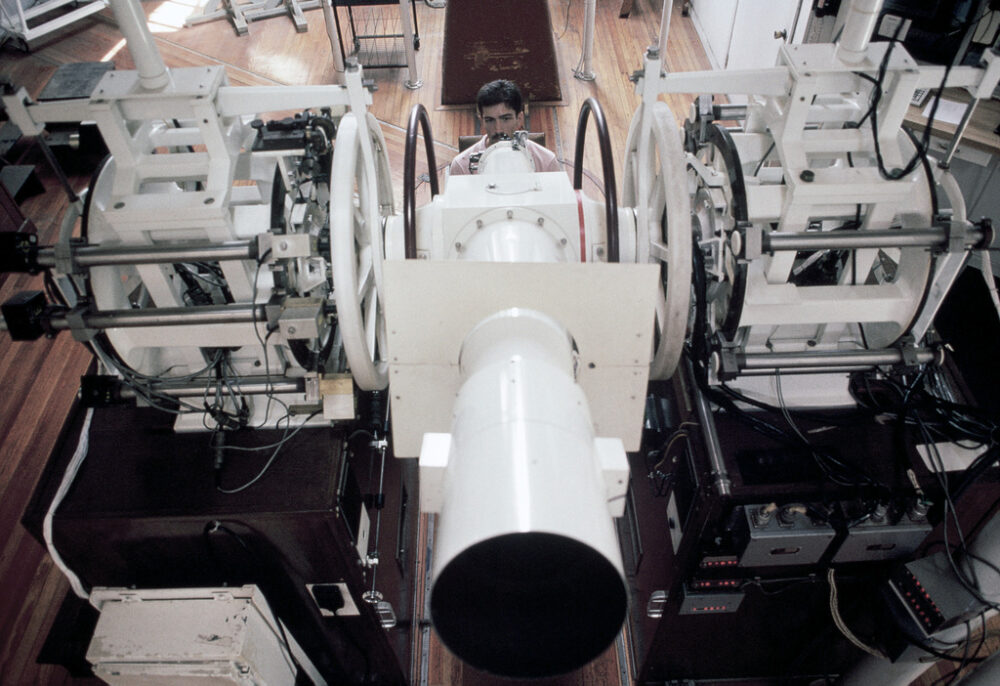
In 2006, astronomers identified 2006 RH120, a small asteroid roughly the size of a car, orbiting Earth for about a year. It completed several loops before leaving Earth’s gravity and returning to a solar orbit. This discovery provided the first verified proof that Earth occasionally hosts temporary moons.
The event sparked renewed scientific interest in how frequently such captures occur. Subsequent studies showed that gravitational interactions between Earth, the Moon, and the Sun make these brief orbits surprisingly common. Researchers now suspect mini-moons are likely present more often than not.
3. Earth’s Gravity Creates a Perfect Trap for Small Asteroids

When a small asteroid passes close to Earth at just the right speed, our planet’s gravity can pull it into a loose temporary orbit. These objects usually approach from near the Earth–Sun Lagrange points, where gravitational forces balance in complex ways.
The Moon also plays a role, subtly influencing the asteroid’s path as it loops around Earth. Most mini-moons eventually gain enough energy from these gravitational interactions to escape into space again. This constant gravitational interplay makes their captures both frequent and fleeting.
4. Most Mini-Moons Are Only a Few Feet Across

Scientists estimate that temporary mini-moons usually measure between one and ten feet across. Their small size makes them incredibly faint, even when they’re relatively close to Earth. Many are simply too dim for current telescope networks to detect.
Because of this, most mini-moons come and go without ever being observed. Researchers believe improved all-sky surveys—such as those using wide-field CCD cameras—will uncover dozens more. These discoveries will help scientists better understand near-Earth asteroid populations.
5. Some Mini-Moons Stay for Months or Even Years
Although many temporary orbiters stay for only a few weeks, some remain captured for extended periods. 2006 RH120 stayed for about a year, and researchers have identified orbital simulations showing similar captures lasting multiple years.
These longer loops allow scientists to study the objects’ composition, rotation, and trajectory. Extended stays also give astronomers more time to track the objects accurately. Understanding these orbits helps refine models of gravitational interactions around Earth.
6. Mini-Moons Follow Highly Chaotic Orbits

Mini-moons do not follow stable, predictable paths like our permanent Moon. Instead, they travel in irregular, twisting trajectories shaped by Earth’s gravity, the Moon’s pull, and the Sun’s influence. Their orbits can shift rapidly as they interact with these forces.
This chaotic motion makes long-term tracking difficult. Small changes in speed or direction can send a mini-moon spiraling closer to Earth or flinging it back into heliocentric orbit. Their unpredictability is one reason so few have been detected.
7. NASA Detected a Possible Mini-Moon in 2020

In 2020, astronomers at NASA’s Jet Propulsion Laboratory identified 2020 CD3, a small object that had entered Earth’s orbit around 2017. It was only discovered after nearly three years because of its tiny size and faint brightness.
Its characteristics matched those of natural asteroids, confirming it as one of Earth’s few recorded temporary moons. It eventually escaped Earth’s gravity later that same year. Observations of 2020 CD3 helped refine models of how long these objects can remain bound.
8. Mini-Moons Offer Safe Targets for Space Missions

Because mini-moons orbit close to Earth and require minimal fuel to reach, they make ideal targets for future space missions. Their small size and accessibility offer opportunities for sample-return missions, testing landing technologies, or studying asteroid composition.
Scientists hope future spacecraft could rendezvous with a captured mini-moon to collect pristine material that has not burned through Earth’s atmosphere. Such missions would provide valuable insights into asteroid origins and solar system evolution.
9. Researchers Believe Many Mini-Moons Go Undetected
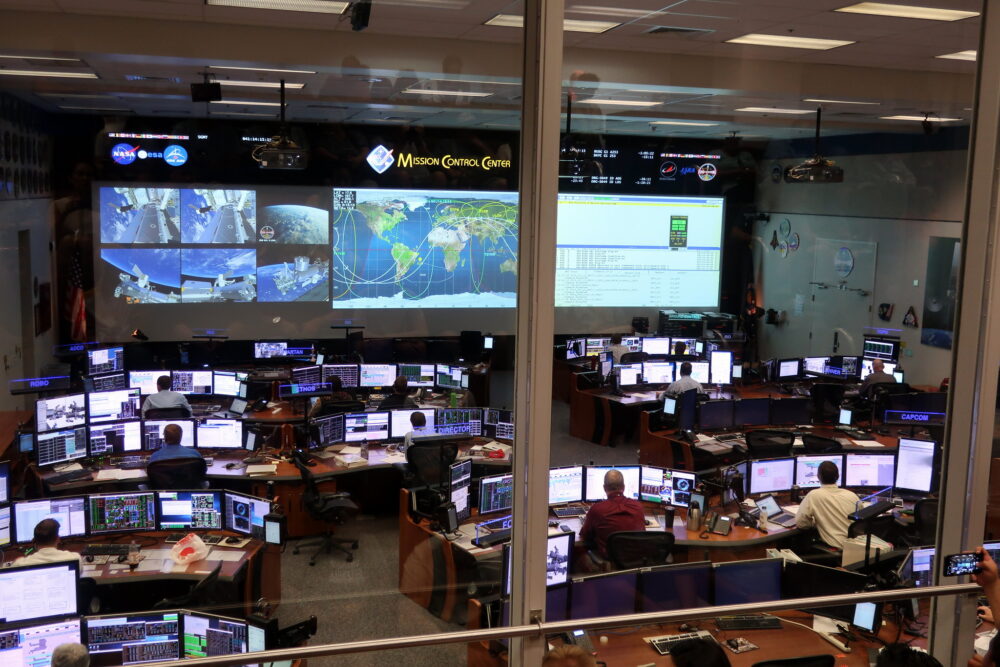
Computer simulations show Earth likely captures multiple mini-moons every decade, but only a handful have ever been observed. Their small size, faintness, and unpredictable movement make detection extraordinarily difficult with current technology.
Upcoming survey telescopes like the Vera C. Rubin Observatory may change this. Its rapid, repeated sky scans could reveal many more temporary orbiters. This would give researchers a clearer picture of the mini-moon population surrounding Earth.
10. Mini-Moons Can Help Scientists Map Near-Earth Asteroids

Studying temporary orbiters helps astronomers understand the broader population of near-Earth asteroids. Mini-moons often originate from similar regions as potentially hazardous objects, making them valuable for modeling asteroid pathways.
Their captures reveal how gravitational interactions shape asteroid trajectories. Tracking these small bodies improves prediction models used for planetary defense. Even tiny mini-moons teach researchers about the dynamics of objects that occasionally pass close to Earth.
11. Some Mini-Moons Are Artificial Space Debris
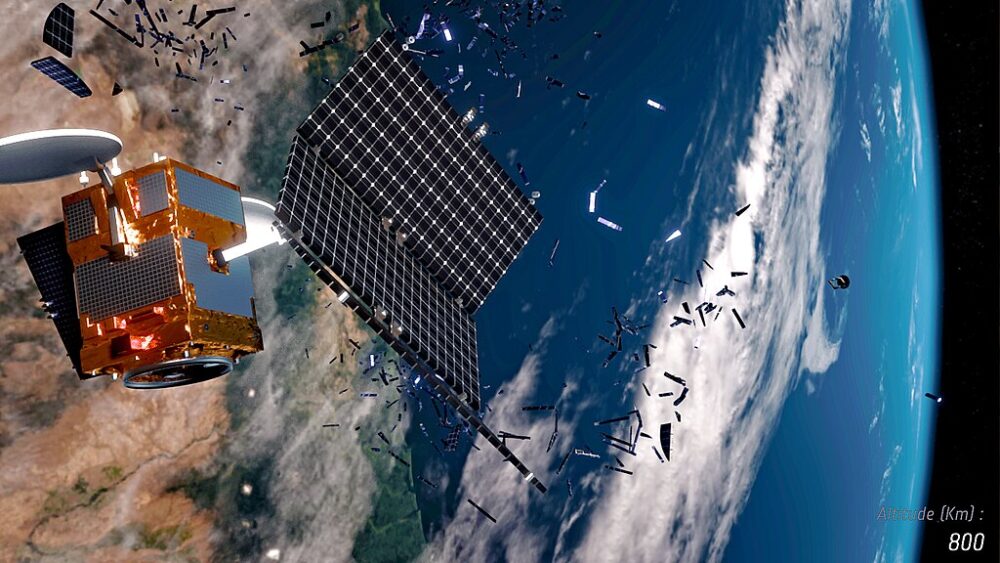
Not every object temporarily orbiting Earth is a natural asteroid. Occasionally, old rocket boosters or spacecraft stages mimic the motion of mini-moons. For example, in 2020 researchers identified 2020 SO as a discarded 1966 Centaur upper stage.
Distinguishing natural objects from artificial ones requires careful spectral analysis. While debris is not considered a true mini-moon, these cases show how complicated orbital identification can be. They also highlight the need for improved tracking systems.
12. Improved Telescopes Will Reveal Even More Mini-Moons

Advances in detection technology are expected to uncover many additional mini-moons in the coming years. Wide-field telescopes, automated sky surveys, and sensitive CCD arrays will allow astronomers to observe fainter and faster-moving objects.
As these tools come online, scientists anticipate discovering dozens of temporarily captured orbiters. These findings will deepen our understanding of Earth’s gravitational environment and the steady flow of small asteroids passing through our neighborhood.